
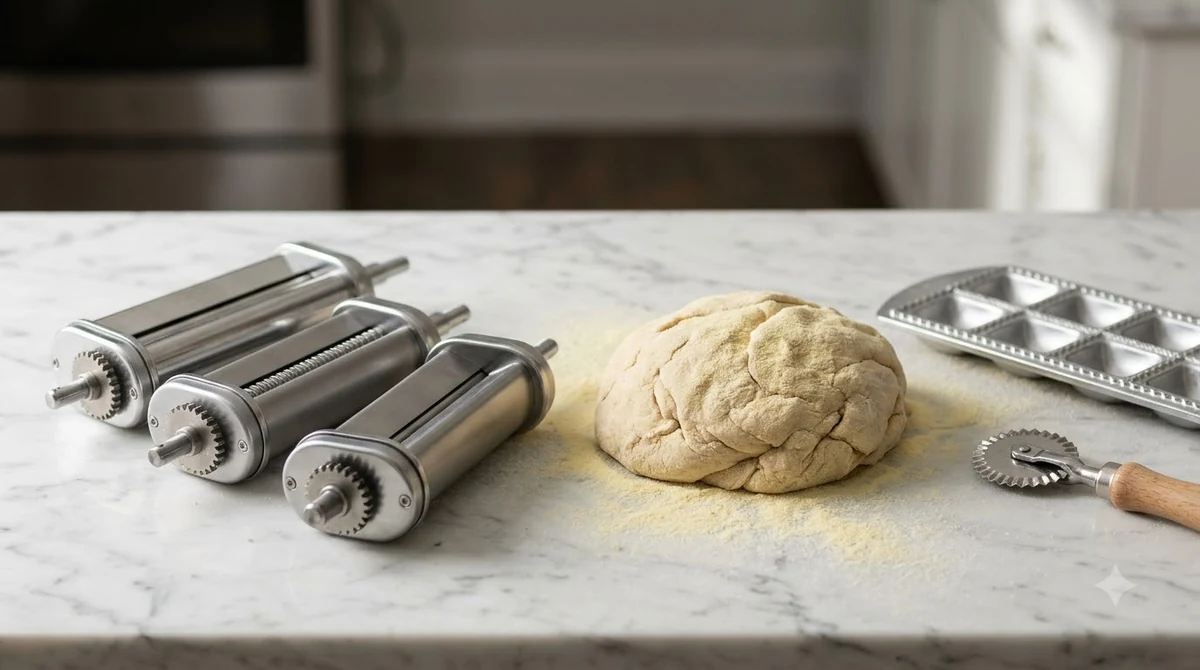

A potato gnocchi recipe combines cooked, riced potatoes with flour, egg, and salt, then shapes the dough into small pillows that cook in just a few minutes. The dough is simple, but its texture depends on how lightly you handle it.
This potato gnocchi recipe guide walks through the process step by step, from choosing the potato to storing leftovers. Ricotta-based gnocchi use a different dough, so they are not covered here. Gnocchi are not the only Ligurian shape that borrows the name, since in some Ligurian dialects trofie pasta can refer to gnocchi too.
What Goes Into Potato Gnocchi
Potato gnocchi are small dumplings made from starchy potatoes, flour, egg, and salt. For the wider background on the dumpling family, see this gnocchi explainer. To see how they differ from wheat pasta, read how gnocchi compares with pasta.
Every potato gnocchi recipe differs in the details. The Food Network version uses two egg yolks, while the Love and Lemons gnocchi recipe uses one large egg. Both start with potatoes that are cooked first, either baked or boiled, before they are riced or mashed.
Once you understand the method, the core formula of any potato gnocchi recipe stays the same. That means the amounts in the next section can be adjusted with confidence when you cook for a different number of people.
Potato Gnocchi Recipe Ingredients and Amounts
A typical potato gnocchi recipe uses 3/4 to 2 pounds of potatoes, 3/4 to 1 cup of flour, one or two eggs, and salt to taste.
| Recipe | Potatoes | Flour | Egg | Rest before cooking |
|---|---|---|---|---|
| Food Network | 3/4 lb Russet or Baker’s | 3/4 to 1 cup | 2 egg yolks | 30 minutes chilled |
| Love and Lemons | 2 lb russet, baked | 1 cup, plus more as needed | 1 large egg | Not stated here |
| Spend With Pennies | 1.5 lb, cooked and riced | 3/4 to 1 cup | Not stated here | 30 minutes |
| Nonnabox | Boiled skin on, 25 to 30 minutes | 2.4 cups (300 g) | Not stated here | Not stated here |
The flour amount varies the most in a potato gnocchi recipe. Start with the lower amount and add more only as needed. Love and Lemons lists 1 cup of flour “plus more as needed,” so treat the amount as a range.
Choose the Right Potato and Cook It Well
Use a starchy, dry potato such as a russet, and avoid new potatoes, which are too watery for gnocchi dough.
For a potato gnocchi recipe, Nonnabox says to avoid new potatoes because they are too watery. The Food Network recipe asks for Russet or Baker’s potatoes, preferably old and unpeeled.
You can bake or boil the potatoes before mashing them. Each method uses different times and temperatures:
- Bake at 425°F for 45 to 60 minutes until tender when pierced with a fork, according to Love and Lemons.
- Bake 3/4 lb of potatoes at 375°F for 45 minutes, according to Food Network.
- Boil skin-on potatoes in water to cover for 25 to 30 minutes until a fork pierces them easily, according to Nonnabox.
A ricer gives the smoothest mash. Without a ricer, mash the potatoes very well and make sure they are perfectly smooth before adding flour. Smooth, dry potatoes need less flour to hold together, and less flour means a softer bite.
How to Make the Dough and Shape the Gnocchi
Mix the riced potato with egg and flour in your potato gnocchi recipe, then knead gently only until the dough is soft and slightly sticky.
- Rice the cooked potatoes for your potato gnocchi recipe onto a lightly floured surface or into a large bowl.
- Beat in the egg or yolks and the salt.
- Add flour a little at a time until a dough forms, using only as much as the dough needs.
- Knead gently, adding flour only if needed, until the dough is soft, smooth, and slightly sticky. Overworking makes the dough tough.
- Divide the dough, roll each piece into a rope, then cut the rope into small pieces.
- Press each piece against the inside curve of a fork with your index finger, then flip it off toward the handle to create ridges. A gnocchi board works the same way, and the same ridged board can shape hand-rolled garganelli quills.
- Place the shaped pieces on a floured baking sheet. Chill for 30 minutes if you want, or cook them right away.
Chilling or resting is common but optional. Food Network chills the shaped pieces for 30 minutes, and Spend With Pennies rests its dough for 30 minutes. The cut size changes the cooking time slightly, so keep the pieces even.
How to Cook Potato Gnocchi in Boiling Water
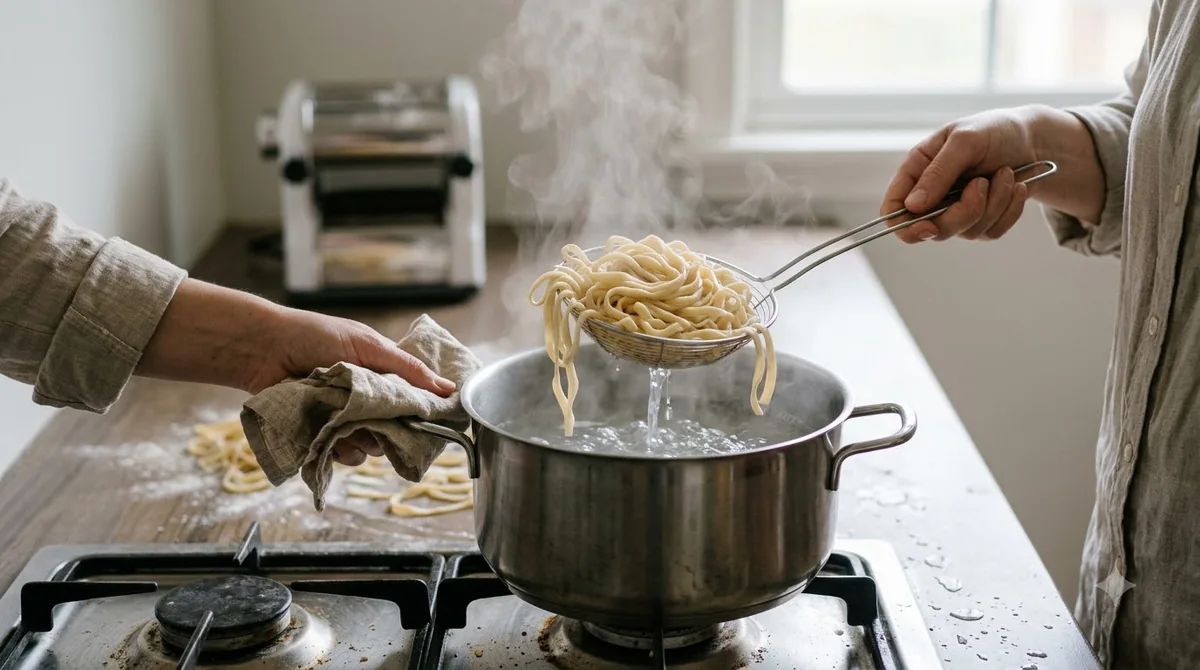
Cook potato gnocchi in salted boiling water in batches, and lift them out with a slotted spoon about 10 to 25 seconds after they float.
- Bring about 4 quarts of water to a boil and add salt, according to the Food Network recipe.
- Add the gnocchi in batches without crowding the pot. Love and Lemons cooks its dough in three batches, one-third at a time.
- Wait until the gnocchi float to the surface.
- Simmer 10 to 15 seconds more until they are just firm, then transfer them with a slotted spoon to a warm bowl.
- Serve with a simple tomato sauce and grated Parmesan, or follow the holding method below.
Nonnabox says to boil about 2 minutes and no more than 3, since the gnocchi are almost done when they float and need only about 25 more seconds. Overcooking is the fastest route to a gummy texture. Test one piece first: it should hold its shape, feel tender in the middle and taste cooked through rather than floury.
Spend With Pennies boils gnocchi for about 90 seconds to 3 minutes, then moves them to an ice bath for about 1 minute. Use that method only if you plan to serve them later.
Common Mistakes in a Potato Gnocchi Recipe
Overworking the dough and adding too much flour both make potato gnocchi tough.
- Overworking the dough: knead only until it comes together, because handling makes it tough.
- Too much flour: add it a little at a time and stop once the dough is soft and slightly sticky.
- Lumpy potatoes: the mash should be perfectly smooth before flour goes in.
- Wet potatoes: Nonnabox says new potatoes are too watery, so choose a starchy variety instead.
Every potato gnocchi recipe varies in how much flour it calls for, so the dough feel matters more than one fixed number. The goal is a soft, slightly sticky dough that holds together without becoming stiff. If you enjoy making dough by hand, filled shapes such as homemade ravioli are a natural next project.
How to Store and Freeze Potato Gnocchi
Cooked gnocchi keep in an airtight container in the refrigerator for up to 3 days, and uncooked gnocchi freeze for up to 3 months.
For this potato gnocchi recipe, Love and Lemons says to freeze uncooked gnocchi in a single layer first, then move them to a freezer bag. You can boil them straight from frozen, with no thawing needed.
Frequently Asked Questions
Can I make potato gnocchi without eggs?
The recipes reviewed here that list an egg use either whole eggs or egg yolks as a binder, and none gives a tested eggless method. If you try it, cook one gnocchi first to see whether the dough holds together.
Do I need a potato ricer?
A ricer is recommended but not required. It gives the smoothest mash. Without one, mash the potatoes very well and make sure no lumps remain before you add the flour.
Should I chill the gnocchi before cooking?
Chilling is optional. Food Network suggests chilling the shaped gnocchi on a floured baking sheet for 30 minutes. Spend With Pennies rests its dough for 30 minutes as well, so a short rest is common.
How do I know when gnocchi are done?
Gnocchi from a potato gnocchi recipe are ready shortly after they float. Food Network says to simmer them 10 to 15 seconds more until just firm, while Nonnabox suggests about 25 seconds. Lift them out with a slotted spoon once they reach that point.
Can I cook gnocchi straight from the freezer?
Yes. Love and Lemons says uncooked gnocchi can be boiled directly from frozen, with no thawing. Freeze them in a single layer first, then move them to a freezer bag for storage.
Start with the lower flour amount in your potato gnocchi recipe and test one gnocchi in boiling water before cooking the rest. If it falls apart, knead in a small amount of extra flour and try again with the next piece, keeping the dough soft and slightly sticky.