
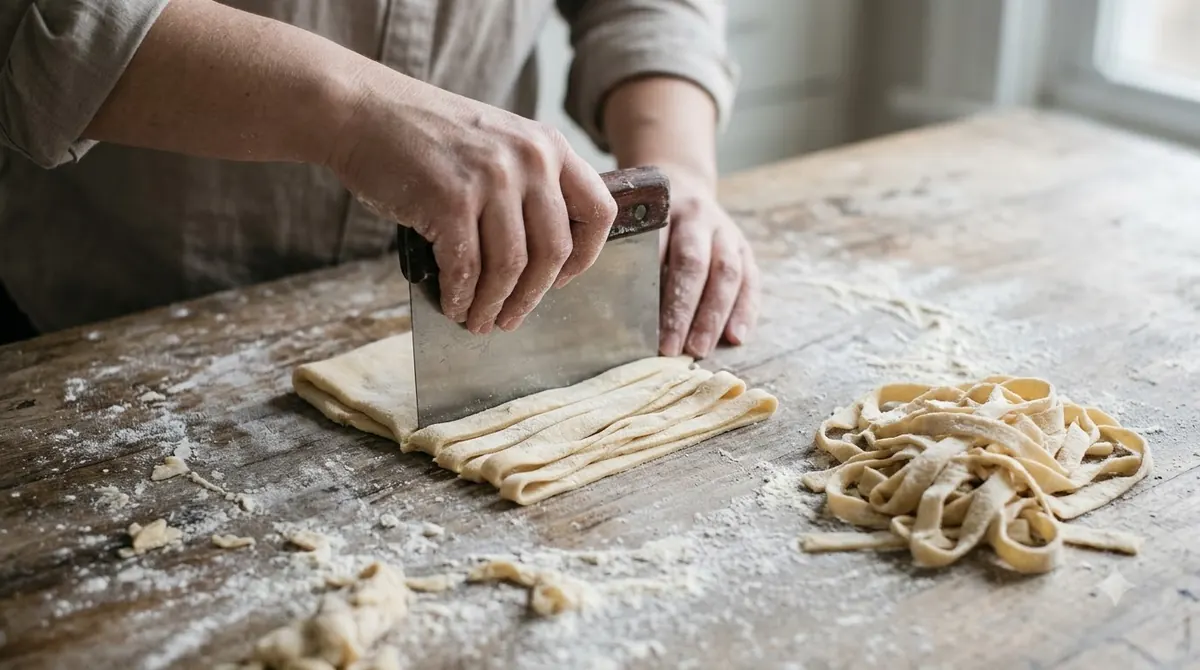

Garganelli pasta is a short, hand-rolled egg pasta from Romagna in northern Italy. It is shaped into ridged quills with a point at each end, and it is also called maccheroni al pettine.
Once you know the shape, it is easy to make at home with flour, eggs and a ridged board. The pasta holds meat and vegetable sauces well, so it suits both hearty and lighter dinners.
What Is Garganelli Pasta?
Garganelli is a traditional egg pasta from Romagna, the southeast part of Emilia-Romagna. Its Romagnol name is garganéi, and the pasta is also known as maccheroni al pettine.
The origin of this garganelli pasta is uncertain. One story dates it to New Year’s Eve 1725 at the home of Cardinal Bentivoglio D’Aragona, where a chef reportedly shaped leftover cappelletti dough. Another credits the cook of Caterina Sforza, Countess of Forlì, a couple of hundred years earlier. The Pasta Project’s account of the history covers both versions.
The dates come from stories rather than documented records, so treat them with care. The shape and the hand-rolling method are the parts that the sources agree on.
What Makes Garganelli Different From Penne?
Garganelli has ridges that wrap around the body of each piece, while penne has ridges that run along its length. The two shapes look similar at a glance, but the way they are made is very different.
| Feature | Garganelli | Penne |
|---|---|---|
| How it is made | Hand-rolled from a square sheet, leaving a seam | Extruded through a die |
| Ridge direction | Wraps around the body | Runs along the length |
| Typical shape | Ribbed quill with points at both ends | Short tube with ridges on the outside |
When you compare shapes side by side, the ridge direction is the simplest test. Garganelli pasta shows ridges that circle the body, while extruded penne shows ridges that run along the tube.
The seam and the wrapping ridges are the easiest signs of a hand-made garganelli. If you see a smooth tube with ridges running straight down its length, you are looking at a different shape.
The sauce can be similar for both shapes, but the ridge pattern is what sets garganelli apart on the plate.
When you shop for a ready-made box, look for the ridged quill shape and the points at both ends. A smooth tube or a straight-ridged tube points to a different pasta. The name on the label is not always enough, so check the shape with your own eyes.
Garganelli Pasta Dough Recipe
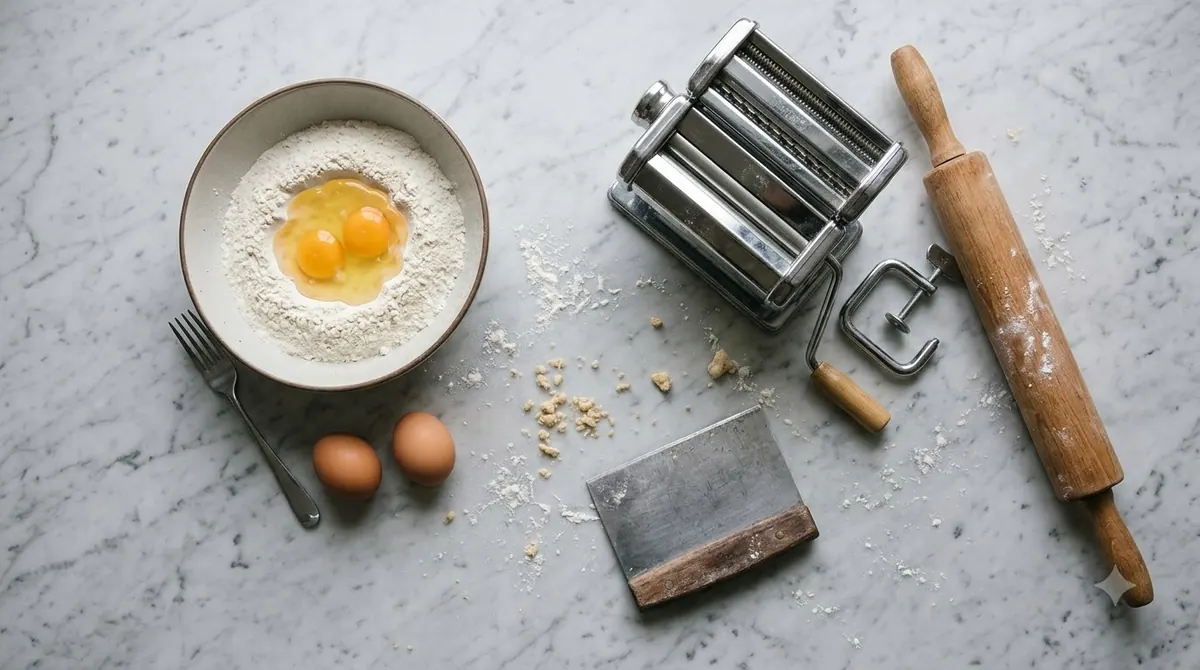
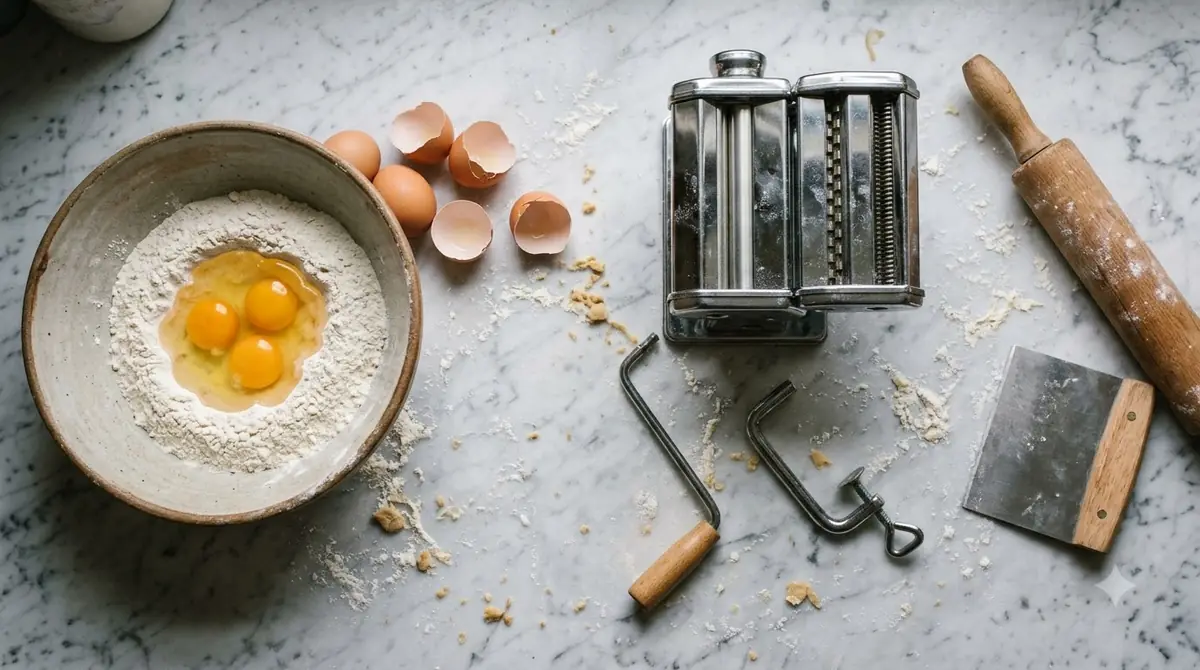
A basic garganelli dough uses 185 grams of all-purpose flour and 2 large eggs, rested wrapped in plastic for 10 minutes to an hour. Marcellina in Cucina’s recipe uses these quantities for fresh garganelli pasta.
- 1½ cups (7 ounces or 185 grams) all-purpose flour
- 2 large eggs at room temperature
- 2 tablespoons of flour set aside, to add if the dough is too wet
- Optional: a little nutmeg and grated Parmesan, as some homemade doughs include
Wrap the dough in plastic wrap before you rest it. The recipe card gives a range from 10 minutes up to 1 hour, so choose the shorter end if you are short on time.
Roll the dough thin enough that you can see color through the sheet, then cut it into squares. Put the scraps back into the dough ball so nothing goes to waste.
Use the reserved 2 tablespoons of flour only if the dough feels too wet. Add it a little at a time, and stop once the dough comes together. Every garganelli pasta batch starts from this same base of flour and eggs. For more on kneading and resting egg dough, see the kneading and resting times.
Once the dough has rested, cut off a piece at a time and keep the rest covered. That habit keeps the dough workable while you shape each batch of garganelli pasta.
How to Shape Garganelli by Hand
You shape garganelli by rolling a cut square of dough around a thin dowel over a ridged board, which marks the grooves. The ridged tool is what gives the pasta its look.
The tool is called a pettine, which is a wooden frame with a ridged central section. Cooks also use a stick called a bastancino to help roll the square into a tube. The Pasta Project describes both tools in its history page.
- Set one square on the comb or gnocchi board board with a point facing you.
- Roll it over a dowel or a clean pencil to mark the grooves.
- Flick the point nearest you over the dowel.
- Roll the dough up, pressing the ends together to seal them.
- Slide the tube off the dowel onto a tray lined with parchment and dusted with flour.
Shaping is repetitive, since each garganelli pasta piece is rolled from its own square. Work in a steady rhythm, and keep your finished pieces spread out on the floured tray until you cook them.
Square sizes vary by recipe. Marcellina in Cucina uses squares of 1 or 1½ inches, which is about 2.5 to 3.5 cm, while The Pasta Project describes squares of about 3 to 5 cm. Pick a size in that range and keep every piece the same.
Without a ridged board or comb, the grooves will not form, so the pasta will look like a plain rolled tube. That is the main scope limit of the home method, and it is worth buying or borrowing a ridged tool before you start. If you would rather start with a simpler hand-rolled shape, pici pasta is traditionally made from just flour and water.
How Long to Cook Garganelli
Fresh garganelli cook quickly in well-salted boiling water, so start tasting within the first few minutes. Check a piece early, because fresh pasta can go from firm to soft in a short time.
Garganelli pasta is a fresh egg pasta, much like fresh pappardelle, so it behaves differently from a dried shape. Drain the pasta when it is tender but still has a little bite in the center.
Best Sauce for Garganelli
A meat ragù is the classic match for garganelli, and the traditional Emilian pairings include sausage and pork loin sauces. The sauces below all appear in traditional recipes from the region.
- Sausage ragù, known as garganelli alla salsiccia
- Pork loin ragù, called ragù di lonza all’Emiliana
- Chicken ragù alla Rezdora, a version from Modena
- Alla zingara, with bell peppers, mushrooms, pancetta and cream
- Zucchini with saffron and Parma ham
The best sauce for garganelli pasta depends on how you want to eat it. A ragù gives a rich, meaty finish, while the zingara version adds vegetables and cream for a softer, brighter bowl.
For a lighter option, vegetable sauces with peas, mushrooms, pumpkin, radicchio or zucchini flowers also appear in traditional recipes. Choose a sauce that clings, since the grooves catch thicker sauces well. Ragù is also the classic partner for tagliatelle pasta, another egg pasta from Emilia-Romagna.
Frequently Asked Questions
What is garganelli pasta?
Garganelli is a short, hand-rolled egg pasta from Romagna in Italy. It has ridges that wrap around the body and points at both ends. The pasta is also called maccheroni al pettine, after the comb used to shape it. Because each garganelli pasta piece is hand-formed, the shape is more irregular than a machine-cut tube.
Is garganelli the same as maccheroni al pettine?
Yes, the two names refer to the same pasta. The second name comes from the pettine, the ridged comb used to shape each piece. Cooks in Romagna also call the pasta garganéi.
What sauce goes best with garganelli?
A meat ragù is the classic choice, with sausage and pork loin versions common in Emilia-Romagna. Vegetable sauces, such as zucchini with saffron, also suit the pasta. Pick a sauce that clings, since the ridges catch it.
How many eggs go into garganelli dough?
A basic recipe uses 2 large eggs with 185 grams of all-purpose flour, according to Marcellina in Cucina. Some cooks add nutmeg or grated Parmesan. Keep 2 tablespoons of flour aside in case the dough turns out too wet.
How big should garganelli squares be?
Cut the dough into squares of about 2.5 to 3.5 cm, or 1 to 1½ inches, following Marcellina in Cucina. The Pasta Project gives a slightly larger range of about 3 to 5 cm. Keep all squares about the same size so they cook evenly.
Is garganelli pasta served dry or in broth?
Today garganelli pasta is usually served in the dry-pasta style, called pasta asciutta, with a sauce on top. Historically it was also added to capon or beef broth, according to The Pasta Project.
Can you shape garganelli without a pasta comb?
The ridges come from a ridged board or comb, so a plain surface will not give the same grooves. You can roll the square around a dowel or a clean pencil, but without a ridged surface the pasta will look like a plain rolled tube.
If you are new to shaping pasta, start with the dough and one simple sauce, then try the comb once the rhythm feels natural. Homemade garganelli rewards patience, so plan extra time for the rest and the shaping. A batch of garganelli pasta is a good project for a weekend dinner with friends.