

Tortellini pasta is a small, ring-shaped stuffed pasta from Emilia-Romagna, Italy, traditionally filled with pork, prosciutto, mortadella and Parmesan. Bologna and Modena both claim its origin, so the exact birthplace is still debated. It is traditionally served in broth, and it also pairs with butter and cream or a tomato cream sauce.
What Is Tortellini Pasta?
Tortellini pasta is a stuffed pasta folded into a small ring, from Emilia-Romagna in northern Italy. Its origin is disputed, because both Bologna and Modena claim it as their own.
Cooks Info explains that the name comes from tortello, a stuffed pastry, which derives from torta, the Italian word for cake. The suffix -ini means small, so the name describes a small stuffed pasta.
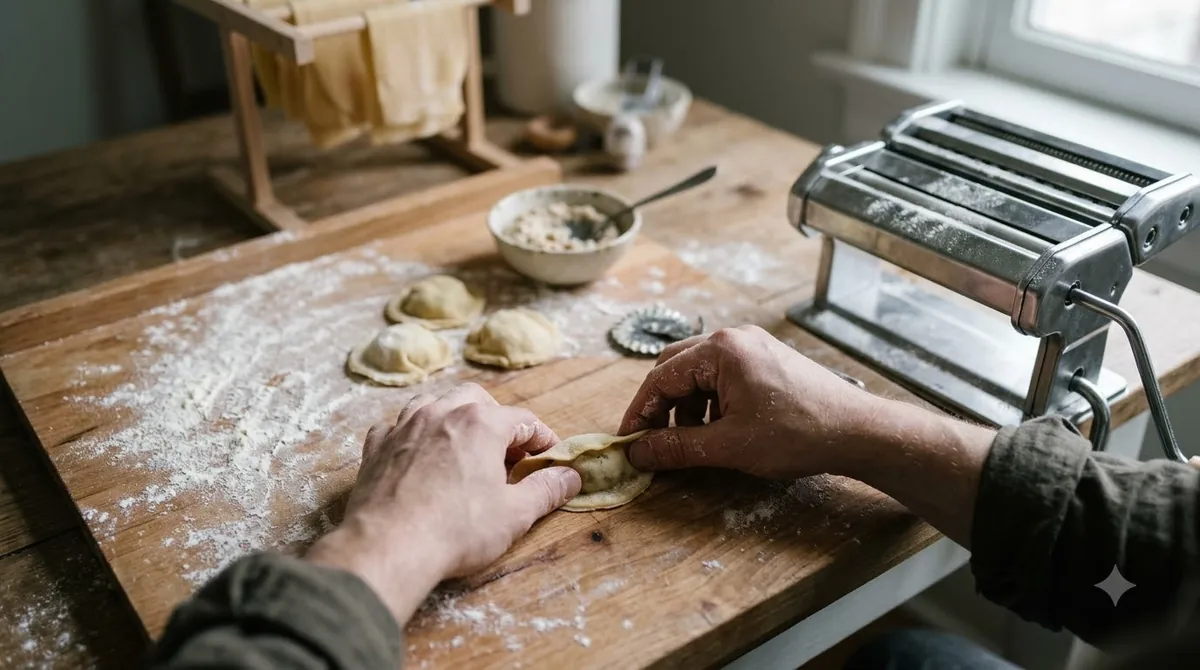
Two small pasta circles enclose a little filling, then are folded and pinched into a ring. Shaping each piece by hand is the slow part of making them. You can read more about the shape on Cooks Info’s tortellini page.
Cooks Info also notes that cappelletti, another stuffed pasta from Emilia-Romagna, are filled with different meat stuffings. The same source says stuffed pastas often used up leftover meats, which is one reason the region is known for them. Our cappelletti vs tortellini comparison sets out how the shape and filling differ.
Traditional Tortellini Filling
Traditional tortellini filling is a meat mixture of pork loin, prosciutto and mortadella, bound with Parmesan cheese, egg and nutmeg. The English Wikipedia entry on tortellini lists this combination as the classic recipe.
- Pork loin
- Prosciutto
- Mortadella
- Parmesan, egg and nutmeg
Each piece of tortellini pasta holds only a small amount of filling. Great British Chefs puts one teaspoon in the center of each circle, which is a useful measure for a first batch.
Keep the filling cool and not too wet before you spoon it onto the dough. A wet filling is hard to shape, and it can burst in the water.
Homemade Tortellini Pasta: Step by Step
To make tortellini by hand, roll fresh dough to 1 to 2 mm, cut 8 cm circles, add one teaspoon of filling and fold each piece into a ring.
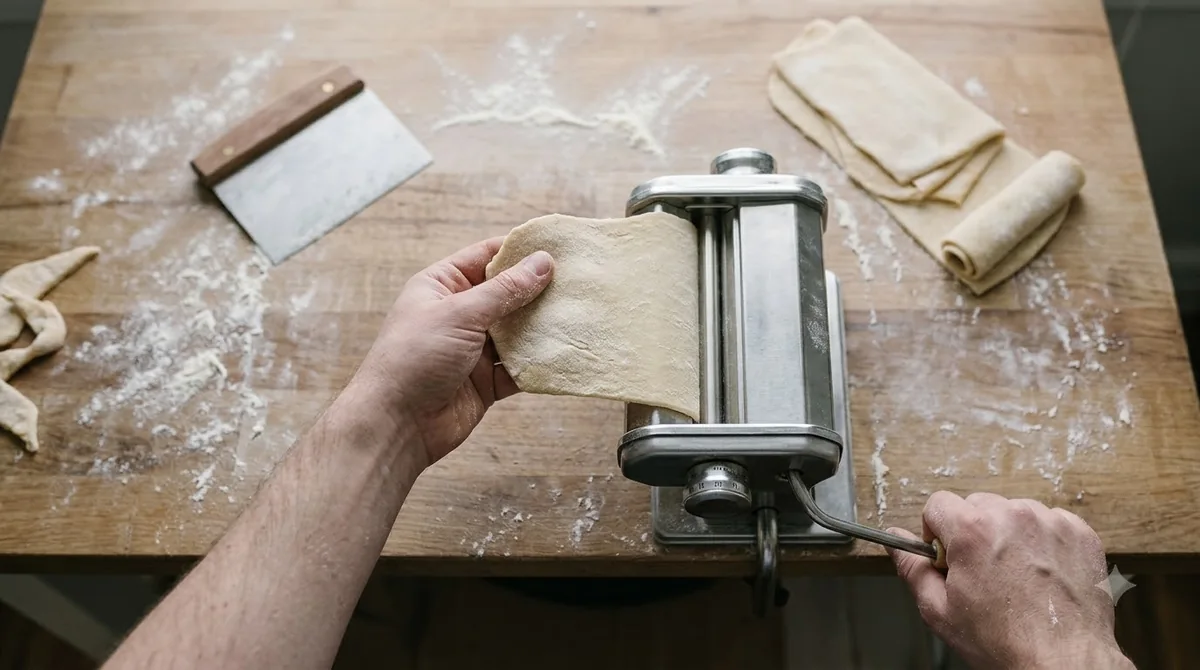
Dough ratios differ between tortellini pasta recipes, so choose a fresh egg pasta recipe, such as the fresh pasta dough recipe on this site, made with 00 flour or another flour you have tested and keep the dough wrapped while you make the filling. A dough that has rested is easier to roll thin, and a thin, supple sheet is what makes a tortellini fold cleanly around the filling.
The steps below follow the method from Great British Chefs’ tortellini guide, with notes where the two recipes differ.
- Take the pasta out of the fridge about 30 minutes before you start. Cut it in two and keep one half covered with a kitchen towel so it does not dry out.
- Roll the dough on a well-floured surface to 1 to 2 mm, which is the thinnest setting on a pasta machine such as the Marcato Atlas 150.
- Cut circles with an 8 cm pastry cutter.
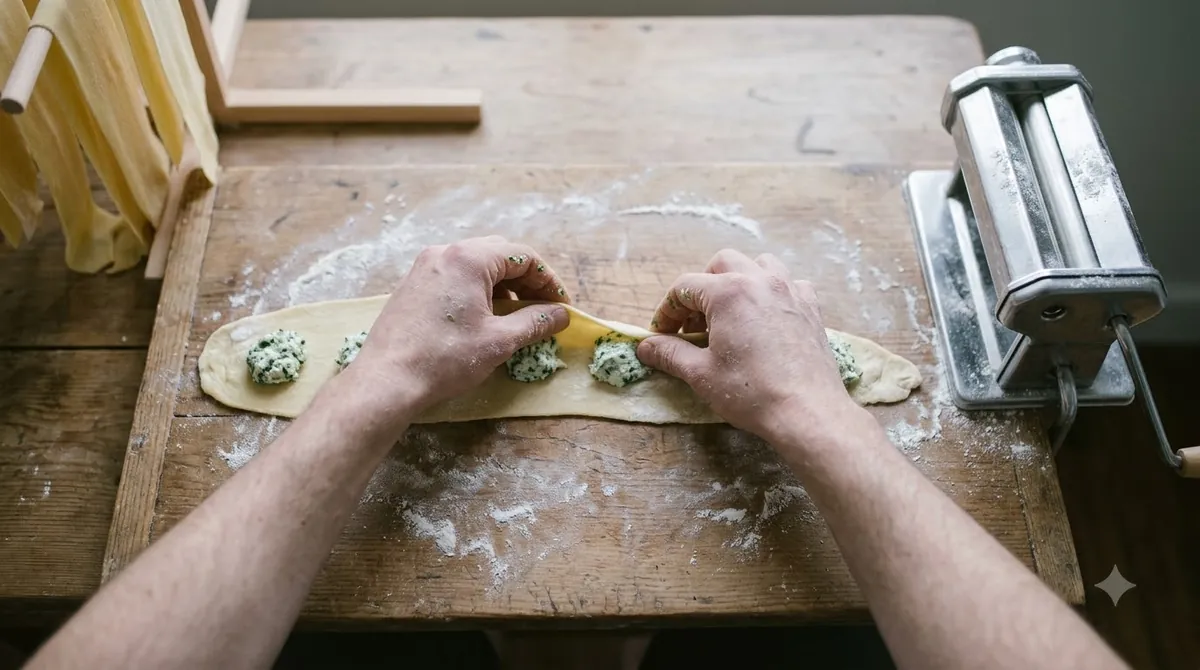
- Place one teaspoon of cool filling in the center of each circle.
- Brush the edge with a very small amount of water, fold the pasta over and seal the top. Work your fingers down the edges to push out air bubbles.
- Bring the corners together around your little finger and press to seal. Freeze finished pieces on a tray before you move them to a container.
Thickness matters more than most cooks expect when they make tortellini pasta. If the dough is too thick, the folded corners turn doughy and the ring cooks unevenly, so roll to the thinnest setting you can handle without tearing the sheet. Keep the circles you are not using under a kitchen towel, because dry edges will not seal.
Common Mistakes That Make Tortellini Burst
A wet filling is hard to shape, and it can burst in the water. Keep the filling cool and not too wet until you fold.
Do not overcrowd the pan either. Great British Chefs advises adding the tortellini without overcrowding, so cook them in batches if needed.
Measure the filling before you fold. One teaspoon per circle leaves room at the edge for sealing, so the seams close more easily. Overfilled tortellini pasta is harder to seal, which fits the advice on keeping the filling dry.
How to Cook Tortellini Pasta
Cook fresh tortellini in a large pan of salted boiling water for 3 to 4 minutes, then drain and toss with a little olive oil.
A large pan gives tortellini pasta room to move, which is why the cooking advice stresses not crowding the water. Stir the water to create a whirlpool before you add the pasta, as the Great British Chefs method suggests. Add the pieces gently so they do not stick together.
Great British Chefs gives 3 to 4 minutes for fresh tortellini. Timing shifts with the thickness of the dough and the size of each piece, so taste one to check the texture before you drain the pan. Lift the pieces out with a slotted spoon so the folded edges stay intact. If you make a large batch, freeze the finished pieces on a tray first and move them to a container afterward, which is the two-step method Great British Chefs recommends for homemade tortellini.
| Fresh tortellini | Cooked volume |
|---|---|
| 9 oz | About 2 1/4 cups |
Best Sauce for Tortellini
Tortellini pasta is traditionally served in capon broth, and Cooks Info also lists butter with cream and a tomato cream sauce as common choices.
| Serving | Style |
|---|---|
| Tortellini en brodo | Served in capon broth, the traditional way |
| Butter and cream | Tossed with butter and cream for a rich plate |
| Tomato cream sauce | A tomato and cream sauce |
The broth route is the one most tied to tradition. Cooks Info describes tortellini as rather like little dumplings, and says they are traditionally eaten in broth on Christmas Eve. The English Wikipedia entry names capon broth as the traditional serving, which is why many cooks treat the broth as the base of the dish.
Tortellini Pasta vs Tortelloni
Tortelloni is the larger version of tortellini, and only tortellini is traditionally cooked in and served with broth. Our guide to tortelloni vs tortellini covers the same split in more detail.
| Attribute | Tortellini | Tortelloni |
|---|---|---|
| Size | Smaller ring | Larger version |
| Traditional serving | In broth | Not traditionally cooked in broth |
| Name | The suffix -ini means small | The suffix -oni means big |
Wikipedia notes that tortellini are traditionally cooked in and served with broth, unlike tortelloni. Choose tortellini when you want a broth-based dish, and choose tortelloni when you want the larger version of the same shape. If you want a flat filled pasta cut from two sheets of dough, homemade ravioli is the next recipe to try, and agnolotti pasta is another stuffed shape from Piedmont.
Frequently Asked Questions
Can you freeze tortellini pasta?
Yes, you can freeze tortellini. Freeze the pieces on a tray first, then move them to a plastic container so they keep their shape. Great British Chefs recommends this two-step method for homemade pieces.
What kind of dough is used for tortellini?
Tortellini are made from a fresh pasta dough that is rolled thin and cut into rounds. Sources differ on the exact flour and liquid amounts, so follow a dough recipe you have tested.
Is tortellini always served in broth?
No. The traditional serving is in capon broth, but Cooks Info also lists butter with cream and a tomato cream sauce. Choose the sauce that fits the dish you are making.
What is the difference between tortellini pasta and cappelletti?
Cooks Info describes cappelletti as another stuffed pasta from Emilia-Romagna, filled with different meat stuffings. Both are small stuffed pastas from the same region, so the filling and the recipe are the main differences to check.
How much cooked pasta does fresh tortellini make?
According to Cooks Info, 9 oz of fresh tortellini makes about 2 1/4 cups cooked. Cook them in salted boiling water for 3 to 4 minutes, then drain and toss with a little olive oil.
Why do tortellini burst in the water?
A wet filling is hard to shape and may burst in the water, according to Great British Chefs. Keep the filling cool, use one teaspoon per piece, and seal the edges well.
Homemade tortellini pasta repays the effort when you want a proper broth or a rich cream sauce. For a weeknight meal, buying fresh or dried tortellini saves time, and making your own is best kept for the days you have time to fold.