

Cappelletti vs tortellini comes down to filling and shape, since both are small stuffed pastas from Emilia-Romagna. Tortellini are usually meat-filled and served in broth, while cappelletti are traditionally cheese-filled and can be served in broth or dry.
The cappelletti vs tortellini question gets confusing because the two overlap in many kitchens. Pick tortellini for a meat filling in broth, and cappelletti for a cheese filling you can serve dry.
| Pick | Best for | Key fact |
|---|---|---|
| Tortellini | A rich meat filling served in broth | Traditional filling of pork loin, prosciutto, mortadella and Parmesan |
| Cappelletti | A cheese filling, served in broth or dry | A home recipe uses 200 g ricotta and 100 g Parmigiano Reggiano |
Where Each Pasta Comes From
Tortellini come from Bologna or Modena, and cappelletti come from Emilia-Romagna and Marche, two regions that share a love of stuffed pasta.
Bologna and Modena both claim to be the birthplace of tortellini, so its origin is disputed. The name comes from tortello, a diminutive of torta, which means cake or pie. The earliest written recipe for a similar dish, called tortelletti, appears in 1570 in the work of Bartolomeo Scappi.
In the cappelletti vs tortellini pair, cappelletti have a looser paper trail. Their earliest possible reference is linked to Ferrara and an 1556 text by Cristoforo di Messisbugo, a cook at the Este court. Sources point to different heartlands, with some naming the Cesena, Ferrara and Reggio Emilia area and others naming Marche.
In practice, the regional labels blur the cappelletti vs tortellini line. Cappelletti are more common in Ravenna and Cesena than in Bologna, while tortellini are more closely tied to Bologna and Modena.
Shape and Size: Ring Versus Hat
Tortellini are small rings, while cappelletti are folded into plump hat-shaped pouches from dough squares of about 4 to 5 cm.
For cappelletti vs tortellini, the shape is the first clue. Tortellini are sealed and pinched into a ring. Wikipedia’s tortellini article links the shape to the Italian phrase ombelico di Venere, or Venus’s navel, which also gives the pasta its best-known legend. The same article gives a weight of about 2 g per piece. The legend ties the shape to Castelfranco Emilia, where an innkeeper glimpses Venus’s navel through a keyhole, and the town holds an annual festival in its honor.
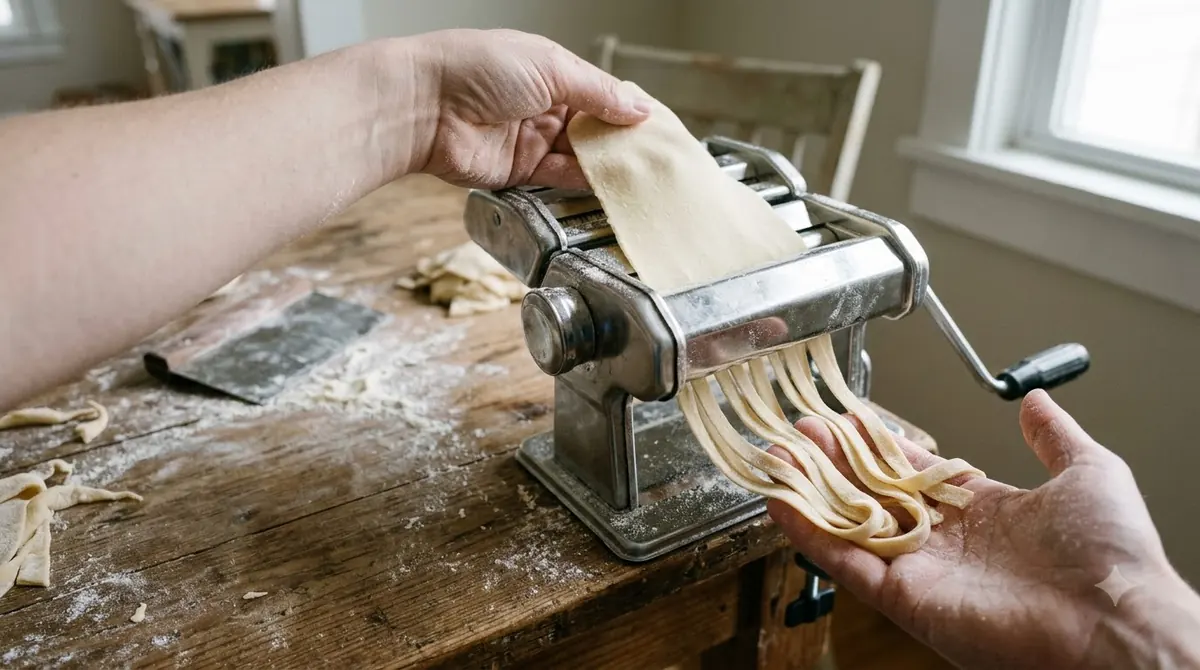
Cappelletti start as a square folded into a triangle, with the edges pinched around a finger. Thin, even sheets help, and rolling dough with a pasta machine makes them easier to cut into squares. The name means “little hats,” from cappello, the Italian word for hat. The result is a plump pouch rather than a closed ring. For a cappelletti vs tortellini comparison, the shape is the detail readers check first, and it is the easiest one to see on a plate.
Size is where sources disagree. Wikipedia describes cappelletti as larger than tortellini, with thicker dough. Taste Bologna gives a dough square of about 4 cm before filling. Check the dough size in the recipe you follow before you cut.
Filling: Meat Versus Cheese
Tortellini are traditionally filled with pork loin, prosciutto, mortadella, Parmesan, egg and nutmeg, while cappelletti are usually cheese-based.
The meat filling is the clearest difference in any cappelletti vs tortellini comparison. Tortellini are usually meat-filled, and the classic blend described on Wikipedia is pork loin, prosciutto, mortadella, Parmesan, egg and nutmeg.
Cappelletti fillings depend on the area. In Romagna the filling is mostly cheese and ricotta, seasoned with nutmeg and lemon zest, and sometimes includes capon breast. In Emilia the filling is more often chicken, pork, veal or beef, with Parmesan, eggs and nutmeg, according to the Wikipedia cappelletti article.
The rule even changes from town to town inside Romagna. Faenza’s version has no meat, while Imola’s is meat-based. Marche uses stewed meats blended with celery, carrot and onion, often with raw eggs, aged cheese, nutmeg and lemon zest. Umbria also favors meat, using a mix of veal, turkey or chicken and pork loin rather than cheese.
Cheese is the usual home filling for cappelletti, and the same idea appears in tortelloni and their ricotta filling, a larger cousin. Taste Bologna’s home recipe mixes ricotta and Parmesan with nutmeg, salt and pepper, so the filling is mild and creamy rather than meaty.
How Each Pasta Is Served
Tortellini are traditionally cooked in and served with capon broth, while cappelletti are served in broth or dry, with butter and sage or a sauce.
- Tortellini in brodo: cooked in and served with capon broth.
- Cappelletti in brodo: meat broth in Romagna, chicken broth in Faenza, and capon broth at Christmas in Marche. Taste Bologna says broth servings are especially common in winter and on Christmas Eve.
- Dry cappelletti: Ferrara’s larger version, the caplàz, is served with a meat sauce or with butter and sage.
- Modern cappelletti: ragù, tomato sauce or truffle sauce, as listed by Taste Bologna’s cappelletti guide.
Wikipedia calls dry cappelletti a recent creation, so broth is the older tradition in the cappelletti vs tortellini pair. Another filled pasta known for broth is broth-served anolini. For cappelletti vs tortellini, decide the serving style before you shape the pasta, since broth and dry service call for different plates and sauces.
Older recipes also differ from the cheese-only home version. Pellegrino Artusi’s 1891 cappelletti used capon, veal, ham and Parmigiano, according to Taste Bologna. So a cheese-only filling is not the only historical version.
Cappelletti vs Tortellini: Side-by-Side Comparison
The cappelletti vs tortellini table below sums up the usual differences by criterion. Filling and shape are the biggest gaps.
| Feature | Tortellini | Cappelletti |
|---|---|---|
| Shape | Small ring | Plump hat-shaped pouch |
| Typical filling | Pork loin, prosciutto, mortadella, Parmesan, egg, nutmeg | Ricotta and Parmesan in Romagna, meat in Emilia |
| Traditional serving | Capon broth | Meat or chicken broth, or dry with butter and sage |
| Main area | Bologna and Modena | Romagna and Marche, more common in Ravenna and Cesena |
| Size | About 2 g per piece | Sources disagree on dough square size, about 4 to 5 cm |
The table shows that filling and serving style decide most of the cappelletti vs tortellini difference. Shape matters too, since a ring and a hat-shaped pouch look different once cooked.
Which Should You Make at Home?
Make tortellini for a meat filling in broth, and cappelletti for a cheese filling you can serve dry or in broth. Use the cappelletti vs tortellini checklist below to decide, and start from a thin fresh egg pasta dough for either shape.
- Choose the filling first. Meat suits tortellini, while ricotta and Parmesan suit cappelletti.
- Choose the serving. Broth works for both, but dry cappelletti need a sauce such as butter and sage.
- Choose the shape you can fold well. Tortellini need a tight ring, and cappelletti need a square folded into a triangle.
The cappelletti vs tortellini choice also depends on the town. In Ferrara, the caplìt has a meat-and-cheese filling and the larger caplàz has a pumpkin filling, while Faenza’s cappelletti have no meat, according to Wikipedia. Family and town recipes vary a lot, so treat these as traditional patterns rather than fixed rules. If folded shapes feel fiddly, simpler homemade ravioli use the same dough with an easier fold. If a recipe calls for a different filling, follow it and use the shape that matches the method. For another stuffed pasta to compare, pansoti pasta is the Ligurian triangle usually served with walnut sauce.
Frequently Asked Questions
Are cappelletti and tortellini the same pasta?
No, but the cappelletti vs tortellini pair is a close one. Both are small stuffed pastas from Emilia-Romagna. Tortellini are ring-shaped with a traditionally meat filling, while cappelletti are hat-shaped and usually cheese-based.
Why are cappelletti called little hats?
The name comes from cappello, the Italian word for hat, and describes the folded pouch. The pasta is made by folding a dough square into a triangle and pinching the edges around the filling.
Is tortellini always filled with meat?
The traditional filling is meat, made from pork loin, prosciutto, mortadella, Parmesan, egg and nutmeg. Wikipedia describes this as the traditional recipe, so check the label or the recipe if you want a meatless version.
Which is bigger, cappelletti or tortellini?
Wikipedia describes cappelletti as larger than tortellini, but the sources do not agree on exact sizes. Taste Bologna gives a dough square of about 4 cm before filling, so compare the dough size in the recipe you use.
Can cappelletti be served dry?
Yes. Ferrara’s larger caplàz is served dry with a meat sauce or with butter and sage. Wikipedia calls dry cappelletti a recent creation, so broth remains the older way to serve them.
Which pasta is older?
Cappelletti have the earliest written reference found in these sources, an 1556 text by Cristoforo di Messisbugo. Tortellini appear as tortelletti in 1570 in Bartolomeo Scappi’s work, so written records do not settle which shape came first in practice.
If you are choosing a pasta for a holiday broth, tortellini are the classic pick. Cooks who want a cheese filling and a choice of broth or dry serving should choose cappelletti. Start with the filling you like best when you choose between cappelletti vs tortellini, then pick the shape that matches it.