
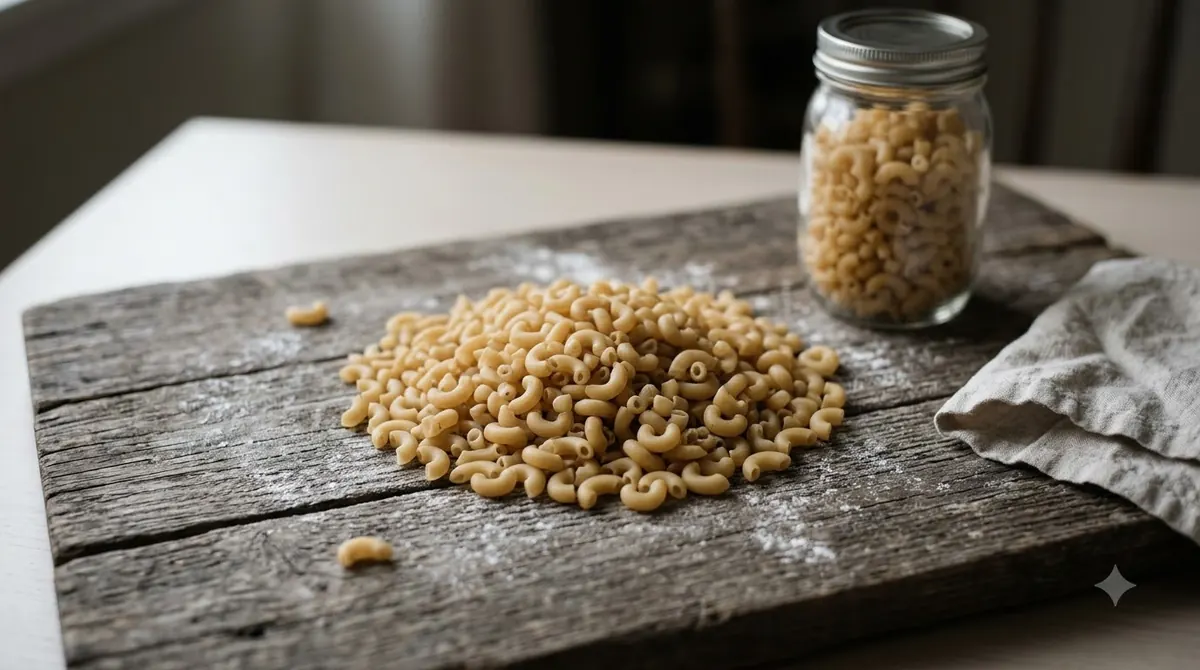

Elbow macaroni pasta is a short, curved tube pasta made from durum wheat semolina and water. In the US, elbow pasta and elbow macaroni are the same product. Most people use it for mac and cheese, but it also works in baked pasta dishes and cold salads.
What Is Elbow Macaroni Pasta?
Elbow macaroni pasta is a small, hollow C-shaped tube that is commonly sold dried. The shape is the reason it holds sauce so well, and the name comes from its bent form.
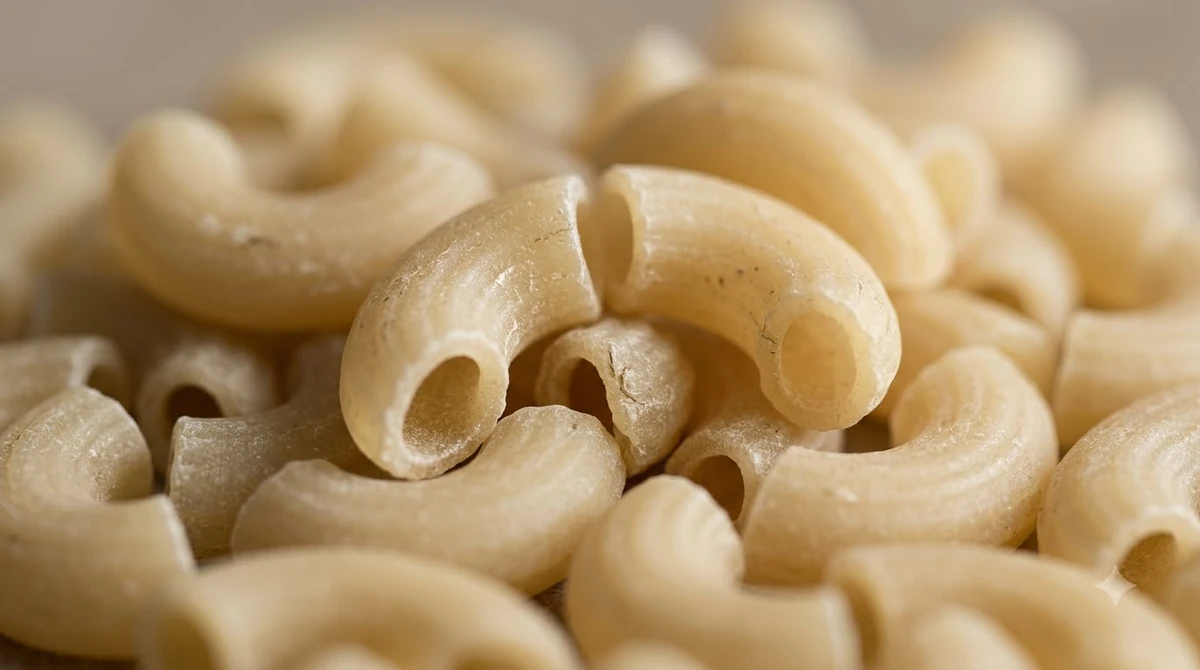
Italians call it gomiti, which means elbows. In Italy, the pasta is traditionally associated with Northern Central Italy, and it became widely available once manufacturers could form it with bronze dies on a large scale, a method explained in this guide to bronze cut pasta.
Here is how the names work in the US:
- Elbow macaroni: the full name on most boxes.
- Elbow pasta: a shorter name used on many brand pages and recipes.
- Macaroni: a broad term, covered in our guide to macaroni pasta shapes, which can also refer to other tube shapes.
Elbow macaroni pasta is common in stovetop mac and cheese, baked casseroles, cold pasta salads and meat sauces such as bolognese, which the tubes hold well.
The word macaroni is much older than the curved shape. According to Wikipedia’s macaroni article, the English word first appears as “makerouns” in The Forme of Cury from 1390, which contains the earliest recorded macaroni and cheese recipe. That recipe likely did not describe the elbow shape, which came later with industrial production.
How Elbow Macaroni Pasta Is Made
Elbow macaroni pasta is made by pushing a stiff dough of durum semolina and water through a die, then cutting and drying the tubes. The curve is not added by hand. It comes from the extrusion itself.
Manufacturers push the two sides of the tube out at different speeds, so each tube bends as it leaves the die. Home machines can make macaroni too, but most commercial elbows come from large-scale extrusion.
US federal rules set the basic standard for macaroni products. According to the federal macaroni product regulation at 21 CFR 139.110, macaroni products are dried formed units of dough made from semolina, durum flour, farina or flour, mixed with water. Macaroni is tube-shaped, with a diameter of more than 0.11 inch but not more than 0.27 inch.
How to Cook Elbow Macaroni Pasta
Cook elbow macaroni pasta in plenty of boiling salted water until it is al dente, which usually takes 5 to 6 minutes. According to DeLallo’s elbow pasta guide, the standard ratio is 5 quarts of water and 2 tablespoons of sea salt per pound of pasta.
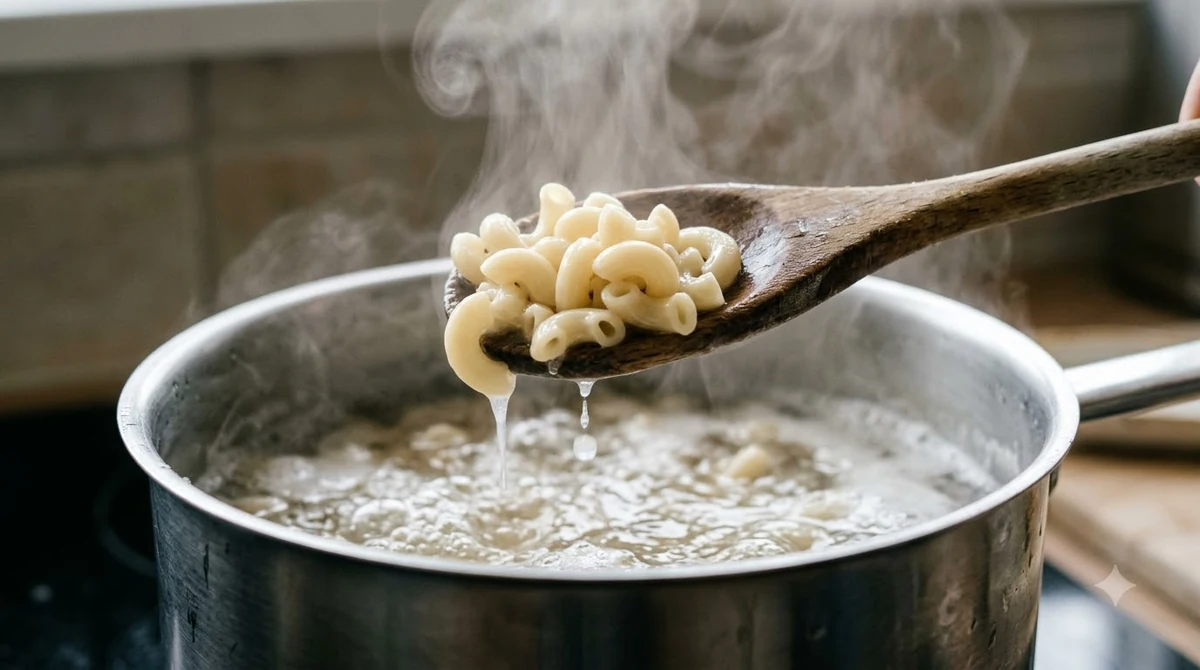
- Bring at least 5 quarts of water to a rolling boil for each pound of pasta.
- Add 2 tablespoons of salt, then stir in the elbows.
- Cook for 5 to 6 minutes, stirring once or twice so the tubes do not stick.
- Taste a piece at the 5-minute mark. It should be firm to the bite but cooked through.
- Drain and use right away, or rinse only if the pasta is for a cold salad.
Use a large pot so the water returns to a boil quickly after you add the pasta, and stir during the first minute so the tubes do not clump. Use the stirring time to check the pot, because the cooking window is short.
For baked dishes or soups, cook the pasta a minute short of al dente. It keeps cooking in the oven or the hot broth, and it will turn soft if you cook it fully first.
Yield matters when you shop, especially for a crowd. The table below shows how much pasta you get from one pound.
| Measure | Amount |
|---|---|
| Dried elbow macaroni, 1 pound | 4 to 5 cups dry |
| Cooked elbow macaroni, from 1 pound | About 8 cups cooked, depending on brand |
| Water for 1 pound of pasta | 5 quarts |
| Salt for 1 pound of pasta | 2 tablespoons |
Package times can differ from brand to brand, so check the cooking time printed on your box and taste before you drain.
Homemade Elbow Macaroni Pasta
You can make homemade elbow macaroni pasta with a rolling pin, a sharp knife and a thin rod such as a skewer or dowel. A common starting dough uses 200 grams of semolina, 85 grams of water and 15 grams of olive oil.
- Mix the water and oil into the semolina with a fork, then knead by hand for at least 5 minutes until the dough is smooth.
- Cover the dough and rest it at room temperature for 20 to 30 minutes so the flour fully absorbs the liquid.
- Roll the dough to about 1 millimeter thick, then cut it into 2.5 centimeter squares.
- Wrap each square around a thin rod, pressing and rolling until the dough closes into a tube, then slide it off.
- Lay the tubes out apart and let them dry for 24 to 48 hours, depending on thickness, before cooking or storage.
Homemade pasta must be completely dry before you store it at room temperature, or it may mold. Freezing is a safer choice if you are not sure the tubes are dry. Boil fresh tubes in at least 6 quarts of well-salted water for about 3 minutes, then cut one in half to check that no dry white center remains.
Plan on about 90 to 100 grams of flour per person when you scale the recipe, according to the same handmade macaroni guide. Frozen homemade macaroni needs about 2 to 3 extra minutes in boiling water, so add that time before you check for doneness.
Elbow Macaroni Substitutes
The best substitutes for elbow macaroni are cavatappi, shells, penne and shellbows, because each has a hollow or ridged shape that catches sauce. Use the one that matches your dish. Each option is a common stand-in when you cannot find elbow macaroni pasta at your store.
| Pick | Best for | Key fact |
|---|---|---|
| Cavatappi | Mac and cheese | Curly tube that holds cheese sauce well |
| Shells (conchiglie) | Baked pasta dishes | Cups trap sauce and small pieces |
| Penne | Casseroles and meat sauces | Tube shape with a similar bite |
| Shellbows | Cold pasta salads | Small shape that stays easy to forkful |
Choose by the job the pasta has to do. For a creamy cheese sauce, cavatappi is the closest match because its curl grabs sauce along the tube. For a baked casserole, shells work well because the cups hold sauce and small pieces of filling. Elbow macaroni pasta is still the simplest pick for a classic stovetop mac and cheese.
If you want a shape that is similar in size but not tubular, fusilli and rotini also hold cheese sauce well. See rotini cooking times and sauce pairings. Cook any substitute to the time on its package, since tubes and shells vary in thickness.
Frequently Asked Questions
Is elbow pasta the same as elbow macaroni?
Yes. In the US, elbow pasta and elbow macaroni refer to the same short, curved tube pasta. The names are used interchangeably on packaging and in recipes.
Why does elbow macaroni curl?
The curl comes from extrusion. The two sides of the tube leave the die at different speeds, so the tube bends as it comes out. This is why the shape is consistent from one batch to the next.
Can you cook elbow macaroni pasta ahead for a bake?
Yes, but cook it about a minute short of al dente. Cooked elbow macaroni pasta keeps softening once it sits in sauce, so toss it lightly with a little oil and spread it on a tray until the bake goes in. Drain it and spread it out so it does not clump.
How long does homemade elbow macaroni pasta take to dry?
Homemade elbow macaroni needs 24 to 48 hours to dry, depending on thickness. It must be fully dry before storage. If you are unsure, freeze it instead of storing it on the shelf.
How much dried elbow macaroni do you need per person?
One pound of dried elbow macaroni yields about 8 cups cooked, which is enough for several side-dish servings. Use the yield table above to scale the amount to your group.
Buy dried elbow macaroni pasta when you need a quick weeknight meal. Make the homemade version when you have a day to dry it and want a fresh texture for a special dish.