
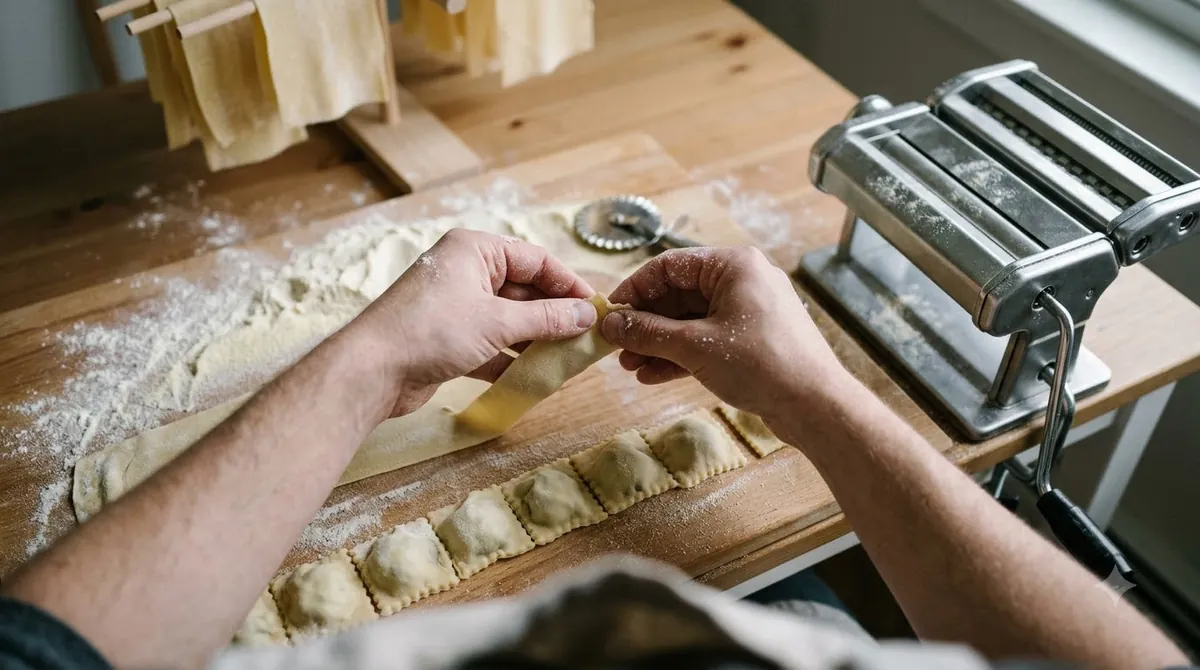

Agnolotti pasta is a filled egg pasta from Piedmont, in northwest Italy. Traditionally it is square, with sides of about one or two inches, although half-moon shapes also exist. Below are the dough, shaping, cooking and sauce steps, with measurements from published recipes.
The smaller agnolotti del plin is pinched by hand and is almost always filled with meat. For your first batch, a simple vegetable or cheese filling lets you practice the seal before you move to meat.
Origins and Shape of Agnolotti
Agnolotti pasta comes from Piedmont, and the traditional form is a square parcel with sides of about one or two inches.
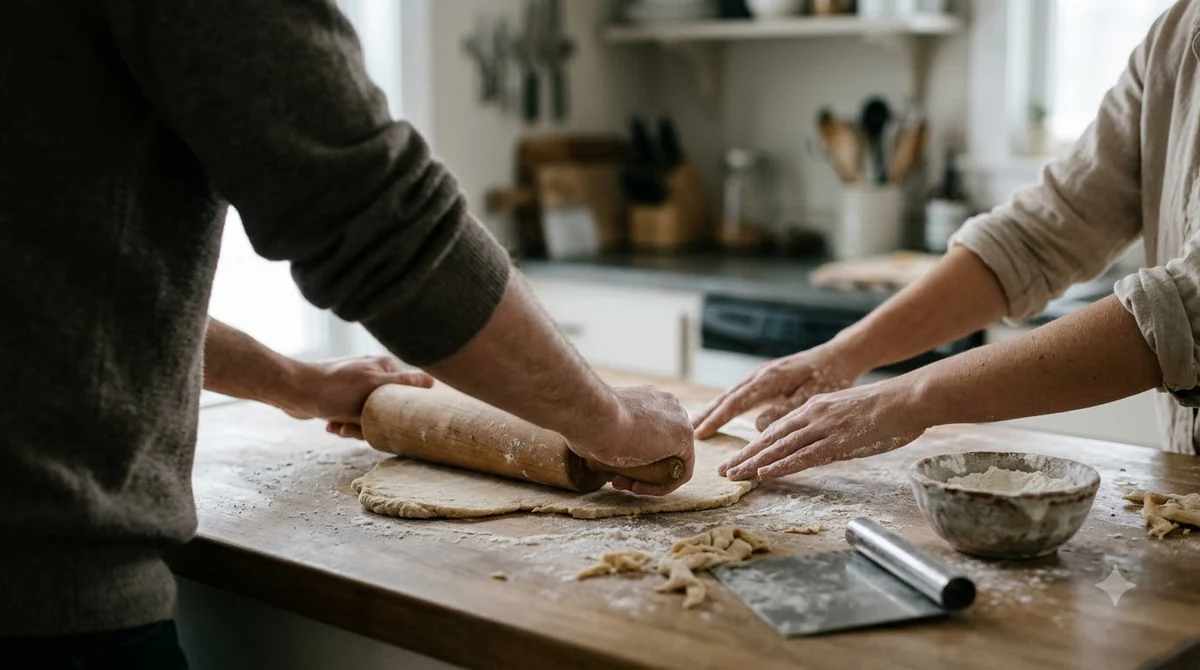
According to Wikipedia’s agnolotti entry, the earliest shape was semicircular, and the square form became the traditional standard. A legend links the name to a cook called Angiolino from Montferrat, but the article presents this as a story rather than a documented fact.
Agnolotti pasta is the general name for the whole family, and agnolotti del plin is one variant of it. Each mound of filling is sealed by pinching the dough between thumb and forefinger, which is where the word plin, meaning pinch, comes from. For a flat filled pasta instead, see making ravioli from two sheets.
Agnolotti Fillings and Regional Styles
Agnolotti pasta fillings fall into two groups: di magro, which uses vegetables, and di grasso, which uses meat.
- Di magro: vegetable fillings, such as spinach and ricotta for a vegetarian version.
- Di grasso: meat fillings, such as roasted meat or a braised mixture.
- Robiola: a cheese that is a popular filling choice in Piedmont.
America’s Test Kitchen uses braised beef short ribs for its filling. The recipe simmers 1 1/2 pounds of boneless short ribs with savoy cabbage, onion, garlic, rosemary, red wine and beef broth, covered on medium-low for about 1 hour, until tender. The meat is then processed with 1/4 cup of the reserved cooking liquid, 1 ounce of Grana Padano, 1 large egg and 1/8 teaspoon of nutmeg. Chill the filling for 30 minutes before piping, and note that it keeps for up to 24 hours.
Wikipedia also lists regional variants of agnolotti pasta with rabbit and porcini cream, sausage and radicchio, and swordfish. Those examples show how far the filling can range.
How to Make Agnolotti Pasta Dough
Homemade agnolotti pasta dough uses 2 cups, or 10 ounces (283 grams), of all-purpose flour and 3 large eggs, according to America’s Test Kitchen.
Agnolotti pasta dough is simple enough to make by hand or in a food processor, and it needs a short rest before rolling. If you enjoy fresh egg pasta, pappardelle pasta is a good next dough to try.
- Process the flour and beaten eggs in a food processor until the mixture forms crumbs.
- If the dough still looks like small pebbles, add water in 1/2 teaspoon increments.
- Knead by hand for 1 to 2 minutes until the dough is smooth.
- Wrap the dough in plastic wrap and rest it for at least 15 minutes, and up to 2 hours.
The full recipe makes about one pound of pasta and serves 4 to 6 people, so you can halve it for a smaller batch. The original method comes from America’s Test Kitchen fresh pasta recipe, which lists the same flour and egg amounts. For more on kneading and resting egg dough, see the egg pasta dough guide.
How to Shape Agnolotti Pasta
Roll the dough until it is very thin, then pipe filling dots about 3 cm apart, and fold, pinch and cut each agnolotti.
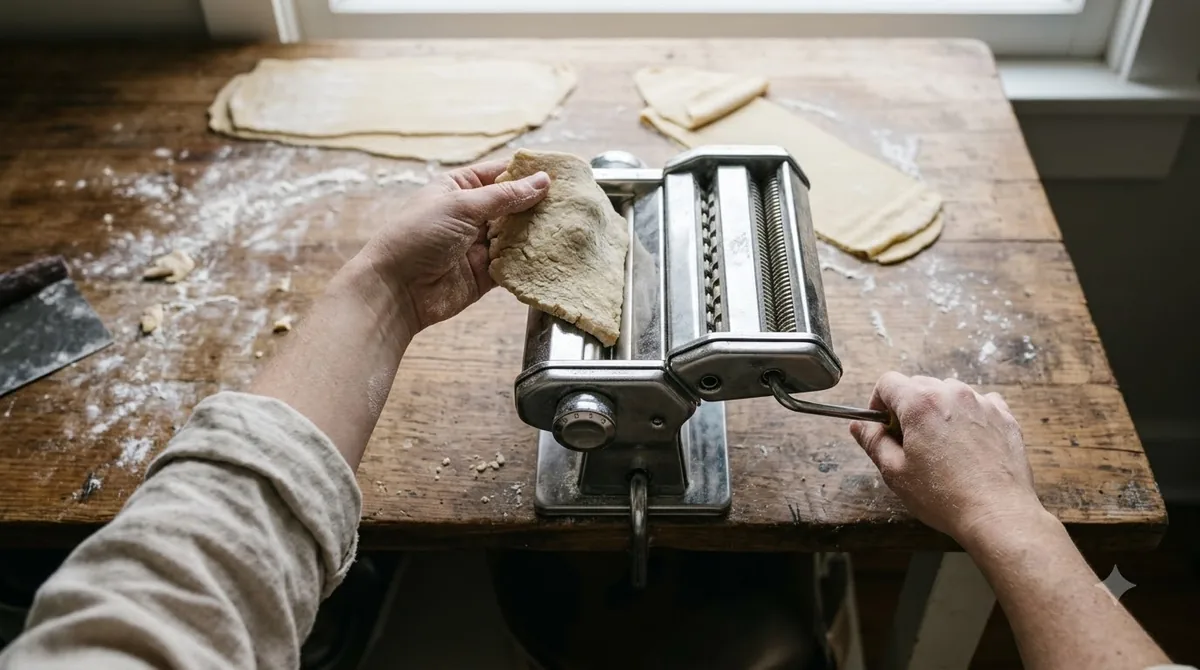
Great British Chefs describes sheets about 2 mm thick and 30 cm long, with 1/2 teaspoon of filling piped about every 3 cm, roughly five dots per sheet.
- Trim the rolled dough into a strip about 4 inches wide.
- Pipe the filling down the center of the strip, leaving a 1-inch border at each end.
- Brush the edges with water, fold the strip over, and press to seal the long edge.
- Pinch the dough between each mound of filling at 1-inch intervals.
- Trim the ends and cut between the pinches with a pastry wheel or sharp knife.
- Let the pieces dry uncovered for about 30 minutes before cooking.
America’s Test Kitchen says one batch of this dough yields about 75 agnolotti from 5 pieces of dough. Keep the agnolotti pasta pieces spaced apart while they dry.
The test kitchen rolls the dough through progressively narrower settings until each sheet is very thin and semi-transparent, about setting 7 on the machine it recommends. A manual roller such as the Marcato Atlas 150 manual does the same job, and cleaning a pasta machine afterward keeps it ready for the next batch. Trim the strip to width before you pipe, so the filling sits in the center of each sheet. If you prefer a folded half-moon to a pinched square, mezzelune pasta uses one round of dough instead.
How to Cook Agnolotti Pasta
Cook fresh agnolotti pasta for 3 to 4 minutes in 4 quarts of gently simmering salted water, or 4 to 5 minutes if they are frozen.
- Bring 4 quarts of water and 1 tablespoon of salt to a boil.
- Add half of the agnolotti at a time and keep the water simmering gently.
- Cook until al dente: 3 to 4 minutes for fresh pieces, or 4 to 5 minutes for frozen.
- Drain and toss with sauce, or with olive oil for a simpler finish.
The longer time applies to frozen agnolotti, so check the first piece for doneness before you drain the batch.
Best Sauce for Agnolotti
A brown butter and toasted hazelnut sauce finished with red wine vinegar works well with agnolotti pasta, according to America’s Test Kitchen.
Brown 8 tablespoons of unsalted butter with 1/4 cup of chopped toasted hazelnuts and 1/4 teaspoon of salt over medium-high heat. Swirl constantly for about 3 minutes, until the butter turns golden and nutty.
Off the heat, stir in 2 teaspoons of red wine vinegar. Toss the cooked agnolotti with 2 tablespoons of cooking water, then sprinkle with 2 tablespoons of minced parsley. The full steps appear in America’s Test Kitchen agnolotti recipe.
Wikipedia lists two traditional agnolotti pasta sauces: braise sauce (al sugo di brasato) and roast sauce (al sugo di arrosto). Great British Chefs also suggests tossing the cooked pasta in olive oil.
Common Mistakes When Shaping Agnolotti
A common shaping mistake is pinching the dough too tightly, which can make the filling burst out during cooking.
- Pinching too tightly, which can make agnolotti burst open in the water.
- Rolling the sheet too thick, when it should be very thin and semi-transparent.
- Resting the dough for less than 15 minutes.
- Skipping the drying time of about 30 minutes before cooking.
Cook one test piece before the full batch. If the seal holds through the boil, the rest of the agnolotti pasta is likely to hold too.
Frequently Asked Questions
What is agnolotti pasta?
Agnolotti pasta is a filled egg pasta from Piedmont, in northwest Italy. It is traditionally square, with sides of about one or two inches. Fillings are usually roasted meat or vegetables, and some cooks add robiola cheese.
How long do you boil agnolotti?
Boil fresh agnolotti for 3 to 4 minutes, until al dente. Frozen agnolotti need 4 to 5 minutes. Cook half the batch at a time in 4 quarts of salted water, so the water keeps simmering, according to America’s Test Kitchen.
How much dough does agnolotti need?
The America’s Test Kitchen fresh egg dough for agnolotti pasta uses 2 cups, or 10 ounces (283 grams), of flour and 3 large eggs. It makes about one pound of pasta and serves 4 to 6 people, so halve it for a smaller batch.
Should you pinch agnolotti tightly?
No. Pinching too tightly can make agnolotti burst open during cooking, according to America’s Test Kitchen. Pinch firmly enough to seal the dough around each mound of filling, then cut the pieces apart and let them dry.
Can you make the agnolotti filling ahead?
Yes. America’s Test Kitchen chills its braised beef filling for 30 minutes and says it keeps for up to 24 hours. Keep it covered in the refrigerator until you are ready to pipe. The same recipe also says the dough should rest at least 15 minutes before rolling.
Which sauce goes best with agnolotti?
Brown butter with toasted hazelnuts and a splash of red wine vinegar is a strong choice for agnolotti pasta, according to America’s Test Kitchen. Traditional Piedmont options include braise and roast sauces. Toss the cooked pasta with a little cooking water so the sauce clings.
Start with a simple filling and cook a small test batch first. Your first agnolotti pasta will take longer, but the steps repeat quickly once the dough and seal feel familiar, and the brown butter sauce makes a dependable finish.