
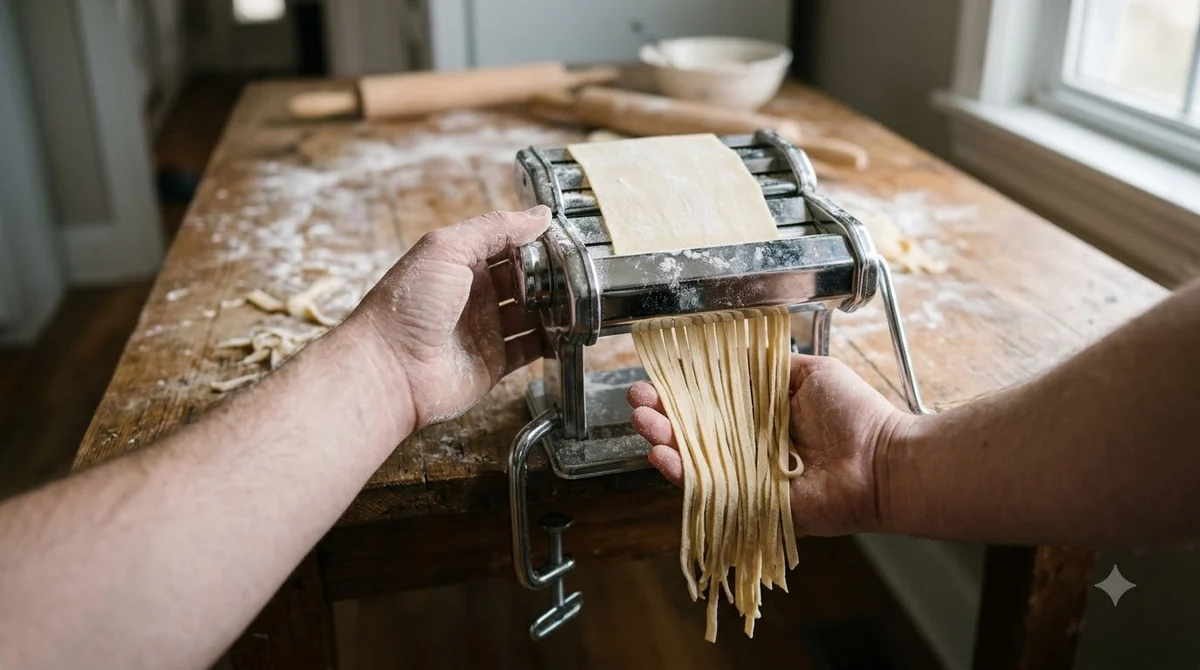

How to use a pasta machine comes down to three steps: clamp it to a counter, roll the dough through the widest setting, then step down until the sheet is thin enough. The machine does the stretching, so your job is steady feeding and well-rested dough. The same sequence works on most hand-crank models, even if the dials look different.
What You Need Before You Start
A hand-crank pasta machine, a simple egg or semolina dough, and a stable work surface are the basics. You do not need a stand mixer or any special tools to learn how to use a pasta machine.
- A hand-crank pasta machine with two smooth rollers and a thickness dial.
- A clamp or a sturdy counter edge to hold the machine steady while you crank.
- Semolina or flour for dusting the rollers, the sheet and your work surface.
- A dough of semolina, 00 flour, eggs, salt and a little cool water.
- A cutting attachment, if your model includes one.
Before you learn how to use a pasta machine, check the manual that came with yours, because models differ. The Marcato Atlas 150 manual (see our Marcato Atlas 150 manual guide), for example, lists 10 thickness settings from 0.5 mm to 4.8 mm and supplies tagliatelle, tagliolini and lasagne attachments. Other brands use different numbering, so the sheet itself is your best guide.
How to Use a Pasta Machine: Setting It Up
Learning how to use a pasta machine starts with clamping it to a counter, opening the rollers and setting the dial to the widest setting before any dough goes in. A steady base and an open roller gap make the first pass much easier.
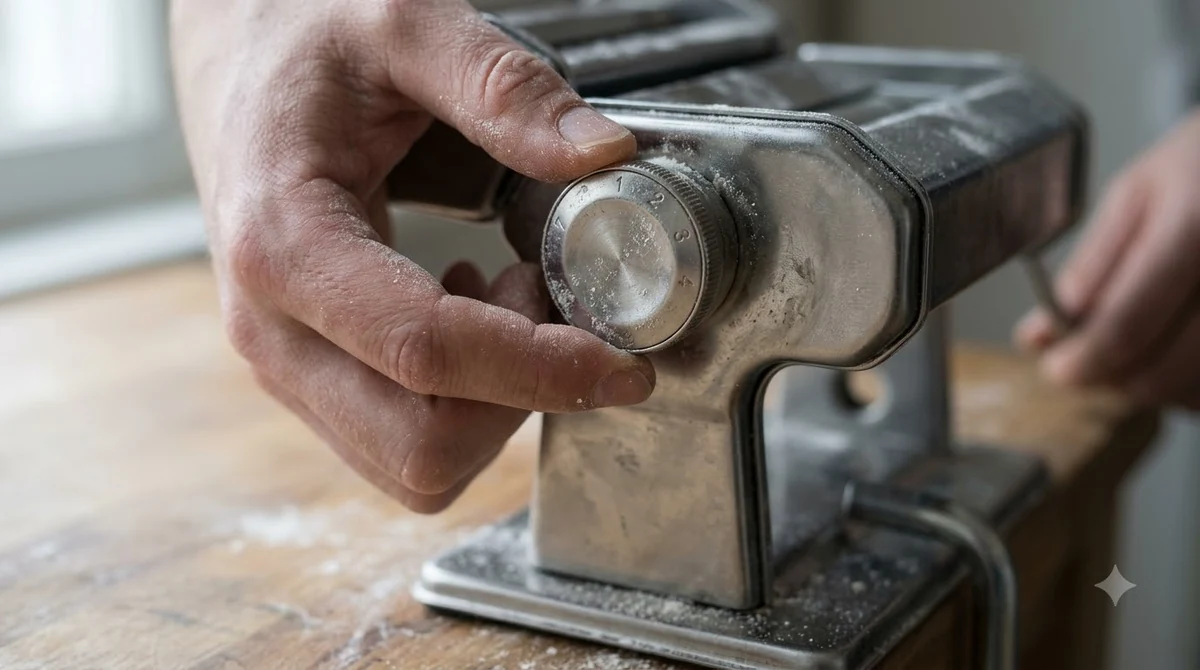
Fix the machine to the counter edge before you start cranking. The Marcato Atlas 150 manual includes a screw clamp for securing the machine to the work surface. A machine that shifts while you turn the handle makes the sheet tear and wastes time.
Turn the dial to the widest setting, which leaves the largest gap between the rollers. Keep a small bowl of semolina within reach. Dust your hands and the rollers lightly, because a little dust stops the dough from sticking as it passes through.
Making the Dough
A basic semolina dough (for a plain egg dough, see our fresh pasta dough recipe) can be made from 285 g semolina, 87 g 00 flour and 3 large eggs, then rested for at least 30 minutes. Mix the dry ingredients first, make a well, and add the eggs.
Bring the mixture together with cool water. King Arthur’s semolina pasta recipe calls for 3 to 4 tablespoons of water, added only as needed. Knead by hand for a couple of minutes until the dough is smooth and firm, then wrap it so it does not dry out.
In how to use a pasta machine, the rest matters as much as the kneading. According to King Arthur’s semolina pasta recipe, the dough should rest at least 30 minutes at room temperature, or up to overnight in the refrigerator. Dough straight from the refrigerator needs at least 30 minutes to warm up before you roll it.
Cut the rested dough into portions that are easy to handle, a habit that makes how to use a pasta machine far less frustrating. Smaller pieces are simpler to flatten and feed through the rollers, especially on your first try.
Rolling the Dough Through the Machine
When you learn how to use a pasta machine for rolling, run the dough through the widest setting once, fold it in thirds, then pass it again. Step down one setting at a time until you reach setting 7, which King Arthur describes as about 0.8 mm on a standard pasta roller.
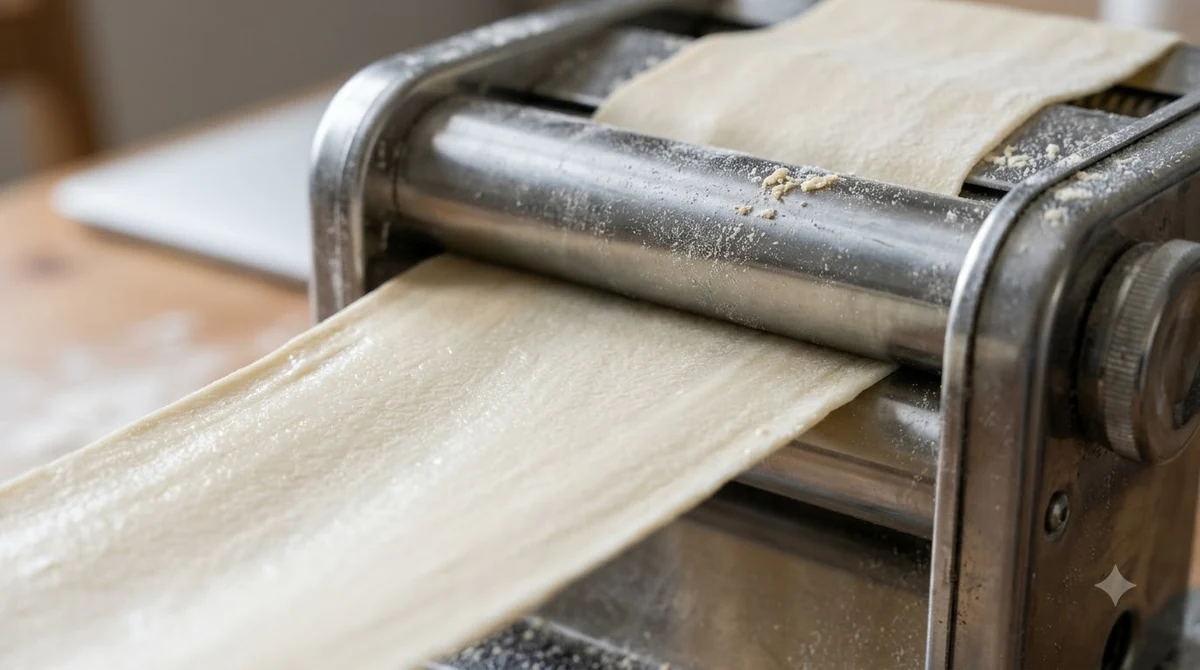
Flatten a portion into a rough rectangle that fits the widest setting, which is the first hands-on step in how to use a pasta machine. Dust it lightly, then feed one end into the rollers while turning the crank at a steady pace. Catch the sheet on the other side with your free hand so it does not fall or fold on itself.
Fold the sheet in thirds like a letter, dust it again and pass it through the same setting a second time. This step helps the dough form an even rectangle and smooths out the texture. After that, move the dial down one setting and pass the sheet through once. Repeat until the sheet is thin enough for your shape.
Setting numbers are not the same on every machine, so anyone learning how to use a pasta machine should note the table below, which compares the figures from the two sources used in this guide.
| Attribute | Marcato Atlas 150 manual | King Arthur recipe |
|---|---|---|
| Number of settings | 10 settings | Not stated |
| Thinnest stated | 0.5 mm | Not stated |
| Thickness at setting 7 | Not stated | About 0.8 mm on a standard roller |
The thickest setting on the Atlas 150 is 4.8 mm, which suits thick pasta. Use the widest setting for most of the rolling, then move down gradually. Stop when the sheet is thin enough for your shape, and check that it does not tear as it feeds through.
Cutting the Pasta
The last step in how to use a pasta machine is cutting: feed a rested, thin sheet into the cutting attachment to get even strands such as tagliatelle or fettuccine, or cut the sheet by hand with a sharp knife. Long strands such as fettuccine are the easiest first shape when you practice, because uneven cuts show up quickly.
Attach the cutter as your manual describes, then guide the sheet in slowly with both hands. Let the strands drop onto a surface lightly dusted with semolina so they do not clump together. Tagliatelle and tagliolini attachments are common on hand-crank machines, and the Atlas 150 manual lists both.
If your machine has no cutter, you can still make strands by hand. Dust the sheet, fold it loosely into a flat roll, then slice across the roll with a sharp knife. King Arthur cuts fettuccine about 1/2 inch wide this way. Shake out the strands and dust them again so they stay separate.
Lasagne sheets need no cutting at all, so you can stop after rolling if you only want to practice how to use a pasta machine. Lay a long, even sheet flat on a floured tray and cut it to the length of your dish. To fill your sheets, see how to use a KitchenAid ravioli maker with a stand mixer.
Common Mistakes to Avoid
Three habits cause much of the early trouble when people first learn how to use a pasta machine: skipping the rest, stepping down too quickly and forcing dough through a setting that is too thin for it. Each one is easy to fix once you know what to look for.
- Skipping the rest makes the dough harder to roll and more likely to tear.
- Stepping down too fast can leave a sheet that is uneven or too thick in places.
- Forcing the crank means the sheet is too thick for that setting, so go back one step.
- Leaving dough uncovered lets the surface dry out, which causes cracks as it rolls.
- Using too much flour dries the sheet and makes strands stick, so dust lightly.
If a sheet keeps tearing, check the dough before blaming the machine. A dough that is too dry or too wet behaves differently at every setting, so add water or flour a small amount at a time and rest it again before rolling.
Cleaning Up After Use
After you learn how to use a pasta machine, clean the rollers and cutter by hand with warm water and mild dish soap, then dry them right away to prevent water spots. The Marcato Atlas 150 manual specifically says the machine is not dishwasher safe and recommends hand washing only.
The same manual warns against steel wool, scouring pads and aggressive cleaners, because they can scratch the surface, which the manual lists as anodized aluminum. Brush off dried dough while it is still dry and wipe the rollers before any water touches them. Our full guide to cleaning a pasta machine goes further. Electric machines have their own instructions and are not covered by these steps; for a stand mixer attachment, see our KitchenAid pasta extruder manual guide.
Frequently Asked Questions
Can I use a pasta machine without a clamp?
Yes, if the machine stays still on a heavy counter while you crank, which is the core of how to use a pasta machine safely. The Marcato Atlas 150 manual includes a screw clamp for fixing the machine to the work surface, which is the safer option for regular use. Check the instructions for your own model before you decide.
How many passes does the dough need?
There is no single count for every recipe when you learn how to use a pasta machine. Pass the dough through the widest setting once, fold it in thirds and pass it again. Then go down one setting at a time, passing the sheet once at each, until it reaches the thickness your shape needs.
How do I stop the dough from sticking?
Dusting is the simplest habit in how to use a pasta machine well: dust the sheet lightly with semolina or flour after each pass, and keep the work surface dusted. Too much flour can dry the sheet and make it harder to feed, so use a light hand and brush off the excess before the next pass.
Can I wash the pasta machine in the dishwasher?
No. The Marcato Atlas 150 manual states that the machine is not dishwasher safe and recommends washing by hand with warm water and mild dish soap. Dry it immediately afterward to prevent water spots on the metal.
Can I cut pasta without the cutting attachment?
Yes. Dust the rolled sheet, fold it loosely into a flat roll, then slice across it with a sharp knife. Shake out the strands and dust them again so they do not stick together while you handle them.
Once you know how to use a pasta machine, start with one simple dough and one shape, such as fettuccine, and repeat the same steps a few times before trying filled pasta. If your model is electric or uses a different attachment set, follow its manual first.