
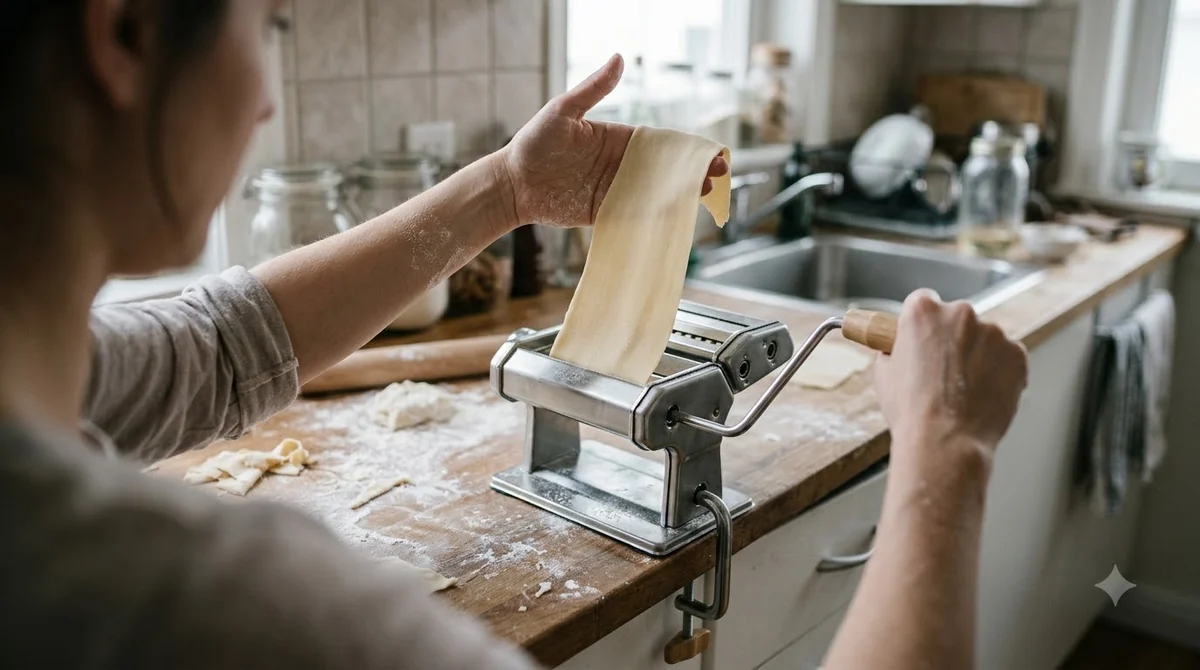

Stringozzi pasta is a long, rectangular noodle from Umbria, in central Italy, traditionally made from flour and water. The name points to its shape, which sources compare to old leather shoelaces. The sources disagree on the flour, the width and the sauce, so this guide shows where they differ.
What Is Stringozzi Pasta?
Stringozzi is an egg-free Umbrian pasta with a rectangular cross-section, according to Wikipedia and The Pasta Project. Wikipedia’s stringozzi entry calls it an Italian wheat pasta and describes its noodles as long and rectangular in cross-section.
The Pasta Project says stringozzi pasta looks similar to tagliolini but is thicker, and that it contains no egg. The home areas named in the sources are the Foligno, Spoleto and Terni areas of Perugia province. Stringozzi pasta is also spelled strangozzi, and both spellings refer to the same Umbrian pasta. The Pasta Project adds that it is found in the Marche, Lazio and Abruzzo regions as well, and that the surface is rough and porous, so it goes well with a wide variety of condiments. Related Umbrian noodles such as umbricelli pasta appear under overlapping names, so check the shape a recipe describes.
How Thick and Long Is Stringozzi?
Sources do not agree on width. One guide cuts strips about 1.5 cm wide, while another gives about 1/4 inch, roughly 6 mm. Stringozzi pasta therefore varies by cook, so the rectangular section matters more than any single measurement.
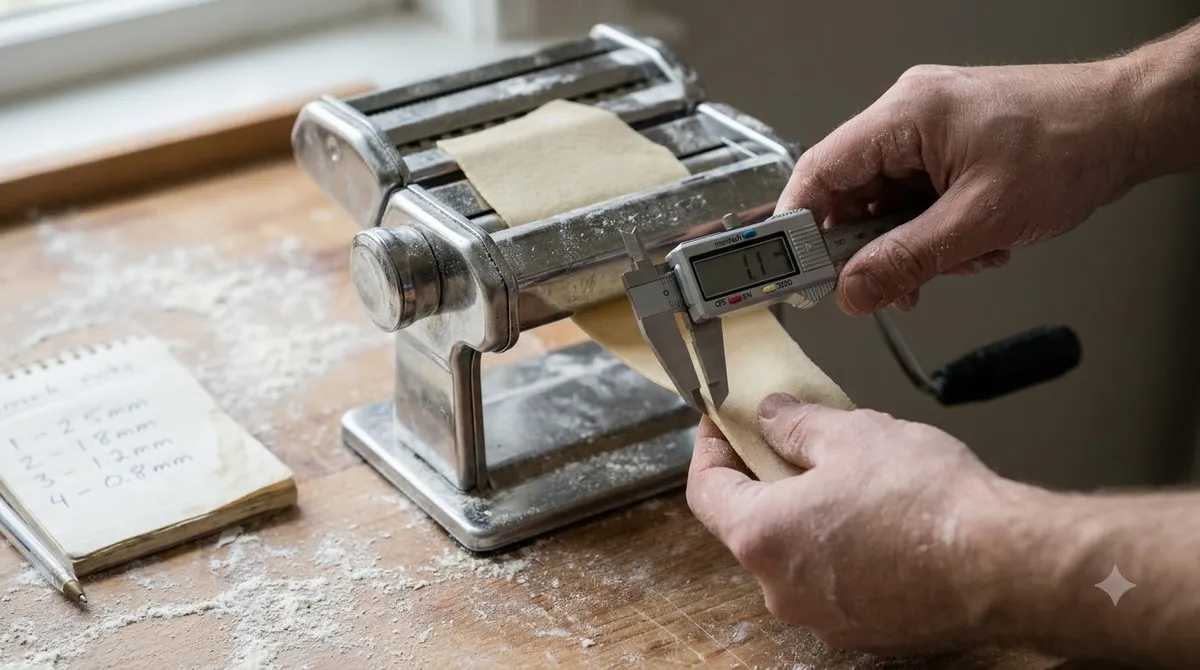
- The Pasta Project rolls the dough sheet to 2 to 3 mm, about twice the thickness of tagliatelle.
- Summer in Italy rolls the dough to 1/8 inch or thinner, then cuts strips about 1.5 cm wide.
- After twisting and breaking, Summer in Italy gives a finished length of about 8 to 10 cm.
The Pasta Project’s own numbers are not consistent. Its introduction gives strips about 3/4 mm wide, while a later step gives about 4 to 5 mm. Its sheet is cut to a rectangle about 30 cm long before the ribbons are made.
Stringozzi Compared With Similar Pastas
Stringozzi pasta is thicker than tagliolini and rougher than spaghetti, and its sheet is about twice as thick as tagliatelle. The table lists each comparison with the source that makes it.
| Comparison | What the sources say | Source |
|---|---|---|
| Tagliolini | Similar shape, but stringozzi is thicker and contains no egg | The Pasta Project |
| Spaghetti | Described as a thicker, less smooth version, with a rougher surface that holds sauce | CooksInfo |
| Tagliatelle | The rolled sheet is about twice the thickness of tagliatelle | The Pasta Project |
| Strozzapreti | Listed as a related name, used in central and southern Italy | The Pasta Project |
How to Make Stringozzi Pasta at Home
You make stringozzi pasta by kneading flour and water, resting the dough, rolling it thin and cutting it into ribbons. The base amount in The Pasta Project is 300 g of Italian “00” or all-purpose flour (or 200 g soft wheat flour plus 100 g semolina), 4 to 5 fluid ounces of water, a pinch of salt and optionally 1 tablespoon of extra virgin olive oil. You may not need all the water.
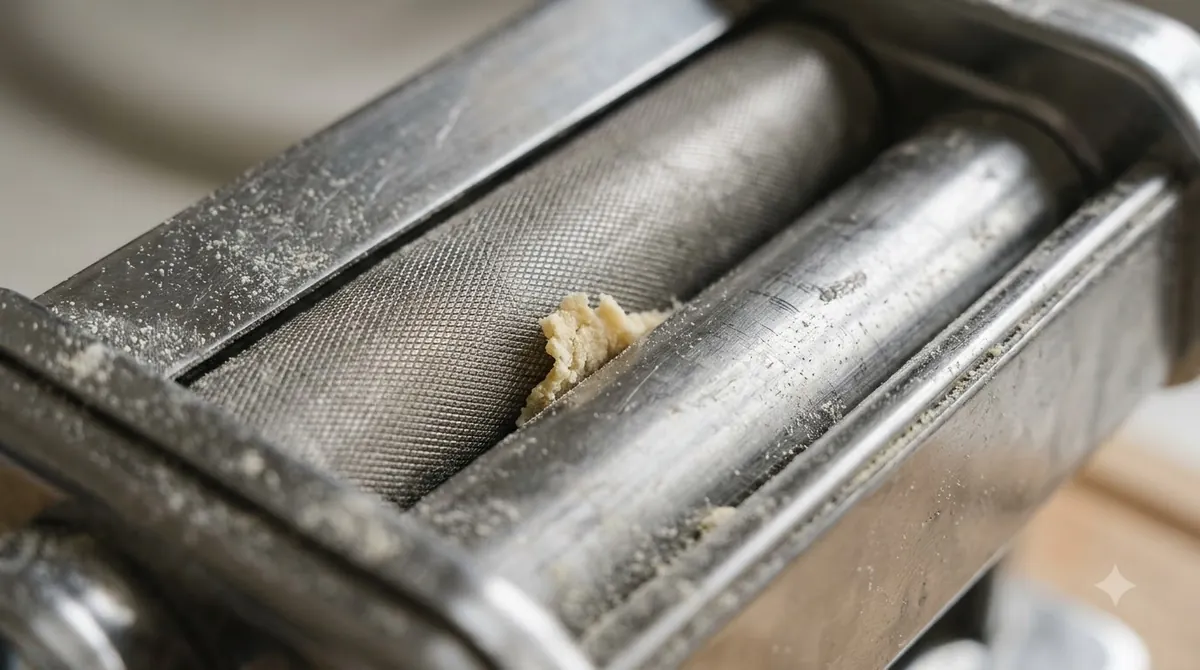
- Mix the flour with warm or room-temperature water, not cold, adding it gradually. The Pasta Project recommends this, and Summer in Italy adds water one tablespoon at a time.
- Knead for 8 to 10 minutes, as The Pasta Project advises. Summer in Italy gives 10 minutes.
- Rest the dough wrapped at room temperature for 30 minutes. Summer in Italy covers it and rests it for about 15 minutes, so the two guides differ here.
- Roll one third of the dough at a time to 2 to 3 mm, dusting with semolina as The Pasta Project does.
- Cut the sheet into a rectangle about 30 cm long, roll it up, cut it into ribbons about 4 to 5 mm wide, and unroll them by hand onto a floured tray.
- Air dry the nests for 24 to 48 hours if you plan to store them, or cook them fresh.
Traditional Sauces for Stringozzi
Because the rough, porous surface grips sauce (CooksInfo notes the same rougher surface), the classic Umbrian sauces are alla Norcina, with sausage and cream, and alla Spoletina, a tomato sauce with garlic. Sources also name black truffle as the traditional partner for stringozzi pasta.
- Alla Norcina: sausage, onion, white wine and cream, with optional truffle, according to The Pasta Project.
- Alla Spoletina: peeled tomatoes, garlic, black pepper, parsley and extra virgin olive oil, according to The Pasta Project.
- Black truffle: Summer in Italy says Umbrian tradition calls for it, and Wikipedia lists it as a common serving.
- Meat ragù and tomato sauce: Wikipedia names both as common accompaniments.
- Other toppings: The Pasta Project also lists porcini, asparagus, chili pepper, leek, speck and pork ragù, plus Umbrian pesto and lentils with sausage as regional dishes.
CooksInfo also mentions variants with porcini mushrooms added to the dough or spelt flour instead of semolina, and says stringozzi pasta is usually used with meatless sauces. That conflicts with the sausage and meat sauces in other sources, so the sauce is a regional choice rather than a fixed rule.
Names and Origins of Stringozzi Pasta
Wikipedia says the name of stringozzi pasta comes from the Italian word for strings, and The Pasta Project links it to old leather shoelaces. The Pasta Project also records a legend about shoelaces used to strangle clergy, and it presents that story as a legend rather than fact.
The Pasta Project says it started as a poor man’s pasta and has been part of Umbrian cooking for centuries, linking its anticlerical legends to the mezzadria system, under which farmers gave half their produce to landowners, many of them priests. It also explains the name as a play on strangola (strangle) and gozzo (goiter). The related strozzapreti pasta shares similar legends. CooksInfo says monks were reputedly the first to make it. None of the sources reviewed gives a date of origin.
Spellings vary: stringozzi, strangozzi, strengozzi and strongozzi appear in The Pasta Project. Summer in Italy lists strengozze and says the pasta is called ciriole in Terni.
Storing and Cooking Stringozzi Pasta
Dried stringozzi pasta keeps for 2 to 6 months in an airtight container, according to The Pasta Project. To freeze fresh nests, the guide says to place them on a floured tray in the freezer for about one hour, then move them to sealed bags and cook from frozen.
CooksInfo gives 12 to 15 minutes of boiling in 4 litres of salted water per 500 g, stirring after the first 2 or 3 minutes. It does not say whether that time is for fresh or dried pasta, and The Pasta Project gives no cooking time for fresh stringozzi.
Frequently Asked Questions
What is stringozzi pasta made of?
Stringozzi is made from flour and water, according to The Pasta Project and Summer in Italy. CooksInfo says the dough uses semolina and water instead, so the flour type differs between sources. Salt and optional olive oil may be added.
Is stringozzi an egg pasta?
The Pasta Project says stringozzi contains no egg. Wikipedia lists wheat flour as the main ingredient and does not mention eggs. Because the name is used for several products, check the label of any packaged stringozzi.
Is strangozzi the same as stringozzi?
Yes, they are two spellings of the same Umbrian pasta. Wikipedia gives both spellings, and The Pasta Project lists strengozzi and strongozzi as further variants.
How long should stringozzi cook?
CooksInfo gives 12 to 15 minutes in boiling salted water, stirring after the first 2 or 3 minutes. The Pasta Project gives no cooking time for fresh stringozzi, so taste a strand near the end of the cooking time before draining.
How long does dried stringozzi keep?
The Pasta Project says dried stringozzi keeps for 2 to 6 months in an airtight container. Air dry the nests for 24 to 48 hours before storing them. For a simpler flour-and-water start, our fresh pasta dough recipe covers kneading and resting basics, and pici pasta is another thick hand-rolled noodle.
If you want the rustic shape of this Umbrian pasta, make a thick ribbon and check the flour and rest times in your recipe before you start. The sources differ, so follow one guide from start to finish.