
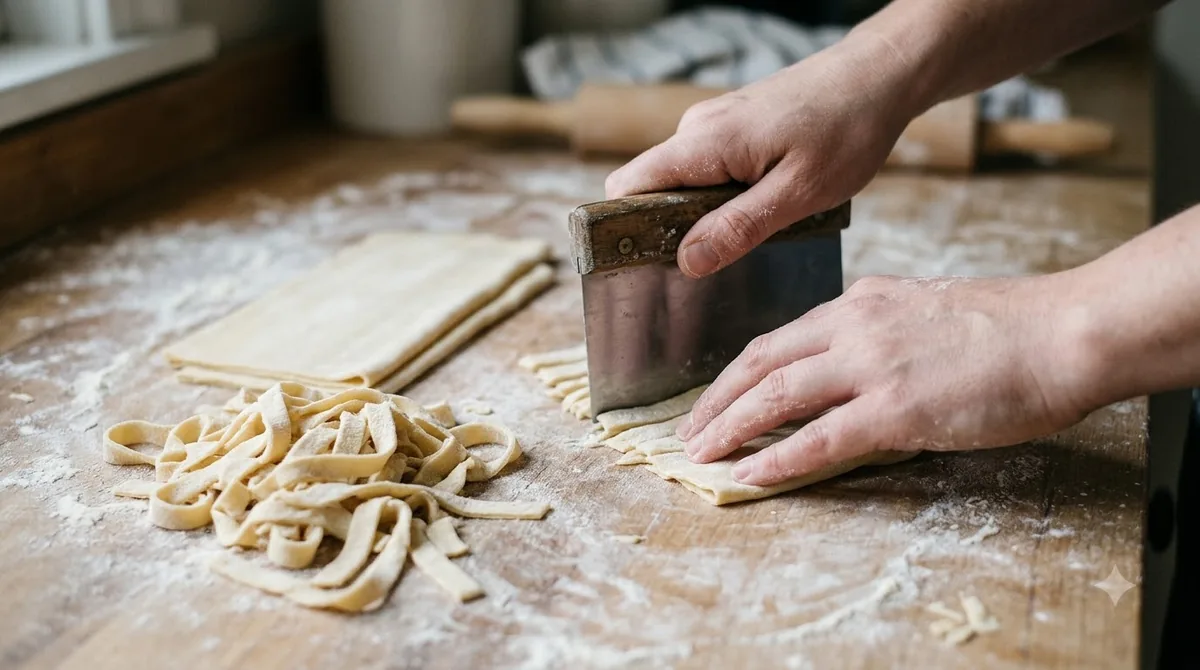

Strozzapreti pasta is a hand-rolled Italian shape from Emilia-Romagna, traditionally made from flour and water and twisted into short cords. Its name translates as “priest strangler,” and you can shape it by hand without a pasta machine.
The shape is close to cavatelli but longer and more twisted, so it holds meat ragù and chunky sauces well. The steps below cover the shape, the dough, the hand-shaping method and the sauces that suit it. Our cavatelli pasta guide shows how that smaller curled cousin is shaped.
What Is Strozzapreti Pasta?
Strozzapreti pasta is a short, handmade shape that looks like a longer, twisted cavatelli. Romagna versions run about 10 cm long, and no two pieces are exactly the same size or shape. Another shape formed by pressing and dragging dough by hand is ear-shaped orecchiette.
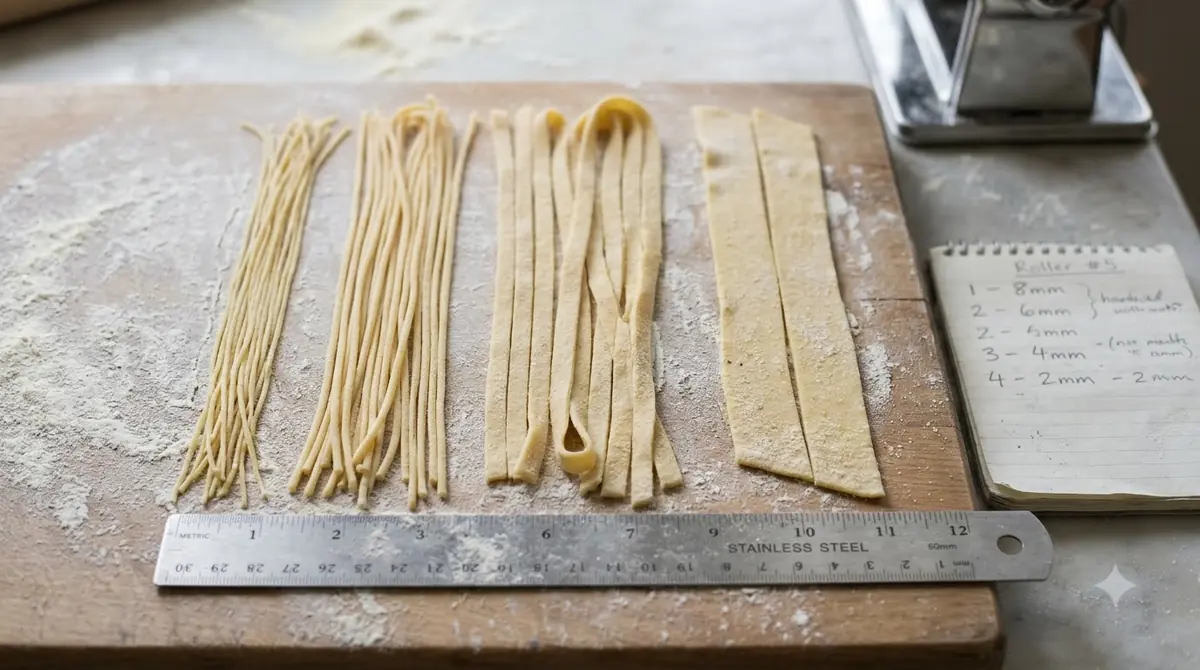
According to Wikipedia’s entry on strozzapreti, the shape is similar to cavatelli, though longer. The Romagna form is made by hand from water and flour and rolled into short twisted cords.
The irregular look is part of the appeal. A hand-rolled piece will never match a machine-extruded shape such as bronze-cut pasta, and the grooves of each twist catch sauce in a way that smooth tubes do not. Each piece is a little different, so the finished batch shows clearly that it was made by hand.
Where the Name Comes From
Strozzapreti means “priest strangler” in Italian. The name comes from anticlerical stories, and The Local Italy lists three explanations that differ in detail.
- Greedy priests: a legend says priests gobbled the pasta so fast that they choked.
- Frustrated cooks: housewives who rolled the dough supposedly got so angry at the clergy that they could strangle a priest.
- Collar resemblance: the simplest theory says the twisted shape looks like a priest’s clerical collar.
The Local Italy presents all three as folk explanations, and the collar theory is the least dramatic of them. Whichever story you prefer, the name has stuck to this shape in Emilia-Romagna for generations.
Tasting Table tells a related version of the tax story. Priests collected taxes door to door around lunchtime and expected to be fed, and when a household could not feed them, they sometimes took its eggs. Tasting Table presents this as lore, not documented history. A separate theory ties the pasta to winter, when hens lay fewer eggs, which would explain a dough without eggs.
Each version tries to explain why strozzapreti pasta got its name, and none of them is documented as fact. For a cook, the useful part is the shape itself and how it is made. Another hand-shaped pasta from Emilia-Romagna is garganelli pasta, which is made from egg dough and rolled over a ridged board.
Strozzapreti Shape and Regional Versions
The name covers several shapes across central Italy, from twisted cords in Romagna to long square-section strangozzi in Umbria. Pieces run from about 5 cm to 10 cm, depending on the region and the cook.
| Region | Form | Notable detail |
|---|---|---|
| Romagna | Short twisted cords | About 10 cm, shaped by hand |
| Imola and Ravenna | Slightly larger twisted pieces | Once called “suffocated priests” from the late 1800s to the mid 1900s |
| Umbria | Strangozzi, long with a square section | Made from water and flour |
| Tuscany | Pici, similar but left untwisted | Same basic dough, different finish |
In Romagna itself, the twisted form has a knotted variant. Between Faenza and Lugo, cooks make strozzapreti col nodo, a version tied into a knot. Wikipedia also notes that the Imola and Ravenna pieces were slightly larger than the Romagna cords.
Some Emilia versions add Parmesan and egg whites to the dough. Because regional forms differ, check the shape before you follow a recipe written for a different version of strozzapreti pasta.
Ingredients and Dough for Strozzapreti
A basic strozzapreti pasta dough uses semolina or soft wheat flour, all-purpose flour, salt and warm water. Egg is optional, because Emilia-Romagna versions do not always use it.
- Flour: semolina or soft wheat flour (see what is 00 flour for one soft wheat option), depending on the cook
- All-purpose flour, which many simple recipes add to the mix
- Salt, for flavor
- Warm water, added slowly until the dough comes together
You do not need a pasta machine for this shape, because the dough is rolled and twisted by hand. Add the warm water a little at a time and stop once the dough holds together, since too much water makes it sticky and hard to shape.
A homemade strozzapreti dough is simple to mix, and the flour choice is the main decision you make before you start.
How to Shape Strozzapreti by Hand
To shape strozzapreti, rest the dough covered for about 30 minutes, roll it to about 1.5 mm, cut strips 1.25 cm wide, and roll each piece into a twisted cord 5 to 6 cm long.
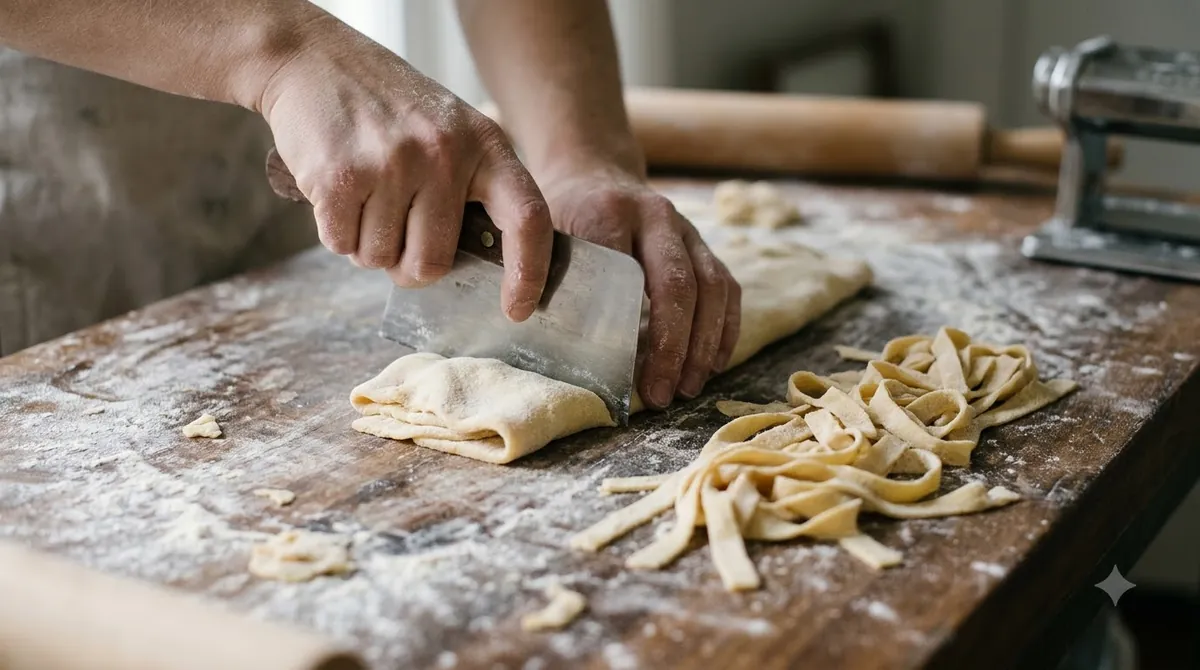
- Knead the dough until smooth, then cover it and let it rest for about 30 minutes.
- Roll the dough out to about 1.5 mm thick.
- Cut the sheet into strips about 1.25 cm wide.
- Roll each strip between your palms, or wrap it around a thin wooden stick, to form a twisted cord.
- Separate the cords into pieces about 5 to 6 cm long, or a little longer.
The measurements above come from The Pasta Project’s hand-shaping guide, which also notes that hand-rolled pieces are usually irregular. A thicker sheet is harder to twist tightly, so keep the rolled sheet close to 1.5 mm.
How to Make Homemade Strozzapreti Pasta
Making homemade strozzapreti pasta needs only a simple dough, a 30-minute rest, a clean work surface and a knife. No special equipment is required for the traditional method.
Keep the dough covered while you work, because it dries out quickly on the counter. Dust the cords lightly with flour so they do not stick together, and spread them out on a tray while you finish the batch.
If you cannot cook the pasta the same day, let the pieces dry in a single layer and keep them covered. Once you have learned the twist, strozzapreti pasta becomes a repeatable dish you can make for a weeknight or a weekend lunch.
Best Sauces for Strozzapreti
A mixed minced meat or sausage ragù is the recommended match for strozzapreti in Emilia-Romagna. Tomato, seafood and pesto also suit strozzapreti pasta and its twisted shape.
| Sauce | Where it fits | Why it works |
|---|---|---|
| Mixed minced meat or sausage ragù | Emilia-Romagna | Thick sauce clings to the twisted cords |
| Traditional tomato sauce, such as marinara sauce from scratch | Widely used | Coats each piece evenly |
| Seafood sauce with mantis shrimp or swordfish | Coastal areas | Lighter seafood flavor suits the shape |
| Pancetta-based sauce | Marche | Salty, rich sauce fills the grooves of each twist |
| Pesto | Less traditional | Herby sauce sticks to the twists |
The Pasta Project calls pesto maybe less traditional but good, so it is a fair choice when you want a fresh sauce.
Frequently Asked Questions
Is strozzapreti pasta the same as cavatelli?
Strozzapreti pasta is close to cavatelli but longer and more twisted. Wikipedia describes it as similar to cavatelli, though longer, so the two shapes are related but not identical.
Is strozzapreti pasta made with egg?
Not always. The Pasta Project notes that Emilia-Romagna versions do not always use eggs, and other regions may add a little. Some Emilia versions also include Parmesan and egg whites, so check the recipe you follow.
Can you make strozzapreti pasta without eggs?
Yes. Emilia-Romagna versions do not always use eggs, and The Local Italy describes a dough of semolina, all-purpose flour, salt and warm water with no egg. Add the water slowly so the dough does not turn sticky.
Where does strozzapreti pasta come from?
Strozzapreti pasta comes from Emilia-Romagna in northern Italy, and Wikipedia links it to Romagna and Tuscany. Umbria has a related long, square-section pasta called strangozzi, so the name covers several regional shapes.
Do you need a pasta machine for strozzapreti?
No. The Local Italy describes strozzapreti as hand-rolled, with no pasta machine needed. A clean surface, a knife and a thin wooden stick are enough to roll and twist each piece.
What does strozzapreti mean?
Strozzapreti means “priest strangler” in Italian. The name is tied to anticlerical stories, including greedy priests who choked and cooks who were angry enough to strangle one. Some say the twisted shape resembles a clerical collar.
How long should strozzapreti dough rest?
Rest the dough covered for about 30 minutes before you roll it out. The Pasta Project recommends this rest, and it makes the sheet easier to handle when you cut and twist it.
What sauce goes best with strozzapreti?
A mixed minced meat or sausage ragù is the recommended match in Emilia-Romagna, since the twisted cords hold thick sauce. Tomato, seafood and pesto are also good choices for this shape.
If you are new to hand-rolled pasta, start with a simple flour and water dough and a chunky meat or tomato sauce. Keep the dough covered while you work, and expect the first batch to look irregular, which is normal for this shape.