
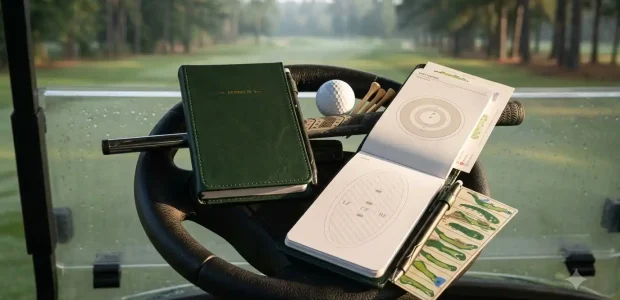

A golf journal is better for building on-course focus and honest self-reflection, while a golf tracking app is better for automatic stats and GPS yardages. Most golfers who actually lower their handicap end up using a simple paper journal, like Journal 18, for reflection, and a free GPS app for yardages, instead of picking just one and hoping it does everything.
What a Golf Journal Actually Does
A golf journal forces you to slow down and think about a shot before and after you hit it, which no app does automatically. Writing down your pre-round goals, club distances, and what actually happened on each hole builds a habit of noticing patterns: the same miss on par 5s, the same three-putt from outside 20 feet, the same rushed decision off the tee when you’re behind pace.
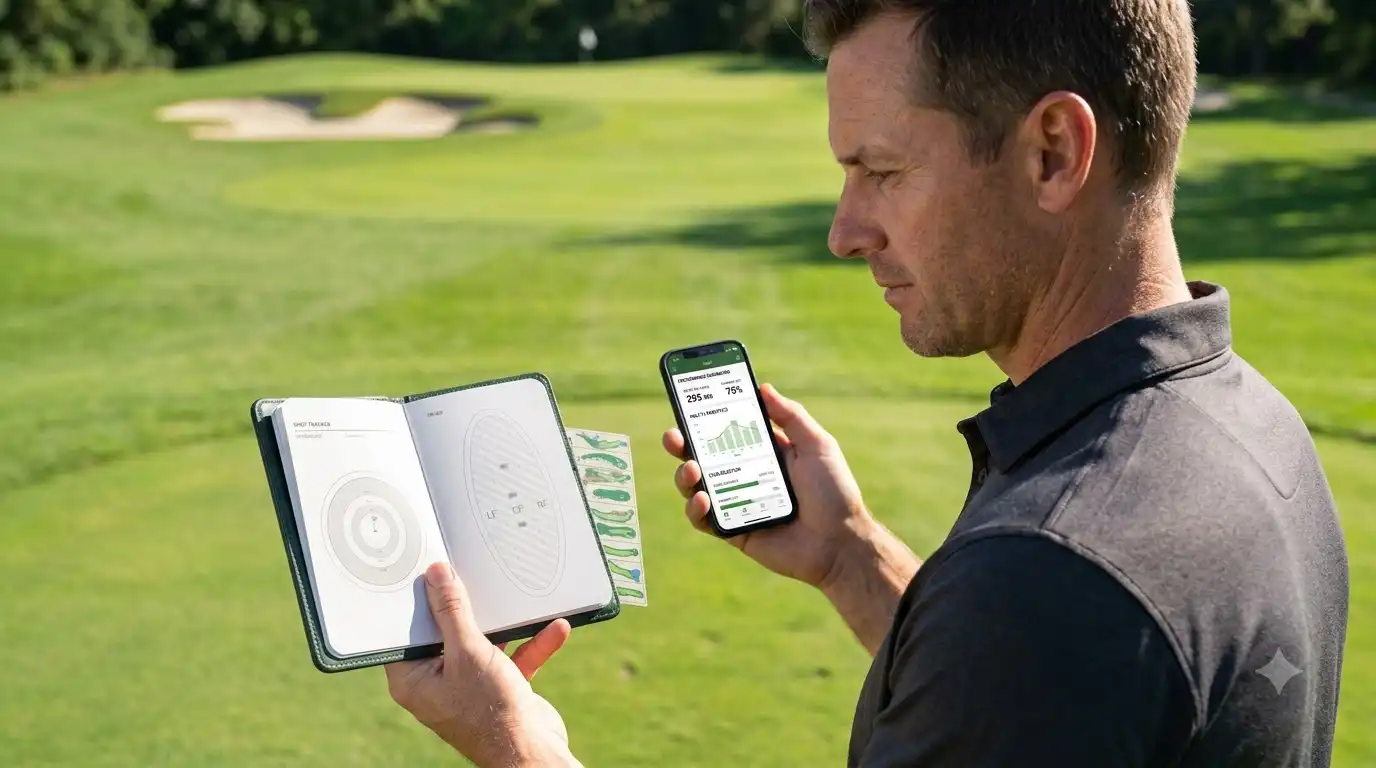
The catch is that a journal only works if you actually open it. Most golfers who buy one use it for two or three rounds, then let it sit in a bag pocket. The ones who stick with it treat it less like a stat sheet and more like a five-minute habit: fill in the pre-round page in the cart, jot a note after a bad hole, spend five minutes on the drive home reading back through it.
What a Tracking App Does Better
An app wins on anything you’d never track by hand: exact GPS yardages, shot-by-shot dispersion, and strokes gained data pulled from dozens of rounds at once. Sensor-based systems, like Arccos, pair club sensors with your phone to log every shot automatically, usually for a hardware cost plus a yearly subscription. Others, like Shot Scope, sell the hardware once and skip the recurring fee. Simpler GPS apps, such as 18Birdies or Golfshot, give you distances and a digital scorecard for free, then charge for deeper stats.
The trade-off is that the data doesn’t turn into insight by itself. Plenty of golfers track hundreds of rounds and never open the stats dashboard except to check their score. An app is only as useful as the ten minutes you spend actually reading what it captured.
Golf Journal vs. Golf Tracking App: Side-by-Side
| Criteria | Golf Journal (e.g. Journal 18) | Golf Tracking App |
|---|---|---|
| Setup | Write in it, no account or pairing needed | Download, create a profile, pair sensors or a GPS watch for automatic tracking |
| What it captures | Scores, notes, pre-round goals, club distances, mental cues | GPS yardages, shot-by-shot data, strokes gained (with sensors) |
| Screen time on course | None | Phone or watch checked most holes |
| Cost model | One-time purchase (Journal 18’s Performance Journal is $54) | Often free for basics, paid subscription or hardware for automatic shot tracking |
| Best for | Pre- and post-round reflection, focus, spotting patterns over a season | Precise distances and stats you’d never calculate by hand |
Neither column is objectively better. They’re answering different questions: a journal asks what you’re actually doing out there, an app asks what exactly happened, down to the yard.

Which One Fits Your Game
The right pick depends less on your handicap and more on how you actually play:
- If numbers on a screen distract you mid-round, a paper journal fits better; you fill it in before you tee off and after you finish, not during.
- If you already replay every shot in your head anyway, an app turns that habit into usable data instead of a vague memory.
- If you’re buying a gift for a golfer who already has three GPS apps installed, a printed journal is different enough to actually get opened, where a fourth app usually doesn’t.
- If you’re chasing a specific weakness, like a three-putt problem, a journal’s mental-cue section often surfaces it faster than a stats app buried in menus.
Why Many Golfers End Up Using Both
The two aren’t really competing for the same five minutes. A GPS app earns its keep during the round, when you need a number fast. A journal earns its keep before you tee off and after you finish, when there’s no rush and you can actually think. Golfers who stick with tracking long term tend to run both: check the app for the yardage, then close it, and let the journal hold the goals, the notes, and the after-round review.
The common mistake is trying to make one tool do both jobs. A journal that tries to log shot-by-shot GPS data becomes tedious fast. An app that tries to replace quiet reflection just becomes another notification.
Inside Journal 18’s Performance Journal
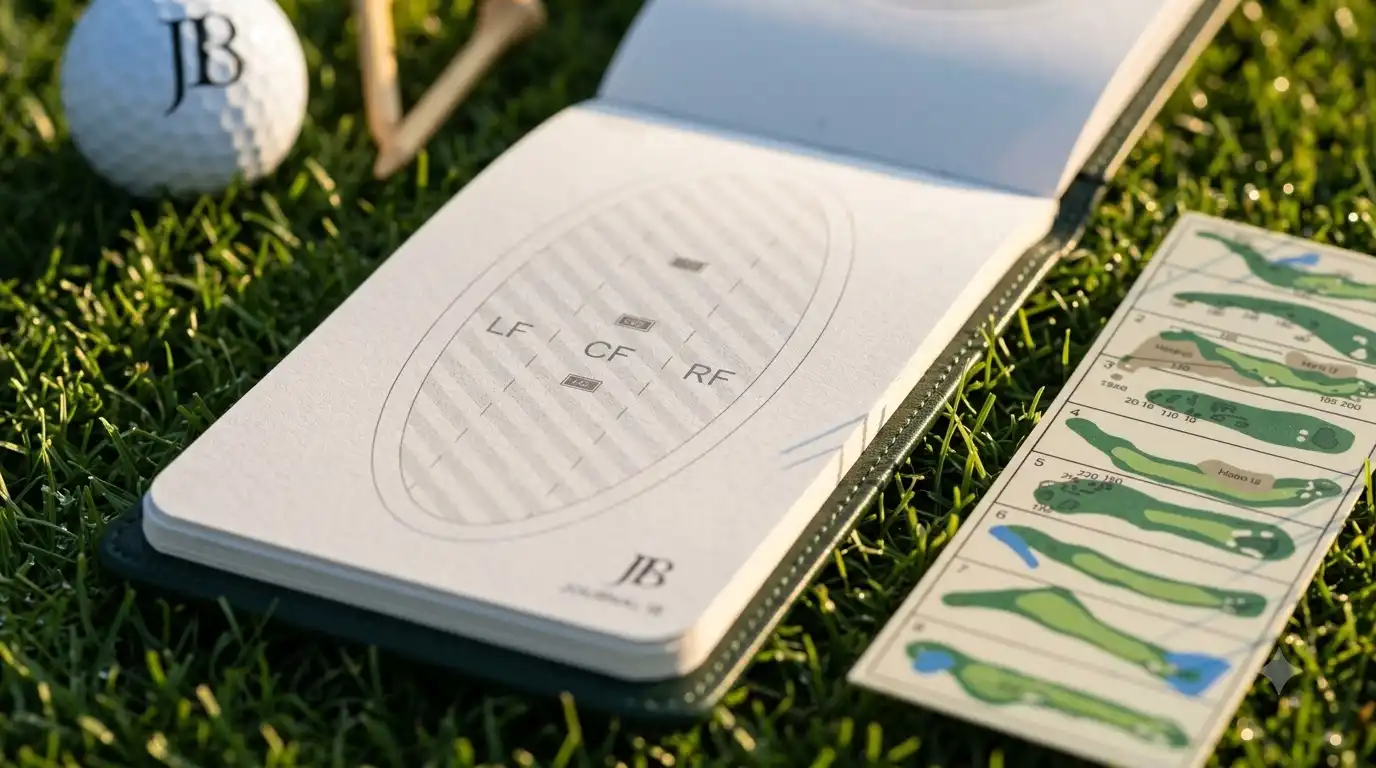
Journal 18’s Performance Journal is a $54 pocket-sized notebook built specifically for this pre- and post-round use case, not a general planner repurposed for golf. It’s sized to fit a golf bag pocket or back pocket, with a textured cover, a ribbon bookmark, and pages for logging fairways hit, greens in regulation, putts, and out-of-bounds shots per hole, alongside a section for club carry distances and pre-round goal setting.
It holds space for 25 rounds and 20 practice sessions before you’d need a second copy, which is enough for most golfers to get through a season and see real patterns. It doesn’t do GPS or automatic shot tracking, since that’s not the job it’s built for. On Journal18’s own product page, it currently carries an average 4.6-star rating from 280 reviews, with the most common praise being the pocket fit and the most common request being more note space per hole.
A common mistake is grabbing a generic planner or notebook instead, then giving up because there’s no clear place to write yardages or a post-round review. Journal 18 also ships with a 30-day return window and free shipping, and personalized covers are available if you’re buying it as a gift rather than for yourself. Before ordering, it’s worth checking Couponaro’s Journal 18 listing for a currently active, checkout-tested discount rather than trusting a random code from an old forum post, since most of those turn out to be expired or fake.
FAQ
Does a paper golf journal actually help you play better, or is it just busywork?
It helps if you review it, not just fill it in. The value isn’t in writing the score down, it’s in reading back after five or six rounds and noticing the same mistake showing up in the notes.
Can I use a golf journal and a tracking app at the same time?
Yes, and it’s the most common setup among golfers who stick with tracking for more than a season. The app handles the numbers during the round; the journal handles the goals and the reflection before and after.
What does Journal 18 track that a normal scorecard doesn’t?
A standard scorecard is just strokes per hole. Journal 18 adds fairways hit, greens in regulation, putts, out-of-bounds shots, club distances, pre-round goals, and a structured post-round review, all in one place.
If your game clicks when you slow down and actually think between shots, get the paper journal and don’t bother with sensors yet. Journal 18’s Performance Journal is built for exactly that pocket-sized, phone-free habit, and it’s worth a quick check on Couponaro for a live discount before you order. If you already track everything obsessively but never open the app afterward, the fix isn’t a better piece of hardware, it’s five quiet minutes with a notebook after the round.
last update: 15.09.2026

Elliot Long spent seven years buying paid search and social traffic for e-commerce brands before starting Couponaro. That work taught him how much of the coupon web runs on codes that expired years ago. He runs this site on his own, dates every page he updates, and would rather tell you a brand has no working code than waste your time at checkout.