
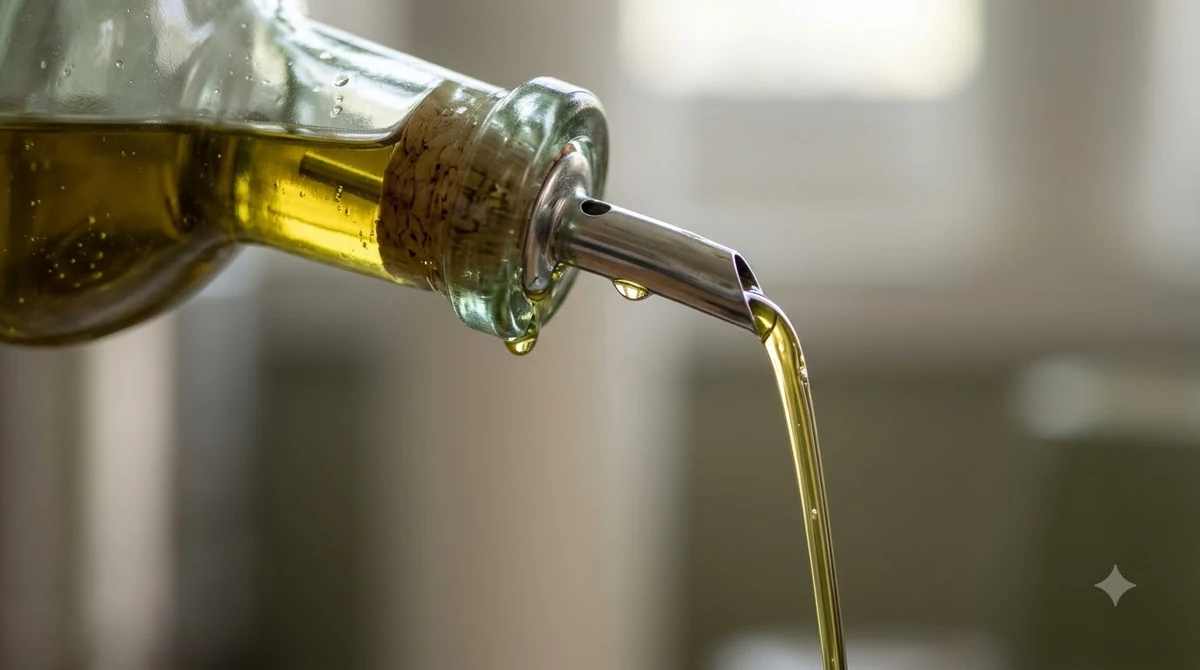

The best finishing olive oil is a fresh, fruity extra virgin oil that you pour over food after cooking. Finishing oil describes how you use a bottle, not a separate grade. A good one tastes bright, grassy or peppery, and its label shows the extra virgin grade.
What Makes an Olive Oil a Finishing Oil
A finishing olive oil is an extra virgin oil with a bold, fresh flavor that you add raw at the end of cooking. The International Olive Council (IOC) allows extra virgin oil to have free acidity of at most 0.8 g per 100 g, expressed as oleic acid.
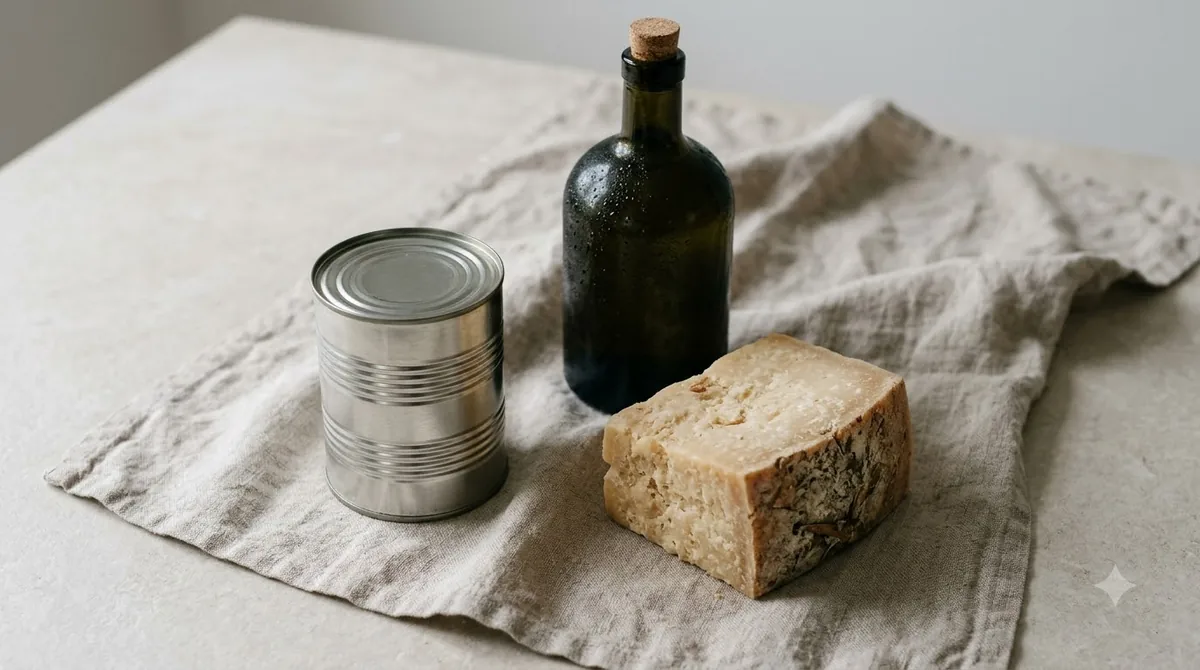
The International Olive Council grades olive oil on chemistry and on taste. Extra virgin oil must be fit for consumption as it is, and its free acidity cannot exceed 0.8 g per 100 g. Virgin olive oil is capped at 2 g per 100 g. A blend sold simply as olive oil is capped at 1 g per 100 g, and it is a mix of refined and virgin oils.
Acidity is only one test. The IOC says its categories rest on both physical-chemical parameters and organoleptic characteristics, which means smell and taste count too. So when you look for the best finishing olive oil, a grade on the label is the starting point, not the finish line. Taste decides whether the bottle earns a place at the table.
How to Choose a Finishing Olive Oil
The best finishing olive oil starts with a bottle labeled extra virgin, a flavor you enjoy on its own, and packaging that blocks light. Those three checks cover most of what matters at the shelf, and they work for any price range.
- Grade: look for extra virgin on the label, which the IOC defines with the 0.8 g limit.
- Flavor: grassy, peppery or fruity notes suggest a bold finishing oil. A flat or stale taste is a warning sign.
- Bottle: dark glass or a tin protects the oil from light, which the IOC names as a key enemy of quality.
- Origin: a named growing region or olive variety, such as Koroneiki from Greece, tells you more than a generic blend label.
Taste is the simplest test. Pour a little onto a spoon or a piece of bread before you buy a large size, and buy a size you can use while it still tastes fresh.

Six Best Finishing Olive Oil Bottles to Consider
Six bottles from an editorial roundup stand out for their flavor and origin, and they suit different tastes. Each one is a candidate for the best finishing olive oil on your shelf, depending on whether you want a grassy bite, a peppery edge or a softer everyday pour.
Read the table as a starting list, not a ranking. The source itself does not rank these six against each other.
As of 2026-11-10, the roundup states only one price, for Branche No. 1.
| Pick | Origin or style | What stands out |
|---|---|---|
| Brightland Alive | Central Valley, California | 12.7 oz bottle; the brand says the blend is processed two hours after harvest |
| Kosterina Original | Greece, Koroneiki olives | Early harvest, from young olives |
| Graza Drizzle | Early-harvested olives | Squeeze bottle for a controlled drizzle |
| Branche No. 1 | Tabernas desert, Spain | Small-batch oil; the roundup gives a price of nearly $50 |
| California Olive Ranch Everyday | California, blend of several olive types | 16.9 fl oz bottle, an everyday option |
| La Tourangelle Organic | Andalucía, Spain | Organic oil from olives grown in Andalucía |
The list comes from Tasting Table’s brand roundup. Brightland’s processing claim is the brand’s own statement, and the Branche No. 1 figure is an editorial price. Check the current price and size on the brand’s site before you buy.
Three candidates for the best finishing olive oil from the table above are in the product boxes below: Brightland Alive, Kosterina Original and Graza Drizzle. Check the size and current price on each listing before you buy.

Brightland Alive 100% Extra Virgin Olive Oil
Pros & ConsViewHide
Reasons to buy
- 100% extra virgin olive oil, labeled high polyphenol
- 12.7 fl oz bottle suits a finishing drizzle
- 75% of 165 Amazon ratings are 5-star
Reasons to avoid
- Costs more per ounce than everyday cooking oils
- Only around 165 ratings, a smaller track record than larger brands
- Meant for raw use, not for frying

Kosterina Original Extra Virgin Olive Oil
Pros & ConsViewHide
Reasons to buy
- Cold-pressed Greek extra virgin olive oil
- 16.9 oz bottle gives plenty of drizzles
- 86% of 624 Amazon ratings are 5-star
Reasons to avoid
- Higher price than everyday olive oils
- Bold flavor may not suit every dish
- Best kept for finishing, not high-heat cooking

Graza Drizzle Extra Virgin Olive Oil
Pros & ConsViewHide
Reasons to buy
- Extra virgin finishing oil, labeled for eating rather than heating
- 4.7-star average across about 1.5K Amazon ratings
- Good for salads, bread and plated dishes
Reasons to avoid
- Meant for finishing, not for high-heat cooking
- Costs more per ounce than an everyday cooking oil
How to Use Finishing Olive Oil
Use the best finishing olive oil raw, at the end of cooking, over soup, pasta, grilled vegetables or bread. Heat is the wrong place for it, because the flavor it carries is the reason you bought it.
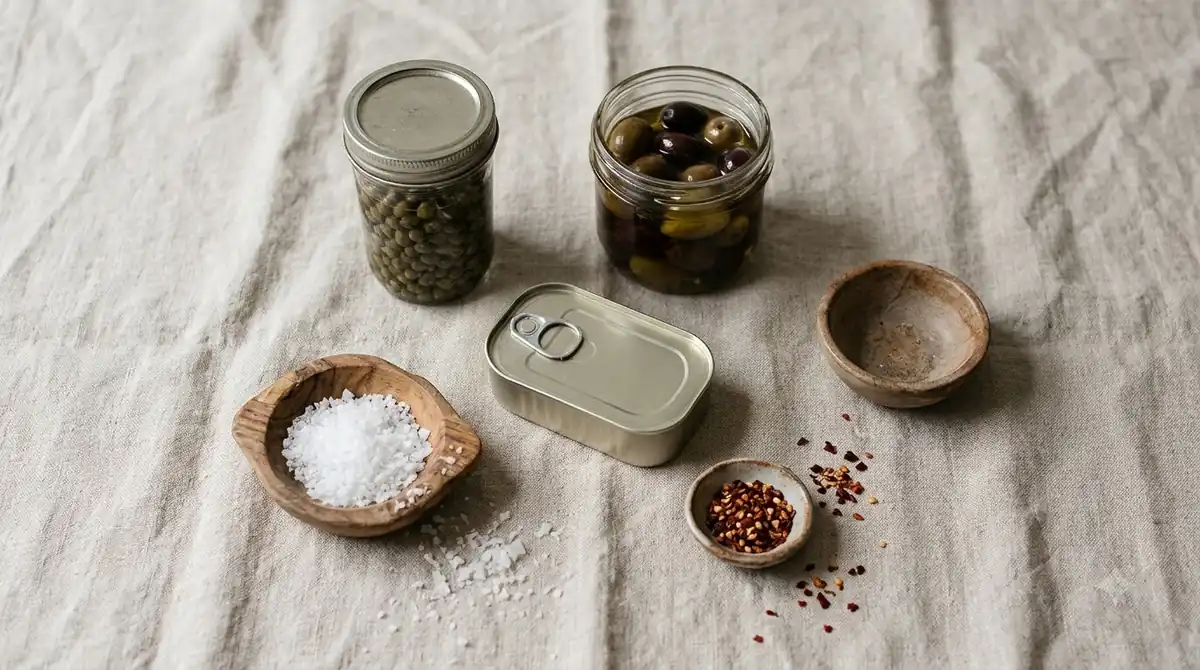
Tasting Table’s editors say cooking with finishing olive oil is never recommended, because heat burns away its subtle range of flavors. The same roundup says less pungent oils are used in cooking more than robust ones, which are better saved for dipping or drizzling.
- Drizzle over finished pasta, or over pasta tossed with pesto, just before serving.
- Spoon over grilled vegetables or a bowl of white beans.
- Dip bread in a small dish with a pinch of salt, or pair it with balsamic vinegar of Modena.
- Finish a soup off the heat, right before it goes to the table.
Keep the cooking oil and the finishing oil apart. Truffle-flavored oils are another way to finish a dish, and our guide to truffle oil explains how to choose one. A cheaper oil does the frying, and the bottle you value stays for the final drizzle.
How to Store It So It Stays Fresh
Store your best finishing olive oil away from excessive heat, air, humidity and light, as the IOC advises. Those four conditions cause most of the loss in flavor that makes a finishing oil worth buying.
Keep the best finishing olive oil in a cupboard away from the stove and the oven. Close the cap after each pour to limit air. Avoid a spot near a dishwasher or a steamy sink, where humidity and heat rise. The IOC gives no number of months for shelf life, so judge freshness by smell and taste instead of by a date alone.
Common Mistakes When Buying
The most common mistake is choosing a finishing oil by its design or price instead of its grade and flavor. Several habits lead to a dull bottle at the table, and each one wastes the reason you bought the best finishing olive oil in the first place.
- Heating it, which burns off the flavor you paid for.
- Buying a clear bottle, which lets light reach the oil.
- Trusting the word “premium” on the front, which is not a grade under IOC rules.
- Skipping the taste test before a large purchase.
A higher price does not guarantee fresher oil. Read the label and taste the oil first.
What Could Not Be Confirmed
Several claims about the best finishing olive oil could not be checked on official pages, so this article leaves them out.
- A common rule to use olive oil within 18 months of harvest appeared only in a search snippet, not on a page that was read.
- The University of California olive oil guide could not be read in full, so its storage and harvest-date tips are not included.
- Prices for most bottles were not stated in the source, so no figures are given beyond the Branche No. 1 price.
Check the harvest date on the bottle, and the current price on the brand’s own site, before you decide.
Frequently Asked Questions
Is finishing olive oil the same as extra virgin olive oil?
Not always. Extra virgin is a grade set by the IOC, while finishing oil describes how you use the bottle. Many finishing oils are extra virgin, and the best finishing olive oil is usually a bold extra virgin oil chosen for drizzling over finished food.
Can I fry with the best finishing olive oil?
The editorial view is no. Heat burns away the subtle flavors that make the oil worth paying for. Use a less pungent oil for cooking and save the bold bottle for the final drizzle.
What does early harvest mean on a label?
It means the olives were picked while still young and green. The roundup links early harvest to a bolder finish, and Kosterina and Graza both describe early-harvested olives. Taste the oil to see whether that bold character suits you.
Does a higher price mean a better finishing oil?
Not necessarily. A higher price does not guarantee that the best finishing olive oil is fresher or more flavorful. Check the grade, the bottle and the harvest date, then taste the oil before you buy a large size.
Where should I keep a finishing oil after opening?
Keep it away from excessive heat, air, humidity and light, as the IOC advises. A cupboard away from the stove is a practical spot, and closing the cap after each pour limits air exposure.
If you want one bottle, pick the best finishing olive oil for your taste: a fresh extra virgin oil with a bold flavor you enjoy, and keep it away from the stove. Save a cheaper oil for cooking so the good bottle stays for the final drizzle. Browse more gear and pantry guides for pantry picks.
 8 min readGear & PantryBest Olive Oil: How to Choose the Right Bottle for Your KitchenUpdated Nov 17, 2026
 9 min readGear & PantryBest Truffle Oil: How to Choose a Bottle That Matches Your CookingUpdated Nov 16, 2026
 6 min readGear & PantryCuisinart 3 in 1 Pizza Oven Stand: What to Look ForUpdated Nov 15, 2026
 8 min readGear & PantryFrantoio Muraglia Olive Oil Review: Honest Verdict for 2026Updated Nov 10, 2026
 9 min readGear & PantryBest Italian Olive Oil: How to Choose a Real OneUpdated Nov 17, 2026
 9 min readGear & PantryBrightland Olive Oil Review: Is It Worth the Price in 2026?Updated Nov 16, 2026