
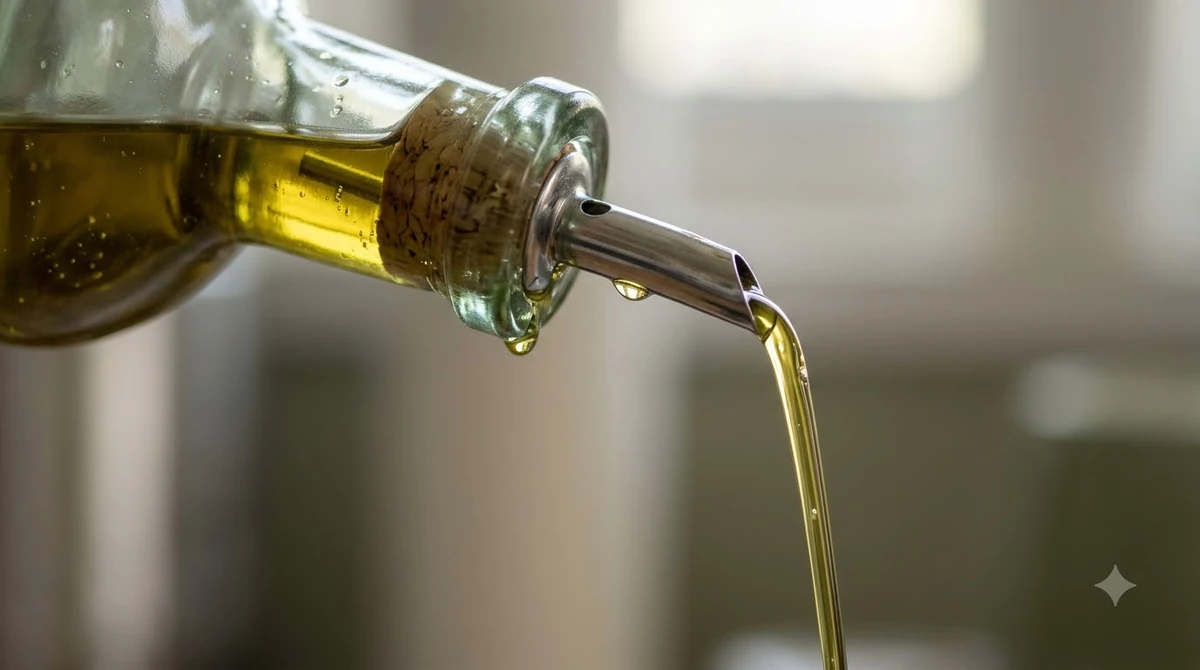

The best olive oil for most home kitchens is a fresh extra virgin olive oil with free acidity at or below 0.8%, a harvest date on the label, and a dark glass bottle. Those three checks tell you more than the brand name on the front.
The right bottle depends on the job. A bright oil works best for salads, bread and finishing, while a sturdier oil suits everyday cooking. Read the grade and storage facts below before you compare prices.
What Makes an Olive Oil Good for Most Kitchens
Extra virgin olive oil is the highest grade of virgin olive oil, made by cold mechanical extraction with no refining, and it contains no more than 0.8% free acidity. Grades are the first clue when you look for the best olive oil on a shelf. The types of olive oil differ in grade, flavor and use.
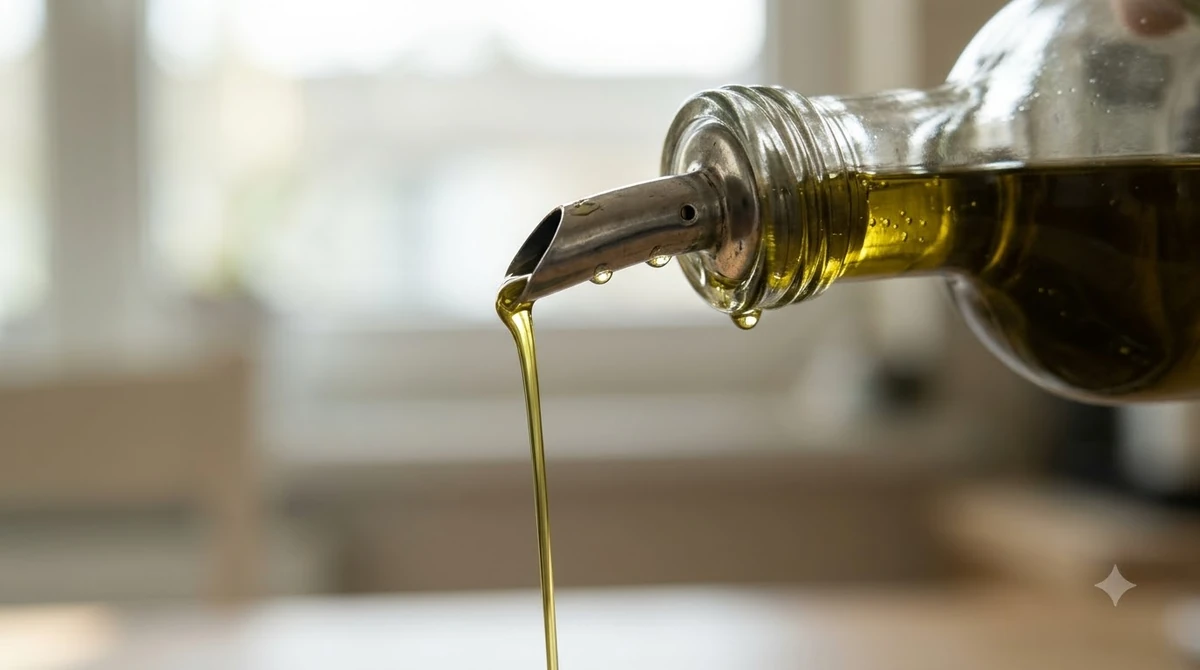
According to the Wikipedia summary of olive oil grades, which cites the International Olive Council (IOC), the main categories are:
- Extra virgin: cold mechanically extracted, with no more than 0.8% free acidity.
- Virgin: a lesser virgin grade with free acidity of up to 2.0%.
- Refined: virgin oil refined with charcoal and other chemical and physical filters.
- Pure or plain “olive oil”: mostly refined oil with a small addition of virgin oil for taste.
Lampante oil is not suitable for eating without further refining, so when you shop for the best olive oil, look for the words extra virgin. The IOC governs about 95% of international production, and the USDA voluntary standards from 2010 closely parallel its grades.
Quick Comparison of Olive Oil by Use
For most home cooks, extra virgin olive oil is the best olive oil for finishing and moderate cooking, while refined olive oil suits higher-heat searing and frying.
| Oil type | Best for | Smoke point | Key fact |
|---|---|---|---|
| Extra virgin | Dressings, finishing, bread, moderate sautéing | About 190 °C (374 °F); a high-quality, low-acidity extra virgin is listed at 207 °C (405 °F) | Highest grade, 0.8% free acidity or less |
| Virgin | Everyday cooking where a milder flavor is wanted | Lower than refined oil | Free acidity up to 2.0% |
| Refined | Searing, frying, high-heat roasting | 199 to 243 °C (390 to 470 °F) | Virgin oil filtered with charcoal and other filters |
The table compares oil types, not brands. Any brand can be a good choice inside one of these rows if its label passes the grade and date checks in the next sections.

Graza Sizzle Extra Virgin Olive Oil, Cooking Oil
Pros & ConsViewHide
Reasons to buy
- Extra virgin cooking oil in a 750 mL bottle
- 4.7-star average across about 4.2K Amazon ratings
- Priced as an everyday oil
Reasons to avoid
- Brand pages name no growing region or harvest date
- Smaller than a 2 L bag-in-box

California Olive Ranch California Extra Virgin
Pros & ConsViewHide
Reasons to buy
- Chef's bottle of 100% California extra virgin olive oil
- 16.9 fl oz size is easier to finish within months of opening
- 4.4-star average on Amazon
Reasons to avoid
- Smaller than the 2 L bag-in-box, so cost per ounce is higher
- Harvest date is not shown on the listing

Kosterina Original Extra Virgin Olive Oil
Pros & ConsViewHide
Reasons to buy
- Cold-pressed Greek extra virgin olive oil
- 16.9 oz bottle gives plenty of drizzles
- 86% of 624 Amazon ratings are 5-star
Reasons to avoid
- Higher price than everyday olive oils
- Bold flavor may not suit every dish
- Best kept for finishing, not high-heat cooking

Brightland Alive 100% Extra Virgin Olive Oil
Pros & ConsViewHide
Reasons to buy
- 100% extra virgin olive oil, labeled high polyphenol
- 12.7 fl oz bottle suits a finishing drizzle
- 75% of 165 Amazon ratings are 5-star
Reasons to avoid
- Costs more per ounce than everyday cooking oils
- Only around 165 ratings, a smaller track record than larger brands
- Meant for raw use, not for frying

Bertolli Extra Virgin Olive Oil, Rich Taste
Pros & ConsViewHide
Reasons to buy
- Rated 4.8 stars across more than 4K Amazon ratings
- 16.9 fl oz bottle is a manageable size to finish while fresh
- Labeled first cold pressed extra virgin
Reasons to avoid
- Check the bottle for a harvest or best-by date before you buy
- Rich-taste style is a mainstream blend, not a single-estate oil
How We Chose the Best Olive Oil
This guide ranks olive oil by published grading rules, freshness signals, packaging and intended use. It does not rely on our own taste tests, because taste is personal and published lists disagree on winners.
- Grade: extra virgin on the label, with free acidity no higher than 0.8% when the label gives it.
- Freshness: a harvest date or best-by date, because prolonged storage reduces polyphenols.
- Packaging: dark glass or an opaque container, since light and heat speed up degradation.
- Use: a finishing oil and a cooking oil should not be judged by the same rules.
- Price: compare price per ounce only after the first four checks pass.
Oxygen matters as much as heat when judging the best olive oil. The peroxide value measures how far an oil has oxidized, and the figures listed in the Wikipedia summary are 20 for virgin oil and 10 for refined and pomace oil.

Features to Look For in an Olive Oil
Look for the words extra virgin, a harvest or best-by date, a dark or opaque container and a named origin. Together these tell you more about the best olive oil than a marketing claim does.
Read the front label for the category, then the back label for the date and origin. A protected designation of origin (PDO) is one origin signal to check, and the EU regulates how those labels are used, so read the wording exactly rather than assuming a region.
- Extra virgin wording, not just “olive oil” or “pure olive oil”.
- A harvest or best-by date, the simplest freshness check. Check the package for the exact shelf life.
- Dark glass or a tin, which protects the oil from light.
- A named origin or PDO, if you want a regional flavor profile.
- A bottle size you can finish within a few months of opening.
Common Mistakes When Buying Olive Oil
The most common mistake is choosing by price or by a pretty bottle alone. The grade, date and storage conditions predict the quality of the best olive oil far better than the look of the label.
- Buying a clear bottle that sits in a sunny shop window. Light speeds up degradation, so dark containers are the protective choice.
- Ignoring the date. An undated bottle gives you no freshness signal at all.
- Keeping an opened bottle beside the stove. Heat degrades polyphenols, and the oil can turn rancid.
- Assuming a higher price means a better oil for every use. The top grade is defined by how the oil is made and its free acidity, not by its price.
Why does olive oil go bad? Oxidation drives the change. Hydrolysis raises free acidity as the oil oxidizes, and rancidity affects both taste and nutritional value. A stale or rancid smell is a clear sign to discard the bottle.
How to Store and Use Your Olive Oil
Store olive oil in a dark glass container at or below 15 °C, and keep it away from the stove, because heat and time reduce polyphenols.
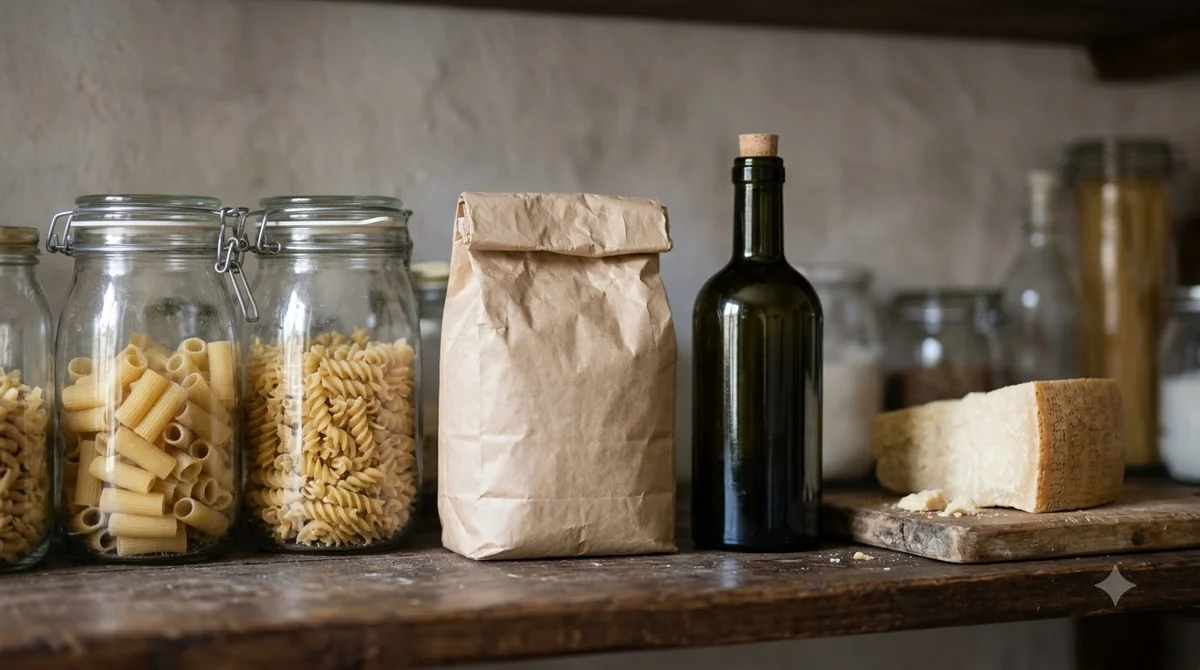
Polyphenols are vulnerable to heat, and their concentration drops significantly at 150 °C during cooking, according to the Wikipedia olive oil summary. Prolonged storage also lowers them, so buy a size you can finish in a reasonable time, because even the best olive oil loses character with age.
- Buy a size you can finish within a few months of opening.
- Store the bottle in a dark cupboard at or below 15 °C, away from the stove and oven.
- Use extra virgin for dressings, finishing and moderate sautéing.
- Switch to refined olive oil for searing or frying at temperatures above extra virgin’s range.
- Replace any oil that smells stale or rancid.
Extra virgin, the grade of the best olive oil for finishing, has a smoke point of about 190 °C (374 °F), and a high-quality, low-acidity extra virgin is listed at 207 °C (405 °F). Above roughly 210 to 216 °C, extra virgin leads to a deteriorated taste. The Wikipedia smoke point summary also notes that smoke point is a weak guide to heat tolerance, because free fatty acids are usually under 1% of the oil.
Who Should Buy Which Olive Oil
Buy a bright extra virgin olive oil for dipping and salads, and a sturdier everyday oil for cooking. The best olive oil depends on the job it has to do, and published lists often disagree on winners because they rank different tastes.
- Dipping and bread: a fresh extra virgin oil with a clear harvest date.
- Salads and drizzling: an extra virgin oil whose taste you enjoy, used raw. See the guide to the best finishing olive oil for more.
- Everyday sautéing: extra virgin for most dishes, unless your pan runs very hot.
- Searing and frying: refined olive oil or another oil with a higher smoke point.
- Tight budget: a store-brand extra virgin that shows its grade and date beats an unlabeled premium bottle.
Frequently Asked Questions
What is the best olive oil for everyday cooking?
For most home kitchens, the best olive oil for everyday cooking is an extra virgin bottle with a recent harvest date, free acidity at or below 0.8%, and dark packaging. Use it below its smoke point of about 190 to 207 °C, which covers most sautéing and roasting.
Is extra virgin olive oil good for frying?
For moderate frying, yes. For very high heat such as deep frying or hard searing, refined olive oil has a higher smoke point, in the range of 199 to 243 °C listed in the smoke point summary. Choose the best olive oil for frying by the heat you need, and check the package for any frying guidance from the producer.
How do I know if olive oil is fresh?
For the best olive oil, look for a harvest date or best-by date on the label. Store the bottle in dark glass away from heat, and discard any oil with a stale or rancid smell. Free acidity above the grade limit means the oil does not meet that grade.
Should I store olive oil in the fridge?
Cool storage is better than a warm cupboard. The stated ideal is a dark glass container at or below 15 °C, and the same summary notes that refrigeration is better still for long storage. Check the package for shelf life and any storage note from the producer.
Does olive oil go bad?
Yes. Oxidation raises free acidity and leads to rancidity, which changes taste and reduces nutritional value. Polyphenols also decline with prolonged storage, so even the best olive oil loses some of its character before it smells off.
Pick one extra virgin bottle for finishing and a second for everyday cooking if you cook often. Check the grade and harvest date before you compare prices, and store both in a dark, cool cupboard so the best olive oil you buy stays that way until the last spoonful.
 8 min readGear & PantryBest Finishing Olive Oil: What to Look For and Which Bottles Stand OutUpdated Nov 17, 2026
 9 min readGear & PantryBest Truffle Oil: How to Choose a Bottle That Matches Your CookingUpdated Nov 16, 2026
 10 min readGear & PantryBest Canned Anchovies: How to Choose the Right Tin for Your KitchenUpdated Nov 16, 2026
 9 min readGear & PantryBest Hot Honey: How to Choose the Right Jar for Your KitchenUpdated Nov 16, 2026
 9 min readGear & PantryBest Italian Olive Oil: How to Choose a Real OneUpdated Nov 17, 2026
 9 min readGear & PantryBest Extra Virgin Olive Oil: How to Pick One That Holds UpUpdated Nov 17, 2026