

The best balsamic vinegar of Modena for most home kitchens is usually the protected IGP bottle, as long as the label matches how you cook. The name covers two different products, and the IGP and DOP Traditional versions differ in ingredients, aging and bottle format.
To find the best balsamic vinegar of Modena, read the label before you compare brands. The ingredient list, the age words and the bottle details tell you more than the price tag or the look of the bottle.
What Balsamic Vinegar of Modena Is
Balsamic vinegar of Modena is a dark, sweet-sour vinegar from the provinces of Modena and Reggio Emilia in Italy. The IGP version is made from grape must and wine vinegar, and its name was registered in the EU on 3 July 2009.
The name is a protected geographical indication, written as IGP or PGI in English. According to the summary on Wikipedia’s page on balsamic vinegar of Modena, the raw materials, processing and aging in wooden containers must take place in the designated zone. The grape must itself does not have to come from Modena or Reggio Emilia.
Grape must is grape juice that has been cooked down, so it supplies sweetness. Wine vinegar supplies the sharp acidity. Time in wood softens the blend. Because the protected name covers a range of blends, two bottles with the same name can taste and cost very differently, so the best balsamic vinegar of Modena depends on the blend you want. Our explainer on what balsamic vinegar of Modena is gives the short version.
IGP or DOP: How to Choose the Best Balsamic Vinegar of Modena
The IGP bottle is the flexible everyday option, while the DOP Traditional bottle must use cooked grape must only and age for at least 12 years. The two products follow different rulebooks (our guide to what DOP means explains the term), so the table below shows the main differences side by side.
| Attribute | IGP (Aceto Balsamico di Modena) | DOP Traditional |
|---|---|---|
| Ingredients | Grape must 20 to 90 percent, wine vinegar 10 to 80 percent | Cooked grape must only |
| Caramel | Up to 2 percent | Not allowed |
| Minimum aging | At least 60 days in wood | No less than 12 years |
| Age word on label | Invecchiato (aged) after 3 years or more in wood | Extravecchio for 25 years or more |
| Bottle | Not covered by the rules checked for this guide | Clear heavy glass, 10, 20 or 40 cl, non-reusable serialized seal |
Cooking also differs. For the DOP Traditional product, the must is cooked in open vats over an open flame for at least 30 minutes at no less than 80 °C. The vinegar is aged in casks of several local woods, each numbered and marked, and it must be bottled in the province of Modena. The official rules are published on the consortium’s rules page for Traditional balsamic vinegar of Modena.
The DOP rules also set specification limits. The product must have a density at 20 °C of not below 1.240 and total acidity of not below 4.5 degrees, expressed as grams of acetic acid per 100 grams. These are product specifications, not taste guarantees, but they show how tightly the DOP rules define the bottle.
The place name on an IGP bottle describes where the vinegar is assembled, processed and aged, not where every grape is grown. Read the ingredient share and the age word together, since the place name alone does not tell you the recipe.
How to Read a Balsamic Vinegar of Modena Label
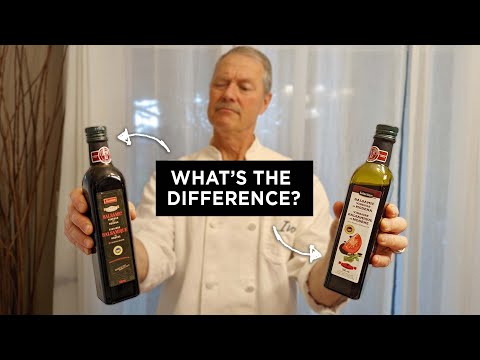
Check three things on the label of any bottle sold as the best balsamic vinegar of Modena: the designation, the age wording and the ingredient list. Together they show which rulebook the bottle is meant to follow, and they are the fastest way to rule out an imitation.
Start with the name. The DOP Traditional label must show the name Aceto balsamico tradizionale di Modena, followed directly by the phrase denominazione di origine protetta. The DOP rules also forbid qualifiers such as extra, fine, scelto, selezionato, riserva, superiore and classico, and they do not allow a production year on the label.
- Designation: the word tradizionale and the phrase denominazione di origine protetta belong to the DOP label.
- Age words: invecchiato means at least 3 years in wood for an IGP product, and Extravecchio means at least 25 years for a DOP product.
- Ingredients: an IGP blend may list caramel, while a DOP Traditional label should show only cooked grape must.
- Seal and bottle: a DOP bottle carries a non-reusable serialized seal that breaks when the bottle is opened.
- Year: a DOP label should not show a production year.
Do not treat the word aged as proof of quality on its own. An IGP bottle may say invecchiato after three years, yet the blend can still contain wine vinegar and, within the 2 percent limit, caramel.
Ingredients and Additives to Check
Caramel and thickeners are the additives that most often separate a traditional aged vinegar from a cheaper condiment, so read the ingredient list before judging the bottle design of the best balsamic vinegar of Modena on your shortlist.
Caramel is allowed in the IGP blend at up to 2 percent, and the stated purpose is to stabilize color. The dark color of traditional vinegar comes from sugar browning during cooking and aging, according to the general encyclopedia summary of balsamic vinegar, so the DOP product does not need caramel.
Cheaper condiments are a different category. The same summary lists common thickeners in such products as modified or native starch, glucose or fructose syrup, pectins, guar gum, xanthan and carob seed. A balsamic glaze uses added sweetener and thickener to imitate the syrupy texture of aged vinegar.
- Caramel: up to 2 percent in the IGP blend.
- Starch or gum: named as thickeners in many condiments.
- Glucose or fructose syrup: a common sweetener in condiments.
- Glaze: sweetener and thickener added to imitate aged vinegar.
A long ingredient list usually means the bottle is a condiment rather than a protected vinegar. A thick, sticky texture can also come from thickeners rather than from age. Only the producer’s own label can confirm what a specific bottle contains.
Choosing by Use
The best balsamic vinegar of Modena for dressings and marinades is the everyday IGP bottle, and the DOP Traditional bottle is for finishing dishes where a few drops matter. The fit depends on how much you use and what you want the vinegar to do.
The encyclopedia summary lists seafood, meat marinades, roasted vegetables and salad dressing as typical uses. Those dishes take a fair amount of vinegar, so an IGP bottle is usually the practical pick for daily cooking. A DOP bottle suits small portions, where its flavor is easier to notice. Dressings usually pair the vinegar with extra virgin olive oil, and protected names work the same way for cheese, as Parmigiano Reggiano vs Parmesan shows. For a wider shortlist beyond Modena bottles, see our guide to the best balsamic vinegar for salads and cooking.
- Everyday dressings and marinades: an IGP bottle.
- Finishing a plate or a dish at the table: a DOP bottle, used in drops.
- A gift or a tasting: a DOP bottle, since its fixed format and serialized seal are easy to recognize.
The DOP bottle costs more for a reason that the rules explain. Its aging is at least 12 years, production is small scale, and the bottle sizes are small. The encyclopedia summary describes traditional production as small scale and the IGP product as highly industrialized, which is consistent with the rules.
Scope boundary: this guide does not compare taste between specific brands, because no tasting was carried out for it. Use the label rules above as the basis for choosing, and let your own taste settle the rest.
What Is Not Verified and How to Check It
Current prices, brand lineups, shelf life and the list of authorized producers were not confirmed for this guide to the best balsamic vinegar of Modena, so check those points on the bottle and the producer’s page before you buy.
This article relies on the consortium’s DOP rules page and two encyclopedia summaries of the EU rules. It did not check a live price list, a current shop listing or the producers selling bottles today.
- Price: compare the shelf price with the bottle size, and calculate the price per 100 ml yourself.
- Producer: look for the producer’s name and, for DOP, the serialized seal on the bottle.
- Storage: follow the storage line printed by the producer rather than a generic number.
- Age claims: confirm them on the label, not in a retailer summary.
Frequently Asked Questions
Is balsamic glaze the same as balsamic vinegar of Modena?
No. A glaze uses added sweetener and thickener to imitate the texture of aged vinegar, according to the encyclopedia summary. Read the ingredient list on the bottle to see what is inside, since the name alone can be misleading.
Is caramel bad in balsamic vinegar?
Not automatically. IGP rules allow caramel up to 2 percent to stabilize color. DOP Traditional rules do not allow it, so the choice depends on whether you want a protected, long-aged product or an everyday blend.
What does invecchiato mean on a label?
It means aged. According to the IGP rules as summarized on Wikipedia, a product kept in wood for 3 years or more may use this label. The blend can still contain wine vinegar, so the age word does not replace reading the ingredients.
Is DOP Traditional worth the cost?
It depends on how you cook. The DOP product has a 12-year minimum, a 25-year Extravecchio term and a cooked-must-only recipe, so it suits finishing dishes and gifts better than daily dressings.
Can I use an IGP bottle for everyday cooking?
Yes. Typical uses named in the encyclopedia summary include marinades, roasted vegetables and salad dressings. Save the DOP bottle for dishes where its flavor is the main point.
To choose the best balsamic vinegar of Modena, start with the label, then match the bottle to the job: an IGP bottle for everyday cooking and a DOP Traditional bottle for finishing a plate. If a bottle does not show the rules it claims to follow, treat its price and design as marketing rather than evidence.
 8 min readGear & PantryBest Balsamic Vinegar: How to Choose a Good Bottle in 2026Updated Nov 17, 2026
 9 min readGear & PantryThe Best Aged Balsamic Vinegar for Your Kitchen in 2026Updated Nov 17, 2026
 8 min readGear & PantryBest Balsamic Glaze: How to Choose One That Tastes RightUpdated Nov 13, 2026
 7 min readGear & PantryBest Capers: How to Choose Good Capers at the StoreUpdated Nov 16, 2026
 9 min readGear & PantryBest Pizza Seasoning: How to Choose a Good BlendUpdated Nov 8, 2026
 10 min readGear & PantryBest Canned Anchovies: How to Choose the Right Tin for Your KitchenUpdated Nov 16, 2026