
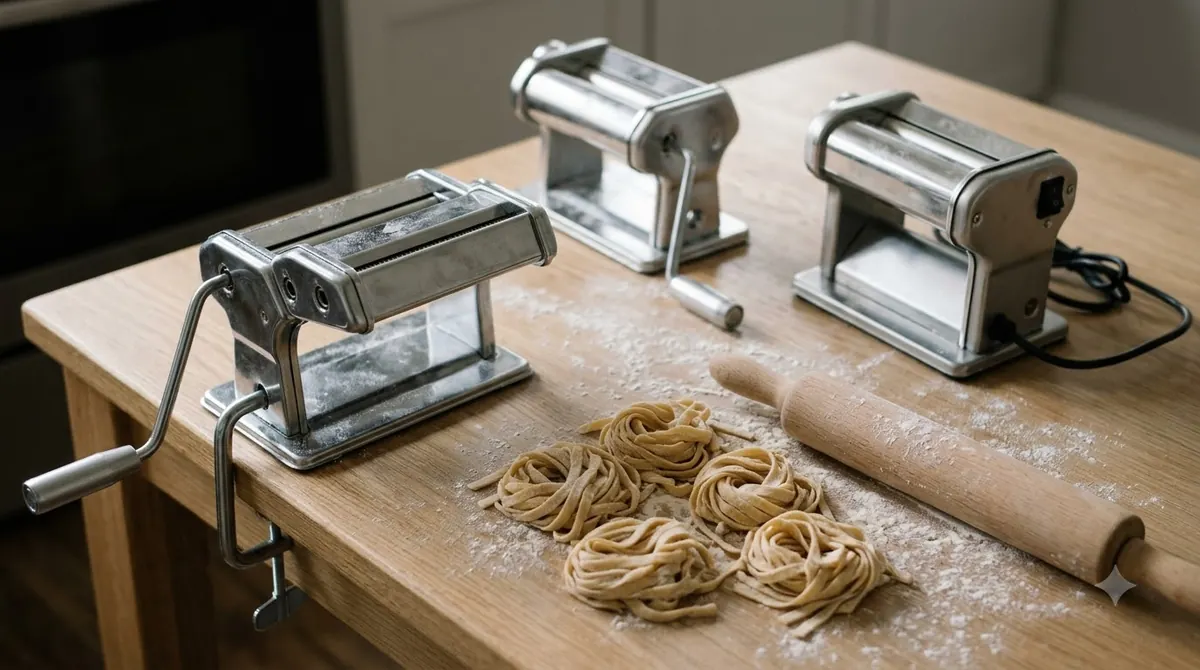

A pasta sheeter rolls fresh dough between two cylinders into a thin, even sheet ready for noodles or filled pasta. The right model depends on how often you cook, how wide a sheet you need and whether you want manual or electric power.
As of 2026-11-12, listings in this guide run from about 98 EUR for a small electric unit to 4,950 EUR for a benchtop model. Start with your sheet width and weekly volume, then compare prices.
Quick picks from the listings checked for this guide:
| Pick | Best for | Key fact |
|---|---|---|
| Imperia Titania Electric | Small kitchens and light use | Electric, 150 mm roller, 98 EUR |
| Imperia Restaurant Manual | Occasional home cooks who want a 220 mm sheet | Manual, 220 mm roller, 379 EUR |
| Electric fresh pasta sheeter SR, wooden cylinders | Wider sheets with electric power | Electric, 220 mm roller, 1,778 EUR |
| La Monferrina Pidue | High-volume production | 168 mm sheet, 0 to 2.5 mm, 14,300 EUR before VAT |

MARCATO Atlas 150 Machine, Made in Italy, Red
Pros & ConsViewHide
Reasons to buy
- Made in Italy hand-crank pasta machine rolling dough in steps
- Includes a pasta cutter and hand crank
- Fits Marcato attachments and the optional motor
Reasons to avoid
- Only rolls and cuts the sheet; tortellini are still shaped by hand
- Takes more counter and storage space than a hand cutter
- Fixed to a countertop edge, so check clamp room

Imperia Pasta Maker Machine- 100% Made in Italy
Pros & ConsViewHide
Reasons to buy
- Chromed steel rollers make sheets up to 150 mm wide
- Cuts fettuccine (6.5 mm) and tagliolini (2 mm)
- Six roller heights from 0.5 to 5 mm
Reasons to avoid
- Manual hand crank
- Two cut widths only, no extruded shapes
- The optional motor is a separate purchase

MARCATO Made in Italy Atlasmotor 110V Electric
Pros & ConsViewHide
Reasons to buy
- Set includes the Atlas 150 machine, hand crank, clamp and Pastadrive motor
- Motor drives the rollers so you can feed dough with both hands
- Made in Italy by Marcato with chrome steel construction
Reasons to avoid
- Costs more than a hand-crank machine alone
- Takes counter space and needs a nearby outlet
- Only 97 Amazon ratings so far

KitchenAid KSMPRA 3-pc Pasta Roller/Cutter Set
Pros & ConsViewHide
Reasons to buy
- Roller and cutter attachments for KitchenAid stand mixers
- Rolls even sheets without hand cranking
- 88% of 9K Amazon ratings are 5-star
Reasons to avoid
- Needs a compatible KitchenAid stand mixer
- Rolls and cuts the dough, but does not fill or fold tortellini
- One of the costlier tools in this guide
The boxes above show pasta machines sold on Amazon US that work as a home pasta sheeter: the hand-crank Marcato Atlas 150 and Imperia, the Atlas with a motor, and the KitchenAid roller and cutter attachment. Their specs come from the Amazon listings. The tables in this guide come from the Lineapasta retailer listing, so compare models by roller width and power type, not by price.
How a Pasta Sheeter Works
A pasta sheeter feeds dough between two rollers, and each pass narrows the gap until the sheet reaches the thickness you set.
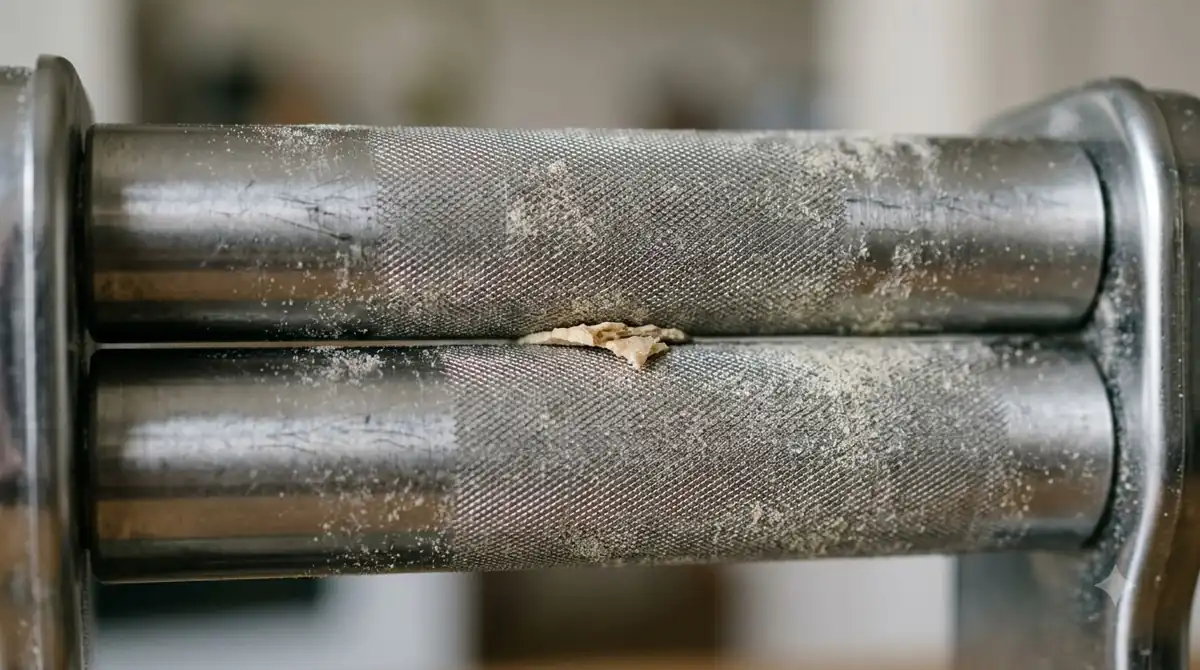
You feed the dough through the widest setting first, then pass it again through narrower settings. The rollers do the thinning, so the dough does not need to be stretched by hand. Many listings describe thickness adjustment by a knob or dial, so check how your model changes the gap. For a closer look at a hand-crank model, see the Marcato Atlas 150 overview.
The La Monferrina Pidue product page, an electric automatic sheeter sold by Lineapasta, makes a 168 mm wide sheet with a thickness range from 0 to 2.5 mm, according to that page. A search summary reported a wider 0 to 5 mm range for one Imperia electric unit, so the spec sheet of each model matters before you buy.
Manual or Electric: Which One Fits Your Kitchen
A manual sheeter suits occasional home cooking, while an electric sheeter suits frequent batches, according to retailer guidance seen in search results.
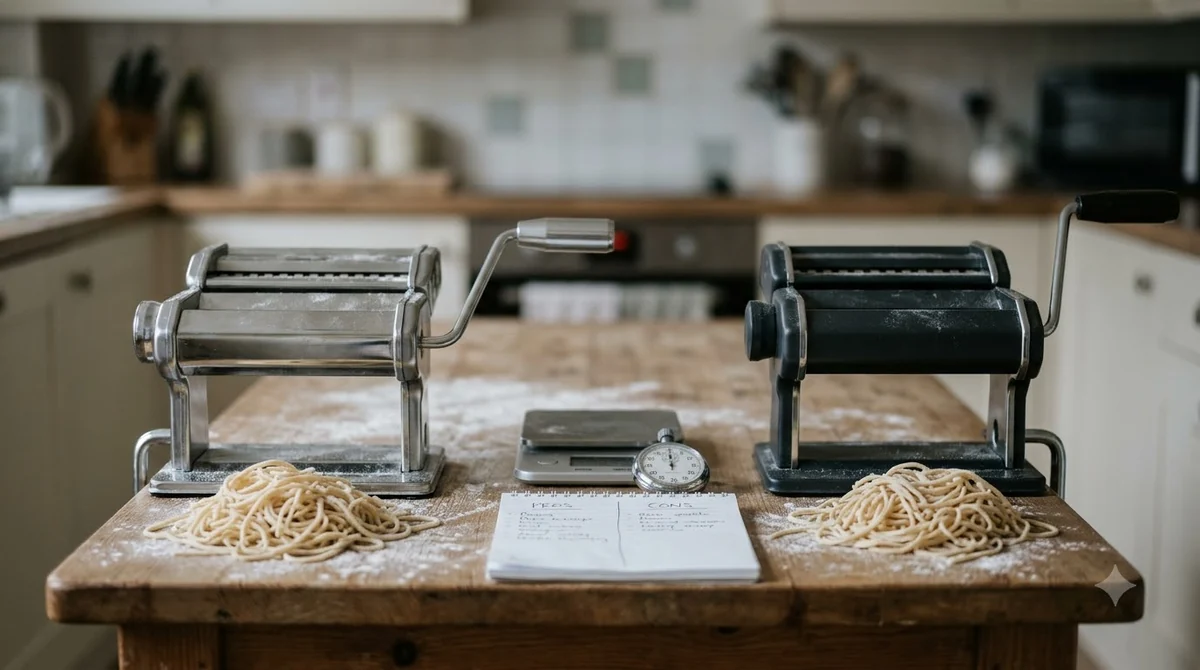
Many listings do not state whether the model is manual or electric, so check the product name and manual before comparing prices. Where the type is stated, electric units in the listing start at 98 EUR, while the Imperia Restaurant Manual is listed at 379 EUR. Price alone does not settle the choice. Our pasta machine for home use guide walks through the same decision.
- Manual: needs no power cord, and suits occasional batches, according to the same retailer guidance.
- Electric: rolls without a hand crank, which suits repeated batches of dough.
- Electric units list voltage options that differ by market, so match the rating to your outlet before you order.
- Footprint: the Pidue measures 86 x 109 x 126 cm, so measure your counter space first.
Roller Width and Sheet Size
Roller widths in the listings run from 150 mm to 320 mm, and the roller width sets the widest sheet a pasta sheeter can make in one pass.
A 150 mm roller suits narrow noodles and small batches. A 220 mm or 250 mm roller gives room for wider sheets, such as those used for lasagna (see pasta machine for lasagna for settings). The 320 mm stainless electric unit in the listing is the widest model in this set.
The La Monferrina Nina benchtop lists a 250 mm pasta sheet width, which is the figure to compare with the roller widths above, since its listing gives its dimensions separately.
Thickness Range and Output
The La Monferrina Pidue lists a thickness range of 0 to 2.5 mm and a pasta sheet output of 25 kg per hour, figures the seller states as rated values.
The same product page lists a 12 kg vat capacity and 2 kW of power. It gives output of 25 kg per hour for tagliatelle, 25 to 30 kg per hour for ravioli and 20 kg per hour for gnocchi. These are seller ratings, not results measured for this guide.
A search summary cited a 0 to 5 mm thickness range for one Imperia electric unit. That figure was not checked on a product page, so confirm it in the manual before you plan a thick setting.
Read the thickness settings in the manual before you start, and keep notes on which setting suits each dough, so you can repeat a good result.
Price Ranges in Current Listings
As of 2026-11-12, the listed prices run from 98 EUR for a 150 mm electric unit to 4,950 EUR for a 250 mm benchtop model in the same retailer listing.
| Model | Type as stated | Roller or sheet width | Listed price |
|---|---|---|---|
| Imperia Titania Electric | Electric | 150 mm | 98 EUR |
| Imperia Restaurant Manual | Manual | 220 mm | 379 EUR |
| Imperia Restaurant Electronic | Electric | 220 mm | 1,340 EUR |
| Electric fresh pasta sheeter SR, wooden cylinders | Electric | 220 mm | 1,778 EUR |
| Electric fresh pasta sheeter SR, stainless cylinders | Electric | 320 mm | 2,465 EUR |
| La Monferrina Nina benchtop | Not stated | 250 mm | 4,950 EUR |
| La Monferrina Pidue single vat | Electric | 168 mm sheet | 14,300 EUR before VAT (product page) |
Rows come from the Lineapasta listing except the Pidue, which comes from its product page. Prices change with stock and shipping, so use the table to compare models, not to set an exact budget. For the Imperia lines, read the Imperia pasta machine guide.
What Is Not Verified and How to Check It
Several details in this guide came only from search summaries or could not be confirmed on a product page, so treat them as open questions until the manual or seller confirms them.
- Imperia 13231 manual sheeter: a search summary of a retailer listing gives an 8.25 inch roller and a 3/8 inch maximum opening, but the product page was not read.
- Thickness range of the Imperia electric unit reported at 0 to 5 mm: seen only in a search summary.
- Cutter attachments, cleaning time and warranty terms: not checked for any model in this guide.
- Shipping costs and VAT for each listing: check the seller at checkout.
Ask the seller for the current specification sheet and the manual before you order, and keep the model number when you compare offers.
Common Mistakes When Buying a Pasta Sheeter
Choosing on price alone skips the three details that decide whether a pasta sheeter fits your kitchen: voltage, counter space and roller width.
- Ignoring voltage. The Pidue page lists 220V/50Hz single phase, 380V/50Hz three phase, 220V/60Hz single phase and 220V/60Hz three phase, so match the option to your outlet.
- Skipping the footprint. The Pidue measures 86 x 109 x 126 cm, so measure your counter before you order any electric model.
- Choosing a narrow roller for wide sheets. A 150 mm roller limits the sheet width you can make in one pass.
- Treating the product name as the type. Some listings do not say whether a model is manual or electric.
- Buying a high-output unit for occasional use. The Pidue rates 25 kg per hour, far more than a weekly home batch needs.
How to Choose the Right Pasta Sheeter
Choose by roller width, power type and voltage first, then compare prices, because those three factors decide whether a pasta sheeter fits how you cook.
- Count how many batches you roll each week, and choose manual or electric from that number.
- Pick the roller width from the widest sheet your recipes need.
- Check the voltage option on the product page against your outlet.
- Confirm the thickness range in the manual, not in a search summary.
- Compare prices including VAT and shipping, which listings may state separately.
If you roll dough for one household, a narrow roller may be enough, and a manual model keeps the setup simple. If you cook for guests on a regular schedule, weigh the rated output and voltage first, because those two numbers decide how the machine fits your routine. Either way, check the widest sheet your recipes need before you compare any other feature. If you already own a stand mixer, the KitchenAid pasta roller is another way to roll sheets.

Frequently Asked Questions
Is a pasta sheeter the same as a pasta machine?
Not always. Listings use the two names inconsistently, so compare roller width, power type and the manual instead of the name alone.
Can a pasta sheeter roll pizza dough?
A search summary described some commercial sheeters as dough sheeters for pasta, pastry and pizza, but that was not checked on a product page. Confirm with the seller and the manual before you roll pizza dough.
What is the thinnest setting on a pasta sheeter?
The La Monferrina Pidue lists a thickness range of 0 to 2.5 mm. One Imperia electric unit was reported at 0 to 5 mm in a search summary, so check the manual for your exact model.
Is an electric pasta sheeter worth it at home?
Retailer guidance seen in search results suggests electric units suit frequent batches, while manual units suit occasional use. Count your weekly batches before you decide, since the listed price gap is large.
Where should I check current prices?
Prices here come from a retailer listing checked on 2026-11-12, and they change with stock. Check the seller for current prices, shipping and VAT before you buy.
Start with the roller width you need and how often you will roll dough, then choose manual or electric. Before you order a pasta sheeter, confirm the voltage, counter space and thickness range in the manual, and keep the model number when you compare offers. Those checks cover the details this guide could not confirm.
 9 min readBest PicksBest Dual Fuel Pizza Ovens: Types, Fuels and How to ChooseUpdated Nov 12, 2026
 9 min readBest PicksCheap Pizza Oven: Budget Types That Actually Cook WellUpdated Nov 12, 2026
 9 min readBest PicksBest Natural Gas Pizza Ovens: Types, Setup and What to CheckUpdated Nov 12, 2026
 10 min readBest PicksBest Pizza Oven for Home Use: How to Pick the Right TypeUpdated Nov 12, 2026
 9 min readBest PicksBest Wood Fired Pizza Oven for Home: Types, Criteria and Buying TipsUpdated Nov 12, 2026
 5 min readBest PicksMost Popular Pizza Oven: Which Type Home Cooks ChooseUpdated Nov 13, 2026