
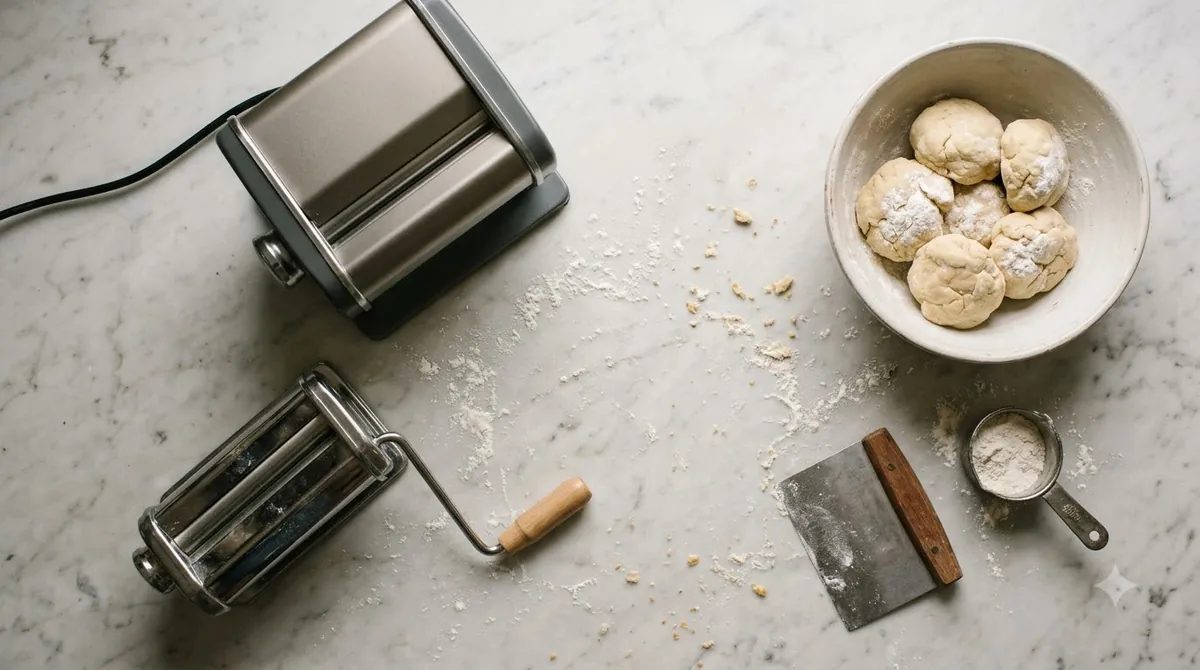

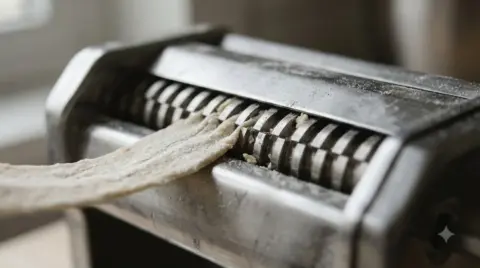
A pasta machine for lasagna is any machine that rolls dough into thin, wide, flat sheets. The Marcato Atlas 150, for example, has 150 mm rollers and a lasagna cutter that its manual lists at settings 6 to 9.
Roller width sets how wide each sheet can be, and the regulator sets how thin it gets. Check both before you buy, then follow the manufacturer’s rolling steps.

MARCATO Atlas 150 Machine, Made in Italy, Red
Pros & ConsViewHide
Reasons to buy
- Made in Italy hand-crank pasta machine rolling dough in steps
- Includes a pasta cutter and hand crank
- Fits Marcato attachments and the optional motor
Reasons to avoid
- Only rolls and cuts the sheet; tortellini are still shaped by hand
- Takes more counter and storage space than a hand cutter
- Fixed to a countertop edge, so check clamp room

Imperia IPasta Classic Pasta Maker
Pros & ConsViewHide
Reasons to buy
- Made in Italy with chromed steel cutting rollers
- Makes 150 mm sheets, 6.5 mm fettuccine and 2 mm tagliolini
- Six roller thickness settings from 0.5 mm to 5 mm
- Clamp slot accepts a separate motor
Reasons to avoid
- Manual crank, so you turn it for every pass
- Only three cut widths in the box
- Motor is a separate purchase

KitchenAid KSMPDX 5-piece Pasta Deluxe Set
Pros & ConsViewHide
Reasons to buy
- Five-piece roller and cutter set for KitchenAid stand mixers
- Stainless steel rollers and cutters
- Eight thickness settings and 6-inch sheets
Reasons to avoid
- Needs a KitchenAid stand mixer, sold separately
- Costs more than the 3-piece KSMPRA set
- Not covered by the sources used in this guide

KitchenAid KSMPRA 3-pc Pasta Roller/Cutter Set
Pros & ConsViewHide
Reasons to buy
- Roller and cutter attachments for KitchenAid stand mixers
- Rolls even sheets without hand cranking
- 88% of 9K Amazon ratings are 5-star
Reasons to avoid
- Needs a compatible KitchenAid stand mixer
- Rolls and cuts the dough, but does not fill or fold tortellini
- One of the costlier tools in this guide
What a Pasta Machine for Lasagna Needs
A pasta machine for lasagna suits the job when it rolls dough flat and thin and can produce wide sheets. Lasagna is a pasta made in wide, flat sheets, and the traditional baking sheet is a long, narrow rectangle. If you plan to bake one, our guide to making lasagna covers the assembly.
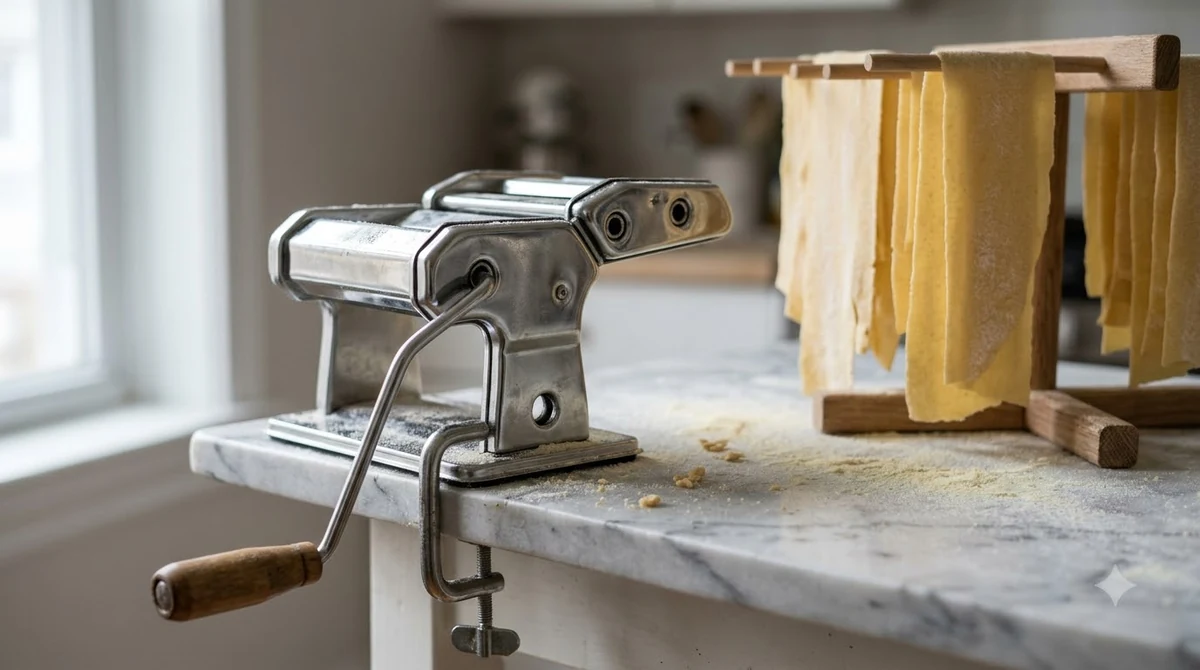
Wikipedia describes lasagne as stacked pasta layers alternating with fillings, topped with grated cheese and baked. According to Wikipedia’s lasagne article, modern baking sheets tend to be long and narrow, though square sheets also exist.
Three checks cover most cases when you look for a pasta machine for lasagna:
- Roller width, which limits the widest sheet you can make.
- Thinnest setting, since the manual’s recommended lasagna settings give sheets of about 1.0 mm down to 0.5 mm.
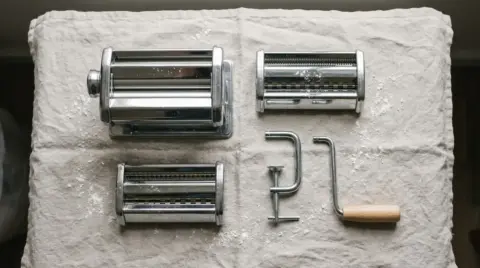
- Accessories, such as a lasagna cutter, which Marcato lists as a separate part for the Atlas 150.
Traditional Emilia-Romagna dough was rolled paper-thin by hand, often by a professional sfoglina. A home machine is the practical way to get close to that texture without the hand-rolling.
Roller Width and the Lasagna Cutter
The Atlas 150 has 150 mm rollers, and its accessory table lists a lasagna cutter at 150 mm. Sheets can be no wider than the rollers, so for a pasta machine for lasagna, roller width is the first number to check.
| Accessory (Atlas 150) | Width listed | Recommended setting |
|---|---|---|
| Lasagna | 150 mm | 6 to 9 |
| Lasagnette | 10 mm | 6 to 9 |
| Fettuccine | 6.5 mm | 6 |
The manual says the Atlas 150 is compatible with 12 extra cutting accessories. The lasagna and lasagnette rows are the two that matter for wide pasta, and both sit in the same range of settings. A 150 mm sheet is narrow, so you will lay several pieces side by side or overlap them in the dish.
If you plan to make only lasagna, a pasta machine for lasagna with a wide roller and a clear thinnest setting covers most of the job. Extra cutters matter mainly if you also make fettuccine or lasagnette often. Our Marcato Atlas 150 lasagna guide goes deeper on that machine.
Thickness Settings for Lasagna Sheets
The Marcato manual lists settings 6 to 9 for lasagna, which give sheets from about 1.0 mm down to 0.5 mm. The figures are approximate, so check the sheet by eye and feel as you roll.
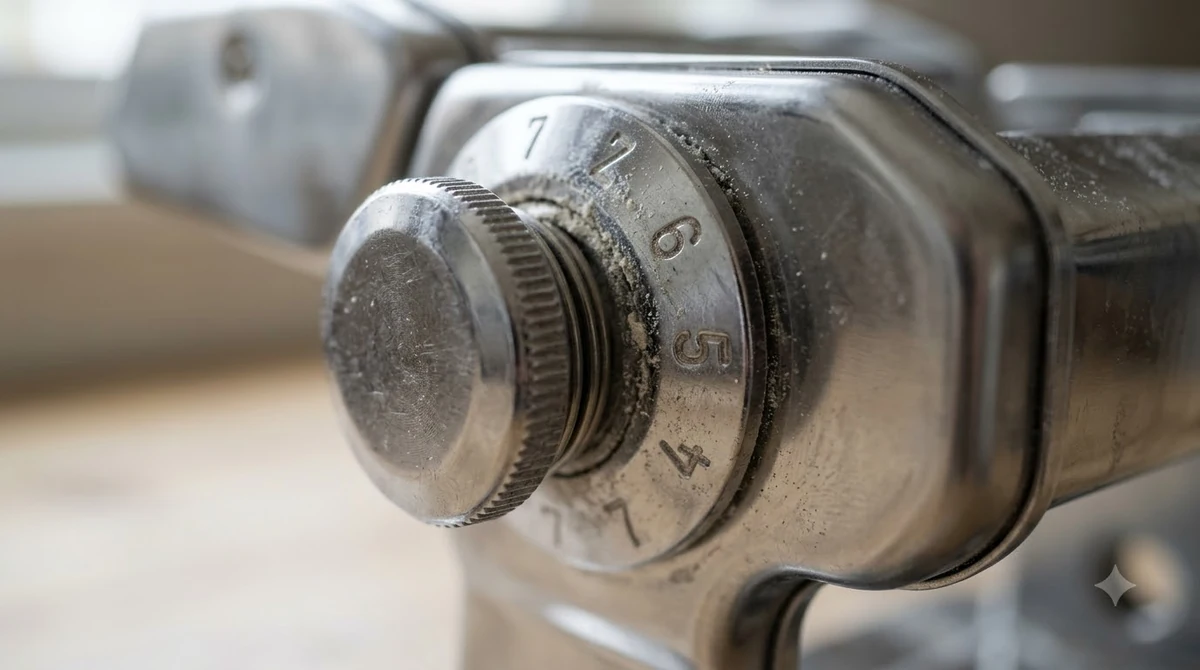
| Regulator setting | Approximate sheet thickness |
|---|---|
| 0 | about 4.8 mm |
| 1 | about 3.7 mm |
| 2 | about 3.1 mm |
| 3 | about 2.4 mm |
| 4 | about 1.8 mm |
| 5 | about 1.5 mm |
| 6 | about 1.0 mm (lasagna range starts) |
| 7 | about 0.8 mm |
| 8 | about 0.6 mm |
| 9 | about 0.5 mm (thinnest listed) |
Start every batch at setting 0, pass the dough several times while folding it, then move down one number per pass. Stop at the setting that matches the sheet you want, and do not skip numbers if the dough tears or sticks. Stand mixer owners can read about making lasagna sheets with a KitchenAid roller.
Because the thickness figures are approximate, roll a test sheet at the setting you chose and check that it holds together when you lift it. If it tears, go back one number and roll it again. Consistent sheets matter more than exact numbers when you layer a dish, so keep every sheet from your pasta machine for lasagna at the same setting.
Dough for Homemade Lasagna Sheets
Fresh lasagna dough is usually flour and eggs, and the Marcato base recipe uses 250 g of 00 flour, 250 g of fine durum semolina and 5 whole eggs for five people.
Wikipedia notes that traditional southern dough used semolina and water, while northern dough used flour and eggs. Industrial dried lasagne sheets are made from durum semolina, so the two products are not the same.
For another take on egg dough, try the fresh pasta dough recipe. To follow the Marcato base recipe, mix the flour, semolina and eggs with a fork, then knead by hand until the dough is smooth and elastic. The manual says to add water if the dough is too dry and flour if it is too soft. Good dough should not stick to your fingers.
If the dough is too sticky to feed through the rollers, add flour a little at a time and roll again. A pasta machine for lasagna works best with dough that is firm enough to hold its shape between passes.
Some regional versions change the colour rather than the method. Ferrara’s green lasagne gets its colour from spinach mixed into the dough, according to Wikipedia.
Rolling and Cutting Lasagna Sheets Step by Step
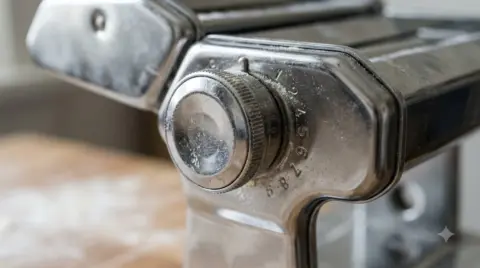
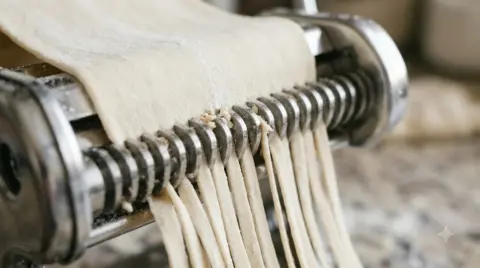
Clamp your pasta machine for lasagna to the counter, set the regulator to 0, pass the folded dough several times, then step down one number per pass until the sheet is thin enough.
- Insert the clamp into the hole on the work surface, then fit the crank and turn it clockwise.
- Pull the regulator outward and turn it to 0.
- Pass the dough through several times, folding it in half and flouring it each time, until it forms an even, compact shape.
- Pass the sheet once at each number down to your target, such as 6 to 9 for lasagna.
- Cut the sheet into pieces about 25 cm long and flour both sides lightly.
- For a cut shape such as lasagnette or fettuccine, move the crank to the cutting roller hole and pass the sheet through.
The manual also notes that the first use should be run with a little dough, which is then discarded. Clean the rollers with a damp cloth before that first pass.
Keep the cut pieces under a clean cloth while you work so they do not dry out before you assemble the dish. Work through one batch at a time so the sheets stay easy to handle.

Choosing a Pasta Machine for Lasagna
Choose a pasta machine for lasagna by roller width, thinnest setting and drive. Marcato’s manual says its non-motorized machines carry a 10-year warranty against manufacturing defects.
| Check | What to look for |
|---|---|
| Roller width | Sets the widest sheet. The Atlas 150 uses 150 mm rollers. |
| Thinnest setting | Lasagna needs settings around 6 to 9 on the Atlas, about 1.0 mm to 0.5 mm. |
| Accessories | A lasagna cutter or lasagnette strip matters if you also want other shapes. |
| Drive | Hand crank or motor. The manual limits motor versions to 15 minutes of continuous use. |
| Warranty | The manual lists 10 years for non-motorized and 2 years for motorized models. |
A motor is not required for a pasta machine for lasagna, since the manual’s steps are written for hand cranking. You can compare the Atlas line directly on Marcato’s official site. We did not verify current prices, stock or how other brands’ rollers compare, so check each manufacturer’s listing for those details.
Cleaning and Caring for the Rollers
The manual says not to wash a pasta machine for lasagna or its accessories in water or the dishwasher, so clean them with a cloth and a brush. See how to clean the Marcato Atlas 150 for a full routine.
- Brush flour and dough off the rollers and cutters with a cloth or soft brush.
- Remove the combs under the cutting rollers by pressing the rod down and pushing it sideways, then slide the comb out.
- If the rollers squeak, add a few drops of food-safe Vaseline oil at the roller ends, as the manual advises.
Frequently Asked Questions
Can any pasta machine make lasagna?
Any machine that rolls dough flat and thin enough can make lasagna sheets. Check the roller width and the thinnest setting before you buy, because they decide how wide and how thin the sheet can be.
How thin should lasagna sheets be?
Marcato’s manual lists settings 6 to 9 for lasagna, which give about 1.0 mm to 0.5 mm. Those figures are approximate, so judge the dough by eye and feel as you roll.
Does a lasagna sheet need a motor?
No. Hand cranking works, and the manual’s steps are written for it. A motor is an option for longer sessions, but the manual limits motor versions to 15 minutes of continuous use.
Can I wash the rollers in the dishwasher?
No. The manual says not to wash a pasta machine for lasagna or its accessories in water or the dishwasher. Brush and wipe them instead.
Is fresh lasagna dough the same as dried sheets?
No. Fresh dough is mixed with eggs and rolled at home, while dried industrial sheets are made from durum semolina, according to Wikipedia.
Start with roller width and the thinnest setting when you shop for a pasta machine for lasagna, since those decide whether a machine can make lasagna sheets at all. Then compare the drive, the accessories and the warranty. Keep the dough a little firm and flour the sheets so they do not stick in your pasta machine for lasagna.
 6 min readBy Use & ModelKitchenAid Pasta Roller Lasagna: How to Roll Sheets for LayersUpdated Nov 7, 2026
 9 min readBy Use & ModelHow to Use KitchenAid Pasta Roller: Step-by-Step GuideUpdated Nov 7, 2026
 9 min readBy Use & ModelBreville Pizzaiolo Recipes: Settings, Dough and Pan Pizza StepsUpdated Nov 6, 2026
 8 min readBy Use & ModelKitchenAid Pasta Roller Not Working: What to Check FirstUpdated Nov 10, 2026
 8 min readBy Use & ModelKitchenAid Pasta Roller Parts: What Comes With Each ModelUpdated Nov 11, 2026
 9 min readBy Use & ModelHow to Clean KitchenAid Pasta RollerUpdated Nov 10, 2026