
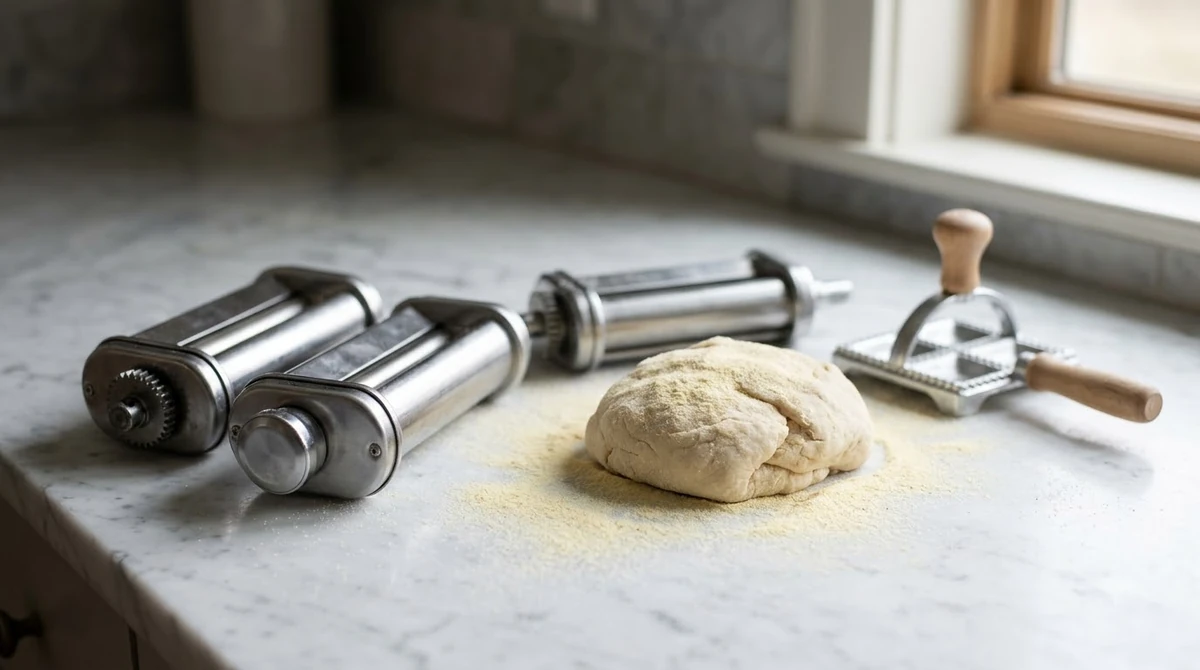

The KitchenAid pasta roller is a stand mixer attachment, model KSMPRA, that flattens dough into sheets and cuts them into spaghetti or fettuccine. It is a three-piece set: a roller with eight thickness settings, a spaghetti cutter and a fettuccine cutter, plus a cleaning brush. The set is made for KitchenAid stand mixers and attaches to the mixer’s multipurpose hub. This review covers what is in the box, the published specifications, who the set suits, and which details you should still confirm before buying.

KitchenAid KSMPRA 3-pc Pasta Roller/Cutter Set
Pros & ConsViewHide
Reasons to buy
- Roller and cutter attachments for KitchenAid stand mixers
- Rolls even sheets without hand cranking
- 88% of 9K Amazon ratings are 5-star
Reasons to avoid
- Needs a compatible KitchenAid stand mixer
- Rolls and cuts the dough, but does not fill or fold tortellini
- One of the costlier tools in this guide
What the KitchenAid Pasta Roller Set Includes
The KSMPRA box holds three working parts and one cleaning tool. Each part is built for a different job in the pasta-making process, so it helps to know what you are paying for before you compare it with other options.
According to the KitchenAid spec sheet for the KSMPRA (document KP160030-C, revision 3/16), the KitchenAid pasta roller set contains the following items:
- A pasta roller that flattens dough into sheets, with eight thickness settings.
- A spaghetti cutter that turns sheets into spaghetti noodles.
- A fettuccine cutter that turns sheets into fettuccine noodles.
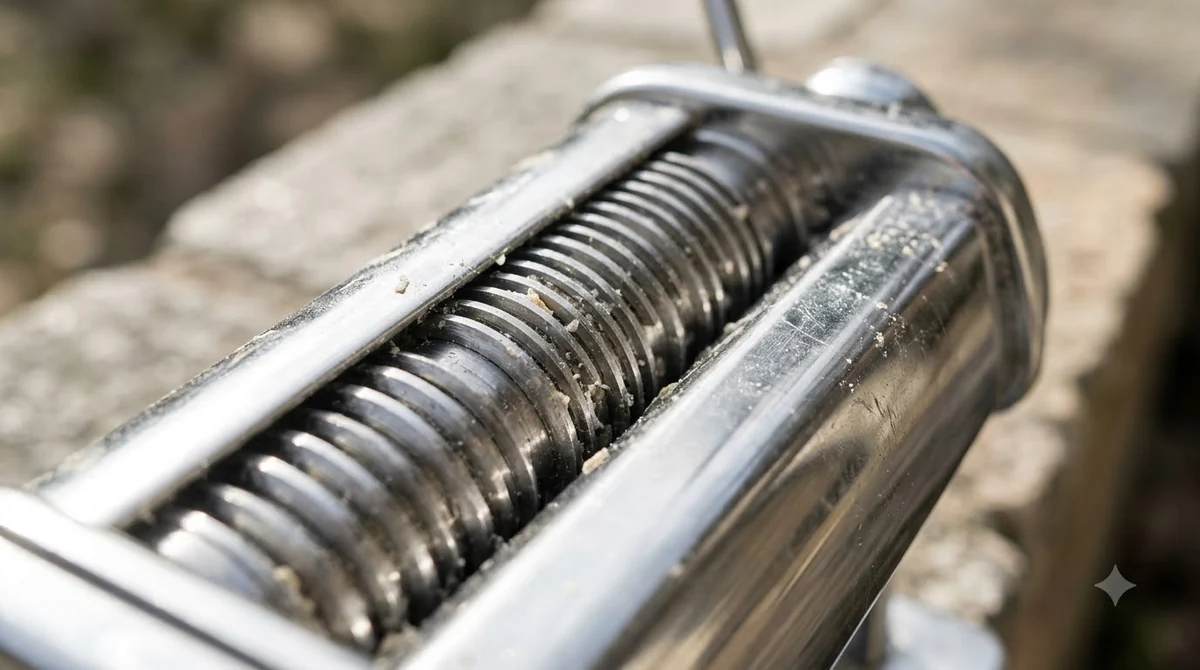
- A cleaning brush for removing flour and bits of dough from the roller and cutters.
The spec sheet describes the rollers and cutters as commercial-style stainless steel. Stainless steel is also easy to see when it needs cleaning, so a dry brush after each session is the simplest routine. The KitchenAid pasta roller set does not include a mixer, so you need a compatible KitchenAid stand mixer before the roller will work.
Specs at a Glance
The table below uses the manufacturer figures from the KSMPRA spec sheet for the KitchenAid pasta roller. Retailer listings for the same set show different dimensions and weights, so treat the spec sheet as the reference for size and weight.
| Item | KitchenAid KSMPRA |
|---|---|
| Model | KSMPRA, 3-Piece Pasta Roller & Cutter Set |
| Pieces | Pasta roller, spaghetti cutter, fettuccine cutter, cleaning brush |
| Thickness settings | 8 |
| Material | Commercial-style stainless steel |
| Product size (H x W x D) | 2.2 x 3.8 x 9.7 in (5.6 x 9.7 x 24.6 cm) |
| Net weight | 7.5 lb (3.4 kg) |
| Shipping weight | 7.9 lb (3.6 kg) |
| Compatibility | Designed for all KitchenAid stand mixer models with the multipurpose attachment hub |
| Made in | Italy |
| Warranty | 1-year replacement limited warranty |
The size and weight figures describe the product itself, not the shipping carton. The carton and master-pack figures on the spec sheet are larger, so check those only if you are arranging storage or delivery.
How the Roller Works With Your Mixer
The roller is a manual-feed attachment: the stand mixer supplies the turning power through its hub, and you guide the dough through the rollers. The general method for machine rolling is to pass the sheet through the rollers several times, moving to a thinner setting after each pass. The Wikipedia article on pasta describes machine rolling in the same way, with sheets rolled thinner in steps. The KitchenAid pasta roller follows that pattern.
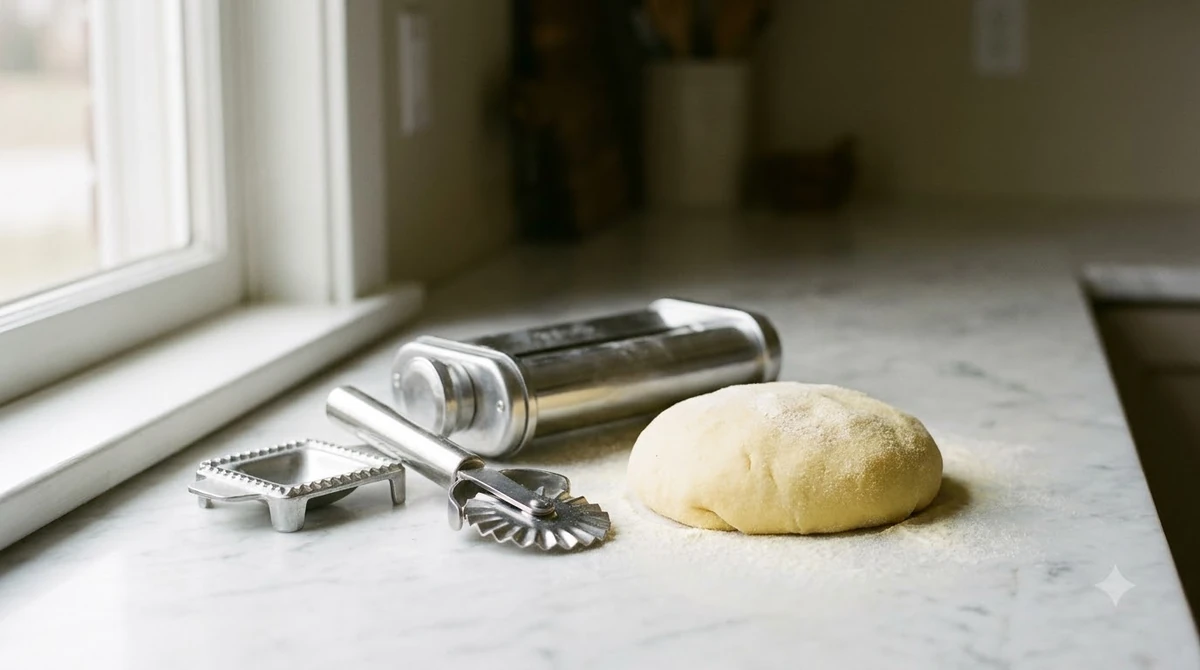
- Turn the mixer off before you attach or remove any part.
- Attach the roller to the multipurpose attachment hub, following the steps in your mixer’s instruction booklet.
- Set the thickness dial to the first, widest setting (the thickest sheet) and pass a flattened piece of dough through the rollers.
- Step the dial down one setting at a time, passing the sheet through each setting once or twice, until it reaches the thickness you want.
- Attach the spaghetti or fettuccine cutter at the outlet to cut the finished sheet into noodles.
The exact mixer speed for the roller and the printed settings chart are not in the spec sheet we could read. Follow the speed and settings in your own instruction booklet. Our guides to KitchenAid tilt head attachments and KitchenAid heavy duty attachments list other attachments for the same mixers.

Which Shapes the Set Makes
The KSMPRA makes two shapes: spaghetti and fettuccine. Both come from the sheet the roller produces, so the thickness setting you choose before cutting affects how the noodles turn out.
Other shapes such as penne, rigatoni or fusilli need an extruder, not a roller. KitchenAid sells a separate pasta press for extruded shapes, and it is a different attachment with its own plates. The roller set does not replace it, and the press does not roll sheets. If your main goal is sheets for lasagna or ravioli, the KitchenAid pasta roller is the right tool, but you will need to cut the sheets yourself. A KitchenAid ravioli maker is a separate attachment.
Dough Basics for the Roller
Fresh pasta for a roller is usually made with eggs and flour. The Wikipedia pasta article notes that fresh pasta is typically made with eggs and all-purpose or “00” flour, and that machine rolling is one of the common methods for thinning it. The dough needs to be smooth and firm enough to pass through the KitchenAid pasta roller without tearing.
We have left specific dough recipes and ratios out of this review. The spec sheet does not give a dough formula for the roller, and recipes from other sources vary. Use a tested recipe from a source you trust, and adjust the flour and water by feel until the dough holds together.
Cleaning and Care
Cleaning is simple but has one firm rule: the roller and cutters should not be immersed in water and should not go in the dishwasher, according to the KitchenAid spec sheet. The included cleaning brush is the intended tool for removing flour and bits of dough.
Brush the KitchenAid pasta roller and its cutters after each use, while the flour is still dry. Dough left in the cutters can dry and build up, so a quick brush at the end of each session saves more trouble than a deep clean later. Store the parts dry before you put them away.
- Use only the included brush on the rollers and cutters.
- Do not soak or rinse the rollers and cutters under water.
- Keep the set dry before you put it away.
Who Should Buy the KitchenAid Pasta Roller
The KitchenAid pasta roller suits people who already own a KitchenAid stand mixer and want fresh sheets plus two cut shapes without buying a separate machine. It makes sense for home cooks who make lasagna, fettuccine or spaghetti regularly and want the mixer to handle the power side of the job.
- Buy it if you already have a compatible KitchenAid stand mixer and want fresh fettuccine or spaghetti.
- Buy it if you mainly need flat sheets for layered dishes and will cut them by hand.
- Skip it if you want short shapes such as penne or fusilli; you will need an extruder for those.
- Skip it if you do not have a KitchenAid stand mixer, because the set needs one to run.
If you do not own a stand mixer, compare the roller set with a standalone hand-crank pasta machine such as the Marcato Atlas 150, which also thins dough in steps but needs you to turn the crank.
What We Could Not Confirm
Several details matter for buying but were not in the pages we could read, so we have left them out rather than guess.
- The exact mixer speed for the roller and the printed roller settings chart. Check the instruction booklet that came with your mixer or the KitchenAid website for your model.
- The current price and whether a discount is running. Prices change often, so check the seller’s page on the day you buy.
- Dimensions and weights on some retailer listings, which differ from the spec sheet. The figures in this article come from the manufacturer’s spec sheet.
- Cutter types on some retailer listings, which show a linguine cutter instead of a spaghetti cutter. The spec sheet lists a spaghetti cutter.
Before you buy, confirm the warranty terms on the KitchenAid website, because the spec sheet only gives the one-year summary and refers you to the full details there.
Related reading: this page reviews the three-piece KSMPRA set. If you are still choosing between the single sheet roller, the three-piece set and the five-piece deluxe set, our best KitchenAid pasta roller attachments guide compares them side by side.
Frequently Asked Questions
What comes in the KitchenAid pasta roller set?
The KSMPRA set includes a pasta roller with eight thickness settings, a spaghetti cutter, a fettuccine cutter and a cleaning brush.
Does the KitchenAid pasta roller fit every stand mixer?
The spec sheet says it is designed to work with all models of KitchenAid stand mixers. Confirm that your model has the multipurpose attachment hub before you buy, because the hub is how the KitchenAid pasta roller connects.
Can the KitchenAid pasta roller go in the dishwasher?
No. The spec sheet says the roller and cutters should not be immersed in water or put in the dishwasher. Clean them with the included brush.
Is the KSMPRA the same as the KitchenAid pasta press?
No. The roller set rolls sheets and cuts two noodle shapes. The pasta press is a separate attachment that pushes dough through plates to make shaped pasta.
How long is the warranty?
The spec sheet lists a 1-year replacement limited warranty and directs you to kitchenaid.com for complete terms.
The KitchenAid pasta roller is a practical choice if you already own a compatible stand mixer and want fresh spaghetti, fettuccine or flat sheets. Check the mixer speed and settings in your own booklet, and confirm the price and warranty on the seller’s and manufacturer’s pages before you buy. If you want the guarantee terms by region, see our guide to the KitchenAid pasta roller warranty.
 6 min readReviews & VersusKitchenAid KSMPRA Pasta Roller and Cutter Set GuideUpdated Nov 13, 2026
 8 min readReviews & VersusImperia Pasta Machine: Models, Roller Range and Who Should BuyUpdated Nov 15, 2026
 5 min readReviews & VersusKitchenAid Pasta Roller vs Extruder: Which Attachment to BuyUpdated Nov 13, 2026
 8 min readReviews & VersusKitchenAid Pasta Roller Warranty: Coverage, Length and ClaimsUpdated Nov 10, 2026
 8 min readReviews & VersusMarcato vs KitchenAid: Which Pasta Maker Should You Buy?Updated Nov 14, 2026
 8 min readReviews & VersusHamilton Beach Pasta Maker Review: Who Should Buy OneUpdated Nov 11, 2026