
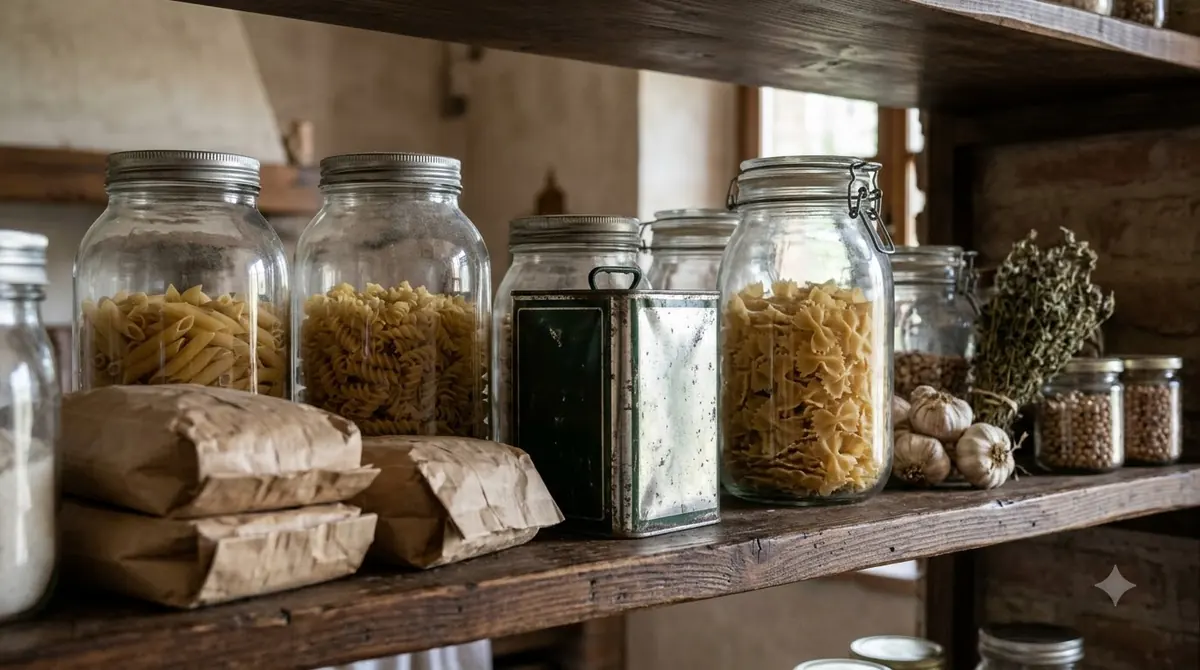

The best pasta storage containers are airtight, sturdy vessels that keep moisture, air and insects away from dry pasta. Glass, metal and plastic all work when the lid seals tightly. Light and heat also reduce quality, so the cupboard matters as much as the container.
Quick comparison of pasta storage containers
Glass jars and metal tins block moisture when the lid seals, while plastic canisters are lighter and easier to refill. The table compares five common types of pasta storage containers by seal, light and best use.
| Container type | Seal to look for | Light and visibility | Best use |
|---|---|---|---|
| Glass jar with clamp or gasket lid | An intact rubber gasket that closes firmly | Clear, so light gets in | Dark cupboard storage where you want to see the stock |
| Metal tin with tight lid | A lid that fits snugly with no gaps | Opaque, blocks light | Longer holds in a dark pantry |
| Plastic canister with snap or locking lid | A gasket or locking clip | Clear or opaque, depending on the model | Frequent cooking and easy refills |
| Tall dispenser | A lid that closes fully along its height | Usually clear | Long pasta such as spaghetti, if your cabinet has the height |
| Zipper or clip bag | A zipper that closes all the way | Opaque or clear film | Temporary storage only, since a bag is a weaker barrier |
Clear containers let you see how much pasta is left, but they also let light in, so keep them inside a closed cupboard.

ComSaf Pasta Containers Storage 2.2 Qt
Pros & ConsViewHide
Reasons to buy
- Tall 11.3 inch jars fit long spaghetti without breaking it
- Glass jars with lids block moisture and insects
- Set of three covers different pasta types
Reasons to avoid
- Clear glass lets light in, so keep them in a closed cupboard
- Tall jars may not fit under a low shelf

Vtopmart 78oz Glass Food Storage Jars
Pros & ConsViewHide
Reasons to buy
- Glass jars with clamp lids give a firm seal
- Wide mouth makes filling and washing easy
- Rated 4.7 stars across about 6.7K Amazon ratings
Reasons to avoid
- Clear glass lets light reach the pasta
- Heavier than plastic, and the clamp lids add a part to clean

Vtopmart Pasta Storage Containers, 4 Pack
Pros & ConsViewHide
Reasons to buy
- Plastic canisters are light and easy to refill
- Four-pack gives one canister for each pasta shape
- Rated 4.5 stars across about 13K Amazon ratings
Reasons to avoid
- Plastic can scratch over time
- Horizontal design needs the right shelf space

Oggi Large Clear Canister with Clamp Lid, 72 oz
Pros & ConsViewHide
Reasons to buy
- Large 72 oz canister holds a full box or two of pasta
- Clamp lid for a tight seal
- Low price with over 10K Amazon ratings at 4.6 stars
Reasons to avoid
- Clear design lets light in
- Single canister, so you would need several to sort shapes
What dry pasta needs from a container
Dry pasta needs protection from moisture, air, insects and light, and the New Mexico State University storage guide sets out that standard for stored food, and it applies to any pasta storage containers you buy.
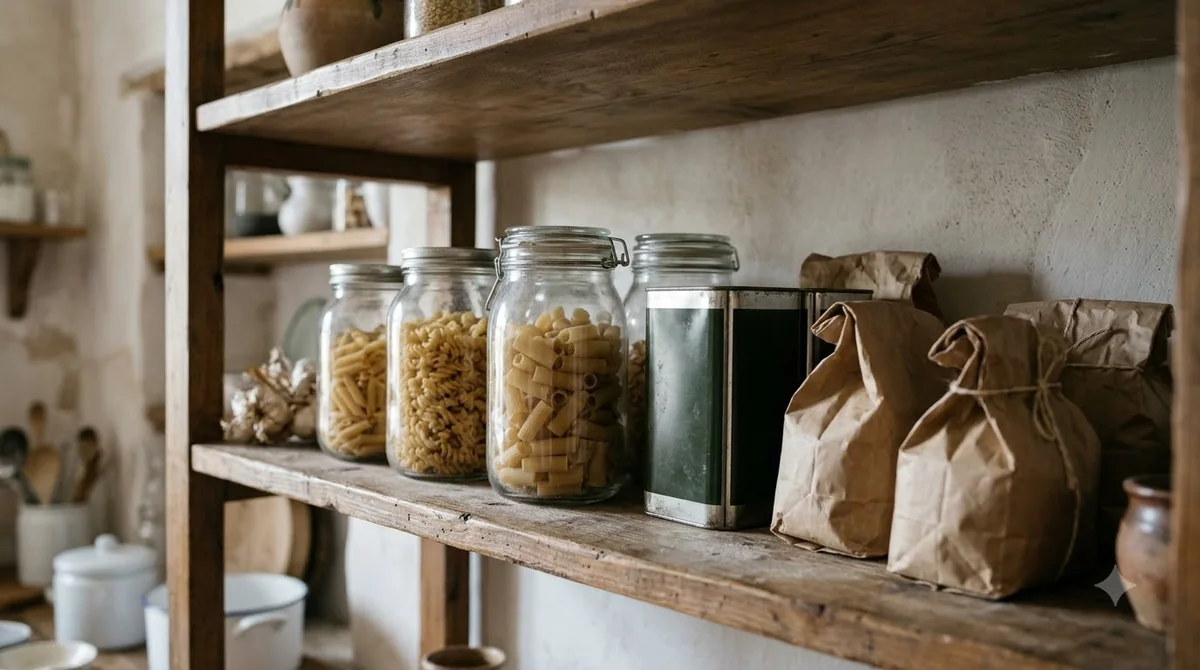
The guide says storage containers should be metal, glass or plastic, or storage bags with tight-fitting zippers or lids, to keep out moisture, air and insects in its food storage guidance. Pasta storage containers that meet that standard cover the core requirement, and the shape or brand is secondary.
The same guide asks for a dry area with little or no humidity, away from heat sources such as the oven, the stove and refrigerator exhaust, so place your pasta storage containers accordingly.
Dark storage matters as well. The guide notes that light can degrade nutritional content and appearance, which is why opaque pasta storage containers, such as tins, and a closed cupboard do a better job than a clear jar on an open shelf.
The guide also advises keeping stored food and pasta storage containers off the floor, where it can come into contact with moisture.
How to judge pasta storage containers
A container is worth buying when its lid closes firmly, because a loose lid lets in the air and insects that storage must keep out. Check these six points before you buy pasta storage containers.
- Seal: a gasket, clamp or locking lid closes firmly. A lid that rattles or sits loosely lets air in.
- Material: glass and metal are rigid and easy to wash. Plastic is lighter, but it can scratch over time, so inspect the surface before you refill it.
- Light: opaque materials block light. A clear container needs a dark cupboard to protect the pasta inside.
- Height and fit: long pasta such as spaghetti (see our spaghetti pasta guide) needs a tall container. Measure the cabinet height before you buy, because tall containers may not fit standard shelves.
- Opening and cleaning: a wide mouth makes it easier to wash and dry the inside completely before a refill.
- Capacity: choose a size close to what you cook through in a few months, so pasta does not sit for long in the container.

Who should buy which type
Choose a glass or metal container for a dark cupboard you open rarely, and a plastic canister if you refill often. The right pasta storage containers for you depend on how much you cook and how much space your kitchen has.
A plastic canister with a locking lid suits households that cook pasta most weeks, and it is a practical pick among pasta storage containers. It is lighter to lift and quicker to refill than glass or metal.
A glass jar with a gasket suits a pantry where you want to see the stock at a glance. Keep it in a closed cupboard, because a clear jar on an open shelf exposes the pasta to light.
Skip tall dispensers among pasta storage containers if your cabinets are shallow or short. Skip zipper bags for long-term storage, since a bag is a weaker barrier than a lidded container with a gasket.
Common mistakes with pasta storage containers
A clear container on a sunny shelf near the stove works against the storage advice on light and heat, even when the lid seals well. Most problems come from placement and habits, not from the container itself.
- Placing containers next to the oven, the stove or the refrigerator exhaust.
- Leaving the original box open or folded loosely after pouring the rest into a container.
- Refilling a container that still holds old or damp pasta without washing and drying it first.
- Using a lid that does not close fully, or a gasket that has cracked.
- Storing containers on the floor, where moisture from the ground can reach them.
- Skipping the date label, which makes it hard to use the oldest pasta first.
How to store pasta in a container
Fill clean, fully dry pasta storage containers, seal the lid and keep it in a dark, dry cupboard away from heat. The steps below cover the routine that the storage guidance supports.
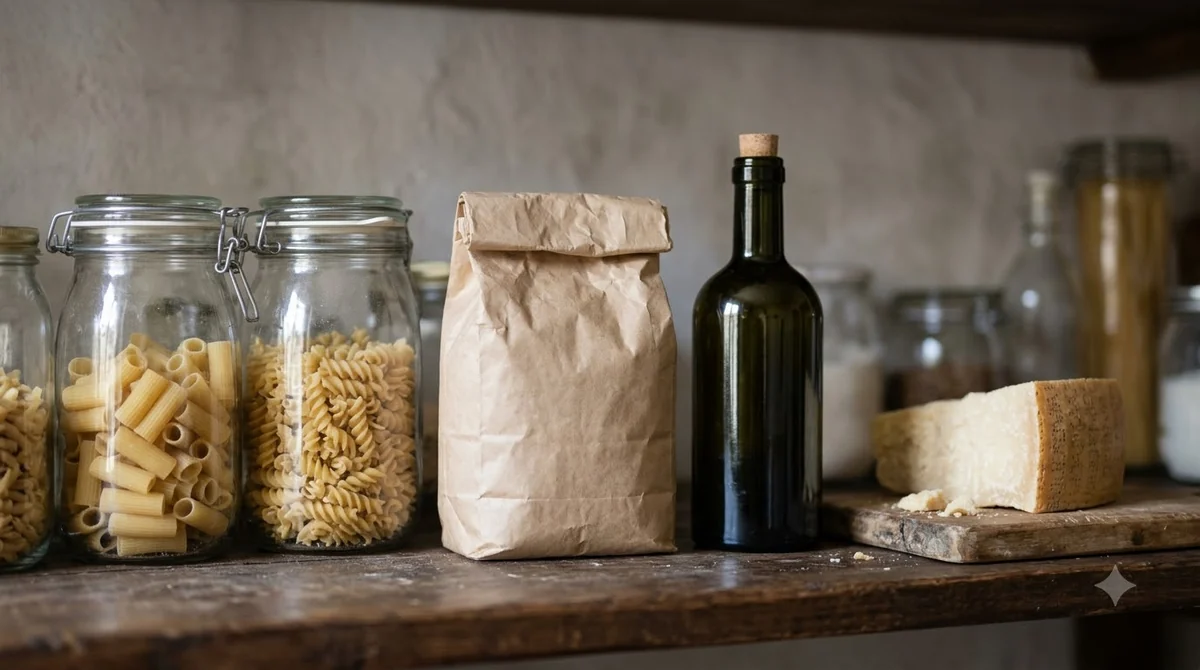
- Check the pasta for pests, damp spots or clumps before you pour it into your pasta storage containers.
- Wash the container and dry it completely, inside and out, including the lid gasket.
- Pour the pasta in and press the lid down until it seals.
- Write the fill date or purchase date on a label or on the lid.
- Store the container in a dark, dry cupboard, away from heat and off the floor.
The guide’s storage table lists pasta at 24 months unopened, with a footnote of 1 year once opened. The layout of that table in the source text is not fully clear, so read the original page before relying on those figures.
What this guide does not confirm yet
This guide gives no confirmed figures for pasta storage containers, such as capacity, dishwasher safety or price, so check each manufacturer page before buying. They were not read from a manufacturer page for this article.
Retail listings often make claims about capacity, dishwasher safety and microwave use. Those claims are not repeated here because they have not been confirmed from a manufacturer page.
Before you order, read the care label for dishwasher and microwave use, measure the shelf height where the container will sit, and confirm whether the lid is a gasket, clamp or simple snap design. For more kitchen picks, browse our gear and pantry guides.
Frequently Asked Questions
Can I store pasta in its original box?
You can, but a box that is folded loosely or left open lets in air and pests. The guide asks for containers that keep out moisture, air and insects, so a sealed container is the safer choice for longer storage.
Do pasta storage containers need to be airtight?
Yes, for dry pasta that will sit for weeks or months. The guide says containers should keep out moisture, air and insects, and a tight seal is what does that job. A lid that closes fully covers the basic requirement.
Should pasta containers go in the fridge?
The guide asks for a dry area with little humidity and away from refrigerator exhaust, so a dry cupboard is the default. The source does not recommend cold storage for dry pasta, so keep the containers on a dry shelf.
How long does dry pasta last in a container?
The guide’s storage table lists pasta at 24 months unopened and 1 year once opened. Read the original table before relying on those figures, and check the pasta for pests before you cook it, whatever the date. For the difference between dried and fresh shelf life, see our fresh pasta vs dried pasta guide.
Are glass or plastic pasta storage containers better?
Neither is better for every kitchen. Glass is clear unless you keep it dark, metal tins are opaque, and plastic is lighter. The guide accepts metal, glass or plastic, so choose by seal, light and space.
Choose pasta storage containers with lids that seal tightly, then store them in a dark, dry cupboard away from heat. A simple airtight option covers the basics for most home cooks. Check any figure you rely on against the original source before you buy. If you are still choosing what to store, our best Italian pasta brand guide helps you pick a bag.
 9 min readGear & PantryBest Pizza Dough Containers for Proofing and Storing DoughUpdated Nov 17, 2026
 9 min readGear & PantryHow to Clean a Baking Steel: Scrape, Dry, and Re-SeasonUpdated Nov 11, 2026
 9 min readGear & PantryOoni Koda 2 Pro Cover: Fit, Storage and What to Check Before You BuyUpdated Nov 10, 2026
 9 min readGear & PantryBest Cover for Solo Stove Pi: Fit, Safety and Storage ChecksUpdated Nov 11, 2026
 8 min readGear & PantryBest Cover for Ooni Koda 2 Max: Fit, Care and StorageUpdated Nov 11, 2026
 8 min readGear & PantryBest Sun Dried Tomatoes: Picks, Storage and How to ChooseUpdated Nov 12, 2026