
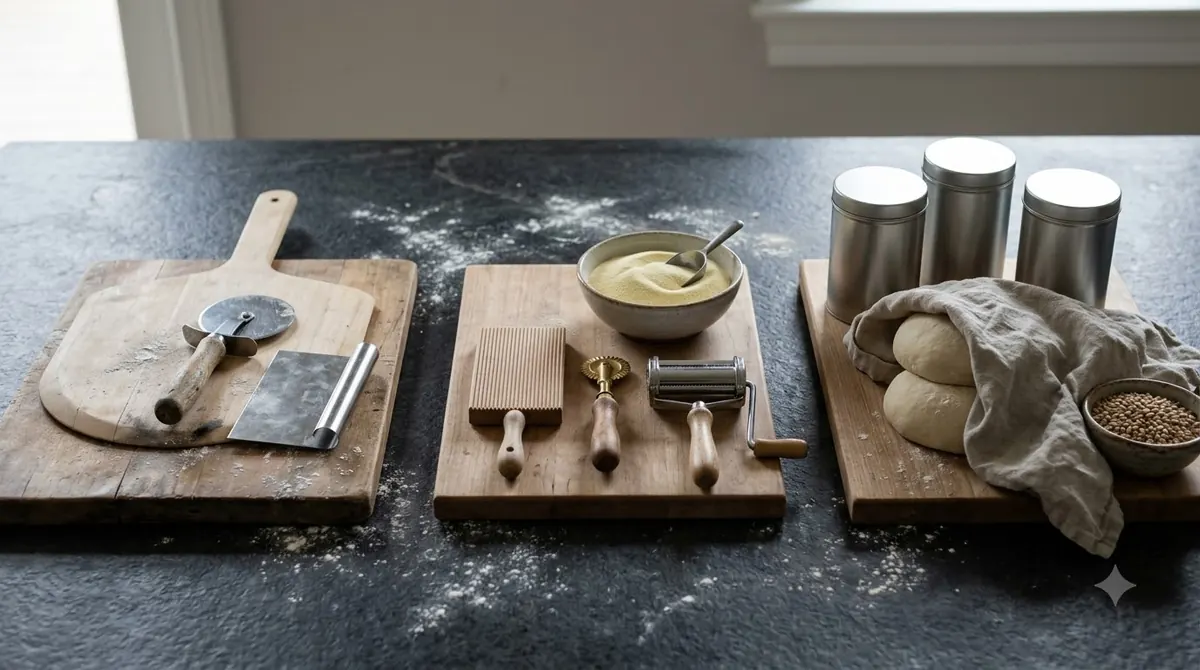

A pizza dough container is a lidded tray or box that holds dough balls while they rise, often in the refrigerator. The right one depends on how many balls you make at once and whether the lid closes tightly enough to keep the surface from drying out.
Round pans suit single dough balls, while rectangular boxes hold several portions in one layer. Start by counting how many balls you ferment together, then check the lid, size and material before you buy.
| Pick | Best for | Key fact |
|---|---|---|
| Rectangular interlocking box | Several dough balls at once | Boxes are described as interlocking for a natural seal |
| Round proofing tray with lid | One dough ball per tray | Round trays are sized for individual balls |
| Latch-lid pizza box | Home cooks who want a lid that stays closed | Latching lid is a maker feature, so check the product page |
| Silicone or flexible box | Compact storage | Some buyers report that a curved bottom can trap dough |
The pizza dough container options below are listed on Amazon for proofing pizza dough. Compare the interior size and lid style with the number of dough balls you ferment at once.

ooni Pizza Dough Proofing Box with Lid
Pros & ConsViewHide
Reasons to buy
- Ooni-branded stackable boxes made for pizza dough
- Listing says each box fits up to six 250 g dough balls
- 90% of Amazon ratings are 5-star
Reasons to avoid
- Higher price than most generic proofing boxes
- Only about 50 Amazon ratings so far
- Large footprint, so measure your fridge shelf

Hans Grill Pizza Dough Proofing Box
Pros & ConsViewHide
Reasons to buy
- Two stackable trays with covers in one pack
- Fits up to six dough balls per tray, per the listing
- Over 240 Amazon ratings, 79% 5-star
Reasons to avoid
- Rectangular tray is large for a crowded fridge
- 6% of ratings are 2-star or 1-star
- Dough balls still need careful spacing

Chef Pomodoro Pizza Proofing Box, 14x11
Pros & ConsViewHide
Reasons to buy
- Snap-on lid, 14 x 11 x 3 in, fits 4 to 6 dough balls
- Nearly 1,500 Amazon ratings, 76% 5-star
- Smaller footprint than the 17 in boxes
Reasons to avoid
- 3 in height leaves limited room above larger dough balls
- Single box, not a stackable set
- Plastic, so it needs hand washing care
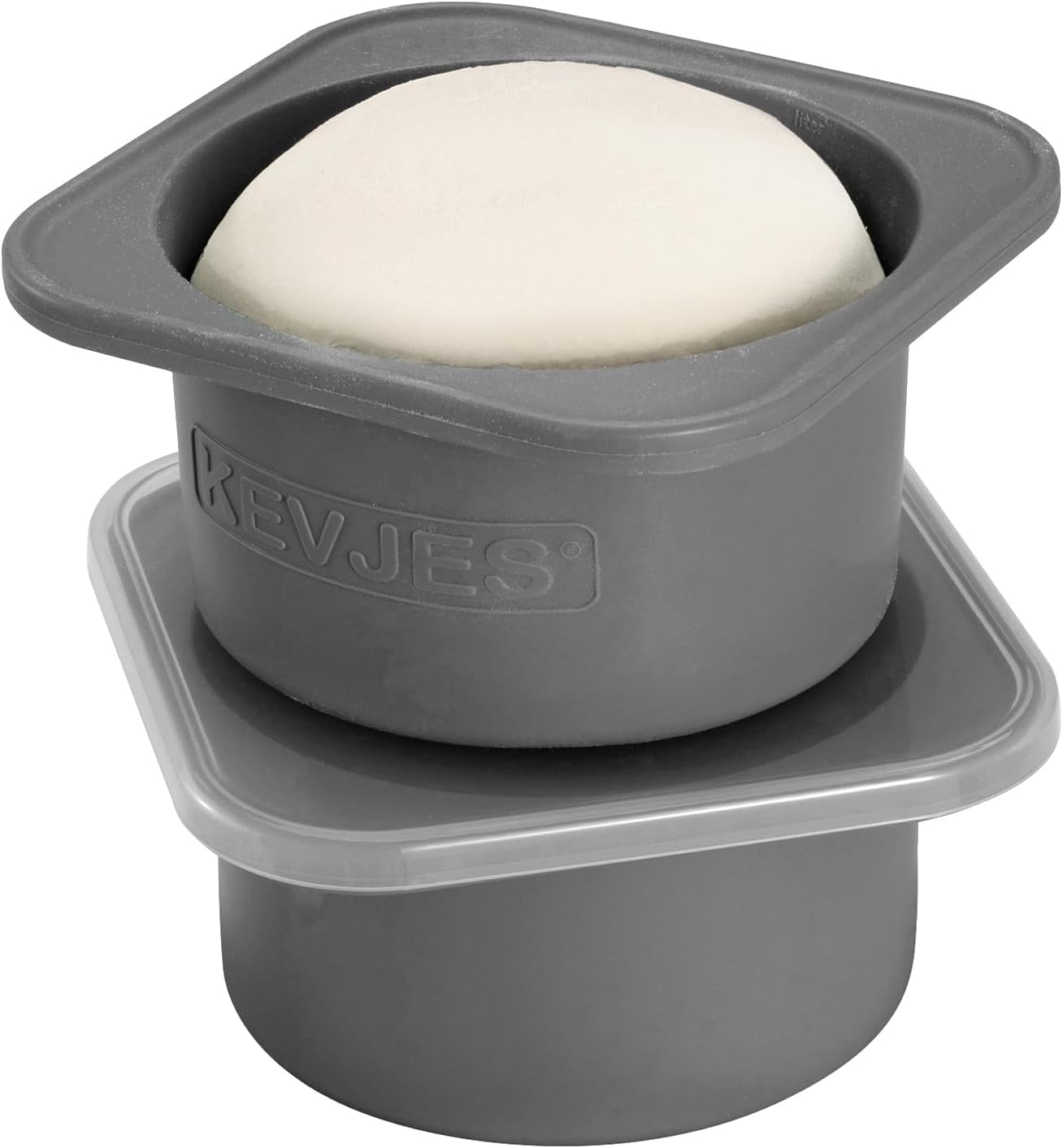
PLUS 1000ml Pizza Dough Proofing Containers
Pros & ConsViewHide
Reasons to buy
- Silicone containers sold as a 2-pack, 1000 ml each, for a 300 g dough ball
- Individual cells keep each ball separate
- 86% of Amazon ratings are 5-star
Reasons to avoid
- One ball per container, so a batch takes more fridge space
- Silicone can trap dough in a curved bottom
- Fewer than 200 Amazon ratings
What to Look for in a Pizza Dough Container
A good pizza dough container needs a lid that seals, enough room for the dough to rise, and a food-safe material such as polypropylene. These three features decide whether the dough keeps a soft surface through a long rest.
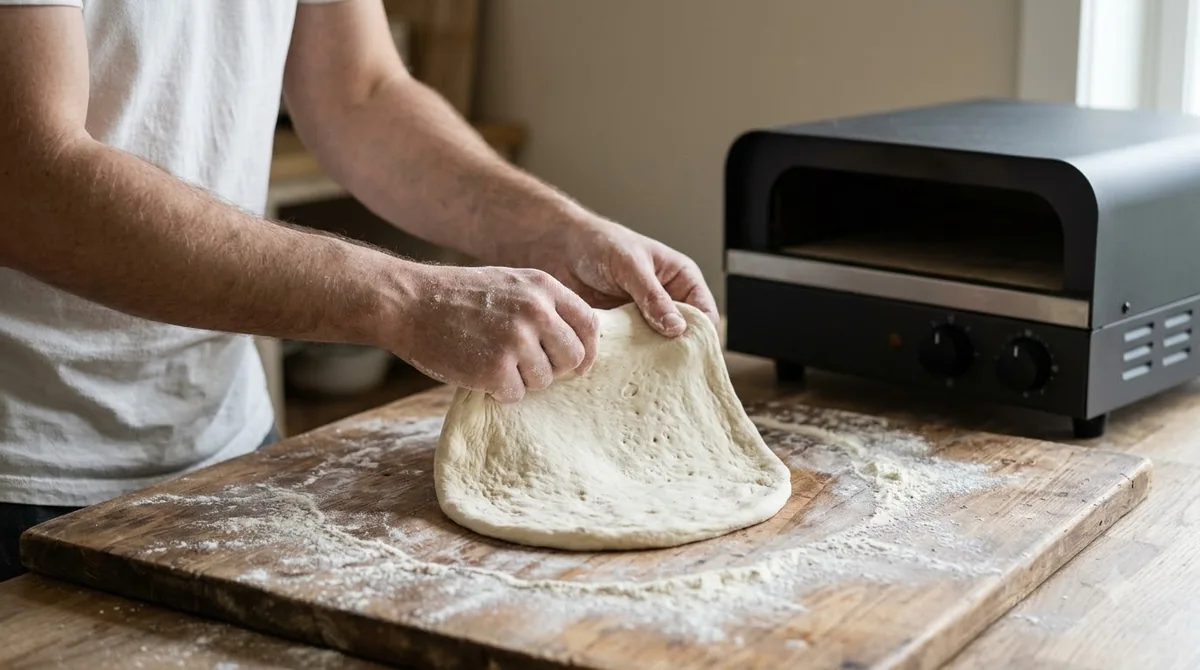
Most pizza dough containers are made from plastic, and polypropylene is the material you will see most often in product descriptions. A dough box guide from JourneymanHQ describes one commercial box as high-density, food-grade polypropylene, which is a useful starting point when you read listings.
Use these checks when you compare listings:
- Food-grade material, stated by the maker rather than implied.
- A lid that closes fully, or a stacking design that keeps the lid in place.
- Interior size listed in inches or centimeters, so you can check the fit in your fridge.
- Dishwasher or hand-wash instructions printed by the maker.
Dimensions and capacity claims for a pizza dough container often come from the listing title. Confirm them on the maker’s product page before you rely on them, because a retailer title can differ from the actual box.

Round or Rectangular: Which Shape Fits Your Dough
Round proofing trays suit one dough ball at a time, while rectangular boxes hold several portions in a single layer. Pick the shape by how many balls you ferment together, not by the look of the product photo, since the right pizza dough container depends on your routine.

Round pizza dough containers are easy to fill and handle, and they fit a single dough ball without much extra room. They are less efficient when you make a batch, because each ball needs its own tray and takes up more fridge shelf space.
Rectangular pizza dough containers make better use of space when you store several balls. They also stack more easily, which helps if your fridge has limited shelves. The trade-off is that a box holds several balls at once, so each ball needs careful spacing to avoid touching its neighbor.
| Criteria | Round tray | Rectangular box |
|---|---|---|
| Dough balls per container | One | Several, in one layer |
| Fridge space | Takes more shelf room per ball | Uses shelf space more efficiently |
| Stacking | Varies by model | Often stackable |
| Cleaning | Fewer corners to scrub | More corners, so check the inside edges |
How the Lid and Seal Affect Your Dough
A lid that seals well on a pizza dough container slows surface drying, while a loose lid lets the outside of the dough dry and form a skin. Lid performance is the feature buyers mention most often in reviews.
Reviews of pizza dough containers mention drying in both directions. For how long dough keeps in the cold, read how long pizza dough lasts in the fridge. Some buyers report that dough skin dried slightly after three days in one box, while another reviewer said the dough came out with no dry skin after 48 hours in the fridge. These are individual experiences, not lab results, so treat them as signals rather than proof.
A few conditions matter more than the lid alone:
- A lid that snaps or latches keeps its seal longer than one that rests loosely on the rim.
- Oil on the dough surface helps, but it does not replace a sealed lid.
- A pizza dough container that is too large lets the dough dry out faster because more air surrounds it.
Sizing Your Container for Dough Rise
Dough needs room to rise, so the pizza dough container should leave space above each ball and keep the lid clear of the dough. Search results often cite a rule of 2 to 3 times the starting dough volume, but that figure is not confirmed by a maker or lab source.
Use this method to choose a size:
- Weigh one dough ball and note the recipe quantity, so you know the starting size.
- Look for a container with enough interior height above the ball for the dough to rise, and compare that height with the listing.
- Check that the lid does not touch the dough at its tallest point, then leave the lid in place during rise.
Dough that touches the lid can stick and tear when you remove it. For even portions, see how to shape pizza dough balls before they go in the box. If the pizza dough container is too tight, shape the balls a little smaller or split the batch into two boxes instead of forcing the lid closed.
Materials: Plastic, Silicone, Wood and Metal
Food-grade plastic is the most common choice for pizza dough containers, while silicone, wood and metal each have specific trade-offs. Choose the material based on how easily you can clean it and whether it holds odor.
- Plastic: easy to see through and simple to clean, though some models are harder to fit into a dishwasher.
- Silicone: flexible and compact, but a curved bottom can trap dough when you remove it.
- Wood: some buyers say it raises dough well and adds flavor, while others report that a sour smell lingered and carried into the pizza.
- Metal: round pans suit individual balls, and they hold their shape over time.
If odor is your main concern, choose a plastic or metal pizza dough container. Wooden boxes can work for buyers who accept the smell risk and clean them carefully after every use.
Common Mistakes With a Pizza Dough Container
The most common mistake is sealing warm dough in a pizza dough container straight after shaping, which traps moisture and makes the surface sticky. Let the ball rest briefly, then oil the container and the dough before you close the lid.
Other mistakes show up often in reviews and home kitchens:
- Overfilling a box so the dough touches the lid during rise.
- Stacking boxes while the dough is still expanding, which can press the lid down on the balls below.
- Skipping a wash after a dry rise, which can leave residue that affects the next batch.
- Storing a container with a damp lid, which encourages odor and mold.
These mistakes are easy to avoid once you know them. A short check of the lid and the dough height before you close the pizza dough container prevents most problems.
Cleaning and Care for Dough Containers
Most pizza dough containers are cleaned by hand with warm water and mild soap, and dishwasher safety varies by model. Check the maker’s care label before you put a container in the dishwasher, because heat can warp some plastics.
Dry the pizza dough container and lid fully before storing them. Our guide to a pizza dough proofing box looks at the rectangular tray style in more detail. More gear picks are in our gear and pantry guides. A damp lid is the main cause of odor, and it can also leave spots on the next batch. Use a plastic dough scraper to remove dried flour and dough from corners instead of a sharp tool that scratches the surface.
Frequently Asked Questions
Can you put pizza dough in a container in the fridge?
Yes, many home cooks use a lidded container for cold fermentation in the refrigerator. Keep the lid closed so the surface does not dry out, and check the temperature range printed by the maker before you store the container for several days.
Is a round or rectangular dough container better?
Round pizza dough containers suit single dough balls, and rectangular boxes suit several portions stored in one layer. Count how many balls you make at once, then choose the shape that matches that number.
How big should a dough container be?
It should leave room for the dough to rise without touching the lid. Search results often cite 2 to 3 times the starting volume, but that figure is not confirmed, so check the interior height against your own dough ball.
Can I use a plastic food storage container instead?
You can, as long as it has a tight lid and enough height for the dough to rise. Dedicated pizza dough containers are shaped for dough balls, which can make them easier to stack and store in a crowded fridge.
Is a wooden dough box a good choice?
Some buyers like the flavor and rise from wood, but others report that odor carried into the pizza. Read recent reviews for smell complaints before you buy, and avoid wood if you want a neutral pizza dough container.
Do I need a dough container for every pizza?
No. A lidded bowl or a covered tray works for a single dough ball. A dedicated pizza dough container matters most when you make several balls at once or cold-ferment them over several days.
Pick the shape by how many dough balls you ferment together, then check the lid, the interior height and the material before you buy. A pizza dough container that seals well and leaves room above the dough is worth more than one with extra features you will not use.
 8 min readGear & PantryPizza Dough Proofing Box: What It Does and How to Use OneUpdated Nov 10, 2026
 8 min readGear & PantryBest Pasta Storage Containers for a Dry PantryUpdated Nov 17, 2026
 8 min readGear & PantrySpiral Mixer for Pizza Dough: Best Types and Picks for 2026Updated Nov 10, 2026
 9 min readGear & PantryBest Stand Mixer for Pizza Dough: Top Picks for Home CooksUpdated Nov 17, 2026
 8 min readGear & PantryPizza Dough Docker: What It Does and What to Check Before You BuyUpdated Nov 17, 2026
 8 min readGear & PantryPizza Dough Roller: Types, Uses and What to Check Before You BuyUpdated Nov 8, 2026