
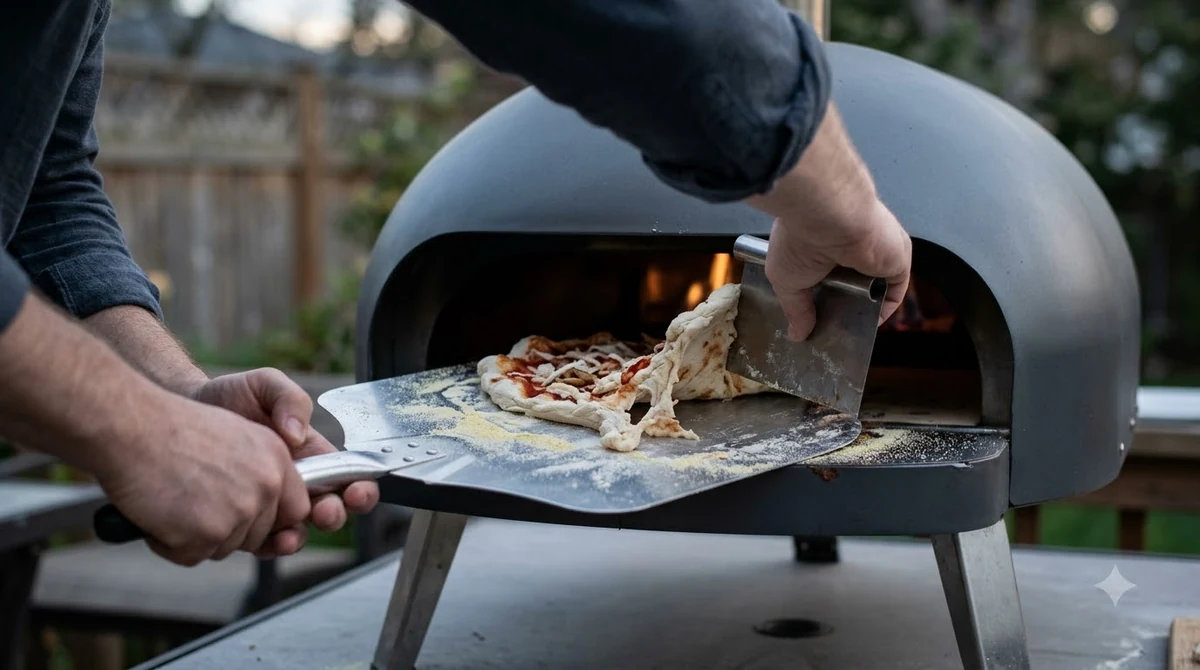

Here is how to clean a baking steel: scrape it while it is still warm, wipe it with a dry paper towel, and dry it fully before storing it. Frequent washing strips the oil seasoning, so most cleaning should be dry or light.
Deep cleaning is only needed for rust, heavy carbon, or food that will not lift, and knowing how to clean a baking steel for those cases saves the seasoning. Each deep clean should end with a fresh layer of oil and a bake so the surface stays non-stick.
How to Clean a Baking Steel After Each Use
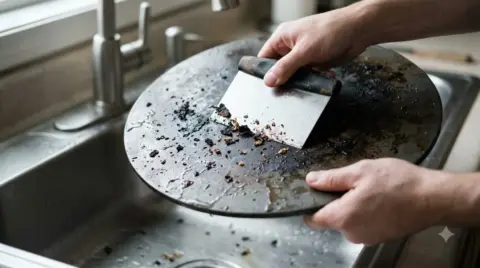
Knowing how to clean a baking steel after each bake starts while the steel is warm, but not hot. Baking Steel’s care guide says to scrape the surface with a bench scraper or sturdy metal spatula while the steel is still warm. This removes cheese, dough, and burnt bits before they harden.
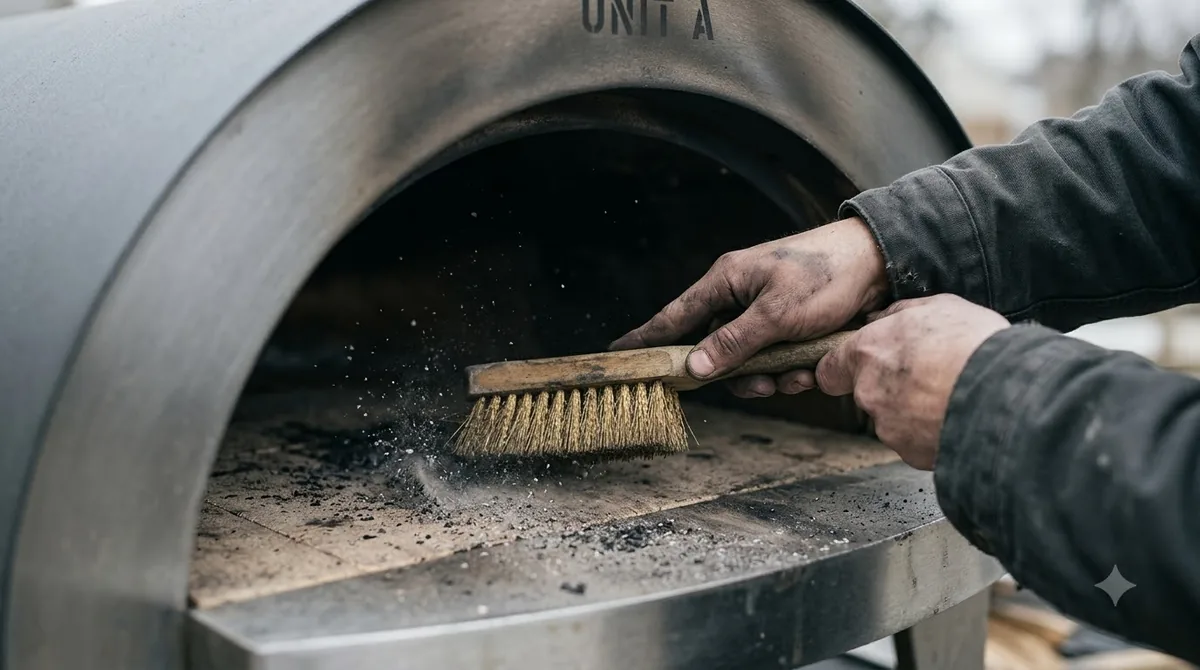
After scraping, wipe the surface with a dry paper towel or an old cloth. Most of the time, that is enough. Use these steps after a typical bake:
- Let the steel cool slightly, but scrape it while it is still warm.
- Scrape loose food and burnt cheese with a bench scraper, working from the center toward the edges.
- Wipe the surface with a dry paper towel to lift crumbs and flour.
- Return the steel to the warm oven for a few minutes if any moisture is left behind.
Use a metal spatula for stubborn spots, but keep the angle low so you do not gouge the surface. Metal scraping is the same method Baking Steel recommends for food stuck to the steel. America’s Test Kitchen takes a similar line, saying to scrape off food blobs or excess char after baking and then call it done.
Match the method to the situation. The table below sums up how to clean a baking steel for each common case.
| Situation | Best method |
|---|---|
| Normal bake with cheese or flour | Scrape while warm, then wipe dry |
| Stuck, baked-on residue | Metal spatula, or hot water and a stiff brush, then dry |
| Rust or heavy carbon | Cleaning brick, wash, dry in a 200°F oven, re-season |
| Surface looks dull or food sticks | Thin oil layer, bake at 400°F for one hour |
Avoid steel wool and harsh detergents. Both can damage the seasoning and leave a dull finish, so skip them in any routine.
Soap and Water: When Washing a Baking Steel Is Acceptable
Soap is acceptable on a baking steel when dry scraping does not remove the residue, and it is one option in how to clean a baking steel after a sticky bake. Baking Steel says hot, soapy water is perfectly safe to use when needed, but some owners avoid it every day to protect the seasoning.
- Use hot water and a stiff brush for baked-on spots.
- Rinse the steel with clean water to remove soap residue.
- Dry the steel right away with a towel, since moisture leads to rust.
- Re-oil the surface after any wash that removes the seasoning, since that is the last part of how to clean a baking steel with soap.
Baking Steel’s guide links soap to the seasoning, so plan a re-seasoning after any wash that removes the oil film.
America’s Test Kitchen advises a gentler approach: scrape first, then use hot water and a stiff brush only when needed. Whatever you choose, dry the steel fully before you put it away.
Deep Cleaning a Baking Steel for Rust and Carbon
A baking steel needs deep cleaning when rust or heavy carbon builds up, and the right brick makes that part of how to clean a baking steel much easier. The Baking Steel cleaning brick is designed for this job, and it removes rust and built-up carbon while smoothing the finish.
- Scrub the rusty or carbon-covered area with a cleaning brick until the surface looks clean.
- Wash with hot, soapy water and a stiff brush if residue remains.
- Rinse, then dry immediately with a towel.
- Place the steel in a 200°F oven for 10 to 15 minutes so it dries completely.
- Re-season the steel once it is bone dry.
Baking Steel’s guide lists the cleaning brick as the first step for rust, with soap and water used afterward.
Dryness is the step most people skip when they learn how to clean a baking steel for rust. Baking Steel tells you to dry the steel completely and return it to a warm oven for a few minutes. Rust that comes back after a few days usually means the steel was stored while still slightly damp.
Rust that stays after scrubbing means the steel was not fully dry before storage, so repeat the drying step before you re-season. A second pass helps how to clean a baking steel last longer. Work to remove the rust completely, then re-season, because bare steel will rust again quickly.
Re-Seasoning a Baking Steel After Cleaning
Re-season a baking steel when the surface looks dull or gray, or when food starts to stick. Re-seasoning is the final step in how to clean a baking steel after any deep clean. Baking Steel says this may be needed once or twice a year, depending on how often you bake. Stones are seasoned differently, so see how to season a pizza stone if you own one.
- Apply a small amount of oil to the top and bottom of the steel.
- Spread a very thin layer with a paper towel, then wipe off as much as you can.
- Place the steel in a preheated 400°F oven for one hour.
- Turn the oven off and let the steel cool completely inside.
The oven step does the real work. Baking Steel’s guide ties the oven step to a finished seasoning, which is why it asks for one hour at 400°F with the door closed as the steel cools. If the surface still looks dull after a bake, the guide’s instruction is to repeat the process with a thin coat, not a thick one.
Choosing the right oil is part of learning how to clean a baking steel well. Organic flaxseed oil is the top choice in Baking Steel’s guide. Grapeseed, canola, and vegetable oil are also listed as options. Choose an oil with a high smoke point, and avoid thick coats, since they can turn sticky. Check the manual that came with your steel for the exact method, because brands differ. The maker’s steps are the safest guide when you learn how to clean a baking steel for the first time.
Common Mistakes When You Clean a Baking Steel
The most common mistake in how to clean a baking steel is washing the steel after every bake. Frequent soap and water weakens the seasoning, so the surface sticks more over time.
- Leaving the steel damp, which causes rust.
- Using steel wool or abrasive pads that scratch the surface.
- Putting the steel in a dishwasher, which can cause rust.
- Oiling too heavily, which leaves a sticky film.
Another mistake is cleaning a steel that is still hot. Baking Steel’s advice is to scrape while the steel is warm but not hot. Wait until the steel has cooled from baking heat, then clean it with the tools you planned. If you are weighing a steel against a stone, pizza stone vs pizza steel compares the two.
A dark, slightly uneven patina is normal after regular use. It usually reflects a well-seasoned surface, not damage, so it does not mean you need a different way to clean a baking steel.
Frequently Asked Questions
Can you use soap on a baking steel?
Yes, hot soapy water is acceptable when dry scraping does not remove the residue. Baking Steel says it is safe, but some owners avoid it on a daily basis to protect the seasoning, so use it only when needed.
Should you wash a baking steel after every use?
No. A dry scrape and a wipe with a paper towel are enough after most bakes, which is the gentlest way to clean a baking steel. Save washing for stuck residue, because frequent washing can weaken the seasoning.
How do you remove rust from a baking steel?
Scrub the rust off with a cleaning brick, wash with soap and water, dry the steel completely, and then re-season it. Baking Steel recommends this same sequence for rust.
How often should you re-season a baking steel?
Re-season when the surface looks dull and gray or food starts to stick. Baking Steel says this may happen once or twice a year, depending on how often you use the steel.
Does preheating burn off leftover residue?
Preheating helps lightly burn off food residue, so it is a useful add-on to how to clean a baking steel after a bake. America’s Test Kitchen says a preheat to 500°F burns off food residue, though a heavy buildup still needs scraping first. Scrape first, then preheat, instead of relying on heat alone.
Knowing how to clean a baking steel properly keeps the surface ready for every bake. It stays in good shape with dry scraping, a fast dry after any wash, and a thin oil layer when the surface dulls. Save deep cleaning for rust or heavy carbon. When deciding how to clean a baking steel, check the care sheet from your steel’s maker before you try a new method. Once it is clean, see how to use a baking steel for the next bake, or read our pizza steel buying guide if you are still choosing one.
 8 min readGear & PantryHow to Choose a Baking Steel ThicknessUpdated Nov 11, 2026
 9 min readGear & PantryHow to Use a Baking Steel in a Home OvenUpdated Nov 10, 2026
 7 min readGear & PantryBaking Steel vs Pizza Stone: Which Gives Better Crust?Updated Nov 15, 2026
 10 min readGear & PantryHow to Season a Cast Iron Pizza PanUpdated Nov 11, 2026
 8 min readGear & PantryBest Pasta Storage Containers for a Dry PantryUpdated Nov 17, 2026
 9 min readGear & PantryHow to Clean a Pasta Pot the Easy WayUpdated Nov 11, 2026