
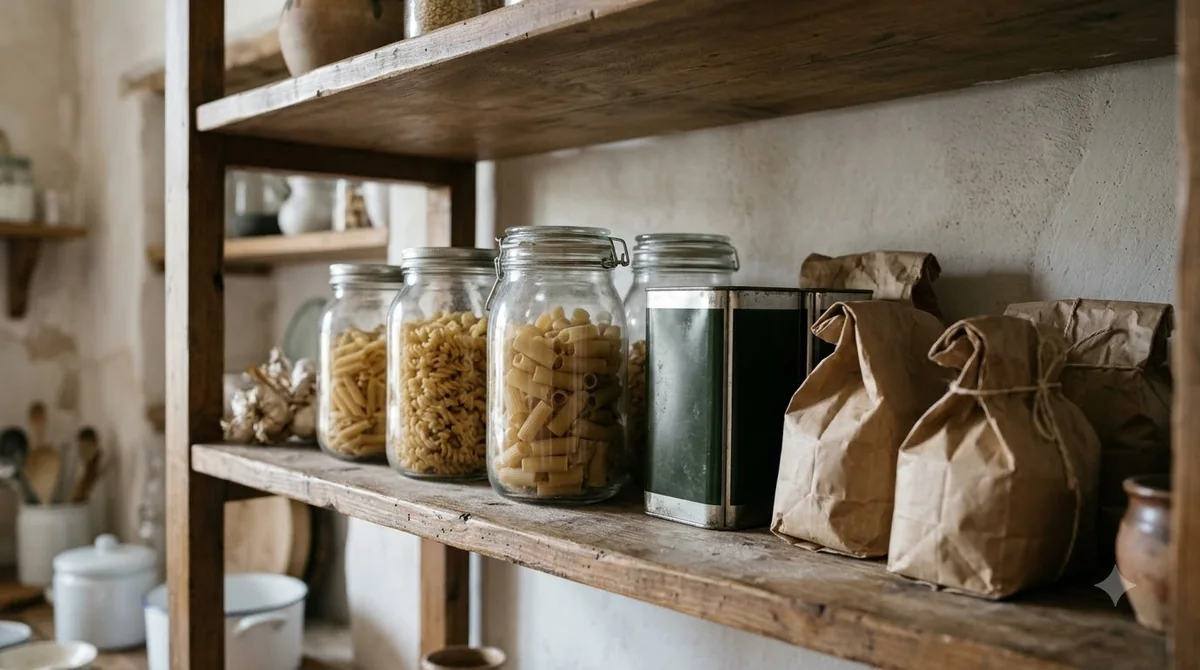

The best polenta comes from coarse, yellow cornmeal, ideally stone-ground, because that grind cooks into a firm, hearty texture with full corn flavor. Polenta is an Italian dish of boiled cornmeal, so the grind you buy shapes the final result more than any other choice. Sources reviewed for this guide agree on that point.
Brand picks depend on what you want: strong corn flavor, a creamy finish, or a dense slice that holds together. Instant and pre-cooked options save time but taste blander, so choose them when speed matters more than flavor.
| Pick | Best for | Key fact |
|---|---|---|
| Albers Enriched and Degermed Yellow Corn Meal | Best overall | Named “Best of the Best” in one taste test |
| Colavita Instant Polenta Cornmeal | Strong corn flavor | Instant cooking style |
| Roland Fine Grain Yellow Polenta | Mild corn flavor | Fine grain |
| Bob’s Red Mill Yellow Corn Polenta | Dense, crisp-friendly slices | Holds together well |
| P.A.N. Pre-Cooked Yellow Corn Meal | Creamy, grits-like texture | Pre-cooked |

Albers Yellow Corn Meal, 20 oz (Pack of 1)
Pros & ConsViewHide
Reasons to buy
- Albers was named Best of the Best in the Sporked taste test
- Enriched, degermed yellow cornmeal
- 20 oz bag is easy to try
Reasons to avoid
- Medium grind rather than a coarse stone-ground polenta
- Fewer buyer ratings than some rivals

Bobs Red Mill, Organic Corn Grits / Polenta
Pros & ConsViewHide
Reasons to buy
- Bob's Red Mill is the brand named best for dense, crisp-friendly polenta
- Organic corn grits/polenta in a 24 oz bag
- Strong buyer rating on thousands of reviews
Reasons to avoid
- Listing is organic corn grits/polenta, not the exact yellow polenta Sporked tested
- Needs traditional cooking time and stirring

Pros & ConsViewHide
Reasons to buy
- P.A.N. pre-cooked cornmeal named best creamy polenta in the Sporked test
- Pre-cooked, so it cooks quickly
- Gluten-free per the listing
Reasons to avoid
- Sold for arepas, so check the package for polenta directions
- Pre-cooked style tastes milder than traditional polenta
What Polenta Is and Which Cornmeal Works Best
Polenta is boiled Italian cornmeal, and coarse, stone-ground yellow cornmeal gives the best polenta texture according to the test kitchen and taste-test sources reviewed here.
Wikipedia describes polenta as an Italian dish of boiled cornmeal that was historically made from other grains before corn reached Europe. Today the usual base is yellow or white cornmeal cooked in water or stock. Yellow maize is the most common choice, though buckwheat or mixtures of maize may also be used. You can read the general background in Wikipedia’s polenta entry.
For the best polenta, the grind matters more than most labels suggest. America’s Test Kitchen found that coarser grains brought the most desirable, pillowy texture to its creamy polenta recipe. Its ideal grind is roughly the size of couscous, which keeps a soft but hearty texture after cooking. Grind coarseness also varies by brand because there is no shared standard, so a bag labeled coarse from one company can be finer than another company’s coarse.
Where Polenta Comes From
Wikipedia places the dish’s roots in northern and central Italy. It is also common in parts of Switzerland, southern France, the Balkans and Romania, and among Italian migrant communities in Brazil, Uruguay and Argentina. Knowing that history helps explain why the same dish appears in very different forms from one region to another.
When you shop for the best polenta, read the package for the grind and the type. Look for a coarse or stone-ground yellow cornmeal if you want a firm, hearty result, and check the cooking directions on the bag before you start.
Coarse, Fine, Instant: Which Cornmeal Fits Best Polenta
Coarse cornmeal gives firm, pillowy polenta, fine cornmeal can turn gluey, and instant polenta cooks in minutes but tastes blander than the traditional kind.
| Grind | Texture | Flavor | Cooking time |
|---|---|---|---|
| Coarse, regular cornmeal | Firm, pillowy, hearty | Full corn flavor | About 45 minutes traditionally |
| Fine cornmeal | Soft and creamy, but can cook up gluey | Milder | Check the package |
| Whole-grain cornmeal | Slightly gritty, even after long cooking | Full corn flavor | Check the package |
| Instant or pre-cooked | Smooth and soft | Comparatively bland | Ready in a few minutes |
Each grind changes the best polenta you can make at home. America’s Test Kitchen describes regular fine cornmeal as having a sandlike texture that cooks up gluey, and it says quick-cooking cornmeal has super-fine grains that speed cooking but lack corn flavor. Whole-grain cornmeal keeps the full corn flavor, yet it stays slightly gritty however long it cooks, so the author prefers degerminated cornmeal for a smoother result.
Instant polenta fits a weeknight only when time matters more than taste, so it is not the best polenta choice for a classic bowl. Wikipedia considers it inferior to polenta made from unprocessed cornmeal and suggests baking or frying it, which is a better use for the instant style than a soft bowl.
Brand Picks From the Taste Tests
In one Sporked taste test, Albers was named best overall, while Colavita, Roland, Bob’s Red Mill and P.A.N. each earned a narrower title for a specific trait. The picks below come from that single review, not from controlled testing, so treat them as one view of the best polenta options.
- Albers Enriched and Degermed Yellow Corn Meal: named “Best of the Best,” with the reviewer finding it “slightly tastier than the rest.”
- Colavita Instant Polenta Cornmeal: the “Best Corn Flavor” pick, because “this one had the strongest corn taste of all the polentas I tried.”
- Roland Fine Grain Yellow Polenta: the “Best Mild Corn Flavor” pick, since the reviewer says “this cornmeal has a really light corn taste.”
- Bob’s Red Mill Yellow Corn Polenta: the “Best for Dense Polenta” pick, which holds together and creates a dense polenta, “perfect for crisping up.”
- P.A.N. Pre-Cooked Yellow Corn Meal: the “Best Creamy Polenta” pick, because it “gives you a smoother, softer polenta.”
Matching a Pick to the Dish
For a soft bowl under a sauce, such as a pot of marinara, the creamy P.A.N. style fits the brief best. For slices you plan to fry or crisp, the dense Bob’s Red Mill style holds together better, according to the same review. Start from the dish you want, then pick the best polenta bag that matches it. Whether you buy polenta or a plain bag of cornmeal, the best polenta for your table is the one that suits the way you plan to serve it.
The review does not list prices, so check the current price on the retailer page before you buy. Choose the pick that matches your goal: the strongest corn taste, a mild base for sauces, a dense slice for frying, or a creamy result from the pre-cooked style.
How to Cook Polenta Well
Traditional polenta simmers for about 45 minutes in four to five times its volume of liquid, with near-constant stirring. Wikipedia describes that as the traditional method, so use the same ratio when you cook the best polenta from a new bag.
- Bring water or stock to a simmer, using four to five times the volume of cornmeal you plan to cook.
- Add the cornmeal slowly while whisking, so it does not clump before it hydrates.
- Simmer for about 45 minutes, stirring nearly constantly.
- Season at the end, once the texture is where you want it, then stir in grated Parmigiano-Reggiano or a splash of olive oil if you like.
Timing depends a lot on the method. Bill Buford’s 2006 book Heat describes a method that takes up to three hours without constant stirring, which is far from the 45 minutes of the traditional approach.
Faster methods exist. Wikipedia reports a 1998 Cook’s Illustrated microwave method that takes 12 minutes with one stir, and a 2010 stovetop method that uses a pinch of baking soda and needs little stirring. Those shortcuts are cited secondhand, so check the original recipe before you rely on the exact timing. The best polenta for a weeknight may be a faster method, while a weekend dish can take the full 45 minutes.

Common Mistakes With Polenta
The most common mistakes when making the best polenta are choosing fine cornmeal for a firm result, expecting instant polenta to taste like the traditional kind, and using too little liquid for the cornmeal.
- Expecting a firm texture from fine cornmeal, which America’s Test Kitchen says can cook up gluey.
- Assuming every bag labeled coarse has the same grind, since the test kitchen notes there is no shared standard.
- Buying whole-grain cornmeal for a smooth result, because it stays slightly gritty.
- Using less than four to five times the volume of liquid, which the traditional method calls for.
Frequently Asked Questions
Is polenta the same as cornmeal?
No. Cornmeal is the ingredient you buy, and polenta is the dish made by boiling it in water or stock, so the best polenta starts with the cornmeal you choose. Wikipedia describes yellow maize as the most common cornmeal base. For cornmeal used in pizza baking instead, see our semolina vs cornmeal for a pizza peel comparison.
Which polenta is best for a creamy result?
In the Sporked taste test, P.A.N. Pre-Cooked Yellow Corn Meal earned the “Best Creamy Polenta” title for its smoother, softer texture. The review does not list prices, so check the current retailer price before you buy.
Is instant polenta worth buying?
It depends on the dish. Wikipedia considers instant polenta inferior to polenta made from unprocessed cornmeal, so it suits recipes where polenta is one ingredient among several.
How long does polenta take to cook?
Traditional polenta takes about 45 minutes with near-constant stirring. Wikipedia reports a microwave method of about 12 minutes with one stir, cited from Cook’s Illustrated, and it notes that the source is secondhand.
Why does my polenta turn gluey?
America’s Test Kitchen notes that regular fine cornmeal has a sandlike texture that cooks up gluey. Choosing a coarser grind and stirring steadily helps you keep a softer, hearty texture.
Is whole-grain cornmeal good for polenta?
It keeps the full corn flavor, but America’s Test Kitchen says it stays slightly gritty however long it cooks. Choose it only if you like a textured bite, since a coarse yellow grind gives the firmer result most cooks want.
Is pre-cooked polenta the same as regular polenta?
Not quite. Wikipedia calls instant polenta ready in a few minutes but inferior to polenta made from unprocessed cornmeal, and America’s Test Kitchen says quick-cooking cornmeal lacks corn flavor. Pick it for speed rather than the best polenta flavor.
For most cooks, the best polenta starts with coarse yellow cornmeal, which gives the firmest, most flavorful result. Pick a pre-cooked style only when speed matters more than flavor, and read the package for the grind before you buy. More pantry guides are in our gear and pantry section.
 9 min readGear & PantryThe Best Parmigiano Reggiano to Buy in 2026Updated Nov 12, 2026
 8 min readGear & PantryBest Tomato Paste: Which Tube, Can or Jar to BuyUpdated Nov 13, 2026
 8 min readGear & PantryBest Dried Porcini Mushrooms: What to Buy and How to Use ThemUpdated Nov 13, 2026
 9 min readGear & PantryBest Pine Nuts for Pesto: What to Buy and WhyUpdated Nov 13, 2026
 8 min readGear & PantryBest Cannoli Forms for Home Cooks: What to Buy and WhyUpdated Nov 12, 2026
 5 min readGear & PantryTop Rated Panettone: What to Look for Before You BuyUpdated Nov 13, 2026