
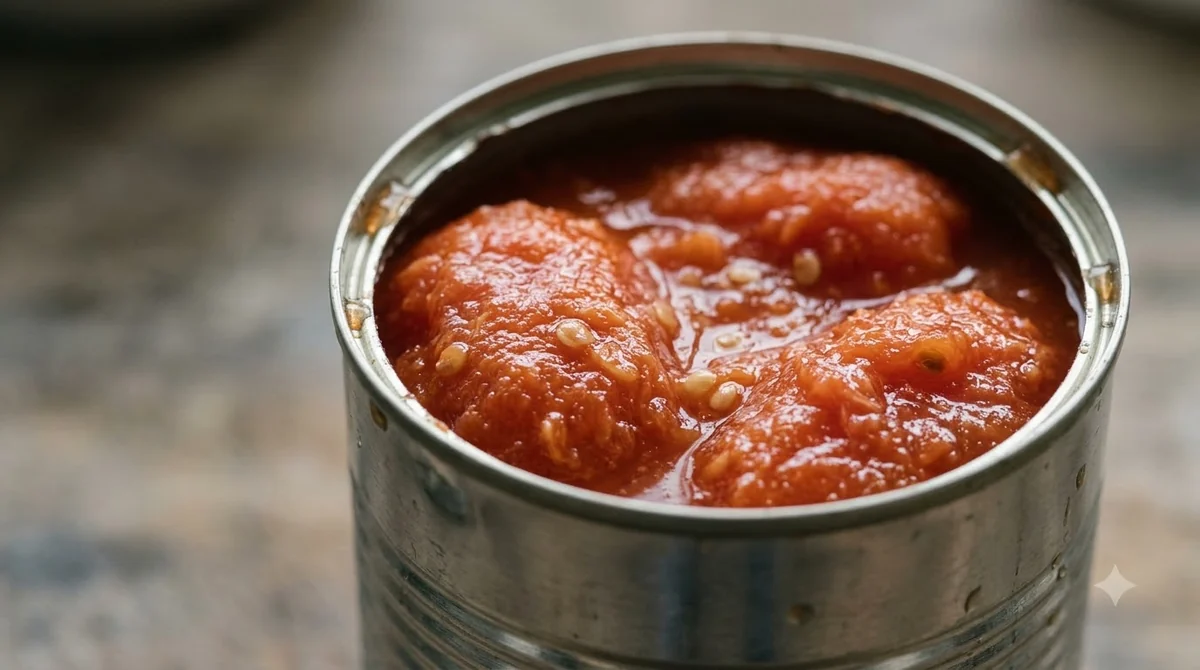

The best tomato paste depends on format and sodium, but concentrated paste in a tube or can gives the deepest flavor. In a 2024 tasting of nearly 20 pastes, a Cento tube ranked first, while several cans and a no-salt jar also stood out.
Check the sodium line and any added flavorings before you buy, because labels differ more than the tomato does. The picks below list the format, the best use and the one fact that set each one apart.
Best Tomato Paste Picks at a Glance
The best tomato paste in this 2024 tasting was Cento’s tube, rated 10 out of 10, according to Sporked’s tomato paste tasting. The same test named a big can, an organic can, a no-salt jar, a sun-dried tube and a flavored paste as category winners.
| Pick | Best for | Key fact |
|---|---|---|
| Cento Tomato Paste (tube) | Best overall | Dark, rich and tomato-forward, rated 10/10 |
| Contadina Roma Tomatoes Paste (big can) | Sauces, stews and chili | Thick, smooth and tangy-sweet, rated 9.5/10 |
| Amore Sun Dried Tomato Paste (tube) | Sun-dried flavor | Oily, savory and slightly spicy, rated 8.5/10 |
| Muir Glen Organic Tomato Paste (can) | Organic buyers | Certified organic, 25 mg sodium per serving, rated 8/10 |
| Bionaturae Tomato Paste No Salt Added (jar) | Salt-free cooking | Zero grams of sodium on the label, rated 7/10 |
| Contadina Roma Tomatoes Paste Basil, Garlic & Oregano | Toast or instant pizza | Garlicky and herb-forward, rated 7/10 |

Cento Tomato Paste, 4.56 Oz Tube
Pros & ConsViewHide
Reasons to buy
- Double concentrated paste in a tube
- Same brand and format as the top pick in the 2024 Sporked tasting
- Tube is easy to squeeze out in small amounts
Reasons to avoid
- Single 4.56 oz tube holds little for large batches
- Check the label for sodium before you buy

CONTADINA Tomato Paste, 12 Pack, 6 oz Can
Pros & ConsViewHide
Reasons to buy
- Plain tomato paste, a flexible base for sauces, stews and chili
- Standard 6 oz cans in a 12-pack
- Brand ranked best big can in the 2024 Sporked tasting
Reasons to avoid
- Twelve cans is a lot if you cook with paste rarely
- Opened cans need to be moved to another container

Bionaturae Organic Tomato Paste
Pros & ConsViewHide
Reasons to buy
- No-salt paste in a jar
- Zero grams of sodium listed on the label per the Sporked tasting
- Organic and keto-friendly per the listing
Reasons to avoid
- Ranked lower for flavor (7/10) in the Sporked tasting
- Jar size may be more than you need

Amore Vegan Tomato Paste In A Tube
Pros & ConsViewHide
Reasons to buy
- Double concentrated paste in a tube
- Vegan and non-GMO per the listing
- Same brand as Sporked's best sun-dried pick
Reasons to avoid
- This listing is plain paste, not the sun-dried tube
- Multi-pack pricing varies, so check the pack size
Ratings use the article’s 10-point scale and come from one reviewer’s tasting, not from a lab test. The article does not list prices, so check the current price on the retailer’s page before you buy.
How the Best Tomato Paste Picks Were Chosen
The tasting covered nearly 20 pastes, both canned and tubed, including flavored versions. The author judged each one on the same four points, which makes the ranking a fair way to find the best tomato paste across formats.
- Smooth texture, with no grainy or watery feel.
- Rich tomato flavor, rather than a flat or sour taste.
- Umami character, the savory depth that cooked tomato gives a sauce.
- Ease of use in the kitchen.
A single tasting is one point of view. Use the ranking as a shortlist, then read the label of the paste you pick, because the same brand can change its formula or format over time.
What Tomato Paste Is and Why Concentration Matters
Tomato paste is concentrated tomato solids with no seeds or skin, made by cooking tomatoes until most of their water is gone. Wikipedia’s tomato paste entry describes the process as cooking tomatoes for several hours, straining out the seeds and skins, and cooking the liquid again until it thickens.
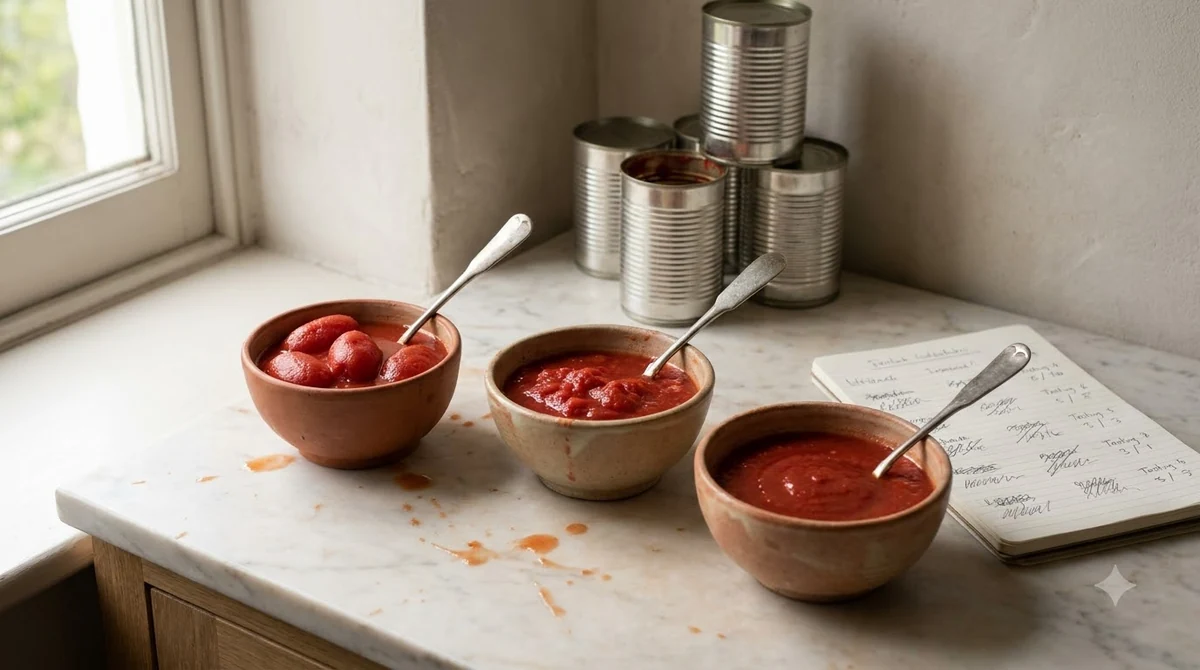
That extra cooking is why paste tastes so much stronger than a sauce, a purée or a strained product such as tomato passata. A paste carries far more tomato solids in each spoonful, so a small amount can change the color and depth of a whole pot.
Purée sets a lower bar. In the US, purée has a soluble solids minimum of 24%, which is lower than the requirement for paste, so paste is the more concentrated product. Fresh round tomatoes have about 3.5% to 5.5% soluble solids, according to the same source.
When you compare labels for the best tomato paste, look for the word paste rather than purée or sauce. A product labeled sauce or purée may be thinner and will not give the same concentrated flavor in a small amount.
How to Choose the Best Tomato Paste by Format
Format matters because the best tomato paste in the tasting came in a tube, and the article calls the tube “far superior” to the can it also reviewed. Each format has a different role in the pantry.
- Tube: the format of the top-rated Cento pick, and the one Sporked ranked above a can of the same product line.
- Can: the most common format on shelves. Contadina’s big can scored 9.5 out of 10 for sauces, stews and chili.
- Jar: the format of Bionaturae’s no-salt paste, which scored 7 out of 10 and is the best pick for salt-free cooking.
A big can suits cooks who want a larger amount on hand. A tube suits a single strong flavor, which is the choice the tasting favored.

Sodium and Organic Labels to Check
When you hunt for the best tomato paste for low-salt cooking, sodium is the label line that changes the most between picks. Bionaturae lists zero grams of sodium, while Muir Glen’s organic can lists 25 mg per serving even though it is made with no added salt.

- No added salt means the maker added no salt, not that the paste has zero sodium.
- Per-serving sodium is the number to compare, since the serving size on each label is different.
- Organic status should appear on the label. Muir Glen is certified organic and non-GMO, and the article notes its can liners are BPA-free.
If you season your own sauce, a no-salt paste gives you control over the final salt level. If you rely on the paste for some of the seasoning, a regular paste may suit you better, and you should taste before adding more salt.
Flavored and Sun-Dried Pastes Are a Different Product
Flavored and sun-dried pastes change the dish, so they are not a direct swap for plain tomato paste. Sporked’s reviewer treated them as a separate category for that reason.
Contadina’s Basil, Garlic & Oregano version is savory and very garlicky. The author says it tastes like pizza paste and suggests spreading it on toast with parmesan for instant pizza. Amore’s sun-dried tube is oily, savory and slightly chunky, and the author notes it is not classic tomato paste.
Use plain paste when a recipe asks for tomato paste, since it is the most direct route to the best tomato paste flavor in a classic sauce. Use a flavored or sun-dried version when you want its added taste, and cut back on extra herbs, garlic or salt in the same dish. If you would rather start from a ready-made sauce, compare the best marinara sauce jars, or build your own with this homemade pizza sauce recipe.
Common Mistakes When Buying Tomato Paste
Most buying mistakes come from choosing on brand name alone and skipping the label, which makes the best tomato paste hard to identify. The mistakes below come up often in tastings like this one.
- Choosing by brand name alone, when format and sodium change the result.
- Assuming “no salt added” means zero sodium, as the Muir Glen label shows.
- Swapping a flavored or sun-dried paste into a classic sauce without adjusting the seasoning.
- Expecting a can to taste like the tube of the same brand, since the article found the tube superior.
How to Get the Most Flavor From Tomato Paste
Cooking the best tomato paste in fat before adding liquid deepens its flavor, because paste is usually sautéed early to promote caramelization.
- Heat oil in the pan before you add the paste.
- Add the paste and stir until it darkens a shade and smells sweet.
- Add broth, canned tomatoes or other liquid only after the paste has cooked.
Exact times depend on your pan and heat, so watch the color rather than the clock. This guide does not verify cooking times for specific recipes, so check the recipe you are following.
Frequently Asked Questions
Is tube tomato paste better than canned?
In the Sporked tasting, the Cento tube ranked best overall as the best tomato paste pick, and the article calls the tube far superior to the can it also reviewed. Check the label for ingredients and sodium, because flavor depends on the brand as much as on the format.
Is no-salt-added tomato paste worth it?
It is worth it if you want full control over the salt in your dish, which is why many cooks look for the best tomato paste with no added salt. Bionaturae’s no-salt jar lists zero grams of sodium, according to Sporked. Some no-salt-added pastes still contain sodium, so read the per-serving figure on the label.
What is the difference between tomato paste and purée?
Tomato paste is concentrated tomato solids with no seeds or skin, while purée has a lower soluble solids requirement. Wikipedia lists a 24% minimum for purée in the US, so paste is the thicker, more concentrated product.
Can I use flavored tomato paste instead of plain?
You can, but the seasoning will change, so the best tomato paste for a classic dish is still a plain one. Contadina’s basil, garlic and oregano version is garlicky and tastes like pizza paste, so Sporked suggests it on toast with parmesan. Taste the dish before adding extra salt or herbs.
How much tomato paste should I buy?
This guide does not verify package sizes or recipe amounts. Check the net weight on the label and the amount your recipe calls for, then choose a size that matches how often you cook.
Start with format and sodium when you look for the best tomato paste, then use the flavor notes in the table to narrow the choice. A tube or big can of plain paste covers most recipes, while flavored and sun-dried versions suit specific dishes. Read the label before you buy, because formulas and formats change. More buying guides are in our gear and pantry section.
 8 min readGear & PantryBest Tomato Passata: How to Pick a Smooth, Pure JarUpdated Nov 17, 2026
 8 min readGear & PantryBest Calabrian Chili Paste for Pizza and PastaUpdated Nov 17, 2026
 9 min readGear & PantryPistachio Cream vs Pistachio Paste: The Difference That MattersUpdated Nov 15, 2026
 4 min readGear & PantryGusto Etna 100% Pistachio Paste Unsweetened Review & UsesUpdated Nov 5, 2026
 9 min readGear & PantryBest Marinara Sauce: What to Look for in a JarUpdated Nov 17, 2026
 8 min readGear & PantryBest Jarred Pasta Sauce: How to Pick a Good JarUpdated Nov 17, 2026