
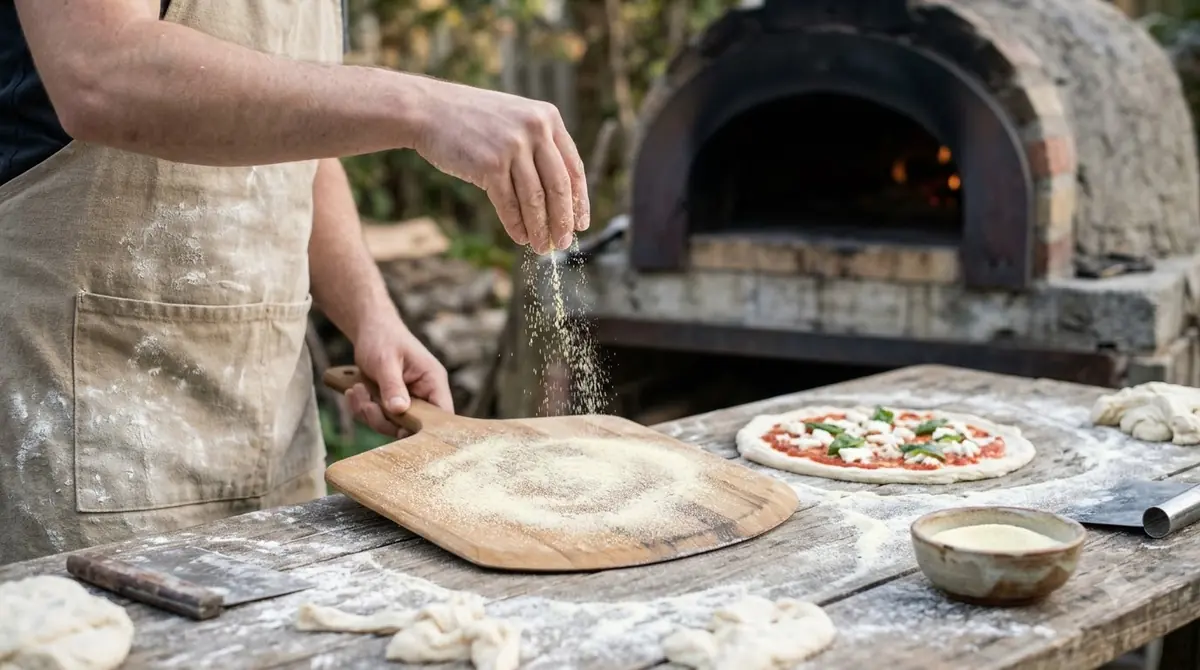

Semolina vs cornmeal for pizza peel is a choice between two different dusting agents, and both can keep dough from sticking. Semolina is a coarse flour milled from durum wheat, while cornmeal is ground from dried maize. The sources we read do not name one winner for every oven, so the right pick depends on grain size, colour and how your peel and stone behave.
What semolina is
Semolina is a coarse flour traditionally made from durum wheat. Its high protein and gluten content is the reason it is so popular for pasta, and it is also used to dust baking surfaces, which is why semolina vs cornmeal for pizza peel is such a common question. Our explainer on what semolina flour is covers the flour itself.
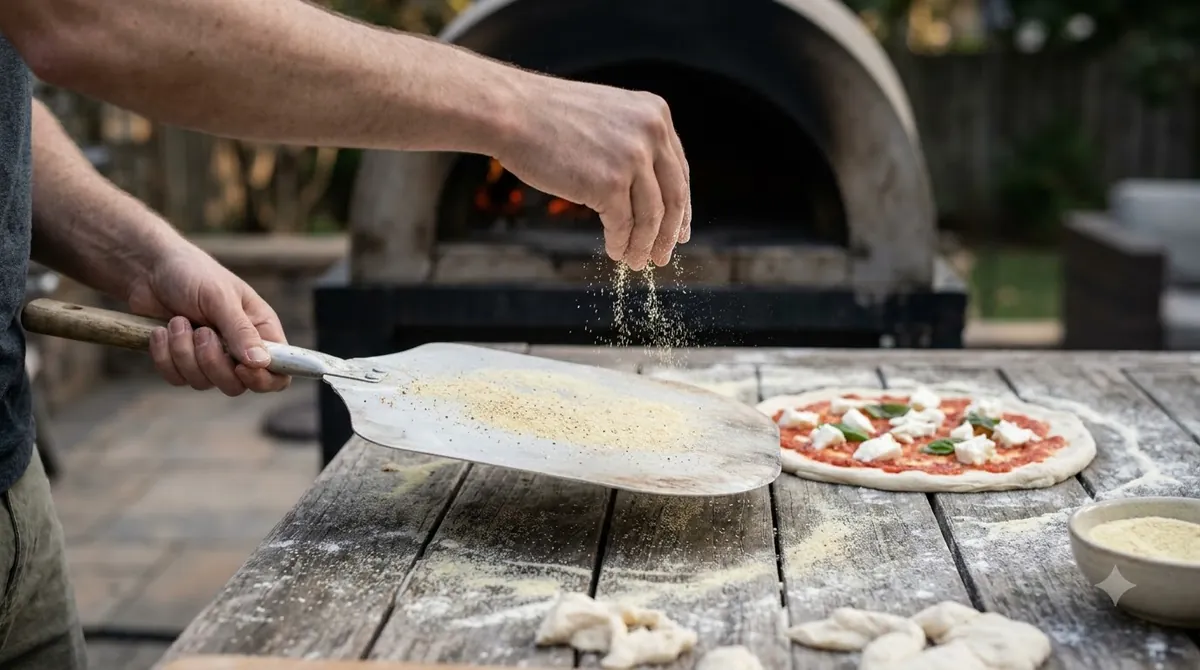
The particles are coarse. In German-speaking and Central and Southeast European usage, semolina particles run about 0.25 to 0.75 millimeters across. The Codex Alimentarius standard for durum semolina says no more than 79 percent passes through a 315-micron sieve, which means at least 21 percent stays on the sieve. Durum semolina is pale yellow, while semolina from common wheat is beige. You can read more in Wikipedia’s semolina entry.
What cornmeal is
Cornmeal is a coarse meal ground from dried maize, which is the same plant as corn. It is a staple food in many places and is sold in coarse, medium and fine grinds.
Even the finest cornmeal is not as fine as wheat flour can be. In Mexico and Louisiana, the very finely ground product is called corn flour. That coarser texture is why cornmeal is often described as a release layer rather than an ingredient in the dough itself, and that texture drives the semolina vs cornmeal for pizza peel debate. The Wikipedia cornmeal entry covers the grind sizes in more detail.
Pizza peel basics
A pizza peel is a flat-surfaced tool with a handle, used to move food into and out of an oven. It is usually made of wood, although a sheet-metal surface on a wooden handle is also common.
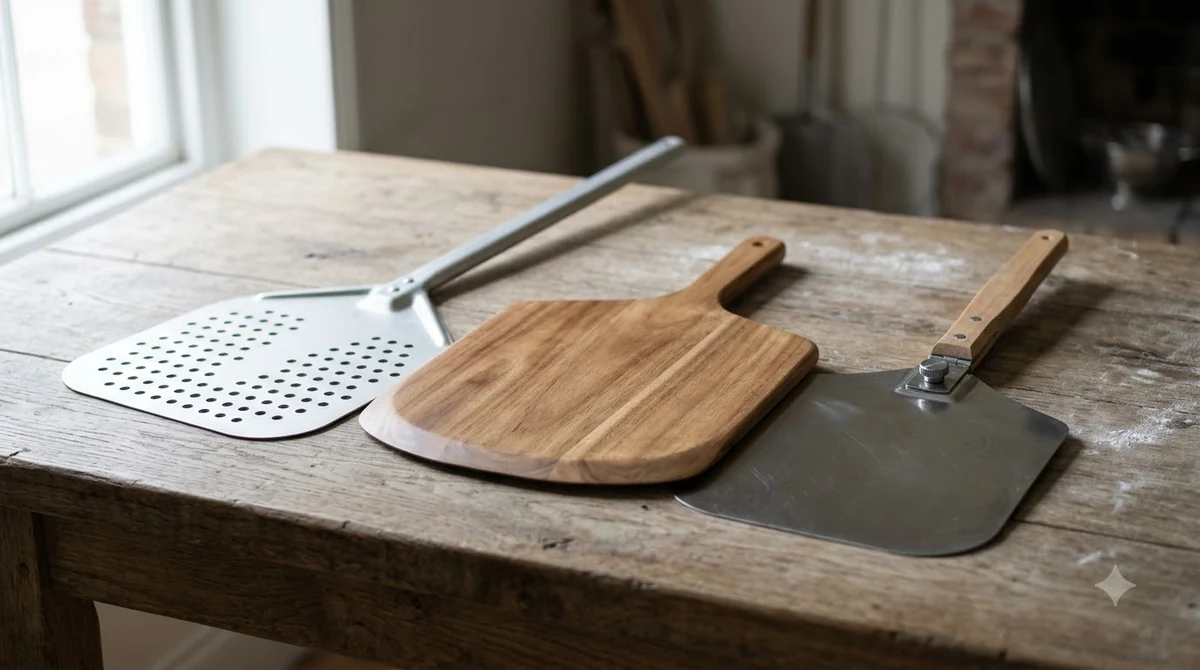
Wood is preferred because it does not get hot enough to burn your hands, which metal can do. If you are shopping, compare the best wooden pizza peels with the best metal pizza peels. A wood and thin metal peel can work well with flatbreads and pizza, and that style is sometimes called a pizza shovel. The Wikipedia pizza peel entry describes the tool and its uses.
Before use, a peel is sprinkled with flour, cornmeal or milled wheat bran so that the baked item slides off easily. That source does not list semolina, but a separate source on semolina names it as a dusting option and as an alternative to cornmeal. For semolina vs cornmeal for pizza peel, that means flour and bran are also on the table.
Why the dusting layer matters on a peel
The dusting layer sits between the dough and the peel. Its job is to let the dough slide, which is why the sources describe it as a way to prevent sticking. Both semolina and cornmeal are named for that job, so for semolina vs cornmeal for pizza peel the question is which one suits your dough and oven.
A coarser grain rolls differently from a fine powder, and that difference is the reason many bakers compare the two. This is a reasoned expectation, not a measured result from the pages read for this article. Test both on plain dough before you rely on either one for guests.
The dusting layer is not only for the peel. Wikipedia’s baking stone article says cooks sprinkle cornmeal or flour on the stone, or use parchment paper, to prevent sticking. So semolina vs cornmeal for pizza peel is partly a question about what ends up on the hot surface, and a stone that is hot enough will brown loose grains. If you bake on a stone, see our guide to the best pizza stones.
Semolina vs cornmeal for pizza peel side by side
Semolina is the finer-textured, durum-based option, while cornmeal is the maize-based one. The table sets out what the sources say about semolina vs cornmeal for pizza peel and marks what still needs checking.
| Criterion | Semolina | Cornmeal |
|---|---|---|
| Grain source | Durum wheat | Dried maize |
| Particle size | About 0.25 to 0.75 mm in one usage; at least 21 percent stays on a 315-micron sieve | Coarse, medium or fine; not as fine as wheat flour |
| Colour | Pale yellow (durum) or beige (common wheat) | Not stated in the sources read |
| Named dusting use | Can dust the baking surface to prevent sticking | Dusts a peel; listed as a release agent for pizza (the source carries a citation-needed tag) |
| Behaviour in a hot oven | Not read in this run | Not read in this run |
| Which one slides better | Not confirmed by the pages read | Not confirmed by the pages read |
The first three rows come from the sources. The last two rows are the ones to test in your own oven before you rely on either product.

How to use either one on a peel
The method is the same for semolina vs cornmeal for pizza peel. Dust the peel lightly before you place the dough on it, then move the pizza onto the stone without hesitating. The sources read here do not give a quantity, so start with a thin layer and adjust.
- Sprinkle a light, even layer of semolina or cornmeal on the peel surface.
- Shape the dough on a separate surface, then check that it moves freely on the peel before you add toppings.
- Slide the pizza onto the stone with a short, firm motion. Practise on a plain dough first.
- Brush off loose grains before the next pizza goes on, so they do not sit on the stone and scorch. This step was not confirmed by the pages read.
Mistakes people make with dusting
Most dusting mistakes with semolina vs cornmeal for pizza peel come from using too much, or from choosing by a single feature. Keep these points in mind:
- Using a thick layer, which leaves loose grains that can end up on the stone.
- Choosing on colour alone. Colour is only one row in the table above.
- Treating the cornmeal release-agent line as settled. That source carries a citation-needed tag.
- Using a metal peel without a plan for handling, since metal can get hot enough to burn your hands.
Semolina vs cornmeal for pizza peel: what is still unverified
This comparison was written without a full search of recent sources, so some points remain open. The burn behaviour of each dusting agent, which one slides better in a hot oven, whether grind size changes the slide, and how much to use are not confirmed by the pages read here.
To settle semolina vs cornmeal for pizza peel for your own oven, read the manual for your oven or stone, look for a baking school or a long-form guide with a named author, and test a small batch of each dusting agent before a dinner.
How to choose between them
When you choose semolina vs cornmeal for pizza peel, start with what you already have and what you want to see on the stone. The points below follow from the facts in the table, and each one can be tested at home.
- Pick semolina if you already keep durum flour for pasta and want a finer, paler dusting.
- Pick cornmeal if you want a maize-based layer, which the peel source names alongside flour and bran.
- Pick flour or milled wheat bran if neither one slides well in your oven. Both are named in the peel source.
- Keep a small jar of each for a side-by-side test on plain dough.
Frequently Asked Questions
Is semolina better than cornmeal for a pizza peel?
On semolina vs cornmeal for pizza peel, the sources read here do not name a winner. Pick by grain size and by what you see in your own oven.
Can you use cornmeal on a wooden peel?
Yes. The pizza peel source lists cornmeal as one of three common dusting agents, along with flour and milled wheat bran.
Does semolina burn on a hot stone?
The sources read here do not say, so the semolina vs cornmeal for pizza peel question stays open on this point. Brush off loose grains after each pizza and check the guidance from your stone maker.
Can you mix semolina and cornmeal?
No source read covers mixing the two for semolina vs cornmeal for pizza peel. Test a small batch first.
Should you use a wood or metal peel?
Wood is usually preferred because it stays cool enough to hold. A thin metal blade can work for flatbreads and pizza, according to the peel source.
How do you clean dusting off a wooden peel?
Brush off dry debris after each use and check the care notes from your peel maker. This was not confirmed in this run.
Whichever you choose in the semolina vs cornmeal for pizza peel comparison, start with a light dusting and watch how the dough moves. If one of the two works better in your oven, keep using it and note what you did, so you can repeat the result.
 8 min readLearnHow to Make Pizza Without a Peel: Parchment and Sheet Pan MethodsUpdated Nov 11, 2026
 8 min readLearnHow to Launch a Pizza Without It Sticking to the PeelUpdated Nov 10, 2026
 7 min readLearnHow to Clean Wooden Pizza Peel Without Warping ItUpdated Nov 10, 2026
 8 min readLearnPizza Sticking to Peel: Causes and FixesUpdated Nov 10, 2026
 9 min readLearnBread Flour vs All Purpose Flour for Pizza: Which Gives a Better CrustUpdated Nov 10, 2026
 8 min readLearn24 Hour Pizza Dough: A Simple Timeline for Better FlavorUpdated Nov 10, 2026