
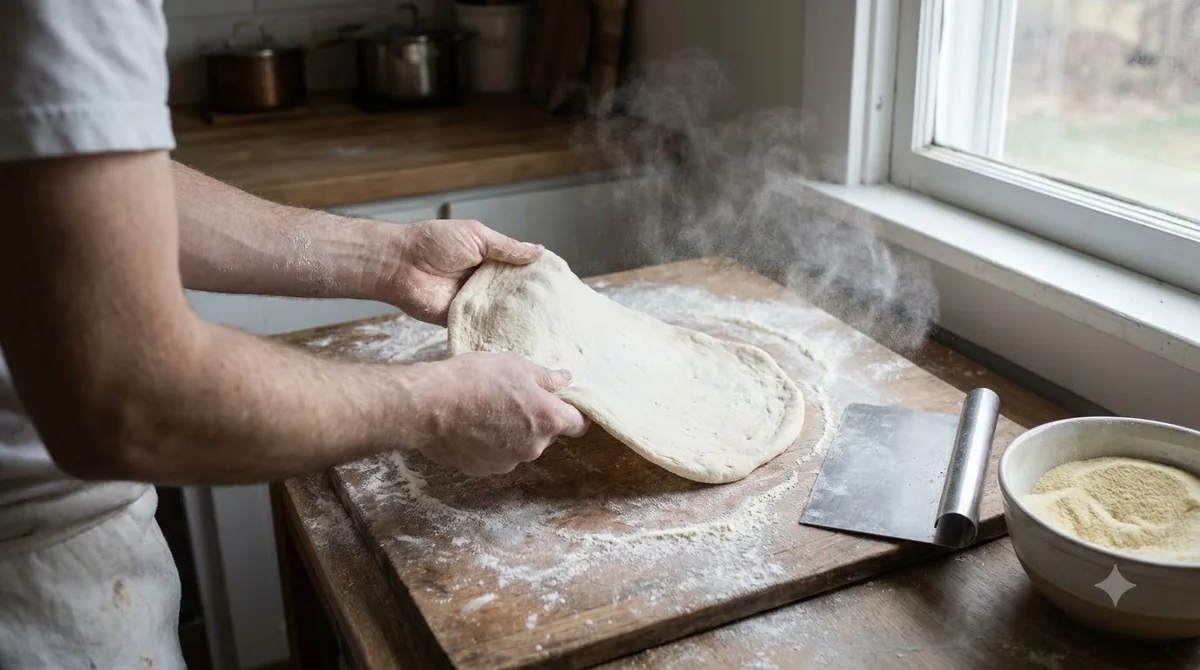

A biga pizza dough is built on a stiff pre-ferment of flour, water and a little yeast. As of November 6, 2026, the recipes checked here use 45 to 50 percent water in the biga, which makes the dough firmer than a poolish.
Biga pizza dough adds a planned rest but needs no special equipment. Use it when you want chew and structure, and choose poolish for a wetter, stretchier dough.
What Is Biga, and How Does It Differ From Poolish?
Biga is a stiff pre-ferment with flour, water and a little yeast, while poolish is fermented at 100 percent hydration. Glowen’s academy describes biga as a stiff pre-ferment that gives pizza dough extra flavor, chewiness and structure. A biga pizza dough therefore starts from a much drier mix than a poolish, which holds as much water as flour. For proofing times after the biga stage, see our guide on how long to proof pizza dough.
| Factor | Biga (Gozney and Glowen recipes) | Poolish (Tasting Table) |
|---|---|---|
| Water in the pre-ferment | 45 percent (Gozney), about 50 percent (Glowen, calculated from its weights) | 100 percent, equal parts flour and water |
| Yeast | 1 percent of flour (Gozney), about 0.2 percent (Glowen, calculated) | No amount given |
| Fermentation | 16 to 18 hours at 16 to 18 °C (Gozney), or 1 to 1.5 hours at room temperature (Glowen) | 8 to 16 hours at room temperature, until it nearly doubles or triples |
| Character in the crust | Firm, chewy structure | Stretchy texture, with acidity that adds chew |
A stiffer pre-ferment holds less water, so the mix feels firmer in your hands. Poolish is the looser choice, and biga is the one to pick when you want the dough to hold its shape.
Biga Pizza Dough Ratios From Two Recipes
Gozney’s 100 percent biga recipe uses 1 kg of flour, 450 g of water and 10 g of yeast in the biga, then 210 g more water and 25 g of salt in the final mix. Gozney says all of the flour goes into the biga, so the pre-ferment is the whole flour base.
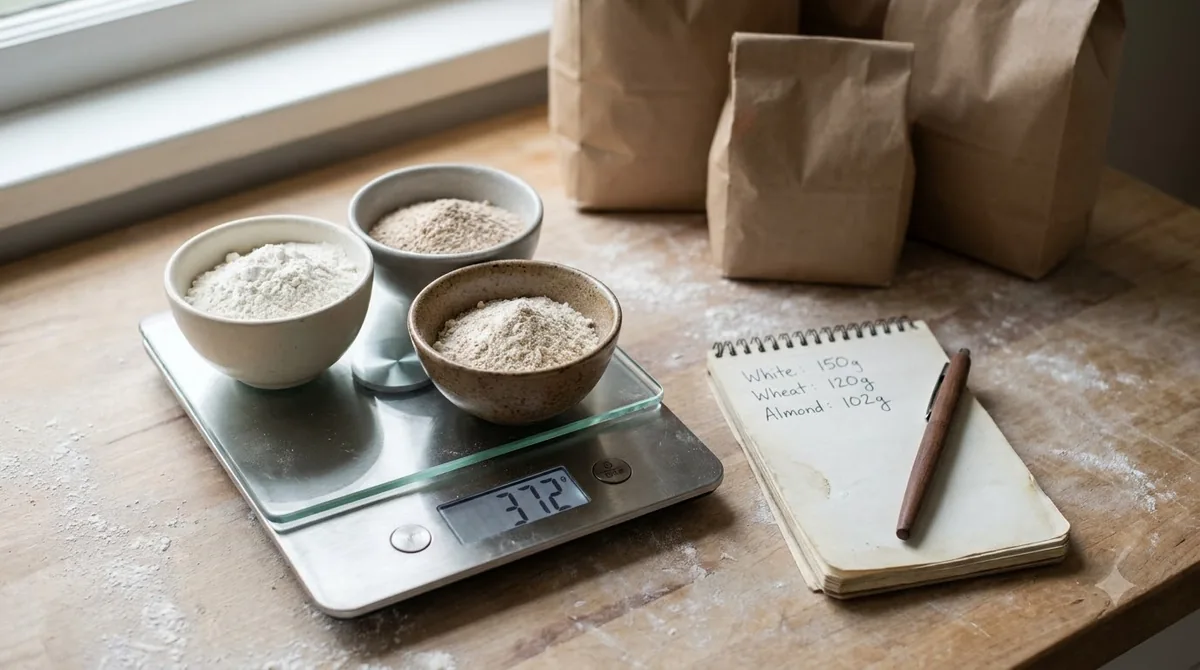
| Ingredient | Gozney 100% biga | Glowen biga |
|---|---|---|
| Flour in the biga | 1 kg (100 percent) | 1 kg strong flour, 13 to 14 percent protein |
| Water in the biga | 450 g (45 percent) | 500 ml (about 50 percent, calculated) |
| Yeast in the biga | 10 g (1 percent) | 2 g (about 0.2 percent, calculated) |
| Water in the final mix | 210 g (21 percent), added in two steps | 200 ml, plus 80 g ice |
| Salt | 25 g (2.5 percent) | 27 g |
| Malt | 10 g (1 percent) | Not used |
| Total hydration | 66 percent, including the biga water | Not stated |
Gozney’s recipe makes six 280 g dough balls. Glowen’s percentages are my own calculations from its gram and milliliter weights, assuming 1 ml of water weighs 1 g, so treat them as close estimates rather than published figures. To size dough balls for your own pizzas, see how much dough for a 12 inch pizza.
Step by Step: Making Biga Pizza Dough
Mix the biga until no dry flour is left, ferment it at 16 to 18 °C for 16 to 18 hours, then mix the final dough the next day. The Gozney method is a two-day process, so plan the biga before you start the dough.
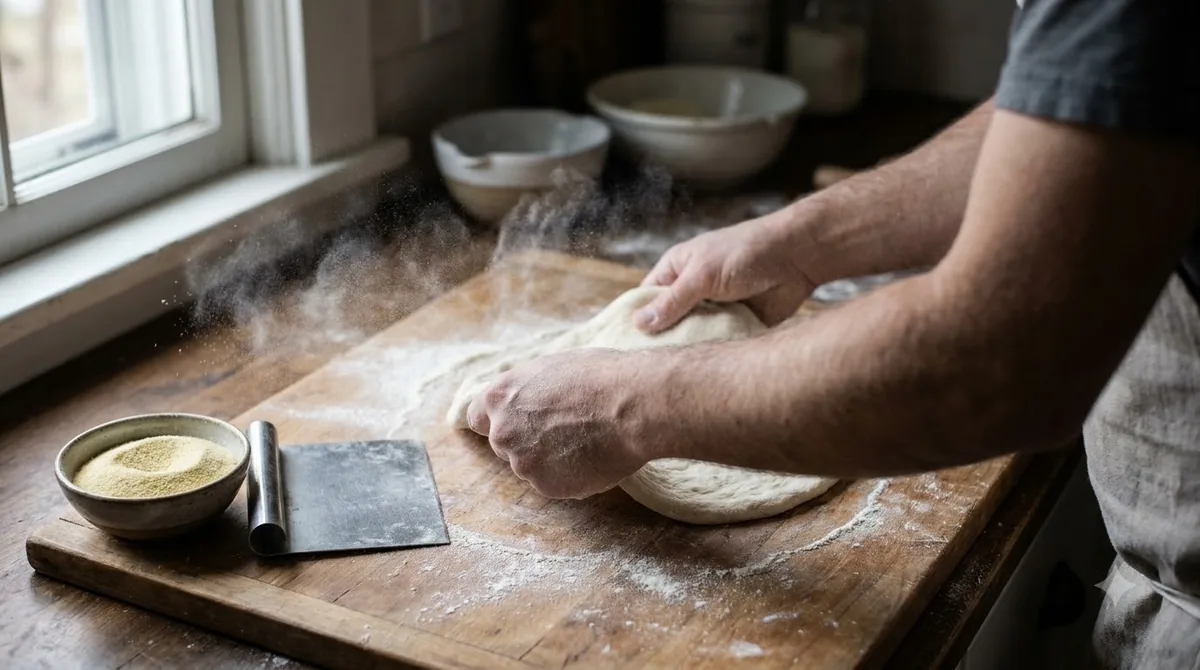
- Mix 1 kg flour, 450 g water and 10 g yeast by hand in a container until it forms a dry, lumpy mix with no dry flour left.
- Cover with cling film that has a small hole, or a lid with a small gap, and ferment at 16 to 18 °C for 16 to 18 hours.
- The next day, mix the biga with 10 g malt and 150 g water on slow for 5 minutes.
- Add 25 g salt and mix on fast for 4 to 5 minutes, then add the remaining 60 g water gradually.
- Fold the dough a few times, rest it for 20 minutes, then divide it into six 280 g balls. Bake after 1 to 2 hours at room temperature, or leave it 1 hour at room temperature and refrigerate until needed.
Gozney gives a final biga pizza dough temperature of 23 to 24 °C and has you fold the dough a few times before the 20 minute rest. Glowen takes a different route: its main dough includes 80 g of ice and is cold fermented for 24 hours before baking.
Timing Your Biga: Same Day, Overnight or Cold Ferment
Gozney’s recipe needs the biga made the day before, while Glowen’s biga rests 1 to 1.5 hours at room temperature or 24 to 48 hours in the fridge. Arla Pro’s guide describes a rest of about 20 hours, which sits between the two.
| Method | Biga stage | Final dough stage | Source |
|---|---|---|---|
| Cool, long biga | 16 to 18 hours at 16 to 18 °C | Rest 20 minutes, proof 1 to 2 hours | Gozney |
| Warm, long biga | About 20 hours, ideal 20 to 21 °C | Not stated | Arla Pro |
| Short or cold biga | 1 to 1.5 hours at room temperature, or 24 to 48 hours in the fridge | Main dough cold fermented for 24 hours | Glowen |
The sources disagree on time and temperature, so the methods are not interchangeable for biga pizza dough. A short room-temperature rest gives the flour less time to develop, so a same-day biga is a compromise rather than the full method. If the dough then stalls, see why pizza dough is not rising; if it collapses, see how to spot overproofed pizza dough.
How to Use Biga Pizza Dough, and Who Should Choose It
Use biga pizza dough as the entire flour base when you want a firmer, chewier crust, because both recipes put all the flour into the pre-ferment. The biga pizza dough method fits cooks who can plan a day ahead and who want the dough to hold its shape at the bench.
Choose biga if:
- You want structure and chew from the dough, as Glowen describes.
- You can start the pre-ferment the day before, as Gozney’s recipe does.
- You prefer a dough that feels firm rather than slack when you stretch it.
Skip biga if:
- You want the wetter, stretchier texture that Tasting Table links to poolish.
- You need dough ready within a few hours and cannot give it a long rest.
Both recipes checked here are written for home pizza at small batch sizes, and neither gives guidance for commercial bakery production. For a classic wood-fired style without a pre-ferment, compare it with a Neapolitan pizza dough recipe.
Common Mistakes When Making Biga Pizza Dough
The most common biga mistake is mixing it into a smooth dough too early, because Gozney’s recipe stops at a dry, lumpy mix with no dry flour left. Check these four points before you start your biga pizza dough.
- Do not treat a dry, lumpy biga as a failure, since that is the stage Gozney asks for.
- Do not mix the 16 to 18 °C method with the 20 to 21 °C method from Arla Pro, which uses different times.
- Do not skip the 20 minute rest before dividing, because Gozney builds it into the final dough.
- Do not measure by volume, because the percentages only work when flour and water are weighed.
Frequently Asked Questions
What temperature should a biga ferment at?
Gozney’s recipe ferments the biga at 16 to 18 °C, while Arla Pro’s guide gives 20 to 21 °C as the ideal biga temperature. Both are brand guides, so follow the temperature of the recipe you choose and keep it steady.
How much yeast goes in biga pizza dough?
Gozney uses 10 g of yeast for 1 kg of flour, which is 1 percent. Glowen uses 2 g for 1 kg, about 0.2 percent by calculation. Arla Pro says only that the biga needs a little yeast.
Does biga need strong flour?
Glowen specifies strong flour with 13 to 14 percent protein for its biga pizza dough. Gozney lists its flour at 100 percent without naming a type, so check the protein content of the bag you have. Our guide to pizza dough with bread flour explains what a higher-protein flour does.
How long can biga pizza dough stay in the fridge?
Gozney says to leave the dough balls 1 hour at room temperature, then refrigerate them until needed, and gives no maximum time. For Glowen’s biga, the fridge window is 24 to 48 hours. Check the dough before you bake it.
Why is my biga dry and crumbly?
A biga pizza dough pre-ferment at about 45 percent water is meant to look dry and lumpy. Mix until no dry flour shows, then cover it and let it rest for the time the recipe gives.
Can I use biga for a same-day pizza?
Glowen’s biga can rest only 1 to 1.5 hours at room temperature, so a same-day plan is possible with that recipe. Gozney’s biga needs 16 to 18 hours and Arla Pro’s about 20 hours, so those fit an overnight plan.
If you want chew and structure, plan a biga pizza dough the day before and keep its ferment cool and steady. If you prefer a wetter, stretchier dough on a shorter schedule, poolish is the more direct choice, and the recipe you follow matters more than any single ratio.