
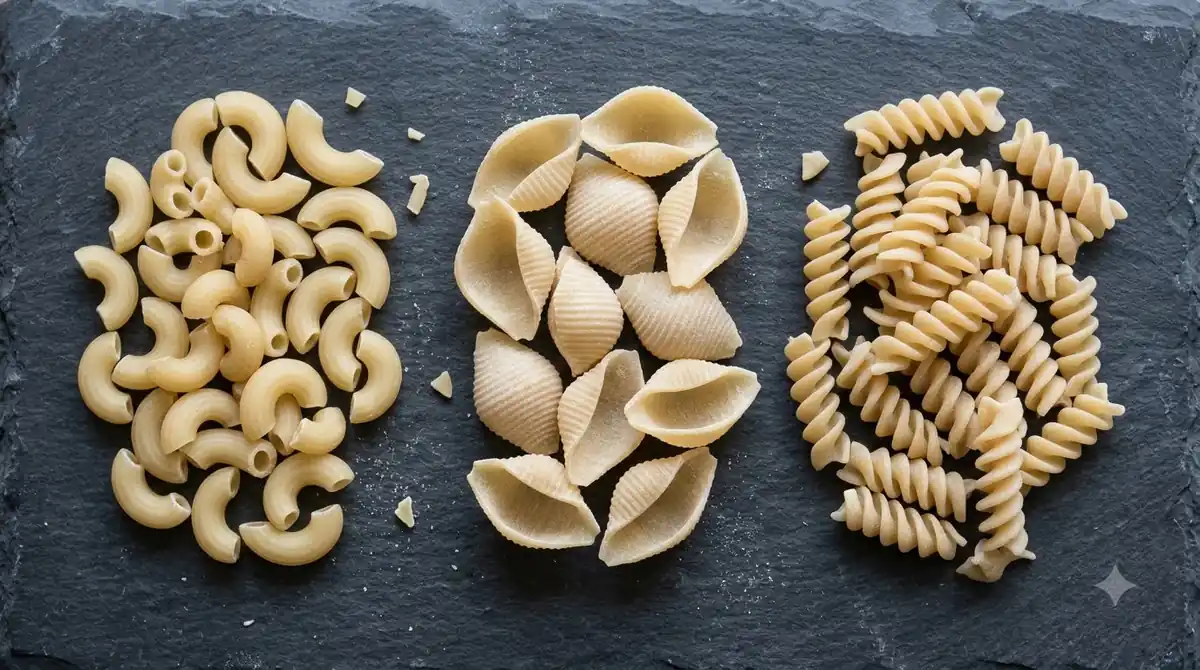

Cellentani pasta is a hollow, ridged corkscrew shape from Italy. It is also sold under the name cavatappi, and most sources treat the two as the same pasta. Its origin is disputed, so the history below sets the accounts side by side.
The open center and outer ridges of cellentani pasta suit chunky tomato sauces, meat ragù and creamy cheese sauces. If you cannot find it, several other spiral and tube shapes work as substitutes.
What Is Cellentani Pasta?
Cellentani pasta is a hollow spiral with outer ridges, made from durum wheat semolina and water. DeLallo’s cavatappi guide describes the same shape and notes that the Italian word cavatappi means corkscrews.
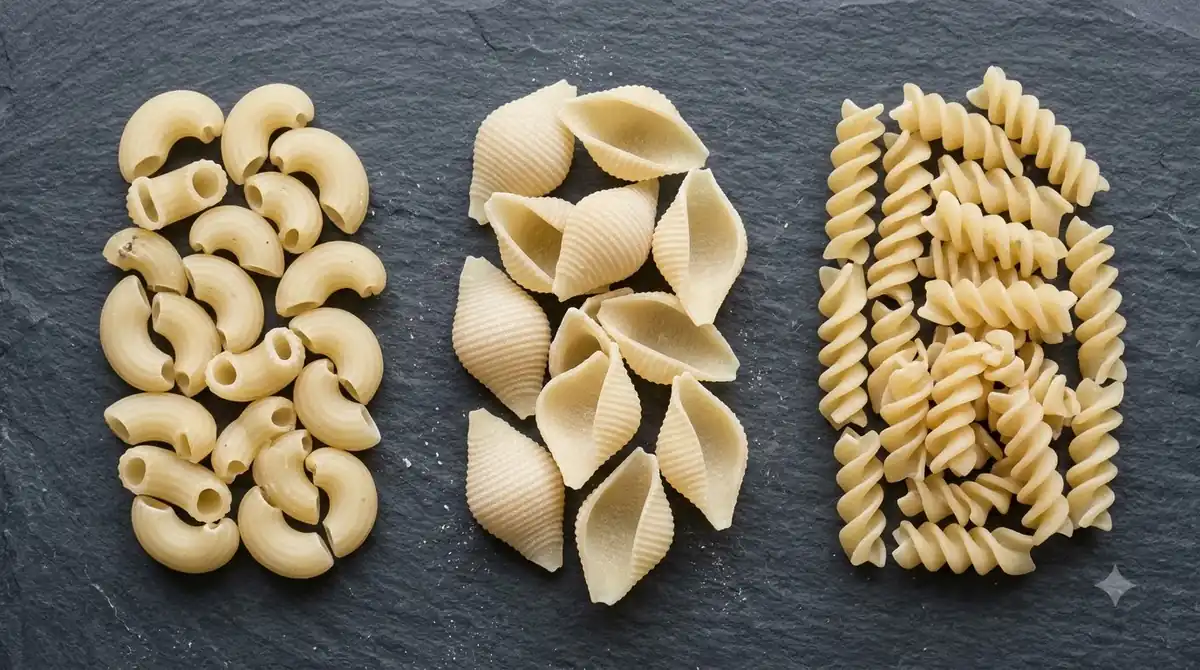
The pasta is usually yellow, like most dried pasta. Some brands add vegetables or coloring, so you may find green or red versions on the shelf. Check the ingredient list if you want a plain semolina pasta.
The spiral is hollow, so thinner sauce can run into the tube and the grooves, while a thicker sauce sits on the outside. For most home cooks, that is the main practical difference from a flat shape like fettuccine.
Other names for this shape include spirali, serpentini and tortiglione. Wikipedia also lists double elbows, a name said to be used in parts of the United States and Canada.
Because the name on the label varies by brand, check the shape on the box and the ingredient list for semolina and water when you shop for cellentani pasta.
Where Did Cellentani Come From?
The origin of cellentani is disputed. One account, summarized in Wikipedia’s cellentani entry, places its creation at Barilla in Parma in the 1970s.
In that account, a set of dies was made with spiral rather than straight lines by mistake, which produced a spring-like shape. Barilla named the pasta after the singer Adriano Celentano, nicknamed Il Molleggiato. The story comes from a former Barilla research technician who spoke on a 2018 television program.
After Barilla trademarked the name, other producers used names such as cavatappi. DeLallo gives a different timeline. Its cavatappi guide says the shape was created in the 1960s and places its origin in Naples, in southern Italy. The two accounts do not agree on the date or the place, and the sources read for this article do not settle the question.
For a home cook, the history matters less than the shape on the plate. Whichever account is right, cellentani pasta is cooked and sauced the same way as other dried spiral pasta.
Cellentani vs Cavatappi and Other Spirals
Cellentani and cavatappi are generally the same shape, while fusilli is a flat twist rather than a hollow tube. The table compares the shapes on the features that matter when you pick one for a sauce.
| Pasta | Hollow tube? | Surface | Note from the sources |
|---|---|---|---|
| Cellentani | Yes | Spiral with outer ridges | Sometimes has more ridges in the dough than cavatappi, per DeLallo |
| Cavatappi | Yes | Spiral with outer ridges | Name means corkscrews; same shape family as cellentani |
| Fusilli | No, a flat twist | Flat twist | Described as a flat twist, not a hollow tube |
The turn count and exact length of cellentani are not confirmed by the sources read, so compare package sizes if you need a precise match. Wikipedia notes that a spiral with less than one full turn looks like a twisted version of elbow macaroni, so the number of turns changes how the shape reads.
Best Sauces for Cellentani Pasta
Cellentani works with chunky tomato sauce, meat ragù and creamy cheese sauces. DeLallo’s cavatappi guide lists these pairings as examples for the shape.
- Chunky tomato sauces, including homemade or jarred marinara
- Meat ragù, including ground beef and Italian sausage in a creamy tomato sauce
- Cheesy creamy sauces, mac and cheese and classic Alfredo
- Pesto, and butter with Parmesan
- Baked pasta dishes and cold pasta salads with small ingredients such as chopped red pepper and olives
The hollow center and outer ridges give a thicker sauce more places to sit than a watery one, so a sauce with some body suits this shape best.
Cellentani pasta with butter and Parmesan is the simplest pairing from that list, since the sauce is little more than melted butter and cheese tossed with the hot pasta and a splash of the cooking water. Wikipedia also lists salads, soups and casseroles as common uses, and names two Italian dishes made with cavatappi: all’amatriciana and al pomodoro.
How to Cook Cellentani
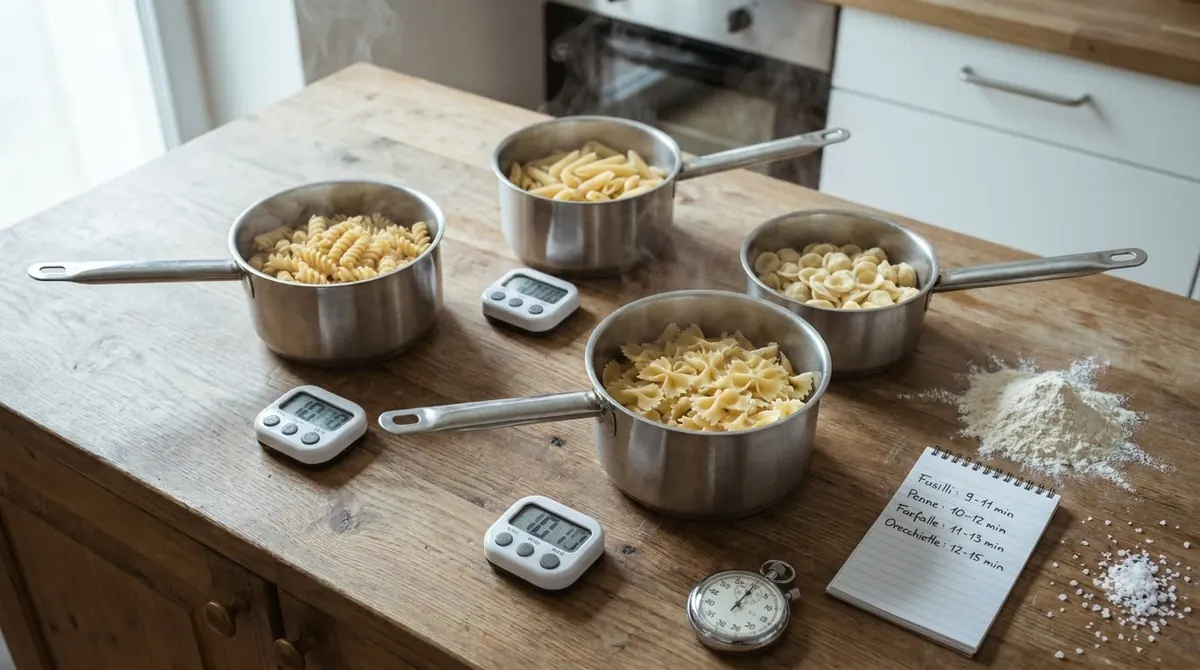
Use about 1 gallon of water and 1-1/2 tablespoons of kosher salt per pound of dried pasta, then cook to al dente. Taste of Home’s pasta guide gives these amounts and the timing steps below.
- Bring the water to a full rolling boil, using about 1 gallon per pound of dried pasta.
- Add about 1-1/2 tablespoons of kosher salt per pound once the water is boiling, so it dissolves right away.
- Add the pasta to the rolling boil and stir right away, making sure each piece is fully submerged.
- Stir again every few minutes, even for short shapes, so the pieces do not stick together.
- Start tasting 1 to 2 minutes before the package time, looking for a cooked center with a slight chew.
- Scoop out about 1 cup of the cooking water before you drain the pasta.
- Drain without rinsing, so the surface starch helps the sauce cling.
DeLallo lists a cook time of 7 to 8 minutes for cavatappi, the same shape family. Brands differ, so treat the package time as the starting point and taste to confirm.
Taste of Home notes that Italian cooks describe the water as salty as the ocean, which can mean two to three tablespoons of salt in a large pot. Use that as a guide for cellentani pasta and adjust to your taste.
Common Mistakes With Cellentani
Two habits cause most trouble with cellentani pasta: rinsing the pasta and draining away the cooking water. Both make the sauce slide off instead of coating the pasta.
- Rinsing after draining, which washes off the surface starch the sauce needs
- Skipping the reserved cup of cooking water, so the sauce ends up too thick or too dry
- Adding salt before the water reaches a boil, so it does not dissolve evenly
- Using a thin sauce that runs off the ridges instead of clinging to them
- Cooking to the package time without tasting, which can leave the center soft
These are cooking habits rather than product claims, so they apply to most dried spiral pasta.
Another common problem is letting the water drop off the boil when the pasta goes in. Taste of Home advises waiting until the water reaches a rolling boil before adding the pasta, so start the timer once the pot is back at a full boil.
Substitutes for Cellentani
If your store does not carry cellentani pasta, DeLallo lists rigatoni, fusilli, penne rigate and shellbows as possible swaps for cavatappi.
- Rigatoni, a ridged tube
- Penne rigate, a ridged penne
- Fusilli, which is a flat twist rather than a hollow tube, so the bite is different
- Shellbows, listed by DeLallo as a possible swap
Choose the swap by what the sauce needs. A hollow ridged tube keeps the closest structure to cellentani pasta, while fusilli gives a different texture.
What Is Not Verified About Cellentani
The sources read for this article do not confirm how many turns a cellentani piece has, or its exact length. Wikipedia gives a range of one to three turns but flags it as needing a citation, so treat that number as unconfirmed. Dimensions are also missing from the sources read, so a ruler and a sample from your package is the easiest way to check.
Cook times also differ by brand, and the manufacturer pages for cellentani could not be read in this research. Use the time on your package and check the manufacturer’s current guidance for your product.
Frequently Asked Questions
Is cellentani pasta the same as cavatappi?
Most sources say yes. DeLallo describes cellentani pasta as mostly the same shape as cavatappi, though sometimes with more ridges in the dough.
What does cavatappi mean?
Cavatappi means corkscrews in Italian, which describes the spiral shape of the pasta.
Should you rinse cellentani pasta after cooking?
No. Taste of Home advises against rinsing hot-dish pasta, because the surface starch helps the sauce cling. Drain it and toss it straight into the sauce.
How much water and salt do you need?
Use about 1 gallon of water per pound of dried pasta, with about 1-1/2 tablespoons of kosher salt added after the water boils. Table salt or sea salt also works, so adjust to taste.
Can you use rigatoni instead?
Yes. DeLallo lists rigatoni as a possible substitute for cavatappi, which is the same shape family as cellentani.
If a recipe names cellentani pasta, use that shape rather than a flat pasta, or change the sauce to suit the swap. Check the package time for your brand, start tasting one to two minutes early, and save a cup of cooking water before you drain. That cup is the easiest way to get the sauce to cling. For more pasta shapes, browse our Learn guides.
 8 min readLearnOcchi di Lupo Pasta: What It Is, Where It Comes From and How to Cook ItUpdated Nov 11, 2026
 8 min readLearnFusilli Lunghi Pasta: What It Is, Where It Comes From and How to Cook ItUpdated Nov 11, 2026
 8 min readLearnCandele Pasta: What It Is, Where It Comes From and How to Cook ItUpdated Nov 11, 2026
 8 min readLearnAnelli Pasta: What It Is, Where It Comes From and How to Cook ItUpdated Nov 10, 2026
 8 min readLearnPassatelli Pasta: What It Is, Where It Comes From and How to Make ItUpdated Nov 6, 2026
 8 min readLearnCasoncelli Pasta: What It Is, Where It Comes From and How to Make ItUpdated Nov 10, 2026