
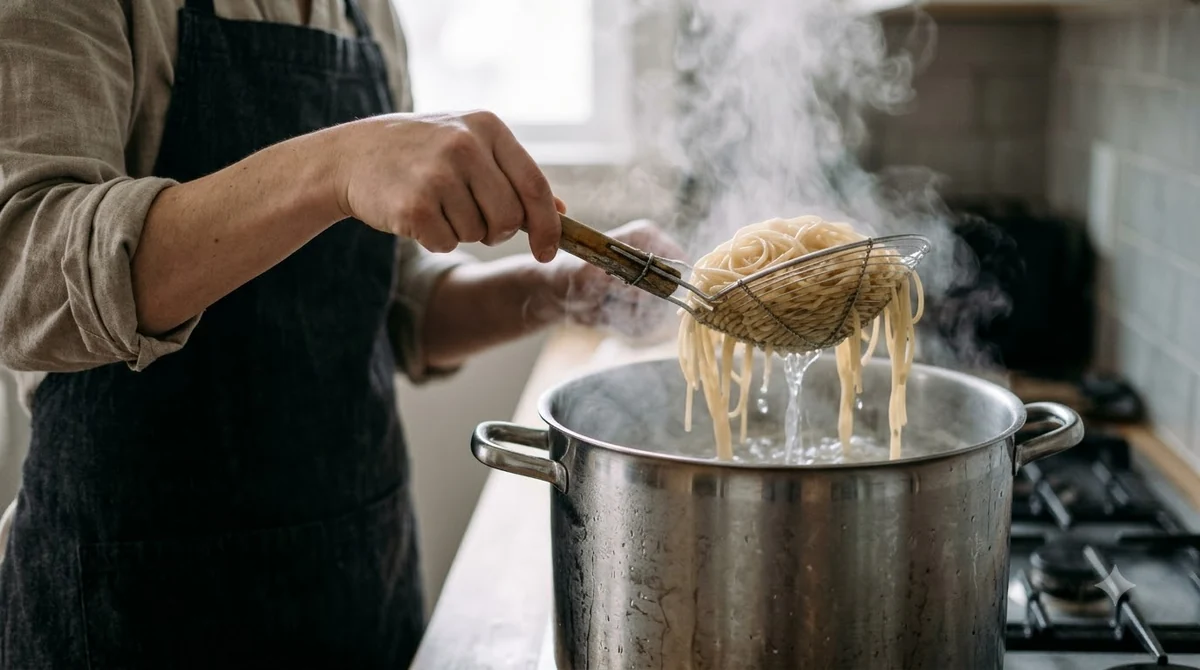

Starchy pasta water for sauce is the cloudy liquid left after boiling pasta, and it works as a binder. It holds starch that leaves the noodles while they cook. Stirred into a sauce, it helps oil, cheese and pasta cling together.
The effect is strongest in sauces built on fat and cheese. Treat it as a tool rather than a fixed recipe: add it a little at a time and judge the texture by eye.
What is starchy pasta water and what is in it?
Starchy pasta water for sauce is the cooking liquid that collects starch released by the noodles as they boil. That starch is the reason the water turns cloudy and the reason it is useful later.
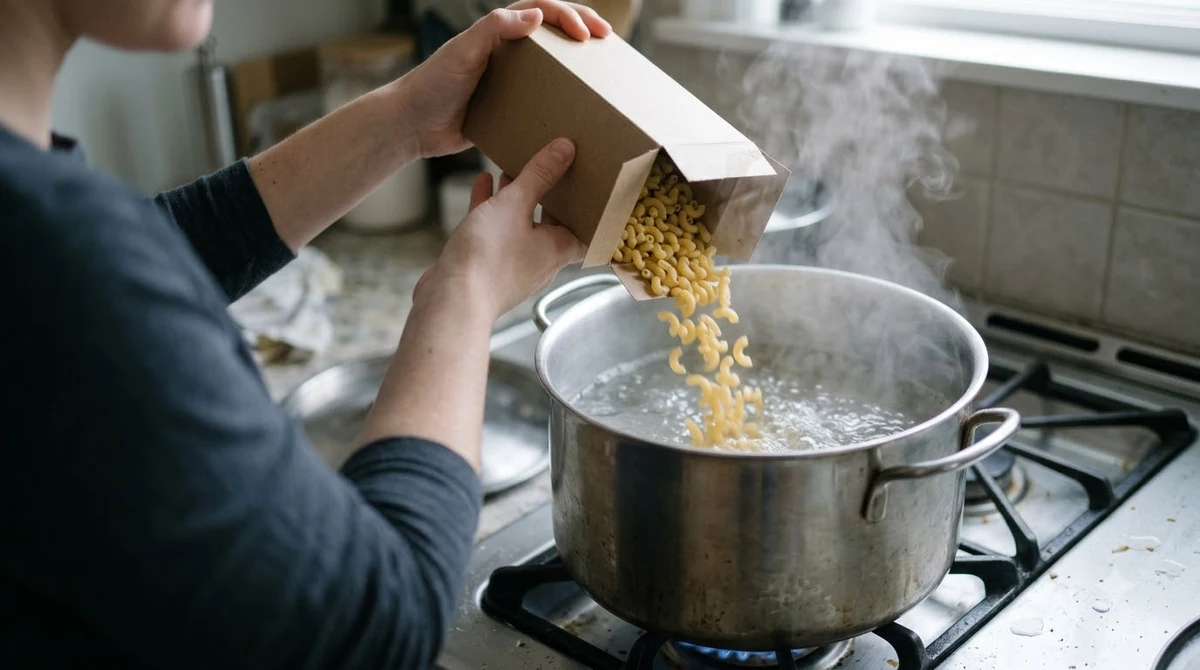
Heating starch in water makes its granules swell, a process called gelatinization. According to Wikipedia’s starch gelatinization entry, some native starches start swelling at 55 °C (131 °F) and others at 85 °C (185 °F), depending on the source.
As the granules break down, amylose molecules leach into the surrounding water. That leached starch is what clouds the pot. The same article notes that salt, sugar, fat and pH shift the range at which starch swells, so the exact behavior depends on the dish.
Because starchy pasta water for sauce is already hot and costs nothing, it is an easy binder to reach for at the stove. Keep a heatproof cup nearby so you can save some starchy pasta water for sauce before the pasta goes into the colander.
The Wikipedia entry on pasta states that starch gelatinization and protein coagulation are the major changes when pasta cooks in boiling water. It also notes that Italian pasta is cooked in salted water, and that the amount of salt has no influence on cooking speed. Salt seasons the noodles, but the starch is what matters for the sauce, and how much salt belongs in pasta water is a separate question.
Why does starchy pasta water make sauce cling and turn creamy?
Starchy pasta water for sauce helps because it gives the oil, water and cheese in the pan something to hold onto, so the sauce coats the noodles instead of pooling at the bottom of the bowl.
An emulsion is a mixture of liquids that do not normally mix, such as oil and water. The Wikipedia article on emulsions explains that common emulsions are inherently unstable and tend to separate unless something holds the droplets apart. An emulsifier reduces the tension between the two liquids and keeps droplets from merging.
The emulsifiers the article lists are egg yolk lecithin, mustard mucilage and proteins such as sodium caseinate. Starch is not on that list. Thickeners such as gum arabic work differently, by increasing the viscosity of the liquid so droplets stay suspended. Starch in pasta water acts more like a thickener in the water phase, which is why starchy pasta water for sauce helps a sauce hold together longer.
Plain water has no starch in it, so it thins the sauce without adding the body that starchy pasta water for sauce provides. This is a practical binding effect, not a guarantee of a perfect emulsion. The result depends on how hot the pan is and how well you toss the pasta, so adding starchy pasta water for sauce a splash at a time gives you more control than a full ladle. If you wonder whether oil in the cooking water changes this, read whether to put oil in pasta water.
How does starchy water work in cacio e pepe?
In a full cacio e pepe recipe, a little of the hot, starchy cooking water is what turns grated pecorino and black pepper into a smooth sauce instead of a clump of cheese.
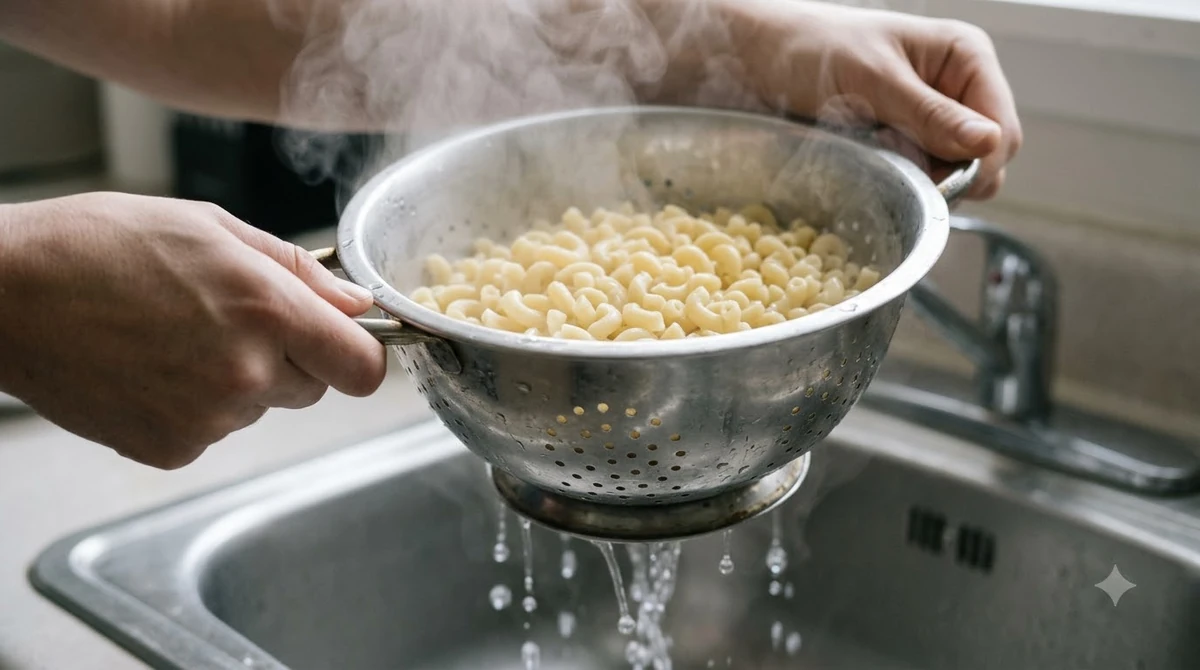
The Wikipedia article on cacio e pepe describes adding a little hot, starchy cooking water, and says the starches help bind the pepper and cheese to the pasta. The name means “cheese and pepper” in several central Italian dialects. The article attributes the dish to shepherds from Lazio, Abruzzo, Tuscany and Umbria in the 18th or 19th century.
The same article warns that pecorino romano can turn lumpy instead of smooth and creamy. It cites a study finding that higher starch concentrations were needed to avoid clumps as the temperature rose. Keep the heat moderate when the cheese goes in, and let the water do the loosening.
- Start with the pasta still hot and the cheese at room temperature.
- Work the cheese in slowly with a splash of the hot water.
- Take the pan off high heat before the cheese goes in.
How to add starchy pasta water for sauce, step by step
Reserve some starchy pasta water for sauce before you drain the pasta, then add it to the sauce a little at a time while you toss.
- Before draining, ladle some of the cloudy water into a heatproof cup.
- Cook the sauce in the pan until it is nearly the texture you want.
- Add the drained pasta to the sauce, then add the reserved water a splash at a time.
- Toss over moderate heat until the sauce coats each piece and clings.
- Taste before serving and adjust salt, since the cooking water may already be salted.
Timing matters too. The water comes off the boil well above the 55 °C and 85 °C starting points listed earlier, so it can loosen a pan quickly. Pull the pasta while it is still firm, as described in how to cook pasta al dente, and add the water while the sauce is still moving over the heat, not after you have taken the pan off the burner.
Real recipes give a starting point. Taste of Home’s cacio e pepe for four, built on 8 ounces of long pasta, reserves 3/4 cup of the cooking water before draining, adds 1/2 cup of it to the skillet before the pasta goes in, and uses more only if the sauce looks dry. Its guide to cooking pasta suggests dipping out about a cup before you drain. Treat those figures as a starting point and stop once the sauce coats the pasta. The table below shows what the water tends to do in each type of sauce.
| Sauce type | What the water does | Watch for |
|---|---|---|
| Oil and garlic | Helps the oil spread and cling to the noodles | Too much water makes the sauce watery |
| Cheese and pepper | Helps the cheese loosen and bind the pepper to the pasta | Lumps form if the heat is too high |
| Tomato | Loosens a thick sauce so it coats the pasta | Dilutes flavor if added in large amounts |
| Cream or butter | Thins a heavy sauce and helps it grip the pasta | Can make the sauce too loose if overdone |

What mistakes should you avoid with pasta water?
The most common mistakes with starchy pasta water for sauce are adding too much water at once, letting cheese sit over high heat, and rinsing the pasta before it goes into the sauce.
- Pouring in a full ladle at once, which thins the sauce before it can cling.
- Adding pecorino over high heat, which can make the sauce lumpy.
- Rinsing the pasta, which washes off the surface starch the sauce needs to grip.
- Adding extra salt before tasting, since the cooking water may already be salted.
This advice applies to pasta cooked in plain water. The sources checked do not cover other cooking liquids, and they do not give storage times for reserved pasta water.
Frequently Asked Questions
Can you use pasta water that has been sitting for hours?
Use it while it is still hot. The cacio e pepe method described in the Wikipedia article depends on a little hot, starchy water, so cooled starchy pasta water for sauce is a weaker tool. The sources checked do not give holding times, so judge the water by how the sauce responds.
Does starchy pasta water replace butter or olive oil?
No, not in most sauces. Starchy pasta water for sauce helps fat and cheese cling to the noodles, but it does not add the richness of the fat itself. Keep the oil or butter in the recipe and use the water as a finishing binder.
Should you rinse pasta before adding it to a sauce?
Usually not, if the sauce is meant to cling to the noodles. Rinsing washes away the surface starch that helps the sauce grip. Rinsing is more useful when you want the noodles separated, such as in a cold pasta salad, and the rinsing pasta after cooking guide covers when it helps.
How much pasta water should you add?
Reserve about a cup per pot, which is the Taste of Home guideline, and use only part of it. Its cacio e pepe for four adds 1/2 cup first and more only if the sauce seems dry. Add a splash of starchy pasta water for sauce, toss, and stop when the sauce coats the noodles and no longer pools in the pan. Taste before adding more, because the sauce can become thin quickly.
Does salt in the pot change the starch?
The Wikipedia entry on pasta says salt does not change cooking speed. The sources checked do not say that salt changes how much starch leaves the noodles. Salt mainly seasons the pasta, so taste the finished sauce before adding more.
Starchy pasta water for sauce costs nothing, and it is easy to pour away by habit. Reserve a cup of starchy pasta water for sauce before you drain, use it while it is hot, and add it a little at a time. Start with about a cup in reserve, and let the sauce tell you how much of it to use. Used with care, starchy pasta water for sauce turns plain noodles and a pan of oil or cheese into one coated dish.
 8 min readLearn70 Hydration Pizza Dough Recipe: What 70% Water Does to Your CrustUpdated Nov 10, 2026
 8 min readLearnHow Long Does Opened Pasta Sauce Last?Updated Nov 11, 2026
 6 min readLearnRadiatori Substitute: Pasta Shapes That Hold Sauce Like It DoesUpdated Nov 13, 2026
 7 min readLearnDoes Pizza Dough Need Sugar? What It Does and How Much to UseUpdated Nov 11, 2026
 7 min readLearnDiastatic Malt Powder in Pizza Dough: What It Does and How Much to UseUpdated Nov 11, 2026
 8 min readLearnRigatoni Pasta: Shape, Uses and Best SaucesUpdated Nov 10, 2026