
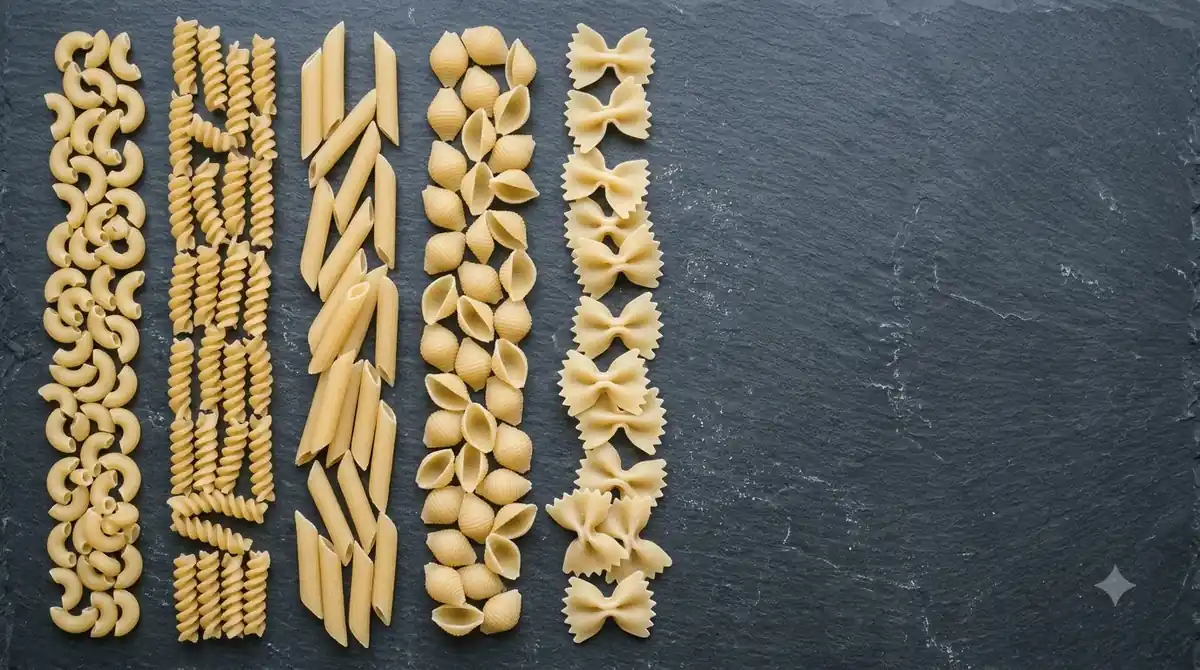

Occhi di lupo pasta is a large tubular pasta from Campania, named for “wolf’s eyes.” It is usually smooth, holds up to hearty sauces, and suits baked dishes. Sizes vary by brand, so the package matters more than the name.
What Is Occhi di Lupo Pasta?
Occhi di lupo is a large tubular pasta whose Italian name means “wolf’s eyes.” The name is usually linked to the cross section of the tube, which some producers say resembles a wolf’s pupil.
That link is a loose one. The Pasta Project’s guide to occhi di lupo admits the comparison is a stretch of the imagination, and it notes that many Italian pasta names come from the natural world. Treat the wolf’s eye as a nickname rather than a documented origin.
The tube is usually smooth, although ridged versions called rigate also exist. There is no standard size across brands. Compare the grams per pack and the brand’s own product description before you buy.
The name also belongs to a wider habit of wolf imagery in Italian. The Pasta Project notes folklore in which a wolf’s eye is said to take away a man’s voice, and it points out that “in bocca al lupo,” which literally means “in the mouth of the wolf,” is a common way to wish someone good luck. That context is a useful reminder that the name is descriptive rather than technical.
Where Occhi di Lupo Pasta Comes From
Occhi di lupo comes from Campania in Southern Italy, and it is most closely associated with Naples and the town of Gragnano. The origin of the shape is lost, so no single inventor or date can be credited.
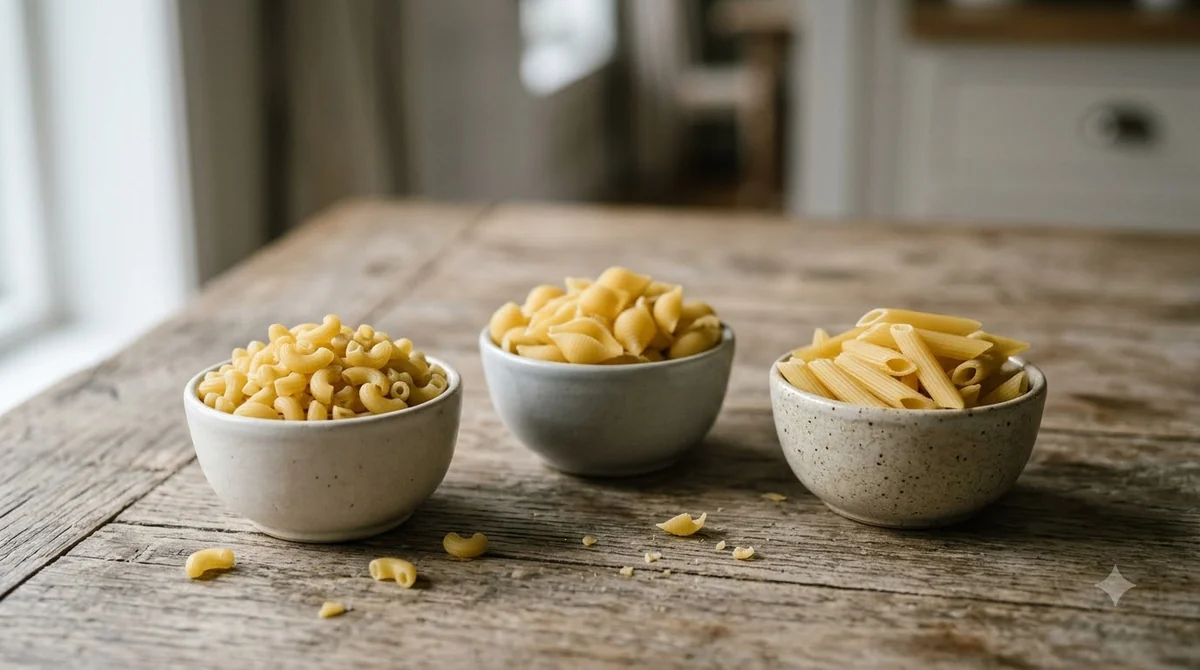
Many Neapolitan pasta companies make occhi di lupo today, including producers of Pasta di Gragnano PGI. Pastificio Di Martino, a Gragnano maker, describes its version as bronze-die extruded and slow-dried.
If a box carries the Gragnano PGI mark, the pack itself names the protected origin. If the mark is missing, you cannot confirm the place of production from the label alone.
Wikipedia classifies occhi di lupo under stuffed pastas, which is a separate category from the plain dried tube most shoppers buy. That is why the same name can describe two different uses, and why a recipe should say which one it expects.
Occhi di Lupo vs Mezzi Occhi di Lupo
Mezzi occhi di lupo is the half-sized version of the same tube, so the two are easy to confuse on a shelf. Use the table below to decide which one fits your sauce and your bowl.
| Feature | Occhi di lupo | Mezzi occhi di lupo |
|---|---|---|
| Size | Large tube, size varies by brand | Half-sized version of the same tube |
| Surface | Usually smooth, ridged versions exist | Check the pack, as finish varies by brand |
| Good for | Meat ragù, sausage, baked dishes | Check the recipe, as it names the size it expects |
| Check before buying | Grams per pack and cooking time | Grams per pack and cooking time |
Because there is no standard size, a recipe that calls for occhi di lupo may work with the half-size tube too. Adjust the timing from the package rather than assuming the two cook in the same time. A baked dish with a ricotta filling is the case where the larger tube is the one most recipes describe.
Mezzi occhi di lupo is the one to reach for when a recipe names the smaller size, and occhi di lupo is the one to choose when the recipe calls for the full tube.
Di Martino’s Gragnano version of occhi di lupo pasta comes in 500 g packs, with ten packs to a case. That is a useful number to compare when you shop, because a larger pack and a half-size tube can look similar on a shelf. Read the grams on the front together with the product name.
How to Cook Occhi di Lupo Pasta
Cook occhi di lupo in plenty of salted boiling water and start checking the package time, since Di Martino’s Gragnano version is listed at al dente in 11 minutes. Other brands differ, so the time on your own box is the starting point.
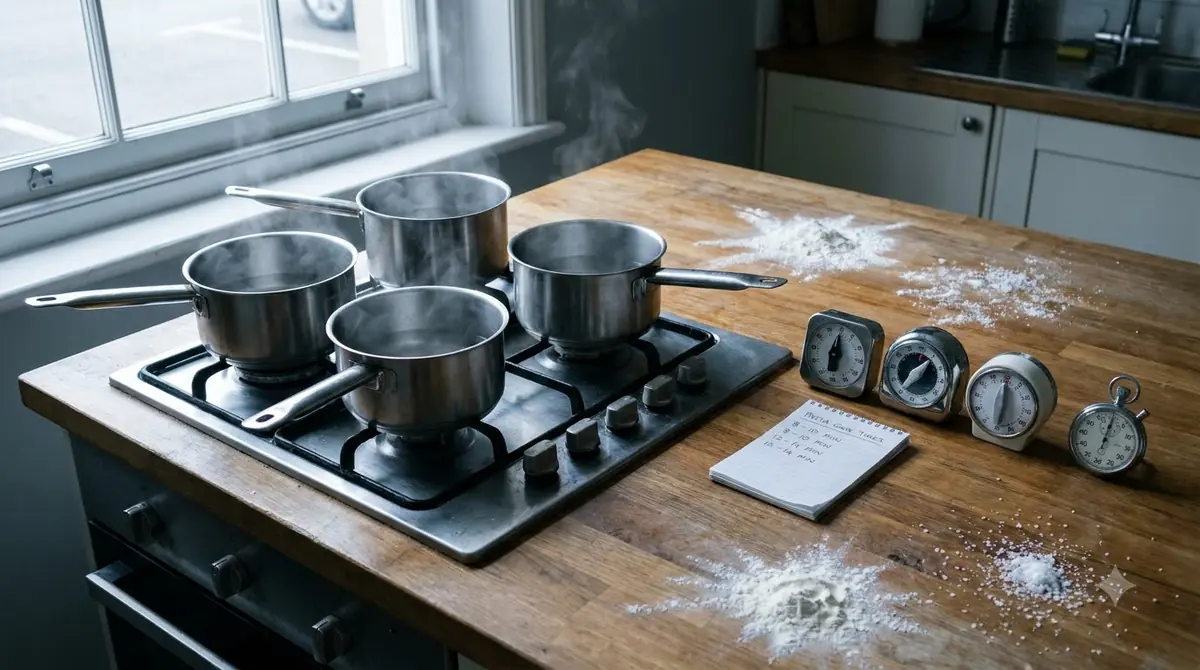
Occhi di lupo needs room to move in the pot. The steps below cover the basic method for a dried tube.
- Bring a large pot of water to a rolling boil and add salt.
- Add the pasta and stir once so the tubes do not stick together.
- Start tasting at the time printed on the package and aim for al dente.
- Drain and toss with the sauce straight away, while the pasta is hot.
The most common mistake is following the time without tasting. Bite a tube from the middle of the pot, since the outside can be softer than the center. If the pasta is still firm in the middle, give it another minute and taste again.
Read the allergen line on the box before you cook for guests, since the Di Martino listing names gluten. The pack also gives the grams and cooking time, so one glance at the label covers the main checks before the water boils.
Use the 11-minute listing as a guide, not a rule, when you cook occhi di lupo pasta from another producer. Brands can differ, so the printed time on that brand’s box is the one to trust.
Best Sauces and Dishes for Occhi di Lupo Pasta
Occhi di lupo pairs best with hearty sauces and baked dishes, according to the serving ideas on the Di Martino listing. A meat ragù or sausage sauce is the sort of pairing the producer names first.
- Meat ragù, the classic partner for a sturdy tube
- Sausage with broccoli
- Tomato with ricotta, for a lighter sauce
- Baked with mozzarella, for a casserole-style dish
- Ricotta and pistachio, a Sicilian-style recipe that The Pasta Project describes as a light summer pasta
Sources do not agree on how the tube is traditionally filled. Wikipedia’s entry on occhi di lupo describes it as a large stuffed pasta, with fillings such as olive oil, ricotta and pistachios, or pecorino with parsley and basil. The producer’s dried version, by contrast, is sold as a plain tube for sauce. Both uses are valid, and the recipe tells you which one it expects.
How to Store Occhi di Lupo Pasta
Store dried occhi di lupo in a cool, dry place away from light and heat, as the Di Martino package advises.
Once the bag is open, move the pasta to an airtight container if the bag does not reseal well. Check the best-before date on the box and use older packs first. The producer lists gluten as the allergen, so this is not a gluten-free choice.
Keeping occhi di lupo pasta away from light matters because the producer names light as one of the conditions to avoid, alongside heat. Keep the box in a cupboard rather than on a sunny windowsill.
Frequently Asked Questions
Is occhi di lupo pasta the same as mezzi occhi di lupo?
Not quite. Mezzi occhi di lupo is the half-sized version of the same tube, so the shape is the same but the size is smaller. Sizes vary by brand, so compare the grams per pack and the product description before you choose.
How long does occhi di lupo pasta take to cook?
Di Martino’s Gragnano version is listed as al dente in 11 minutes. Other brands can differ, so follow the time printed on your package. Start tasting a little before that time and drain when the center is just firm.
What sauce goes best with occhi di lupo pasta?
Hearty sauces work best, including meat ragù and sausage with broccoli, according to the producer’s serving ideas. Tomato with ricotta and a baked dish with mozzarella are also listed.
Is occhi di lupo pasta gluten free?
No. The Di Martino Gragnano package lists gluten as the allergen, and the ingredients are durum wheat semolina and water. Check the label of any brand you buy, because recipes and ingredients can change between production runs.
Where does occhi di lupo pasta come from?
It is a Southern Italian pasta, especially associated with Naples and Gragnano in Campania. The origin of the shape is lost, so no single date or maker is known. Many Neapolitan producers make it today, including Gragnano PGI makers.
Can occhi di lupo pasta be baked?
Yes. The Di Martino listing suggests baking occhi di lupo pasta with mozzarella, and The Pasta Project notes that the tube is often baked or filled, usually with ricotta. Check your recipe and package for the size and timing before you start.
Does occhi di lupo pasta have ridges?
Usually not. The tube is most often smooth, but ridged versions called rigate exist. Read the product description to see which finish a given occhi di lupo pasta box offers.
If you want a sturdy tube for meat sauce or baking, occhi di lupo is a good pick. Check the size on the box before you buy, use the package time as a starting point, and taste before you drain.
 8 min readLearnFusilli Lunghi Pasta: What It Is, Where It Comes From and How to Cook ItUpdated Nov 11, 2026
 8 min readLearnCandele Pasta: What It Is, Where It Comes From and How to Cook ItUpdated Nov 11, 2026
 8 min readLearnCellentani Pasta: What It Is, Where It Comes From and How to Cook ItUpdated Nov 11, 2026
 8 min readLearnAnelli Pasta: What It Is, Where It Comes From and How to Cook ItUpdated Nov 10, 2026
 8 min readLearnPassatelli Pasta: What It Is, Where It Comes From and How to Make ItUpdated Nov 6, 2026
 8 min readLearnCasoncelli Pasta: What It Is, Where It Comes From and How to Make ItUpdated Nov 10, 2026