
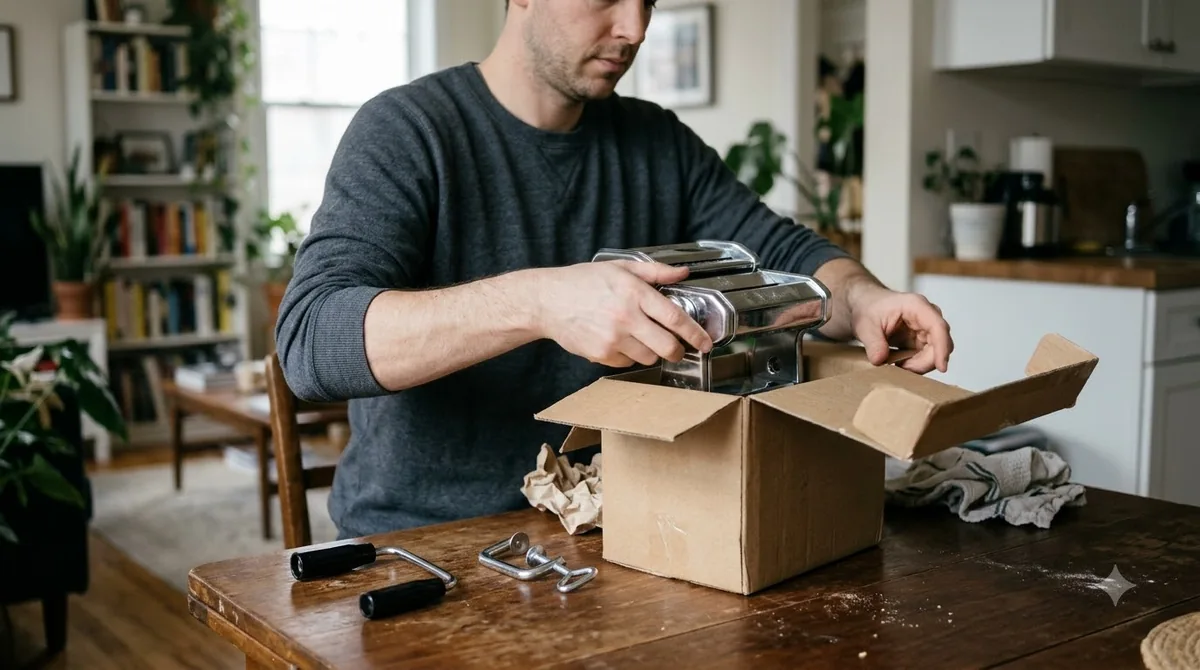

The CucinaPro pasta machine is a hand-crank pasta roller that clamps to the edge of a work surface, and its Classic 177 manual lists a one-year limited warranty. The brand sells pasta makers through its online store, so the details that matter most come from the manual for each model.
CucinaPro lists several pasta machines on its site, and each model has its own manual. Check the model number on your CucinaPro pasta machine before you assume which attachments and care rules apply.
CucinaPro Pasta Machine Models the Brand Lists
CucinaPro’s instruction manual page lists five machines: the 135-10 Ravioli Maker, the 177 Classic Pasta Maker, the 178 Deluxe Pasta Maker, the 530 Cavatelli Maker and the 135-03 Pierogi Maker.
The CucinaPro instruction manual page links a PDF for each model, but it gives no specifications. It does not confirm roller width, thickness settings or the attachments included in the box for any model. Our CucinaPro pasta maker attachments guide covers the accessory side. The CucinaPro homepage describes the company as an online retailer of kitchen appliances and tools, with a Pasta Makers category among its product groups.
| Model | Type on the manual page | What the manual confirms |
|---|---|---|
| 177 Classic Pasta Maker | Hand-crank pasta maker | Clamp, two cutter heads, widest setting 7, one-year limited warranty |
| 178 Deluxe Pasta Maker | Hand-crank pasta maker | Same opening instructions as the 177 manual |
| 135-10 Ravioli Maker | Ravioli maker | Manual listed, contents not checked |
| 530 Cavatelli Maker | Cavatelli maker | Manual listed, contents not checked |
| 135-03 Pierogi Maker | Pierogi maker | Manual listed, contents not checked |

How the Classic and Deluxe Models Are Used
Both the 177 and 178 manuals for the CucinaPro pasta machine start with the same steps: clamp the machine, wipe it clean, then pass dough through the rollers before the first real batch.
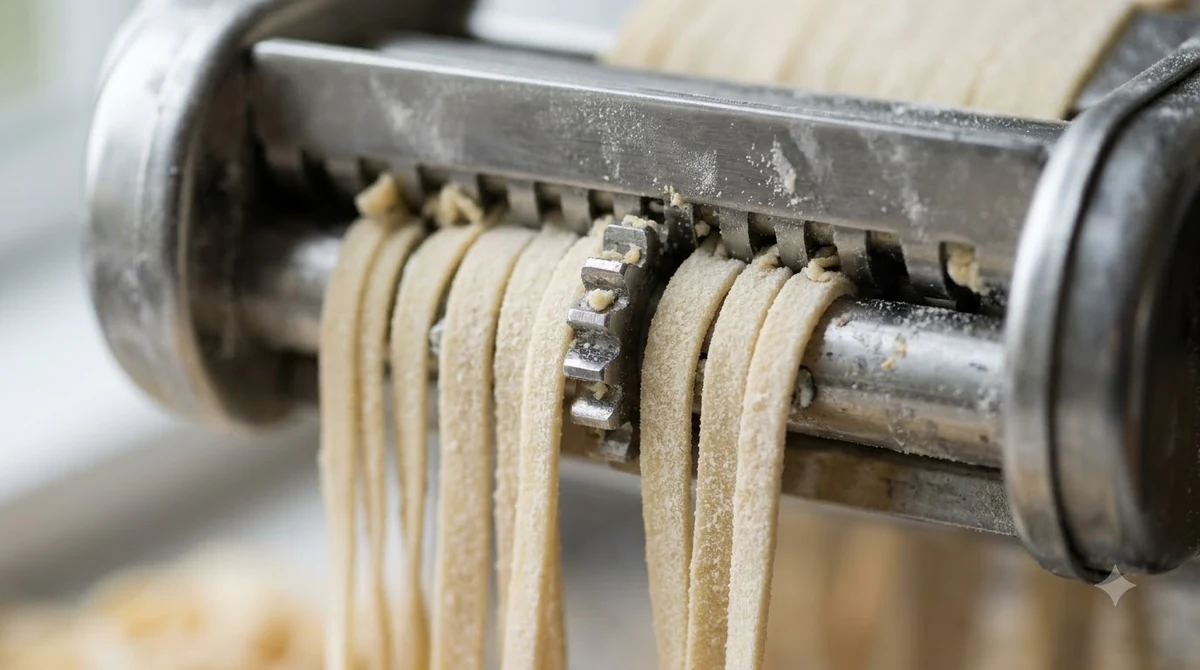
The first pages of the Classic 177 manual tell you to fasten the machine with the enclosed clamp to the edge of a surface. They also say to wipe all surfaces with a clean, dry cloth and never use a wet one on the body.
Before cooking on a CucinaPro pasta machine, the manuals suggest passing dough through the rollers and both cutter heads. That step lets the dough touch the parts where machine oil can build up, and the manual says to discard that dough once you finish.
The rolling routine in the manual has four steps:
- Set the machine to the widest setting, 7, and pass a rough rectangle of dough through the rollers.
- Dust the strip with flour, fold it in half and pass it through again until the texture turns smooth.
- Move the regulator knob to the next position and roll the dough, repeating until it reaches the thickness you want.
- Turn the hand crank slowly through the drive hole of the cutter you want, then lift the pasta strip as it comes out.
The hand crank on a CucinaPro pasta machine gives you control over every pass, but each sheet takes steady manual effort. The manuals say the machine is for household use only, so treat it as a home kitchen tool rather than a production machine. Our CucinaPro pasta maker instructions guide covers setup, rolling and cutting step by step.
Dough Recipes in the Manuals
The 177 manual’s all-purpose dough uses 3 cups of flour, 2 eggs, 3 tablespoons of water, 1 teaspoon of olive oil and half a teaspoon of salt.
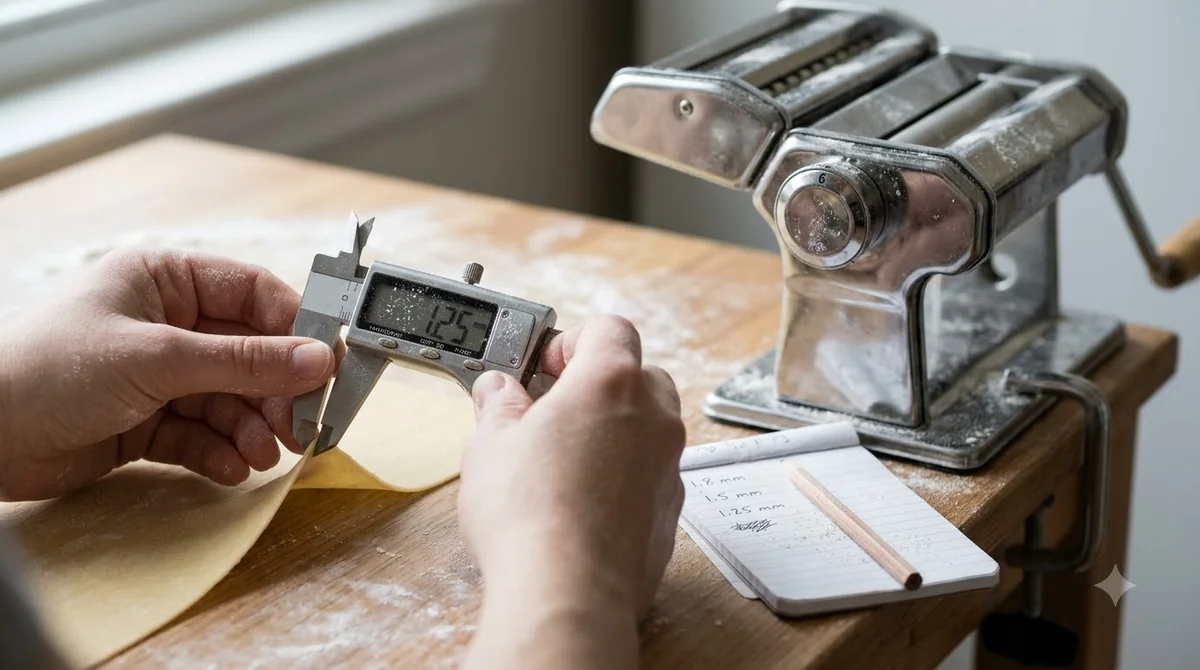
Mix the ingredients, then knead the dough on a lightly floured surface for about 5 minutes. Wrap it in plastic wrap and let it rest for about an hour. Slice it into quarter-inch pieces and keep the pieces you are not using covered with a damp cloth.
The manual warns that you will probably need more water than the recipe lists, so add it slowly. Too much water makes the dough sticky and hard to feed through the rollers.
The manual also gives a semolina version. It uses 2 cups of semolina flour, 2 eggs, 2 tablespoons of oil and 2 tablespoons of water. The manual describes semolina as having the consistency of a rough cornmeal, so the dough will feel grainer than the all-purpose version.
Warranty and Support for CucinaPro Machines
The Classic 177 manual states a one-year limited warranty from the date of purchase, and it requires valid proof of purchase.
Under that warranty, CucinaPro will repair or replace a defective product at its discretion at no charge to the owner. Replacement products and repaired parts are covered only for the rest of the original year or six months, whichever is greater.
The warranty does not cover damage from accident, misuse, improper maintenance or normal wear and tear. The warranty page prints SCS Direct Inc. in Trumbull, CT 06611, so keep your receipt and order details if you need to contact them. This article does not check whether a CucinaPro pasta machine bought from a third-party seller carries the same terms.
Care and Cleaning Rules to Follow
The manuals say to let the CucinaPro pasta machine air dry, brush out flour and keep the body away from water and dishwashers.
- Brush flour out with a pastry brush, or use canned air for spaces a brush cannot reach.
- If pasta gets stuck in a cutter head, let it dry, then break it with a bamboo skewer so it falls out.
- Wipe the body with a dry soft cloth and store the machine in a dry area.
- Do not place the machine body in water or any liquid, and do not put it in the dishwasher.
- Do not use a knife on the machine.
The most common mistake with a CucinaPro pasta machine is rinsing the rollers under the tap. The manual’s rule is clear on this point, so a dry brush and a dry cloth are the routine to follow. See how to clean a pasta machine for more general care tips.
Cooking and Storing Fresh Pasta
Fresh pasta cooks faster than dried pasta, and the manual suggests testing homemade noodles after 3 to 4 minutes.
Use plenty of boiling water so the pasta can move freely. The manual says half a pound of pasta needs at least 2 quarts of water, and one pound needs 6 quarts. Let the water come to a full rolling boil before you add the pasta, and add salt first if you want it.
You can dry fresh pasta on a towel, a pasta rack or a broom handle resting across two chairs. The manual says to move a towel-dried batch so air keeps circulating. For storage, fresh pasta keeps about a week in an airtight container in the refrigerator, and freezing is the choice for longer storage. Stuffed pasta should be frozen, and the manual says drying stuffed pasta at home is not recommended.
How to Choose the Right CucinaPro Pasta Machine
Choose a CucinaPro pasta machine by the shapes you want to make, then confirm the manual for that exact model number before you buy parts or accessories. If you are still comparing machines, read how to choose a pasta maker first.
- Sheets and cut pasta: the 177 manual covers rolling sheets, cutting and a lasagna recipe, so it fits a cook who wants to make fettuccine or lasagna sheets.
- Filled pasta: the 177 manual includes a ravioli recipe, but the 135-10 Ravioli Maker has its own manual to check, and our CucinaPro pasta maker for ravioli guide explains the details.
- Specific shapes: check the 530 Cavatelli Maker and 135-03 Pierogi Maker manuals for their own steps before you assume they work like the Classic model.
- Dough: both dough recipes in the manuals use eggs, so plan a different recipe if you need an eggless dough.
A hand-crank CucinaPro pasta machine suits a cook who wants to make pasta in small batches and does not mind turning a crank for each pass. It is a weaker fit for anyone who wants to make large batches quickly, because the manual describes working through the dough one slice at a time.
What the Sources Do Not Confirm
The manuals and the brand page do not confirm roller width, the number of thickness settings, the attachments in each box or current prices for any CucinaPro pasta machine.
Retailer listings for the CucinaPro pasta machine found during research disagree on price and on included parts. Treat any number from a retailer listing as unverified until you compare it with the box, the product page or the manual for your exact model.
Before buying a CucinaPro pasta machine, match the model number on the box to the manual list, read the included parts section in that manual, and compare the seller’s return policy with the one-year warranty. Prices change often, so check the seller on the day you buy.
Frequently Asked Questions
Is the CucinaPro pasta machine electric?
The Classic 177 and Deluxe 178 manuals describe turning a hand crank, so those two CucinaPro pasta machines are hand-operated. The manuals for the other listed models were not checked, so read them before you assume the same design.
Can you put the CucinaPro pasta machine in the dishwasher?
No. The manuals say not to place the machine in the dishwasher and not to place the body in water or any other liquid. Brush off the flour and wipe the body with a dry cloth instead.
How long is the CucinaPro warranty?
The Classic 177 manual states a one-year limited warranty from the purchase date, with valid proof of purchase required. Replacement products and repaired parts are covered for the rest of that year or six months, whichever is greater.
What setting should you use first on a CucinaPro pasta machine?
The manual says to start with the widest setting, number 7, and pass the dough through the rollers several times. Then move the regulator knob to the next position and roll again until the sheet reaches the thickness you want.
Does the Classic 177 manual include a ravioli recipe?
Yes. The manual includes a cheese and sausage ravioli recipe and says to seal each ravioli with an egg wash. It also warns that air trapped inside a ravioli can make it burst while it cooks.
If you own a CucinaPro pasta machine, read the manual that matches your model number before your first batch, and keep your proof of purchase for the warranty. For prices and current stock, check the seller directly, because the listings found while researching this topic did not agree.
 8 min readReviews & VersusHamilton Beach Pasta Machine: Models, Warranty and What to CheckUpdated Nov 15, 2026
 8 min readReviews & VersusMarcato Pasta Machine: Complete Guide to Models and SettingsUpdated Nov 15, 2026
 8 min readReviews & VersusImperia Pasta Machine: Models, Roller Range and Who Should BuyUpdated Nov 15, 2026
 8 min readReviews & VersusCucinaPro Pasta Maker: What to Check Before You BuyUpdated Nov 8, 2026
 5 min readReviews & VersusElectric vs Manual Pasta Maker: Which One Fits Your KitchenUpdated Nov 13, 2026
 9 min readReviews & VersusGozney Pizza Oven: Models, Fuels, Warranty and How to ChooseUpdated Nov 15, 2026