

The CucinaPro pasta maker is a hand-crank roller and cutter for fresh pasta at home. You clamp it to the edge of a counter, roll dough through progressively thinner settings, and cut it with one of two cutter heads. The brand’s manuals describe this process in plain steps that most home cooks can follow in one afternoon.
Before you buy a CucinaPro pasta maker, match the model number printed on the machine with the brand manual. The 177 Classic and 178 Deluxe manuals share most of their opening steps, but the warranty wording checked for this guide comes from the 177 manual only.

Pasta Maker Deluxe Set- Stainless Steel
Pros & ConsViewHide
Reasons to buy
- Three attachments make five types: lasagnette, fettuccine, angel hair, spaghetti and ravioli
- Hand crank with adjustable thickness
- Chrome-coated steel body
- 67% of 4.6K Amazon ratings are 5-star
Reasons to avoid
- Manual only, no motor
- Clamps to a countertop edge
- 8% of ratings are 1-star
What the CucinaPro Pasta Maker Does
The CucinaPro pasta maker is a manual machine. The 177 Classic and 178 Deluxe manuals both describe clamping the body to the edge of a surface and turning a hand crank to roll and cut dough, with no motor involved.
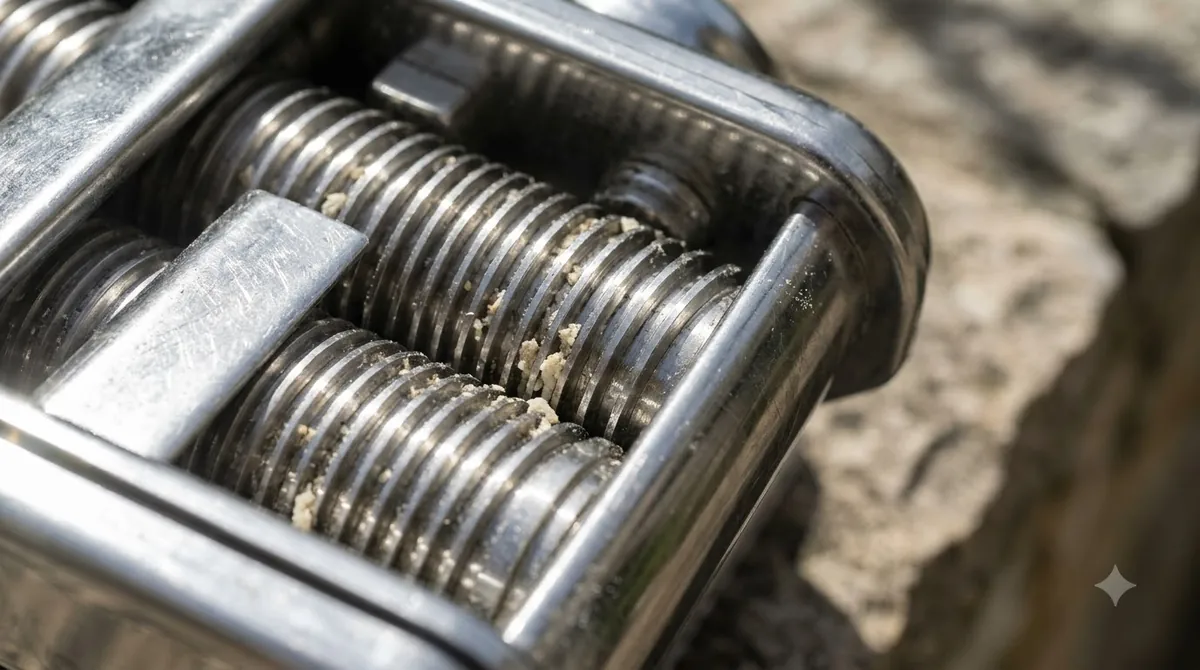
The first-use step in both manuals is a clean-up pass. You open the rollers to the largest gap, wipe them with a paper towel held against the rollers while you turn the handle, and then pass a piece of dough through the rollers and both cutter heads. The manuals say to discard that dough when you finish, because machine oil can collect along the edges of the rollers and cutters.
Both manuals also say the machine is for household use only. That limit matters if you plan to make pasta in a restaurant or a commercial kitchen, where the manufacturer’s stated use does not cover that setting.
Which Models the Brand Manuals Cover
CucinaPro’s instruction page lists five pasta-related manuals, and the 177 Classic and 178 Deluxe are the two whose opening steps were checked in full for this guide. The CucinaPro’s instruction manuals page is the place to confirm which manual matches your CucinaPro pasta maker. For a step-by-step walkthrough, see our CucinaPro pasta maker instructions.
| Model number | Name on the brand page | Covered in this guide |
|---|---|---|
| 177 | Classic Pasta Maker | Yes: steps, dough, cooking, care, warranty |
| 178 | Deluxe Pasta Maker | Yes: opening steps and dough |
| 135-10 | Ravioli Maker | No, manual not read for this guide |
| 530 | Cavatelli Maker | No, manual not read for this guide |
| 135-03 | Pierogi Maker | No, manual not read for this guide |
The Classic 177 and Deluxe 178 manuals repeat the same opening steps: start at the widest setting 7, clamp the body to a surface, pass dough through both cutter heads, and use the machine for household purposes only. The warranty wording was read in the 177 manual only, so treat it as the Classic model’s text until you check the paperwork that came with your machine.
This guide does not compare the attachments sold with each CucinaPro pasta maker set. The sources checked for attachment counts were seller listings, and listing details differ from one seller to the next, so the manual and the box contents are the more reliable check. We cover add-ons in our CucinaPro pasta maker attachments guide, and the ravioli maker in our CucinaPro pasta maker ravioli guide.
How Rolling and Cutting Work
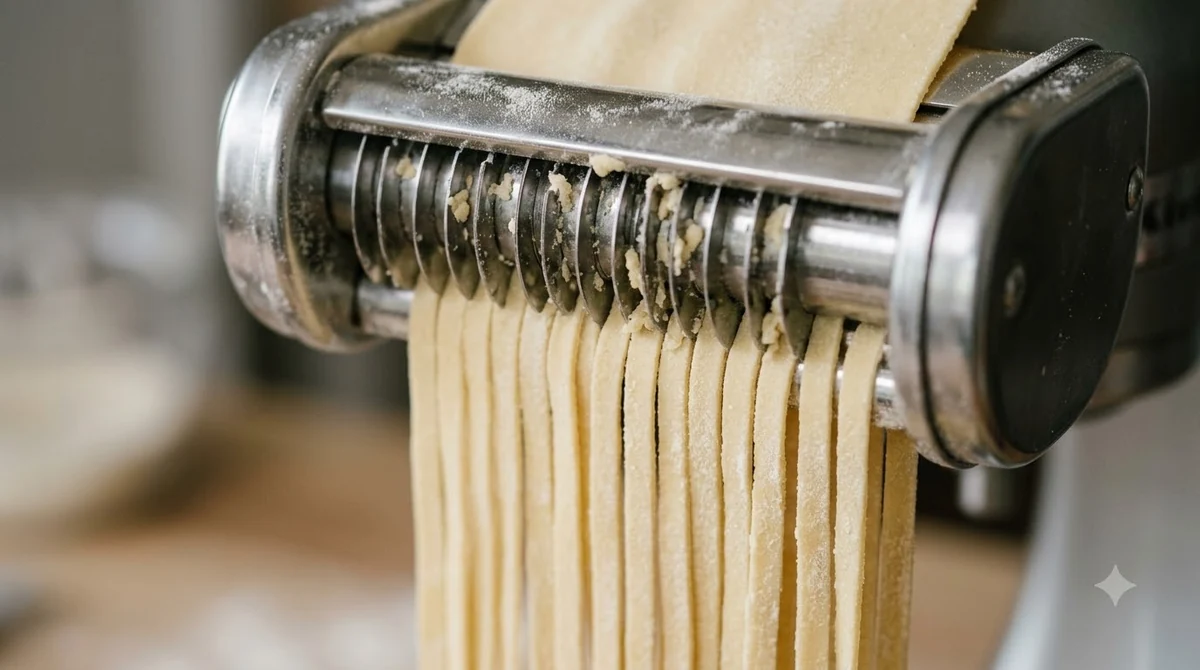
Rolling on a CucinaPro pasta maker starts at the widest setting, 7, and you step the roller down one notch after each set of passes until the sheet is as thin as you want before cutting. The 177 and 178 manuals describe the same sequence, so the steps below apply to both.
- Set the regulator to the widest setting, 7, and dust the rollers and the dough with a little flour.
- Crank the dough through, fold the strip in half, dust it, and pass it through again until the texture turns from rough to smooth.
- Set the knob to the next position and roll the sheet once. Repeat until you reach the thickness you want.
- Let the sheets rest on a floured surface, then cut each one to the length you want.
- Move the crank to the drive hole of the cutter you are using, feed the sheet in slowly, and lift the strands out with your free hand.
- Dry the pasta on a towel, a pasta rack, or a broom handle across the backs of two chairs. If you dry it on a towel, move it so air can circulate.
The manual notes that you may have to pinch the starting end to get the dough into the rollers. It also says fresh pasta cooks faster than dried pasta, so start testing within minutes of putting it in the water rather than waiting for a set time.
Dough Recipes in the Manual
The manual gives two doughs: an all-purpose version with 2 eggs and 3 tablespoons of water, and a semolina version with 2 eggs and 2 tablespoons each of oil and water. Both are kneaded for about 5 minutes and then rested for about an hour.
| Dough | Ingredients | Rest |
|---|---|---|
| All-purpose | 3 cups all-purpose flour, 2 large eggs, 3 tbsp water, 1 tsp olive oil, 1/2 tsp salt | About 1 hour, wrapped in plastic |
| Semolina | 2 cups semolina flour, 2 large eggs, 2 tbsp oil (olive, canola or vegetable), 2 tbsp water | About 1 hour, wrapped in plastic |
For a CucinaPro pasta maker, the manual says semolina has the consistency of a rough corn meal. For the all-purpose dough it warns that you will probably need more water than the recipe lists, so add it slowly and stop as soon as the dough forms a ball. For another starting point, try our fresh pasta dough recipe.
For cooking, the manual says half a pound of pasta needs at least 2 quarts of water, and one pound needs 6 quarts. Let the water come to a full rolling boil before adding the pasta, and add salt first if you plan to use it.
Cleaning, Storage and Care
The CucinaPro pasta maker manual says never place the machine body in water or any liquid, never put it in a dishwasher, and never use a knife on it. Care is mostly about drying and brushing off flour after each session.
- Let the machine air dry, then blow out flour with canned air or brush it off with a pastry brush.
- If pasta gets stuck in a cutter head, let it dry and break it loose with a bamboo skewer.
- Wipe the machine with a dry, soft cloth and store it in a dry place when not in use.
- Refrigerate fresh pasta in an airtight container for about a week, freeze it, or cook it right away (more in our guide on how to store fresh pasta).
Warranty and Returns
The 177 manual for the CucinaPro pasta maker gives a one-year limited warranty from the date of purchase, with valid proof of purchase required. The CucinaPro’s 177 manual says the company will repair or replace a defective product at its discretion, at no charge to the owner.
Replacement products or repaired parts are guaranteed for the unexpired portion of the original warranty or six months, whichever is greater. The warranty does not cover defects caused by accident, misuse, improper maintenance or normal wear and tear.
The same page offers an exchange or refund within 30 days of receipt, less shipping and processing, with the original proof of purchase. The warranty applies to products operated in the United States. For products used outside the US, the buyer pays the shipping costs.
Who Should Buy and Who Should Skip
The CucinaPro pasta maker suits home cooks who want hand-cut fresh pasta and do not mind turning a crank for each pass of dough. It is a poor fit for anyone who needs heavy or commercial use, because the manuals limit it to household use.
- Good fit: you cook pasta at home and want sheets or strands from one manual machine.
- Good fit: you have a sturdy counter edge where the clamp can hold the body steady.
- Skip it: you plan to wash the body in water or run it through a dishwasher.
- Skip it: you need a warranty for use outside the US without paying shipping.
This guide does not list current prices for any CucinaPro pasta maker. Check the seller’s current price and the model number before you order, and keep the receipt, since the warranty depends on proof of purchase.
Frequently Asked Questions
Is the CucinaPro pasta maker dishwasher safe?
No. The manual says not to place the machine in a dishwasher and not to place the body in water or any liquid. Wipe it with a dry, soft cloth after use and store it somewhere dry.
How long is the CucinaPro warranty?
The 177 manual for the CucinaPro pasta maker lists a one-year limited warranty from the date of purchase, with valid proof of purchase. Accident, misuse, improper maintenance and normal wear are excluded.
How much water do I need to cook homemade pasta?
The manual says half a pound of pasta needs at least 2 quarts of water, and one pound needs 6 quarts. Let the water reach a full rolling boil before you add the pasta.
How long should I cook fresh homemade noodles?
The manual says homemade noodles should be tested after 3 to 4 minutes. Test often, because fresh pasta cooks faster than dried pasta and can overcook quickly.
How should I store fresh pasta from a CucinaPro pasta maker?
Keep it in an airtight container in the refrigerator for about a week, freeze it, or cook it right away, as the manual recommends.
Before you order a CucinaPro pasta maker, match the model number on the machine with the brand manual, then compare the warranty and return terms on the seller’s page. A few minutes of checking the model number and your proof of purchase rules is the simplest way to avoid a mismatched machine.
 8 min readReviews & VersusNinja Pizza Oven: Models, Specs and What to Check Before You BuyUpdated Nov 15, 2026
 8 min readReviews & VersusVEVOR Electric Pasta Maker Review: Specs, Ratings and What to CheckUpdated Nov 15, 2026
 8 min readReviews & VersusImperia Pasta Maker: Lines, Model Codes and What to CheckUpdated Nov 15, 2026
 9 min readReviews & VersusPhilips Viva Pasta Maker Review: Specs, Discs and What to CheckUpdated Nov 17, 2026
 9 min readReviews & VersusCucinaPro Pasta Machine: Models, Manuals and Warranty ExplainedUpdated Nov 15, 2026
 8 min readReviews & VersusMarcato vs KitchenAid: Which Pasta Maker Should You Buy?Updated Nov 14, 2026