
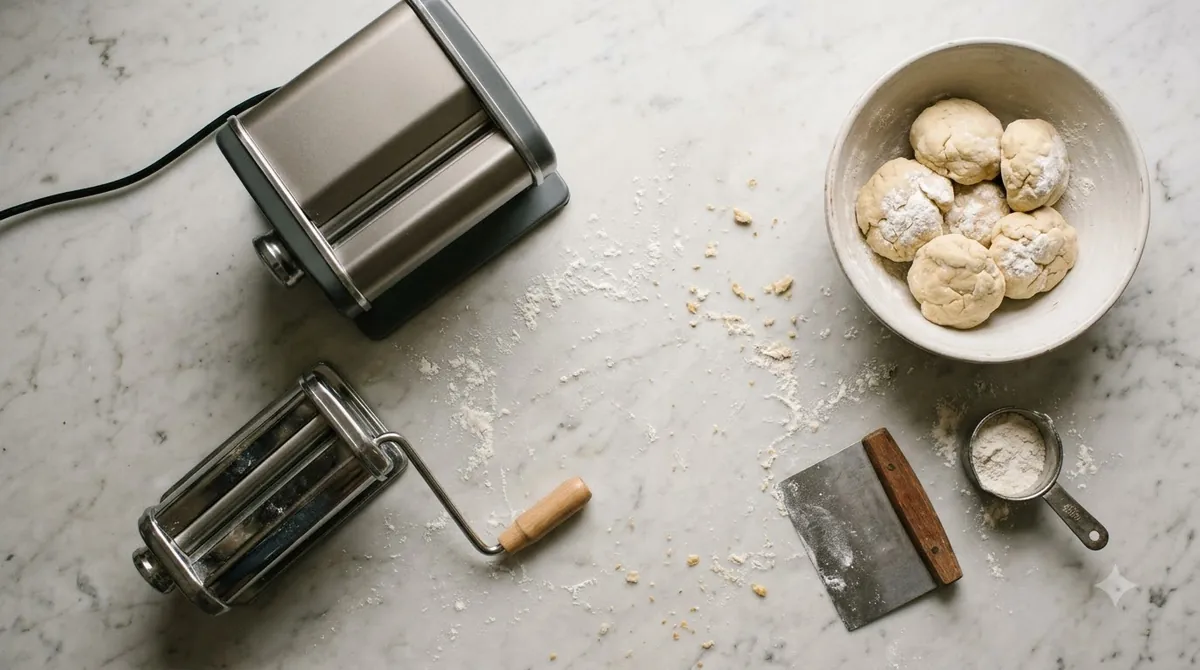

Learning how to choose a pasta maker starts with the shapes you plan to make: a manual roller for sheets and ribbons, or an electric machine or extruder for shaped pasta. Hand-cranked models are still the most affordable option, and the choice then depends on roller range, cutter quality, knob ease and the dough you will feed it.
How to Choose a Pasta Maker: Manual Roller or Electric Extruder
A manual roller is the most affordable option and handles sheets well, while an extruder pushes dough through dies that set the shape.
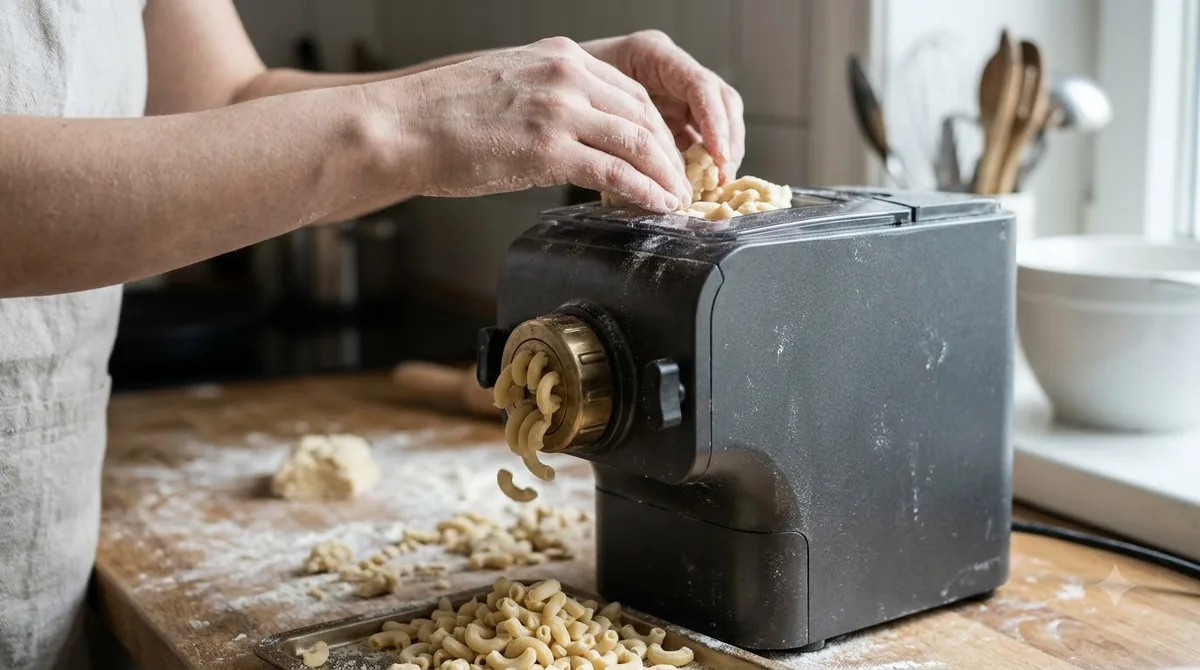
Deciding how to choose a pasta maker starts with this split. Hand-cranked machines are still the most prevalent and affordable options, though electric models are becoming more common, according to a 2022 review by America’s Test Kitchen. A roller machine clamps to a counter, and you turn a crank to feed the dough between two rollers; the steps for using a pasta machine are the same on most models.
An extruder works differently. Wikipedia’s pasta article notes that the size and shape of the dies in the extruder determine the shape of the extruded pasta. For a model with a die set, see how the KitchenAid pasta extruder manual describes its attachment. If your main goal is sheets for filled pasta or ribbons, a roller is the better fit. If you want tubes or spirals, an extruder matches the job. If an electric machine appeals to you, our guide to using the Emeril PM-01 pasta maker shows how one model handles dough batches and discs.
| Type | Typical output | Check first |
|---|---|---|
| Manual roller | Sheets, and noodles with a cutter attachment | Thinnest setting, cutter, knob |
| Extruder | Shapes set by the die | Included dies and how they clean |
How to Choose a Pasta Maker by Roller Settings
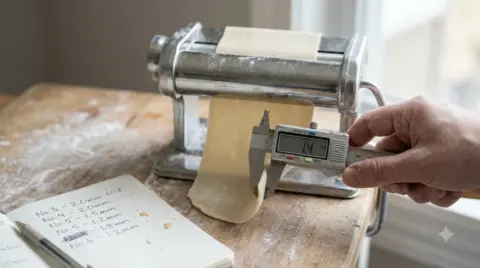
In the 2022 tests, roller machines offered 6 to 10 settings, and their thinnest settings ranged from 0.02 to 0.08 inches. The number of settings mattered less than the range, the reviewers said, so the thinnest setting is the first line to check in how to choose a pasta maker for filled pasta.
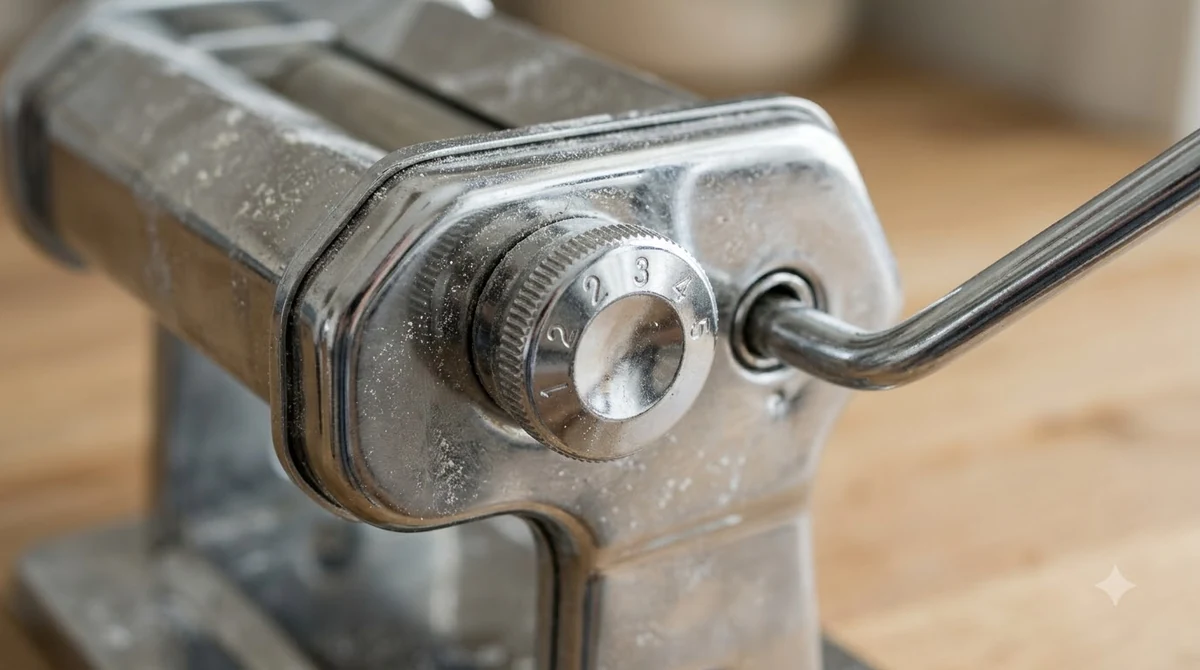
For how to choose a pasta maker with thin ravioli in mind, testers wanted rollers that open wide enough for thick dough and close enough for ultrathin ravioli sheets. A side knob sets the gap, and the review advises starting at the widest setting and stepping the distance down until the dough reaches the thinness you want.
| Model (tested 2022) | Settings | Thickness range (inches) |
|---|---|---|
| Marcato Atlas 150 | 10 | 0.24 to 0.02 |
| Marcato Atlas 180 | 10 | 0.24 to 0.02 |
| Imperia by CucinaPro | 6 | 0.2 to 0.03 |
| Fox Run | 7 | 0.2 to 0.08 |
| Weston Traditional Style | 7 | 0.17 to 0.04 |
The 150 mm roller, about 6 inches, is the most common size among the tested machines. The Atlas 180 has rollers and attachments about 1 inch wider, which the review links to lasagna sheets. Models and specs change, so confirm the current range in the manufacturer’s listing before you buy. The Marcato Atlas 150 manual is one place to see what a full 10-setting machine includes.
Cutting Attachments and Noodle Shapes
A cutter is a standard part of how to choose a pasta maker. Most pasta machines include a cutting attachment that turns a rolled sheet into noodles, and a sharp knife can do the same job by hand. The University of Maryland’s pasta shaping notes list spaghetti, tagliatelle and angel hair as possible results from the cutter.
The same notes advise flouring the attachment if the pasta sticks to it. In the ATK review, dull or misaligned cutter blades were a design flaw because they did not fully separate the noodles, so a sharp, well-aligned cutter is worth checking.
- Look for blades that sit straight and separate the noodles cleanly.
- Flour the cutter before feeding a sheet through it.
- Plan for a sharp knife as a backup if the cutter is weak.
Ease of Use: Knobs, Clamps and Effort
Knob ease is another part of how to choose a pasta maker. Testers judged knobs on whether one hand can adjust them and whether they line up with the thickness markings. A knob that needs two hands slows every change of setting. For a model that needs both hands, see our walkthrough on how to use the Imperia pasta machine.
- One-hand knob with clear markings: the reviewers preferred this design.
- Two-hand knob: the Imperia by CucinaPro needed both hands to adjust, according to the same review.
- Misaligned knob: one knob did not line up with the thickness markings, which made the setting hard to read.
- Clamp: none of the tested machines moved once clamped to the counter, so setup was not a deciding factor.
Dough You Will Feed the Machine
Dough is part of how to choose a pasta maker too. Egg dough should feel firm and leathery but pliable, and it should rest before rolling. KitchenAid’s UK guidance says good dough sticks together when pressed but does not stick to your fingers, and it should never crumble and fall apart.
- If the dough is too dry and crumbly, add water one tablespoon at a time.
- If the dough is too wet and the shapes droop, add a little flour.
- Rest the dough before rolling. KitchenAid suggests 10 to 15 minutes, while the PBS fresh egg pasta recipe calls for at least one hour at room temperature, or up to one day in the refrigerator.
Fresh pasta is usually made from eggs and flour and cooks in about half the time of dried pasta, according to Wikipedia’s pasta article. Dried pasta, by contrast, has a moisture content of about 12 percent. Our comparison of fresh pasta versus dried pasta goes deeper, and the dough steps matter as much as the machine.
Common Mistakes When Buying
The most common mistake in how to choose a pasta maker is choosing a machine by its number of settings rather than by the thinnest setting and roller width you need.
- Counting settings instead of range: a machine with fewer settings can still reach the thickness you need.
- Ignoring the cutter: dull blades leave noodles stuck together.
- Skipping the width, a gap in how to choose a pasta maker that many buyers miss: 150 mm is the most common size, and wider rollers suit lasagna sheets.
- Overlooking the knob: a two-hand knob slows every adjustment.
What We Could Not Verify and How to Check
Before you finalize how to choose a pasta maker, confirm the details below. Current prices, warranty terms, motor specifications and the dies included with electric models were not verified for this guide, so they are left out.
- Read the owner’s manual for the recommended dough recipe and cleaning steps.
- Ask the manufacturer or retailer for the current warranty and the parts included with your model number.
- Compare the listed thinnest setting with the thickness your recipe needs.
- Confirm the roller width and any extruder die sets for the exact model before buying.
Frequently Asked Questions
Is a manual pasta machine enough for home cooks?
For a budget pick, a manual machine is described as the most prevalent and affordable option, and it handles sheets and cut noodles well. Check that its thinnest setting covers the pasta you plan to make.
Do I need an extruder to make pasta at home?
When you weigh how to choose a pasta maker, an extruder is needed only for shapes made by pushing dough through dies. Sheets and ribbons need a roller, and a cutter attachment can produce noodles from the same sheets.
What roller width is most common?
The 150 mm roller, about 6 inches, is the most common size among the machines tested by America’s Test Kitchen in 2022. Wider rollers suit lasagna sheets.
How thin should pasta sheets go?
The tested machines reached settings from 0.24 inch down to 0.02 inch. When you decide how to choose a pasta maker for filled pasta, pick a machine whose thinnest setting matches the sheets you want.
Does fresh pasta cook faster than dried pasta?
Fresh pasta usually takes about half as long to cook as dried pasta, according to Wikipedia’s pasta article. Cooking times on the package and your own taste test remain the best guide.
When you decide how to choose a pasta maker, start with the roller range and the shapes you cook most often, then check the cutter and the knob. If you mainly want tubes or spirals, an extruder fits better, and if you cook sheets and ribbons, a roller with a cutter covers most needs.
 9 min readLearnGnocchi vs Pasta: Ingredients, Cooking and Which to ChooseUpdated Nov 14, 2026
 7 min readLearnCarbonara vs Alfredo: Ingredients, Origins and Which Sauce to ChooseUpdated Nov 10, 2026
 9 min readLearnTypes of Olive Oil: Grades, Uses, and How to ChooseUpdated Nov 10, 2026
 7 min readLearnBow Tie Pasta vs Farfalle: Same Shape, Two NamesUpdated Nov 14, 2026
 9 min readLearnSemolina Pasta vs Egg Pasta: 5 Simple Differences in 2026Updated Nov 6, 2026
 8 min readLearnHow Thin to Roll Pasta by Shape and Machine SettingUpdated Nov 7, 2026