
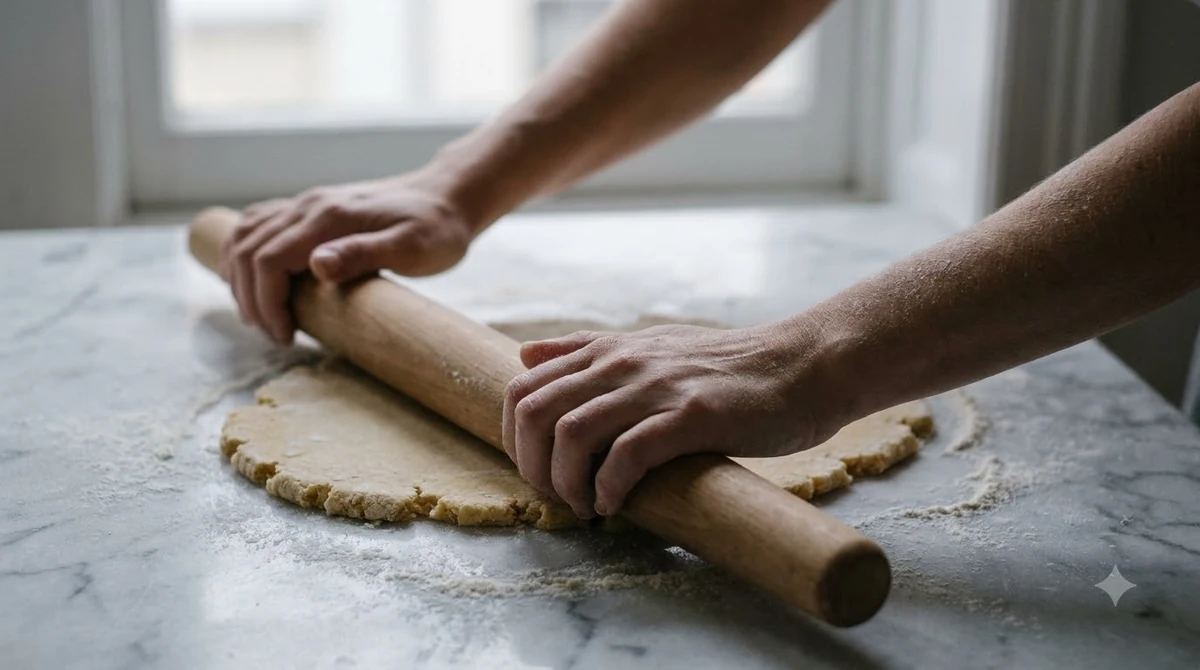

Knowing how to make semolina pasta dough is simple: mix semolina flour with warm water, knead until smooth for about 8 to 10 minutes, then rest the dough wrapped in plastic. Semolina gives a firm, slightly golden dough that holds its shape well for shapes such as orecchiette and cavatelli. The method is simple, but the water amount and the resting step decide how easy the dough is to work with.
Semolina is a coarse, high-protein flour made from durum wheat. Because it absorbs water more slowly than soft flour, the dough can feel dry at first and then become smooth after a few minutes of kneading. This guide covers the ingredients, the mixing and kneading steps, the rest time, and the fixes for a dough that is too dry or too sticky.
What Ingredients Do You Need for Semolina Pasta Dough?
A basic semolina dough needs only semolina flour and water, which makes it a good choice for an egg-free pasta.
The Caputo traditional semolina pasta dough recipe uses 300 g of semolina flour with 160 to 180 g of room-temperature water, which yields about 460 g of dough. Start with the lower amount of water and add more only if the dough stays crumbly after several minutes of kneading.
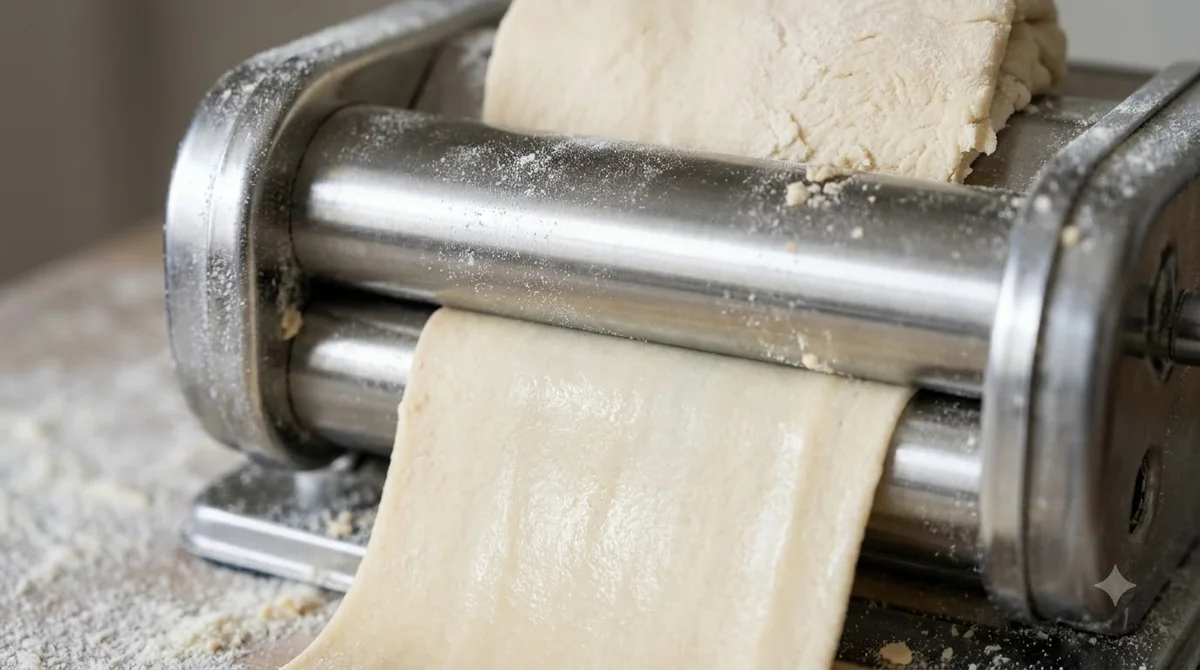
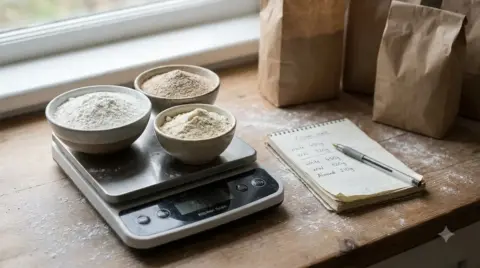
Weigh the flour and water rather than measuring by volume. Semolina varies in how much water it takes up, so a scale gives a more repeatable result than a cup measure.
How to Make Semolina Pasta Dough by Kneading
Kneading develops the gluten that holds the dough together, and it usually takes about 8 to 10 minutes by hand.
- Make a well in the flour, add most of the water, and bring the dough together with a fork or your hand.
- Knead on a clean, lightly floured surface, pushing the dough away with the heel of your hand and folding it back.
- Keep kneading until the dough feels smooth and firm and springs back slowly when pressed.
- If the dough cracks at the edges and will not come together, add water a small amount at a time, as the KitchenAid pasta dough guide suggests for dry dough.
A dough that is too sticky to handle usually needs a little more flour, added a spoonful at a time, rather than more kneading.
How Long Should Semolina Dough Rest?
Semolina dough should rest wrapped tightly in plastic wrap, at room temperature for about 30 minutes or up to 6 hours.
Resting relaxes the gluten, which makes the dough easier to roll or press into shape. If you will not use it within 6 hours, refrigerate it, then let it come back to room temperature for at least 2 hours before you shape it. Cold dough is stiff and tears easily.
Can You Keep Semolina Dough Overnight?
Yes, but wrap it well so it does not dry out. Bring it back to room temperature before shaping, because a cold dough will fight you at every step.
How Do You Shape Semolina Pasta Dough?
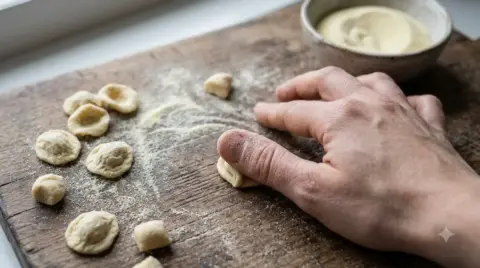
Semolina dough suits shapes that are made by hand, such as orecchiette and cavatelli, rather than thin sheets that need a roller.
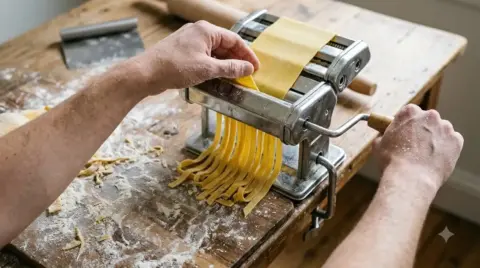
The Caputo recipe links to separate method guides for these shapes, and its recipe notes that the same dough can be formed into them. For thin noodles, a stiffer dough is easier to roll out in a pasta machine, so keep the water near the lower end of the range.
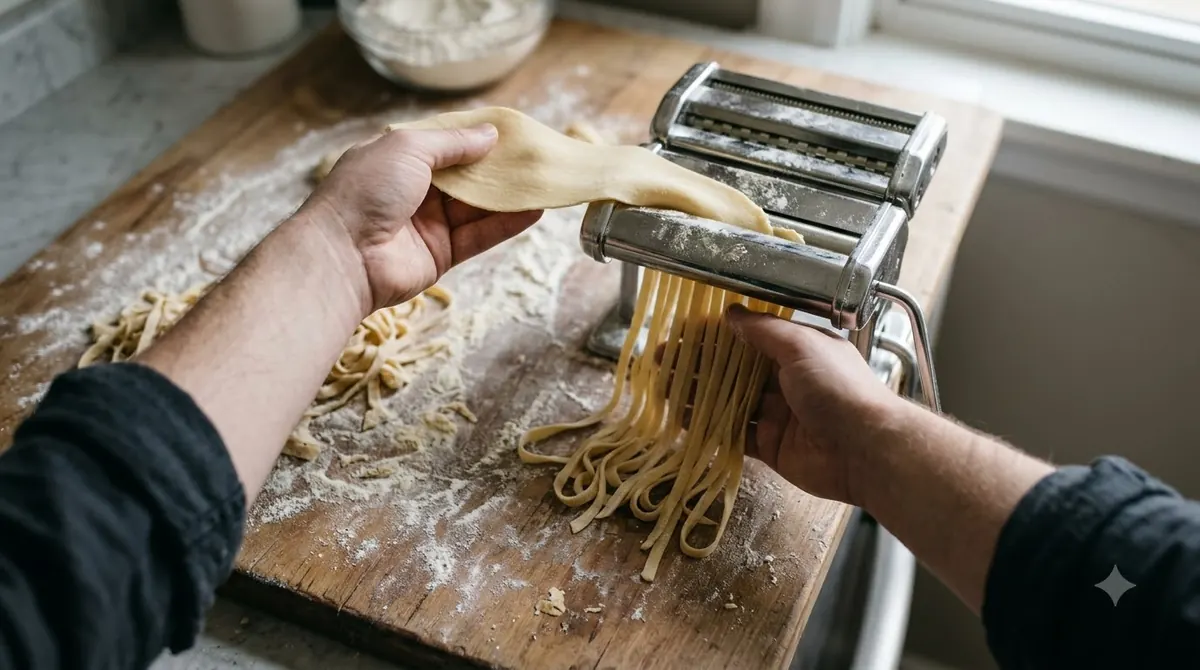
Dust the shaped pieces with a little semolina so they do not stick together while they wait to be cooked.
Why Choose Semolina Over All-Purpose Flour?
Semolina is the better choice when you learn how to make semolina pasta dough for a firm bite and a little more structure, because its coarse grind and high protein hold up well to boiling.
All-purpose flour makes a softer, more delicate dough that is easier to roll thin by hand, but it can turn soft or mushy in the pot if it is overworked. Semolina keeps its shape and texture, which suits short shapes and sauces that cling to the surface.
Many cooks mix the two: a small share of all-purpose flour softens the dough a little while semolina keeps the chew. Start with straight semolina the first time so you learn how the dough feels before you change the ratio.
Common Problems and Quick Fixes
Most problems when you learn how to make semolina pasta dough come from too little or too much water, or from skipping the rest.
- Crumbly dough: add water a teaspoon at a time and knead for another minute or two.
- Sticky dough: add flour a spoonful at a time and knead it in fully before adding more.
- Dough tears when shaped: it is probably too cold or has not rested long enough.
Frequently Asked Questions
Is semolina pasta dough the same as egg pasta dough?
No. Semolina dough is made with water and durum flour only, so it is firmer and more chewy. Egg dough is softer and more tender, and it is the classic choice for fresh tagliatelle.
Do I need a pasta machine to learn how to make semolina pasta dough?
No. Kneading and shaping by hand works well, especially for orecchiette and cavatelli. A machine helps only when you want long, thin sheets.
How much dough does 300 g of semolina make?
The Caputo recipe yields about 460 g of dough from 300 g of flour and 160 to 180 g of water.
Can I freeze semolina pasta dough?
Wrap the dough tightly and freeze it, then thaw it in the refrigerator and bring it to room temperature before shaping. Check the package or manufacturer guidance for storage limits on the flour you use.
Learning how to make semolina pasta dough is a forgiving place to start when you want a simple, egg-free pasta. Weigh your flour, add the water gradually, and give the dough a full rest before you shape it. Once you have the feel for it, adjusting the water by a spoonful at a time is the fastest way to get the texture you want.
 8 min readLearnSemolina Pizza Dough: What It Is and How to Make ItUpdated Nov 10, 2026
 6 min readLearnEggless Pasta Dough: Semolina, Water and Resting TimeUpdated Nov 13, 2026
 6 min readLearnHow to Make Trofie: Hand-Rolled Dough and Shaping StepsUpdated Nov 13, 2026
 6 min readLearnHomemade Casarecce: Semolina Dough and Rod Shaping GuideUpdated Nov 13, 2026
 6 min readLearnHomemade Mafaldine: 2 Methods With Egg or Semolina DoughUpdated Nov 13, 2026
 6 min readLearnHomemade Gemelli: Semolina Dough, Shaping and DryingUpdated Nov 13, 2026