
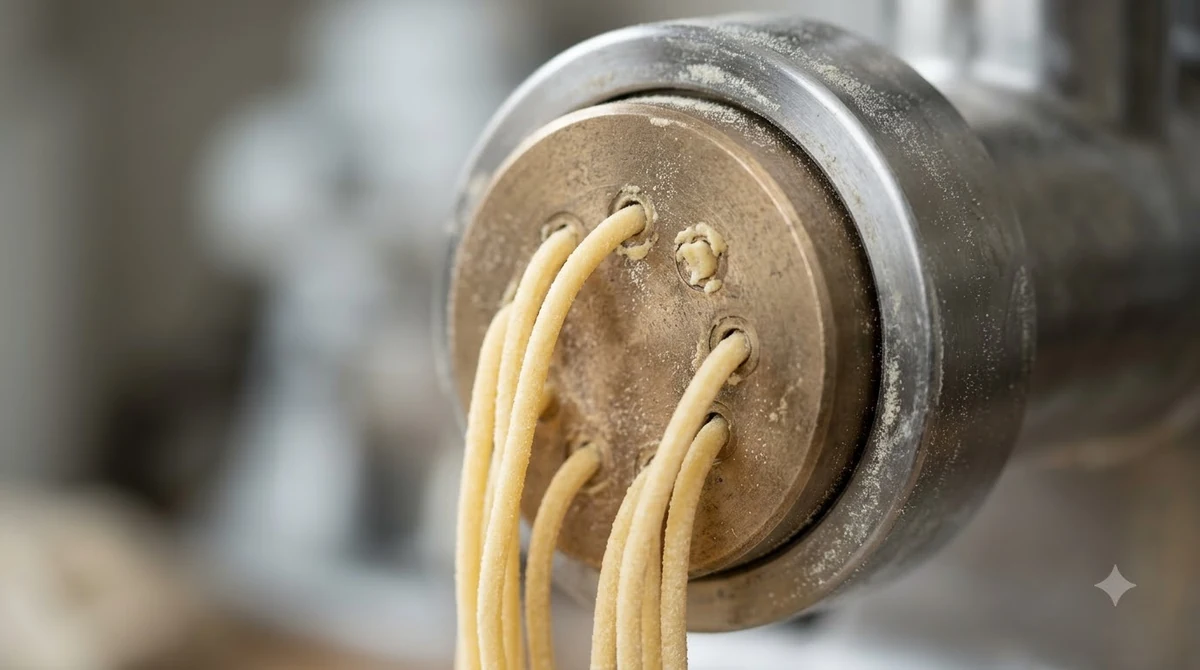

Homemade bigoli are long, thick strands of pasta from the Veneto region of northeast Italy, made by pushing a firm dough through a die with a rough, porous surface. That rough surface is what helps them hold sauce. Traditionally the dough is pressed through a wooden bigolaro, but a home cook can get close with a pasta extruder and a thick-strand die. The guide below covers the dough, the extrusion step, the cooking, and the sauces that suit this regional pasta.
What Bigoli Pasta Is
The Pasta Project describes bigoli as a long, thick extruded pasta that is rougher on the outside than spaghetti. That texture is the key feature: it gives the sauce something to grip.
Sources differ on the exact thickness. The Pasta Project gives a diameter of 3 to 4 mm, while a Venice cooking school blog gives about 2.5 mm, so think of bigoli as thicker than spaghetti rather than matching a fixed measurement. The Pasta Project
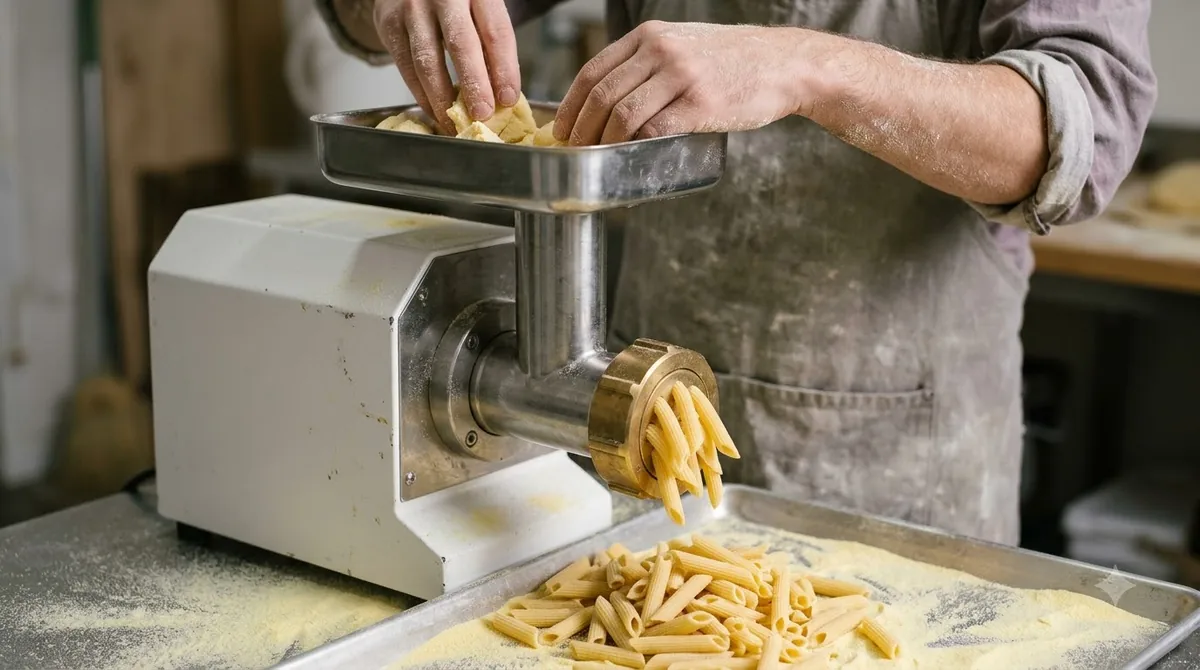
Bigoli originate in what is now Veneto, and they were traditionally made with buckwheat flour. Modern versions usually use whole wheat or “00” flour with egg, water or milk, butter, and salt, and some cooks use duck egg for a richer colour and bite.
How to Make Homemade Bigoli Dough at Home
Homemade bigoli dough should be firmer than fresh egg pasta for rolling, because it has to be pushed through a die under pressure. A cooking school recipe from Venice uses 400 g of semolina, 4 eggs and a pinch of salt, then lets the dough rest for about 30 minutes. Mama Isa’s Cooking School Treat that as one reference point and adjust with a little water or flour until the dough is firm but not crumbly.
- Mound the flour on the counter, make a well, and add the eggs and salt.
- Mix with a fork, then knead by hand until the dough is smooth and firm.
- Wrap the dough and rest it for about 30 minutes so it is easier to push.
- Cut the dough into pieces that fit your extruder or press, so each batch stays manageable.
Extrude the Bigoli
The traditional bigolaro is a wooden cylinder with a lever and piston. The dough is pushed through a perforated filter, and that bronze die gives the strands their rough, porous surface. The Pasta Project describes this machine in its guide, and it is the tool that makes bigoli taste like bigoli.
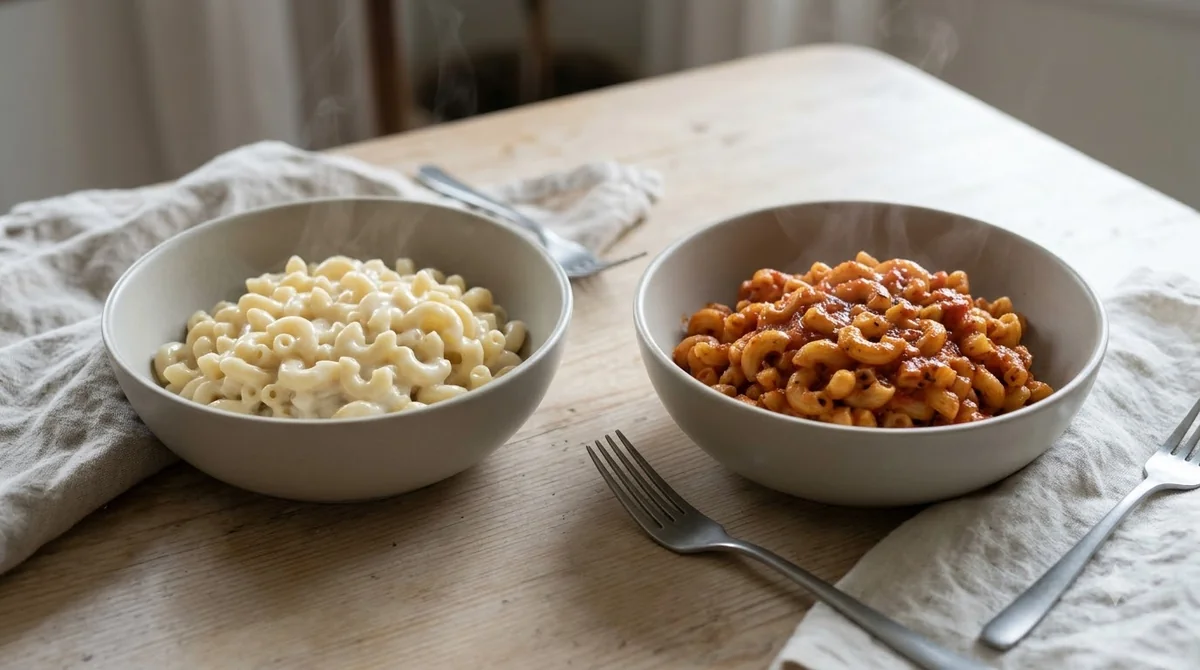
At home, a manual or electric pasta extruder with a thick-strand die is the closest substitute. Push the dough steadily, and let each strand fall onto a floured tray or board. Cut the strands to the length you want, then cover them lightly so they do not dry out before cooking.
Cook Bigoli in Salted Water
Cook homemade bigoli in a large pot of salted boiling water. The Venice cooking school blog gives about 4 to 6 minutes until al dente for its recipe, but thickness and dryness both change the time, so taste a strand before you drain.
Reserve a cup of the cooking water before draining. Toss the bigoli in the sauce with a splash of that water, which helps the sauce cling to the rough surface and gives the dish a silkier finish.
Traditional Sauces for Bigoli
The Pasta Project lists duck ragù, meat or sausage ragù, and sauces with anchovies or salted sardines as traditional pairings. Each one suits the thick, rough strands in a different way.
- Duck ragù, which is rich and slow-cooked, and fits the Venetian style of duck-based sauces.
- Meat or sausage ragù, a simpler everyday version that clings well to the strands.
- Bigoli in salsa, a slow-cooked white onion sauce with salt-cured sardines or anchovies, traditionally served on lean days.
The Pasta Project also notes that bigoli were traditionally eaten on days of abstinence and fasting, such as Christmas Eve, Ash Wednesday, and Good Friday. That history explains why the onion and fish sauce is so common in the region.
Bigoli Versus Spaghetti
Homemade bigoli and spaghetti look similar at first, but the bigoli is thicker and has a rougher surface. That makes bigoli better for sauces that need something to hold, and spaghetti better for thinner, oil-based sauces.
If you do not have a bigoli die, you can still serve a thick, rough-textured pasta with these sauces. Just expect a slightly different bite, and keep the sauce a little looser so it coats the strands evenly.
Common Mistakes With Homemade Bigoli
Most problems come from dough that is too wet or too dry for the extruder. Both make the strands break or stick, and both are easy to correct before you cook.
- Dough that is too wet, which clogs the die and makes the strands stick together.
- Dough that is too dry, which cracks as it comes out and breaks into short pieces.
- Strands left uncovered, which dry on the surface and become brittle. Keep the cut strands under a clean cloth until the pot is boiling, so the homemade bigoli stay flexible.
- Overcooking, which softens the rough surface that makes bigoli special.
Frequently Asked Questions
What is bigoli made of?
Modern bigoli usually use whole wheat or “00” flour, egg, water or milk, butter and salt. Originally they were made with buckwheat flour, according to The Pasta Project.
Can I make bigoli without a bigolaro?
Yes, with a pasta extruder and a thick-strand die. The result will be close, though the bronze-die surface of the traditional press gives a slightly rougher texture.
Is bigoli the same as bigoli in salsa?
No. Bigoli is the pasta itself, while bigoli in salsa is a traditional dish that pairs the pasta with a slow-cooked onion and salted fish sauce.
How long should I cook homemade bigoli?
A cooking school blog gives about 4 to 6 minutes until al dente for its recipe. Because homemade strands vary in thickness and dryness, taste a strand before draining.
Start with a simple dough and a sauce you already like, since that makes it easier to judge your first batch of homemade bigoli, such as a meat ragù or the onion and sardine version. Once the extrusion feels steady, the strands come out even and the homemade bigoli will taste like the regional pasta it is meant to be.
 5 min readLearnHomemade Bucatini: Dough, Extrusion and Drying TipsUpdated Nov 13, 2026
 8 min readLearnBigoli Pasta: A Thick Venetian Noodle ExplainedUpdated Nov 6, 2026
 5 min readLearnHomemade Strozzapreti: 3 Easy Steps and SaucesUpdated Nov 13, 2026
 8 min readLearnRoasted Red Pepper Sauce for Pasta: A Simple Homemade RecipeUpdated Nov 11, 2026
 8 min readLearnHomemade Pizza Sauce Recipe: 3 Easy Tomato TipsUpdated Nov 10, 2026
 9 min readLearnVodka Sauce Pizza Recipe: A Creamy Homemade GuideUpdated Nov 10, 2026