
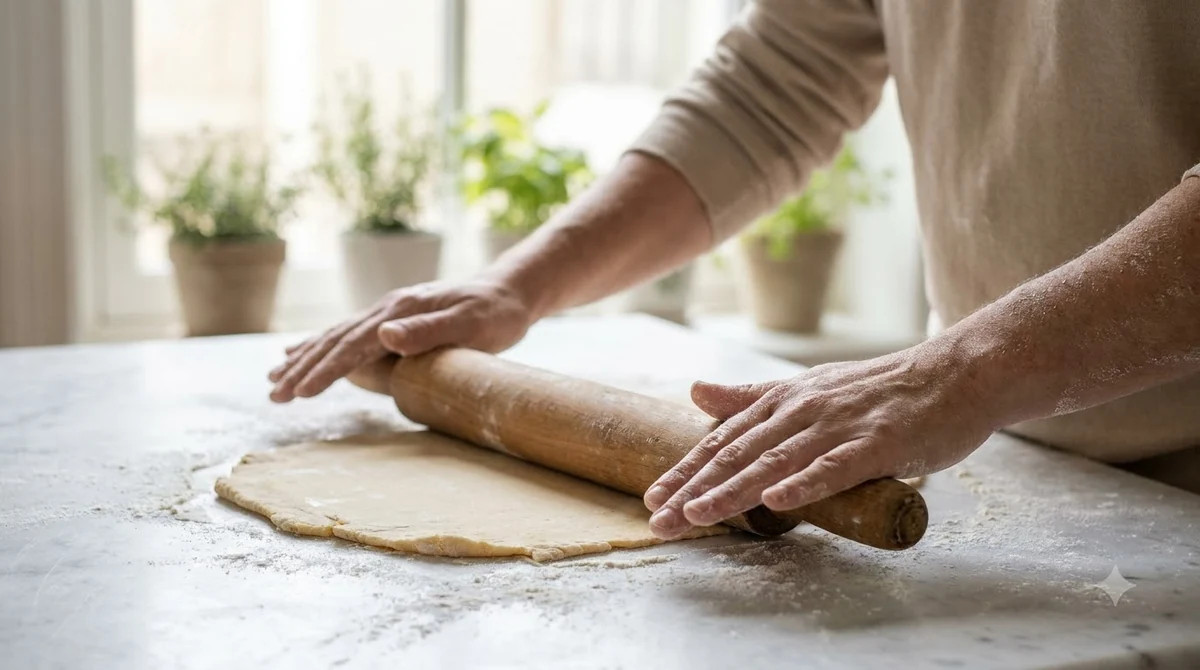

Homemade strozzapreti is a simple dough of flour, salt and warm water, twisted by hand into short, irregular cords, and it needs no pasta machine. The Local Italy lists semolina, all-purpose flour, salt and warm water as the base, and many Emilia-Romagna cooks skip the egg. Plan for a rest of about 30 minutes before you shape the pasta.
What You Need for Homemade Strozzapreti
You need only a bench or board, a knife and a rolling surface. The dough itself uses flour, salt and warm water, and the flour can be semolina, soft wheat flour or a mix, depending on the cook.
The Pasta Project notes that Emilia-Romagna versions do not always use eggs, so an egg-free dough is the traditional starting point. Some Emilian cooks add Parmesan or egg whites for a richer variation, but that is a regional twist rather than the basic recipe.
No exact flour-to-water ratio is given in the sources used for this guide. Start from a tested recipe, add the warm water little by little, and stop when the dough holds together without sticking to your hands.
Mix, Rest and Cut the Dough
The first part of the method is the same as for most hand-rolled pasta. Mix the flour and salt, add the warm water, and knead until the dough is smooth and firm.
- Mix the flour and salt on a board, then add the warm water in stages.
- Knead until smooth, then cover the dough and rest it for about 30 minutes.
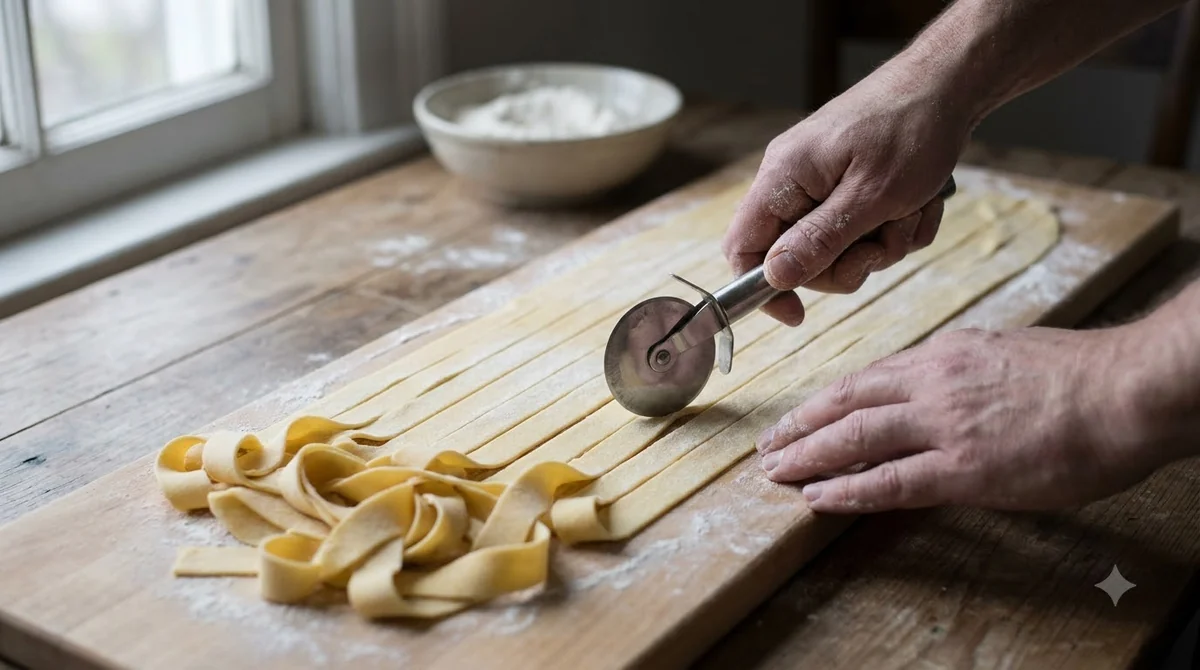
- Roll the dough out and cut it into strips about 1.25 cm wide.
The rest gives the gluten time to relax, which makes the dough easier to roll and twist without tearing. Keep the rest of the dough covered while you work with one strip, so it does not dry out at the edges.
How to Shape Each Piece by Hand
Strozzapreti is shaped by hand. Each piece is a short cord, about 5 to 6 cm long according to The Pasta Project, and no two pieces will match exactly.
Wikipedia describes the Romagna form as a short twisted cord, and says the pieces run about 10 cm long in Romagna, with no two the same size. If you want a longer piece, cut it a little longer and twist it more loosely. The irregular look is part of the shape, so do not worry if your pieces vary.
- Take one strip and roll it into a thin cord under your palms.
- Cut the cord into pieces of the length you want.
- Twist each piece so it forms a short, irregular cord, then set it on a floured tray.
Cooking and Serving Strozzapreti
Cook the pasta in plenty of well-salted boiling water, and taste a piece early, since handmade pieces vary in thickness. Drain it and toss it in the sauce while both are hot.
The Pasta Project lists several sauces that suit the shape. Mixed minced meat or sausage ragù is the regional classic from Emilia-Romagna. A traditional tomato sauce is another option. Seafood sauces are common in coastal areas, and a pancetta-based sauce is typical in Marche. Pesto is listed too, described as a less traditional but good choice.
Shape Variations Across Italy
Strozzapreti is closely tied to Emilia-Romagna, but the idea of a hand-rolled, twisted pasta appears in other parts of Italy under other names. Wikipedia says the shape is similar to cavatelli but longer, and Romagna versions are made by hand from water and flour and rolled into short twisted cords.
In Umbria, a similar pasta called strangozzi is long and square in section, made from water and flour. In Tuscany, pici look similar but are not twisted. The Pasta Project notes that the Emilia-Romagna versions may be slightly larger in towns such as Imola and Ravenna.
Because the shape varies by region and by cook, a homemade batch will look a little different from a shop-bought one. That is part of the appeal. If you want a neater result, cut the strips to the same width and keep each piece close to the same length, but accept that the twist will still be irregular.
The shape is also easy to compare with cavatelli. Cavatelli is shorter and rounder, while strozzapreti is longer and more twisted. If you have cavatelli on hand, you can use them with the same sauces, but the twisted strozzapreti grip a meat ragù a little more.
Once the pieces are shaped, lay them on a floured tray in a single layer and keep them covered until the water is boiling. This stops the cords from sticking together. Cook them in batches if the pot is crowded, so the water keeps its boil and the pasta cooks evenly.
Frequently Asked Questions
What does strozzapreti mean?
Strozzapreti means “priest strangler” in Italian. The name comes from folk stories, and The Local Italy lists several versions, including one that compares the twist to a clerical collar. None of these stories is documented as fact.
Is strozzapreti made with egg?
Not always. The Pasta Project notes that Emilia-Romagna versions do not always use eggs, and the basic dough is flour, salt and warm water.
Do I need a pasta machine for strozzapreti?
No. The Local Italy notes that the shape is made without a machine, using a board, a knife and your hands.
How long should strozzapreti dough rest?
The Pasta Project suggests resting the dough covered for about 30 minutes after kneading. Keep it covered while you shape the pieces so the edges do not dry.
Strozzapreti is one of the simplest homemade pastas to try, because it needs only flour, salt, warm water and your hands. Rest the dough, cut it into strips, and twist each piece into a short cord. Pair it with a meat ragù for the classic plate, and keep the pieces a little irregular, because that is what makes the shape look handmade.
 8 min readLearnHomemade Pizza Sauce Recipe: 3 Easy Tomato TipsUpdated Nov 10, 2026
 8 min readLearnHomemade Ravioli: Easy 3-Egg Dough Recipe and TipsUpdated Nov 10, 2026
 8 min readLearnProsciutto and Arugula Pizza Recipe: Easy Homemade StepsUpdated Nov 10, 2026
 6 min readLearnHow to Make Strozzapreti by Hand, Step by StepUpdated Nov 13, 2026
 9 min readLearnHow to Freeze Fresh Mozzarella: 3 Simple StepsUpdated Nov 11, 2026
 6 min readLearnBest Sauce for Strozzapreti: Meat Ragù, Tomato and PestoUpdated Nov 13, 2026