
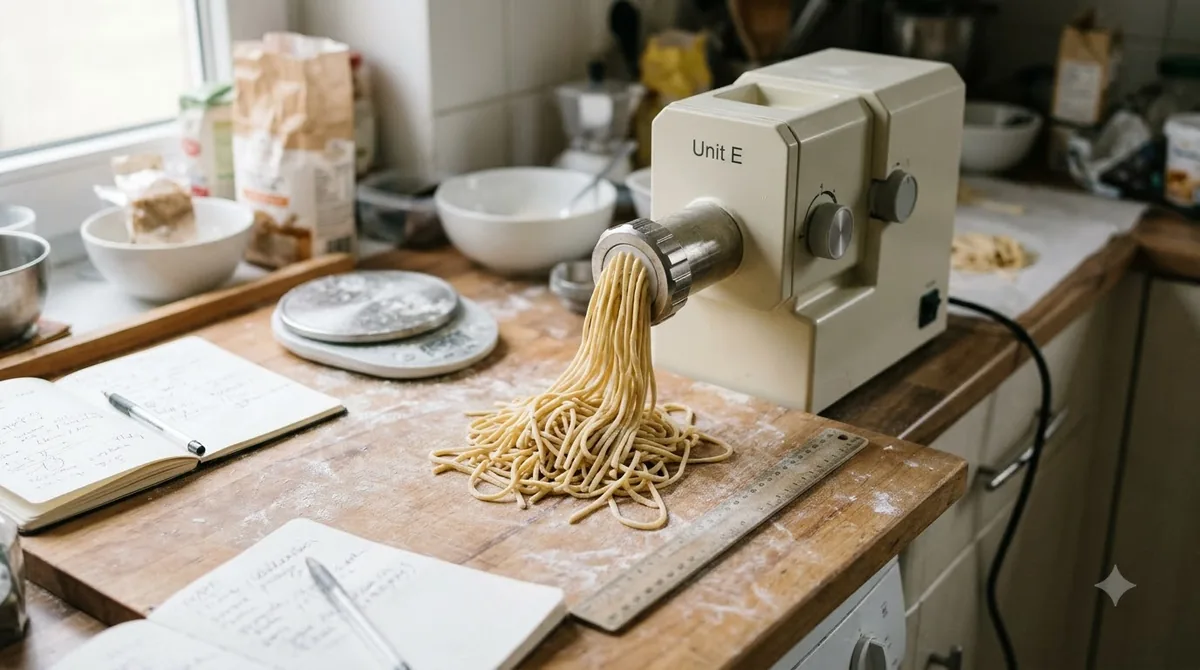

To make homemade bucatini, mix semolina flour with about 40% warm water, knead it until it looks like wet sand, then push it through a pasta extruder with a bucatini die. The dough needs to be stiff enough to hold its shape and wet enough to pass through the die. Cut the strands to length, let them dry for at least 15 minutes, then cook them in well-salted water.
Bucatini is a thick, hollow spaghetti, and the hole is the hardest part to get right at home. The dough, the die and the first few passes through the machine all affect whether the centre stays open, so plan a test batch before you make a full portion.
What Is Bucatini and How Is It Shaped?
Bucatini is a thick, hollow pasta about 25 to 30 cm long, with a diameter of roughly 3 mm for the whole strand. The Wikipedia entry on bucatini explains that it is extruded through a die with small circular openings, then cut and cooked either fresh or dried.
The name comes from the Italian word for hole. Bucatini is most associated with Lazio and Rome, and around Naples the same shape is called perciatelli. At home, the die is what creates the hollow centre, so the extruder is not optional if you want a true bucatini.
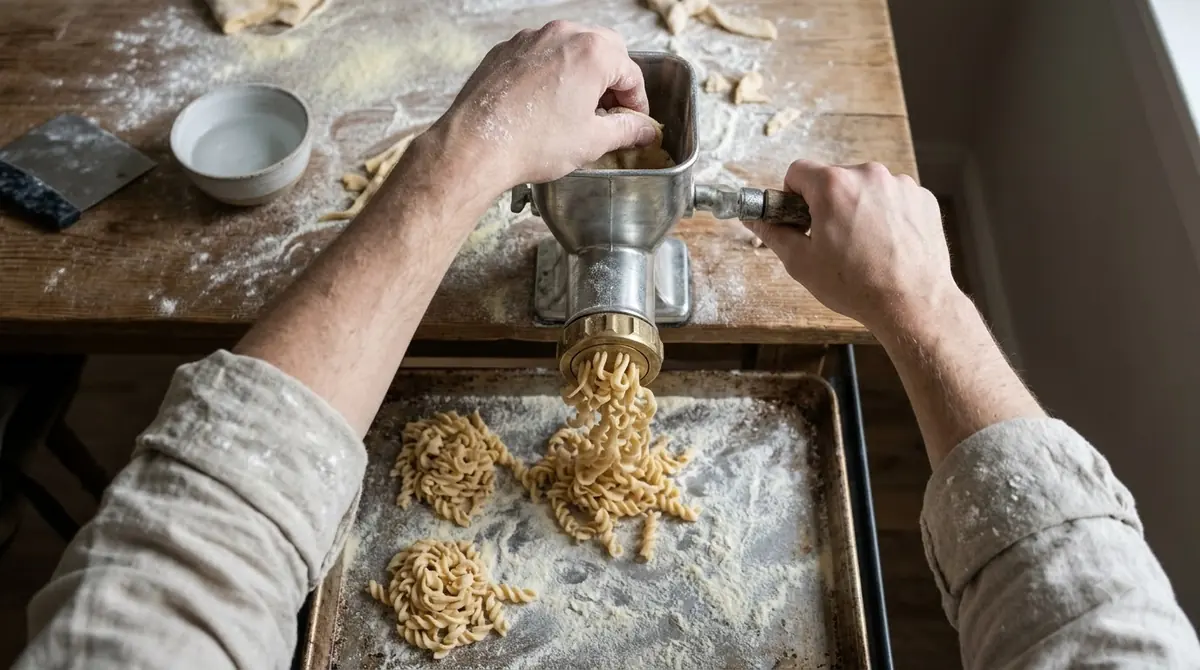
Because the hole is what makes bucatini distinct, the dough must pass through the die without collapsing or closing.
What Dough Works Best for Homemade Bucatini?
The dough is the main variable. A simple semolina and water dough is the most common starting point, and the hydration decides how well it extrudes.
Semolina and Warm Water
One recipe built on semola di grano duro rimacinata uses 200 g of semola and 80 g of warm water, which is about 40% hydration. The same author notes that 40% works well with one brand of semola in one extruder, and that the right figure varies with the flour, the machine and the weather.
Adjusting for Hydration
Shaped pasta can need about 35% hydration, while humid kitchens sometimes call for less water. Reduce the water in steps of about 2% if the dough is too wet, and add a small splash if it is too dry. Too-dry dough can damage the die or the machine, and too-wet dough comes out soft and deformed.
How Do You Mix and Rest the Dough?
Mix the flour and water on low so that the water is absorbed evenly, then rest the dough before extruding. Resting spreads the moisture through the dough and tends to reduce misshapen first passes.
- Add the semola to a stand mixer with a paddle attachment.
- Drizzle in warm water slowly on low speed, then mix on low for about five minutes.
- Check the texture: it should hold together when pressed but crumble back to sand.
- Wrap the dough and rest it for 30 minutes to an hour before extruding.
Traditional extruded dough is often made without salt, because salt can affect the elasticity of the dough and how smoothly it passes through the die. Add salt to the cooking water instead.
How Do You Extrude Bucatini Without Closing the Hole?
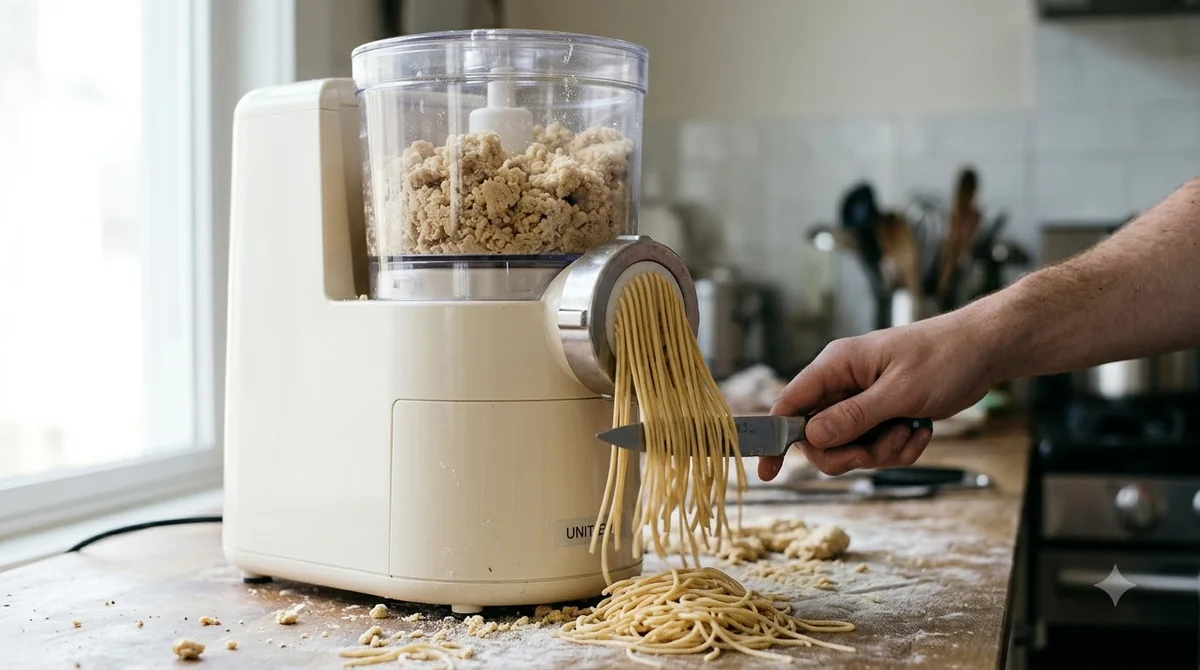
Extrusion is where most home attempts go wrong. Let the machine warm up before you start, because the first few pieces often come out deformed or curved. Feed the early pieces back into the hopper and keep the dough balls small, since large balls extrude less evenly.
Handle the strands gently while they are wet. Cut them to length as they exit the die and lay them on a rack so they do not stick. If the dough sticks in the extruder or will not come out at all, it is usually too dry, so check the hydration and the warm-up first.
| Problem | Likely cause | What to try |
|---|---|---|
| Dough will not extrude | Too dry | Add water a few drops at a time |
| Soft, deformed strands | Too wet | Reduce water and add a little flour |
| Hole closes | Dough too wet or pressed too fast | Lower hydration and extrude more slowly |
| Strands split after drying | Dried too fast or in humid air | Dry longer and avoid plastic bags for long drying |
How Do You Dry, Store and Cook Homemade Bucatini?
Cut the strands and let them dry for at least 15 minutes before cooking. Air-drying for up to a day can work, but humidity and temperature change the result, and the pasta can split. For longer storage, freeze the dried strands and cook them directly from frozen without thawing.
Cook bucatini in plenty of well-salted water. Check the strands a minute or two before the time you expect, because homemade pasta cooks faster than dried factory pasta. Keep a cup of the cooking water and finish the bucatini in the sauce.
Frequently Asked Questions
Can I make bucatini without an extruder?
The hollow centre comes from the die, so a standard pasta roller will not make bucatini. You can make a similar thick spaghetti by hand, but it will not have the hole.
What flour should I use for homemade bucatini?
Semola or semolina made from durum wheat is the traditional choice. Different brands absorb water differently, so start with the hydration in your recipe and adjust by feel.
Should I add eggs to bucatini dough?
Egg dough is easier for beginners to bring together, but it needs a different hydration. If you use eggs, count their weight toward the total liquid and expect a different texture from a water-only dough.
What sauce goes best with bucatini?
Bucatini is traditionally served with amatriciana, a tomato sauce with guanciale, or with butter, cheese and egg sauces. The thick hollow strand holds a sauce well, so a sturdy tomato or cheese sauce suits it.
Homemade bucatini comes down to dough, rest and a steady extrusion. Keep the hydration close to the recipe, let the machine warm up, dry the strands before cooking and check the texture of each batch before you commit to a full portion.
 5 min readLearnHomemade Macaroni: Dough, Shaping, Drying and Cooking TipsUpdated Nov 13, 2026
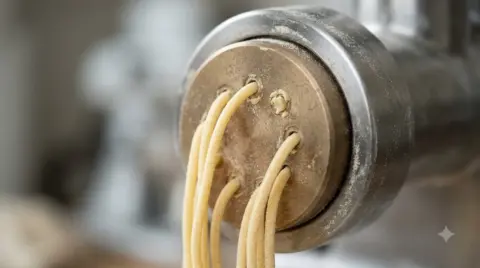 6 min readLearnHomemade Bigoli: Dough, Extrusion and Traditional SaucesUpdated Nov 13, 2026
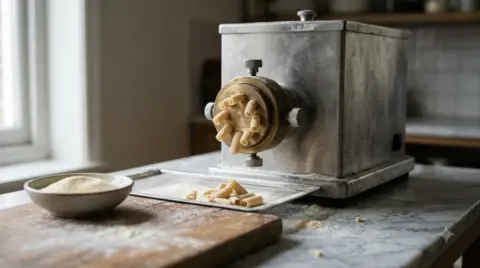 6 min readLearnHomemade Cavatappi: Equipment, Dough and Drying GuideUpdated Nov 13, 2026
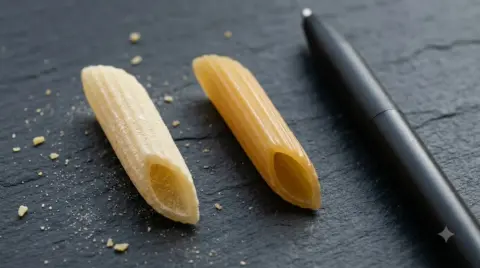 6 min readLearnHomemade Gemelli: Semolina Dough, Shaping and DryingUpdated Nov 13, 2026
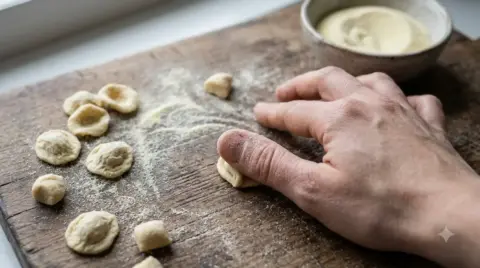 6 min readLearnHomemade Orecchiette: Dough, Thumb Shaping and DryingUpdated Nov 13, 2026
 5 min readLearnHomemade Rigatoni: Dough, Shaping and TipsUpdated Nov 13, 2026