
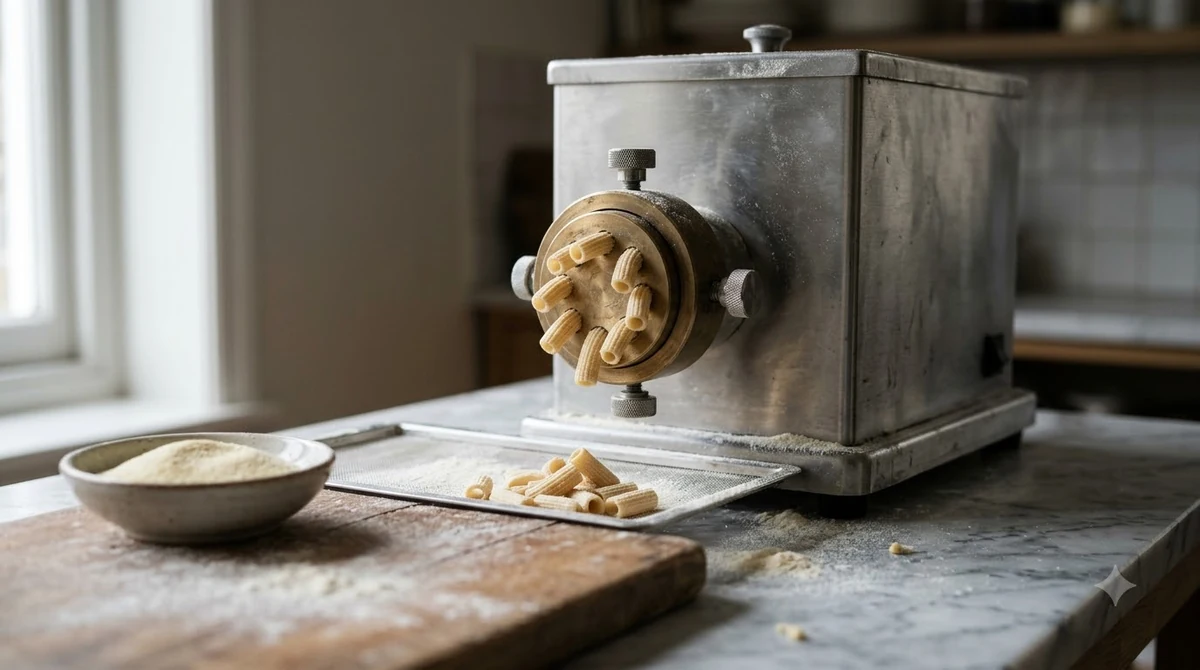

Making homemade cavatappi means forcing dough through a spiral die on a pasta extruder. Hand rolling and cutting cannot produce the hollow, ridged spiral, so a machine with a cavatappi die is the realistic route. The dough, the die and the drying step each affect the final shape.
Cavatappi is a corkscrew with a hollow center and ridges on the outside, which is why it is usually made by machine. This guide explains what the shape needs, which equipment you can use, and where to check your own manual rather than rely on a number from a generic recipe.
What Makes Cavatappi Different From Other Shapes
Cavatappi is a spiral pasta with a hollow center and a ridged outside, and it is larger than cavatelli and elbow macaroni.
The DeLallo guide to cavatappi describes the spiral and hollow center, and notes that it is larger than cavatelli and elbow macaroni and roughly the size of rotini. The name comes from Italian for corkscrew, as the Wikipedia entry on cavatappi explains.
Can You Make Cavatappi at Home?
Yes, but only with an extruder and a cavatappi die. A rolling pin, a pasta roller or a knife cannot create the hollow spiral with ridges.
Hand methods, such as wrapping thin strips of dough around a dowel, can imitate the look of a spiral. They do not create the same hollow tube, and the result is usually uneven. If you want true cavatappi, a machine is the only dependable option.
Choosing an Extruder and Die
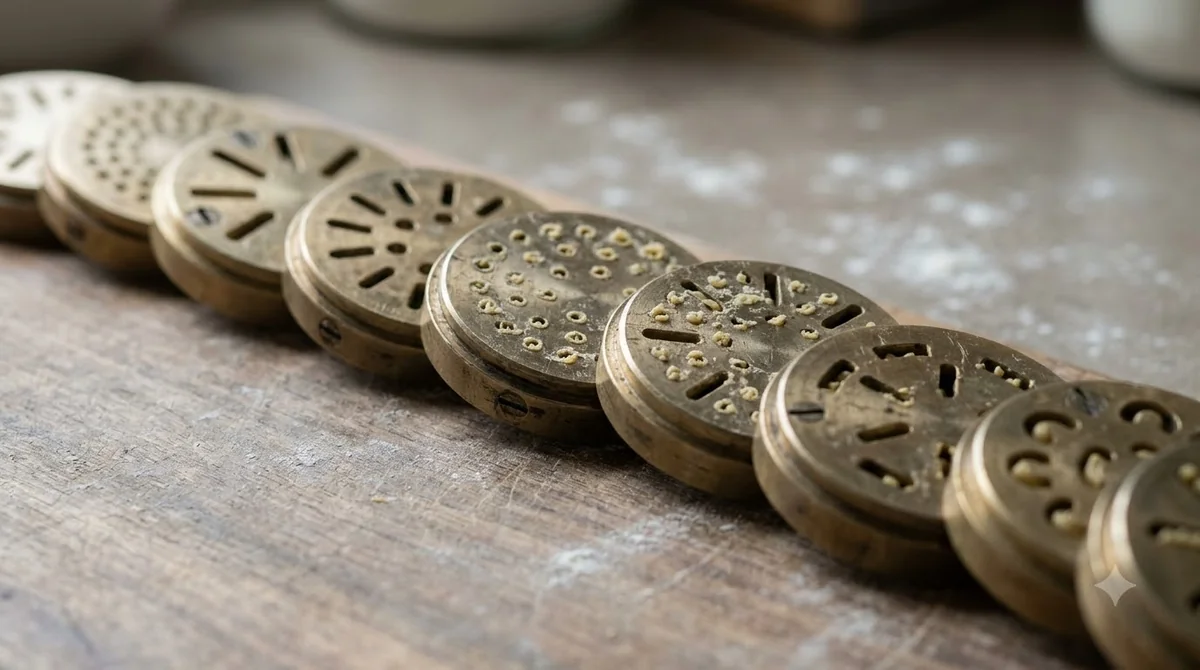
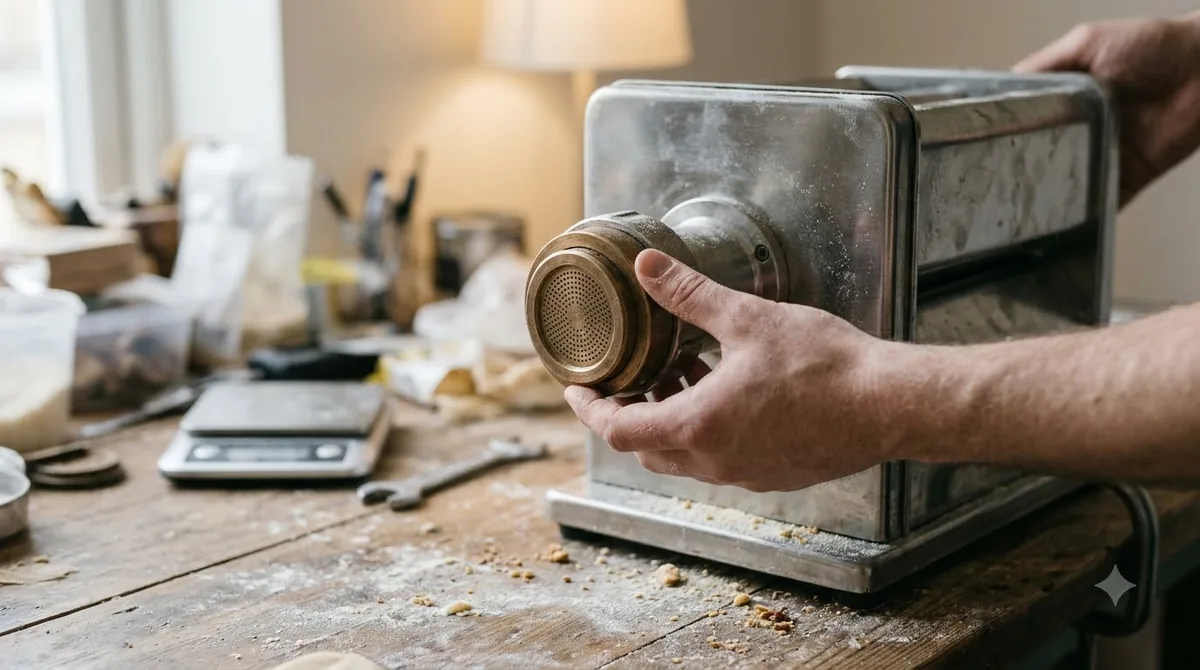
Choose a die that fits your specific extruder, because cavatappi dies are sold for particular machines rather than as one universal part.
Product listings for cavatappi dies, such as the 7.8 mm cavatappi die listed for certain Estella pasta machines, show the diameter and the machine they fit. Check the listing against your model before you buy, because a die that does not match the extruder will not seat properly.
The table below compares the main options for getting cavatappi at home.
| Option | What to expect |
|---|---|
| Extruder with a matching cavatappi die | True hollow spiral with consistent ridges |
| Hand-wrapped strips on a dowel | Spiral look, but uneven and not hollow |
| Store-bought dried cavatappi | Consistent shape with no equipment needed |
Making the Dough for an Extruder
Extruder dough needs to be stiffer than rolled dough, so that it holds its shape as it leaves the die.
Use the flour-to-liquid ratio in your extruder’s manual, or a dough recipe you have tested on that machine. This guide does not give a ratio, because the right amount depends on the flour, the humidity in your kitchen and the model of extruder.
- Mix the flour and liquid until the dough holds together and feels firm.
- Let the dough rest, covered, so the flour hydrates evenly.
- Cut the dough into small portions that fit the extruder barrel.
- Feed each portion slowly, and keep the barrel from overfilling.
Smaller portions move through the extruder more easily than one large lump, so work in batches instead of loading the whole dough at once.
Shaping, Drying and Storing
Once extruded, cut the spirals to length and spread them out so they do not stick together while they dry.
Drying Fresh Cavatappi
Fresh cavatappi cooks quickly and should be used within a short time. For longer storage, dry the pieces fully until they are firm and no longer soft to the touch, then keep them in a sealed container away from moisture.
The exact drying time depends on the humidity and the thickness of the spiral, so check the pieces by feel rather than by a fixed timer.
Cooking Your Homemade Cavatappi
Fresh cavatappi needs far less time in boiling water than dried store-bought pasta. Start testing it after a short time, and taste a piece for the texture you want, rather than following a dried-pasta package.
Drain it and toss it with a thick sauce while it is still warm. Chunky tomato, meat ragù and cheese sauces suit the hollow center and the ridges, which is why cavatappi is a good shape to make at home.
Checking the Shape Before You Cook
Before cooking a batch, look at several pieces side by side. Each spiral should have an open, hollow center and ridges that look even from one end to the other.
If the center is closed or the ridges look smeared, the dough was probably too wet or the die was not seated correctly. Adjust the dough or check the die fit before you run the next batch, because a faulty shape does not improve once it is dried.
Keep a few pieces from the first batch as a reference. Compare each new batch with them so you can spot a change in the dough or the machine early.
Common Problems When Extruding Cavatappi
The most common problem is a dough that is too wet, which sticks to the die and comes out as a clump instead of a clean spiral. Add a little flour in small amounts until the strand holds its shape.
Another problem is a dough that is too dry, which cracks along the ridges. Add a small amount of water and knead it in before you try again.
Clean the die and barrel after each batch. Dried dough left in the grooves can change the shape of the next batch.
Frequently Asked Questions
Can I make cavatappi without an extruder?
You can make a spiral look by hand, but it will not be hollow. A machine with a cavatappi die is the reliable option for the true shape.
Do I need a special die for cavatappi?
Yes. The spiral and hollow center come from the die, so you need a cavatappi die that fits your extruder model.
How long does homemade cavatappi take to cook?
Fresh cavatappi cooks much faster than dried pasta. Test a piece early and check the texture rather than relying on a package time.
What is the best sauce for homemade cavatappi?
Chunky tomato sauce, meat ragù and cheese sauces are the most reliable choices because the spiral holds them well.
Homemade cavatappi is worth the effort if you have an extruder and a die that fits it. Use your machine’s manual for the dough ratio, keep the batches small, and check the drying by feel. If the spiral comes out uneven, adjust the dough rather than the cooking time.
 5 min readLearnHomemade Bucatini: Dough, Extrusion and Drying TipsUpdated Nov 13, 2026
 5 min readLearnHomemade Macaroni: Dough, Shaping, Drying and Cooking TipsUpdated Nov 13, 2026
 6 min readLearnHomemade Gemelli: Semolina Dough, Shaping and DryingUpdated Nov 13, 2026
 6 min readLearnHomemade Orecchiette: Dough, Thumb Shaping and DryingUpdated Nov 13, 2026
 6 min readLearnBest Sauce for Cavatappi: Chunky, Cheesy and Pesto OptionsUpdated Nov 13, 2026
 6 min readLearnCavatappi Substitute: Best Pasta Swaps for Every DishUpdated Nov 13, 2026