
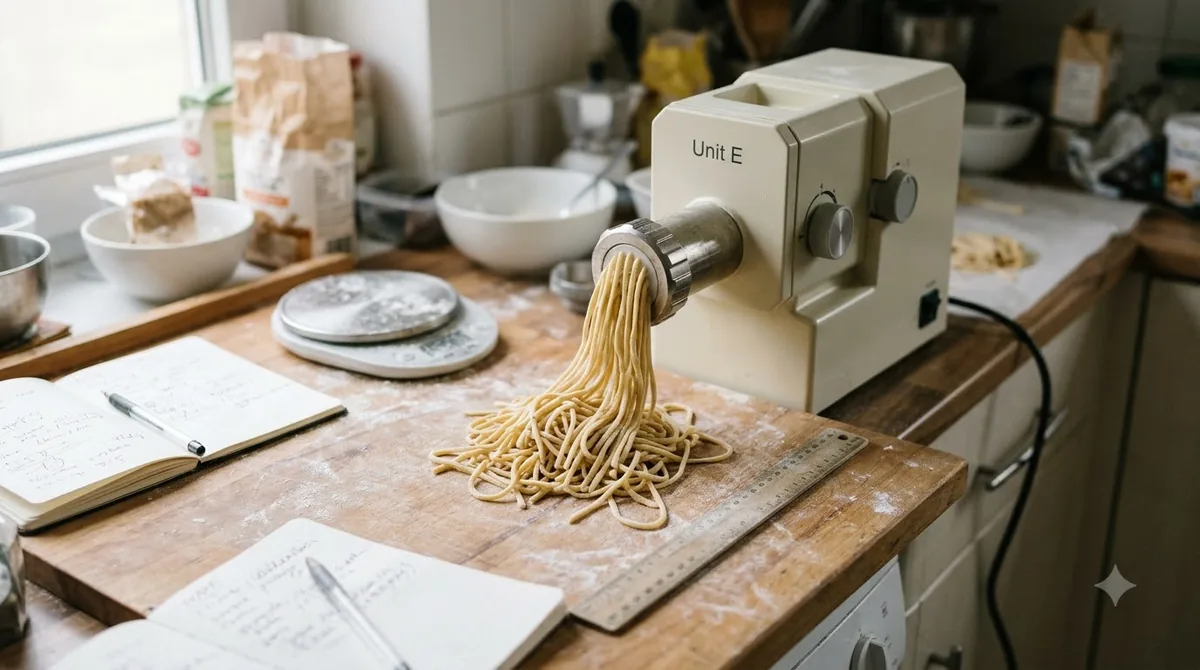

Homemade macaroni needs only flour, eggs or water, and some hand work. Knead a firm semolina dough, roll it thin, cut small squares, and wrap each one around a thin rod to form tubes. Plan on a day or two of drying before the pasta is ready to cook.
What Dough Works Best for Homemade Macaroni?
Macaroni needs a firmer dough than fresh sheet pasta, so a semolina dough with a little oil is a practical starting point.
King Arthur Baking says a dough for extruded shapes should be drier than a sheet dough, and it compares the texture to pie dough or lumpy grits. The same guide uses about one large egg per cup of flour, plus one to two tablespoons of water as needed. It says all-purpose, whole wheat, semolina, or a blend can all work, while pastry and cake flours are too soft.
The Cristina’s Kitchen handmade macaroni guide uses 200 grams of semolina flour, 85 grams of water, and 15 grams of olive oil. Mix the liquid into the flour with a fork, then knead by hand for about 5 minutes until the dough is smooth.
Wrap the dough and let it rest for at least 20 to 30 minutes before you roll it. The guide asks for this rest before you start rolling.
The Cristina’s Kitchen amounts are given in grams, so a kitchen scale gives a more reliable dough than measuring by volume. King Arthur’s cup-based ratio is a rougher guide, so check the texture against its pie dough comparison as you knead.
How Do You Shape Macaroni by Hand?
Roll the dough to about 1 mm thick, cut it into 2.5 cm squares, and roll each square around a thin rod until the edges close.
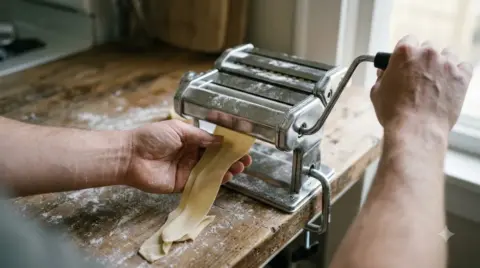
- Roll the rested dough to about 1 mm with a rolling pin or a pasta machine.
- Cut the sheet into squares of roughly 2.5 by 2.5 cm (1 inch) with a knife, pasta cutter, or pasta bicycle.
- Press a thin rod, such as a skewer, chopstick, or dowel, into a square.
- Roll the square until the dough closes around the rod.
- Gently slide the tube off the rod and lay it out spaced apart on a wire rack, perforated tray, or towel.
The rod sets the hole in the middle of each tube. The guide suggests a skewer, chopstick, or dowel, so use whichever thin, straight rod you have on hand.
The guide produces tubes, which is the basic shape of macaroni. It does not cover curling the tubes into the bent elbow shape, so look for a dedicated elbow guide if that shape matters to you.
Keep the rolled dough and cut squares covered with a towel while you work through the rest of the batch.
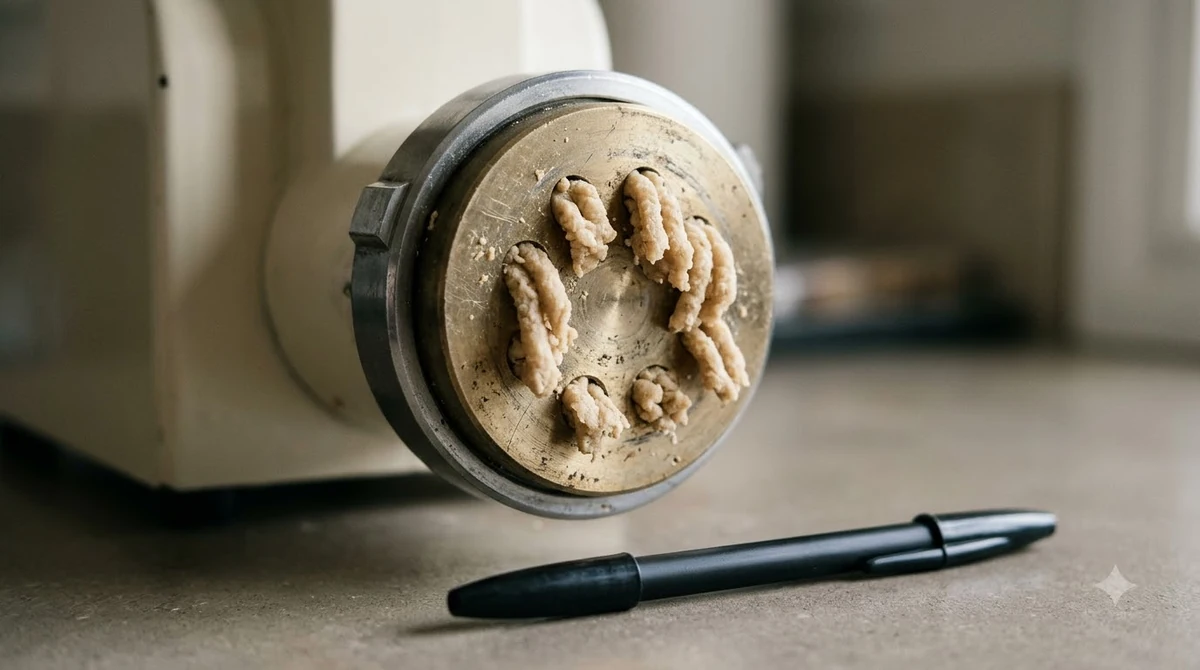
How Long Should Homemade Macaroni Dry?
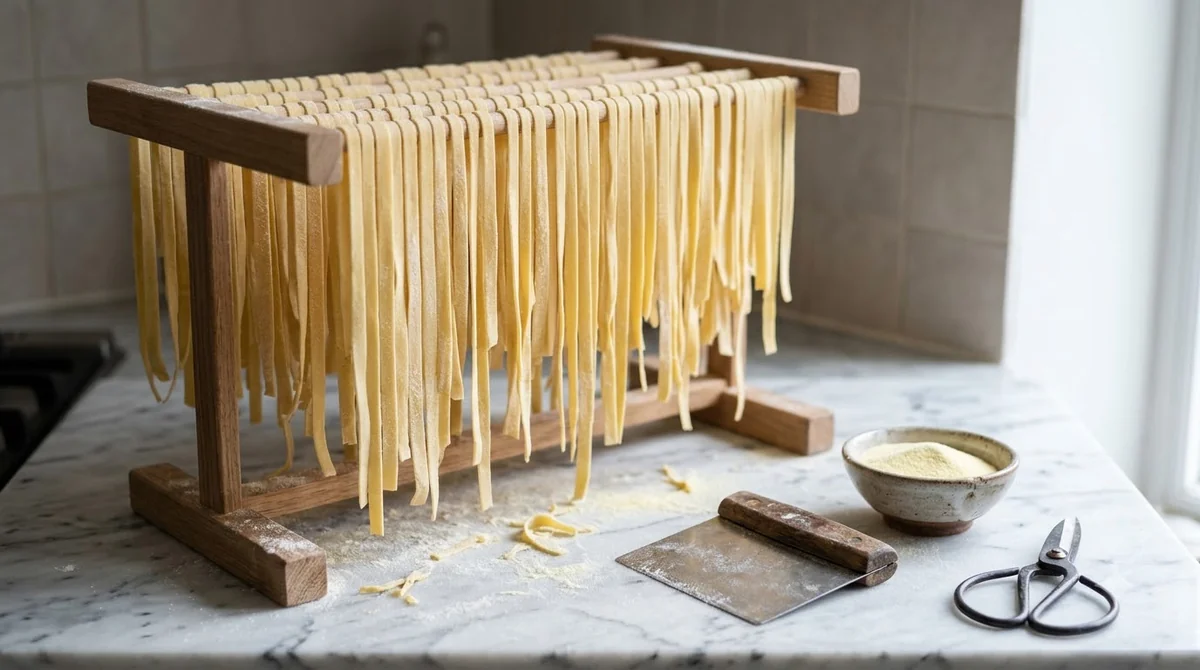
Dry the shapes in a single layer for 24 to 48 hours, depending on thickness, until they are fully hard.
The Cristina’s Kitchen guide says the pasta must be “absolutely bone dry” or it may mold. Use a perforated tray if you have one, so air reaches every side, and turn the pieces if they sit on a towel.
King Arthur gives a shorter window of 12 to 24 hours for pasta that will be stored, and it advises turning the pasta occasionally so it dries evenly. Thicker tubes need the longer end of the range.
The guide also recommends freezing the dried pasta for the safest storage.
Lay the tubes spaced apart while they dry, so none of them touch. The Cristina’s Kitchen guide says to lay them out this way on a rack, tray, or towel.
How Do You Cook Homemade Macaroni?
Cook in at least 6 liters of well-salted water for about 3 minutes, then cut one piece through the middle to check it.
Homemade pasta has no printed cooking time, so start checking at about 3 minutes, as the guide suggests, and cut another piece if the first one is not clearly done. Because the guide’s test is a cut through the middle, check one piece before you cook the whole batch, so you can adjust the time for the rest.
If there is no dry white portion in the center of the cut piece, the pasta is cooked. The guide also says frozen pasta can go into the water without thawing first.
Drain the macaroni and toss it with the sauce you plan to serve, then serve it while it is hot.
Frequently Asked Questions
How big should the macaroni squares be?
The Cristina’s Kitchen method rolls the dough to about 1 mm and cuts squares of roughly 2.5 by 2.5 cm, which is 1 inch.
Can you make homemade macaroni without a pasta machine?
Yes. The Cristina’s Kitchen method rolls the dough with a rolling pin and cuts it with a knife or pasta cutter, then forms each tube around a thin rod.
Which flour should I use for homemade macaroni?
The guide uses semolina flour. King Arthur says all-purpose, whole wheat, semolina, or a blend can all work, but pastry and cake flours are too soft for pasta.
How long does dried homemade macaroni last?
The guides do not give a fixed shelf life. They recommend drying the pasta completely and freezing it after drying for the safest storage. Check for any sign of mold before you cook it.
Why is my dough too dry or crumbly?
King Arthur advises adding water in small amounts, one to two tablespoons as needed, and watching the consistency rather than the clock. Macaroni dough should look like pie dough or lumpy grits, so a slightly crumbly dough is closer to the right stage than a sticky one.
Homemade macaroni is simple once the dough is right: firm, well rested, and cut into even pieces. Give the shapes enough time to dry fully before you store or cook them, and check the center of one piece before you drain the whole pot.
 5 min readLearnHomemade Penne: Dough, Shaping and Cooking TipsUpdated Nov 13, 2026
 6 min readLearnHomemade Gemelli: Semolina Dough, Shaping and DryingUpdated Nov 13, 2026
 6 min readLearnHomemade Orecchiette: Dough, Thumb Shaping and DryingUpdated Nov 13, 2026
 5 min readLearnHomemade Bucatini: Dough, Extrusion and Drying TipsUpdated Nov 13, 2026
 5 min readLearnHomemade Rigatoni: Dough, Shaping and TipsUpdated Nov 13, 2026
 6 min readLearnHomemade Cavatappi: Equipment, Dough and Drying GuideUpdated Nov 13, 2026