
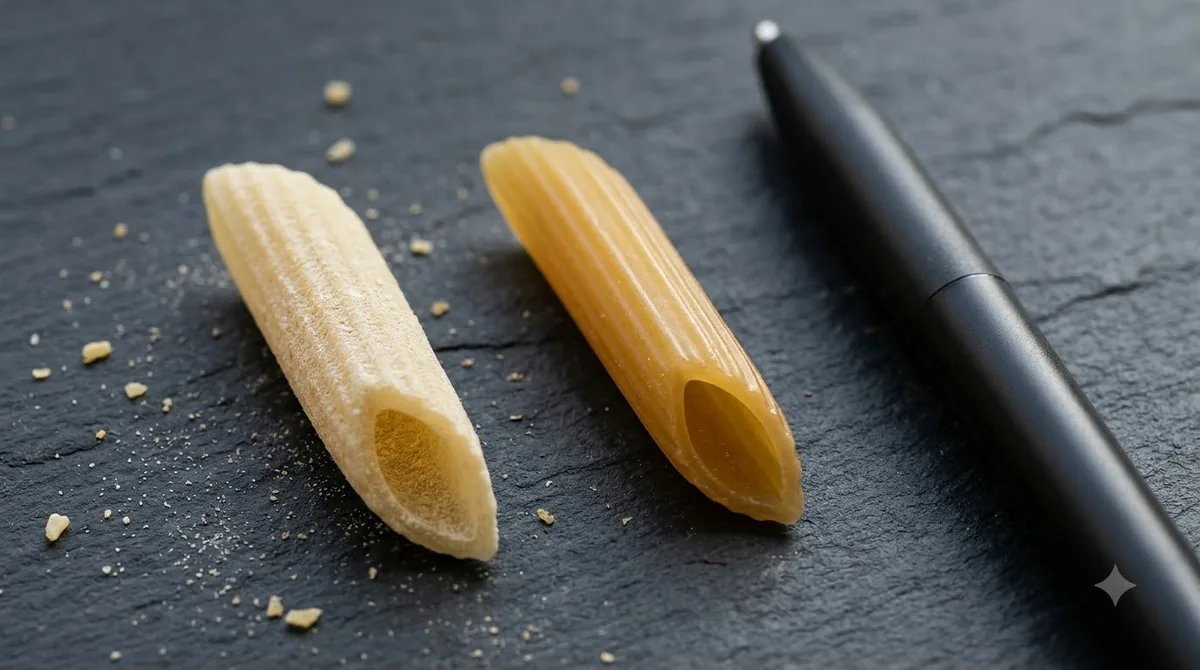

Homemade gemelli is a short, twisted pasta made from semolina and water, shaped by rolling small pieces of dough into twists. The dough is simple: semolina, warm water and a long knead. The shaping takes the most practice, so start with a small batch and dry it fully before you store it.
What Is Gemelli and Why Make It at Home?
Gemelli means twins in Italian, and the shape is two thin strands twisted together. The twist gives sauce plenty of places to cling, which is why it works well in both baked dishes and cold salads. Making it at home lets you choose the dough and the thickness of each twist.
A semolina and water dough is the simplest route. It has no eggs, so the flavour is plain and the texture is firm. The same dough can also be used for other small shapes, which makes it a good base if you want to try more than one pasta.
How to Mix and Knead Semolina Dough for Gemelli
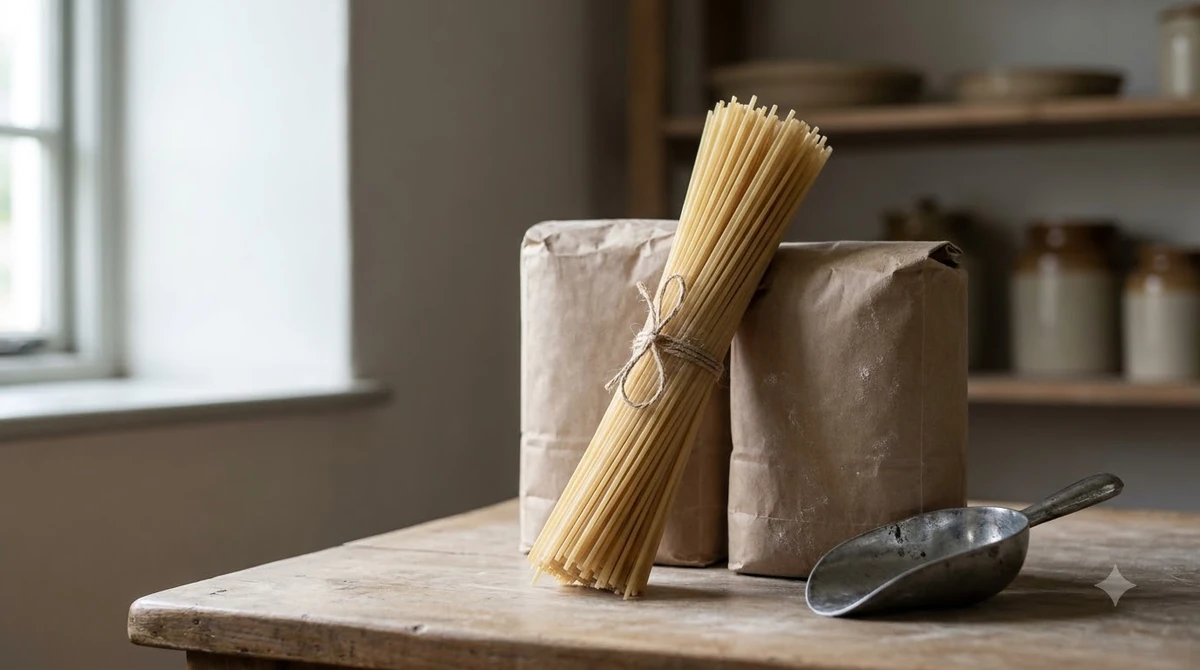
Vincenzo’s Plate uses 500 g of semolina and about 300 ml of warm water. Add the water gradually, since semolina takes it up unevenly. If the dough feels dry, add a little more water and keep kneading. The page describes it as a two-ingredient dough, so there is no need for eggs or oil.
Homecooking Collective uses a slightly different ratio, with 320 g of semola rimacinata flour and 160 ml of water. Its recipe card asks for 15 to 18 minutes of kneading, until the dough is soft, tacky and smooth. The page’s body text says 15 to 20 minutes, so aim for the lower end and stop when the dough is smooth.
- Mix the semolina with warm water a little at a time until a rough dough forms.
- Knead by hand until the dough is smooth, soft and only slightly tacky.
- Wrap the dough tightly and rest it at room temperature. Vincenzo’s Plate suggests at least 30 minutes before rolling.
How to Cut and Shape Small Twisted Pasta
Homecooking Collective’s method for small shapes starts with a 2-inch chunk of dough while the rest stays wrapped. Roll it into a rope between a quarter inch and half an inch thick, then cut the rope into pieces between a quarter inch and an inch long. Keep the pieces you are not working on covered so they do not dry out.
Shape each piece by hand. Gemelli is made from two strands twisted together, so roll each piece into a thin strand and press two strands together with a gentle twist. Keep the pressure light, because a heavy hand flattens the twist and loses the spiral. Place the finished pieces on a semolina-dusted baking sheet so they do not stick.
Work in small batches so the shaped pieces do not sit out too long. A pasta that dries too fast on the counter can crack, so cover the tray lightly and move it to a cooler spot if the room is warm.
How to Dry and Store Homemade Gemelli
Vincenzo’s Plate notes that small shapes can be eaten right away or dried for 48 to 72 hours on a pizza tray or drying rack before storing. Drying makes the pasta firmer and keeps it from clumping in the bag.
Homecooking Collective offers two storage options. Refrigerate the shapes on a semolina-dusted sheet, not touching, covered with plastic wrap, for one to two days at most. For longer storage, freeze them on the sheet until hard, which takes at least an hour, then move them to an airtight container or sealed bag for up to a month. Do not thaw before cooking. Add the frozen pasta straight to boiling water.
| Storage option | How long | How to store |
|---|---|---|
| Dried at room temperature | 48 to 72 hours to dry | Pizza tray or drying rack, uncovered |
| Refrigerated | One to two days at most | Semolina-dusted sheet, covered with plastic wrap |
| Frozen | Up to one month | Frozen on the sheet, then airtight container |
Tips for Better Homemade Gemelli
The first few pieces are often uneven. Treat them as practice, then cook a small test batch to check the bite before you shape the rest. Short shapes like gemelli cook quickly, so start tasting a minute or two before the time you expect them to be ready.
Keep the dough covered while you work, and dust the board and your hands with a little semolina. Too much flour makes the surface gritty and can stop the twists from holding together.
Troubleshooting Homemade Gemelli Dough and Shapes
Most problems come from the dough being too dry or too wet, or from shapes that are not dried or stored properly. The fixes are simple once you know what to look for.
If the dough cracks as you knead it and will not come together, it is probably too dry. Add a little warm water, a few drops at a time, and keep kneading. Vincenzo’s Plate advises adding more water if the dough feels dry, so make the change gradually rather than all at once.
If the dough is sticky and clings to your hands, it has too much water. Dust the surface with semolina and knead for a few more minutes. The dough should become smooth and only slightly tacky. Do not add flour, because extra flour makes the texture gritty.
If the twists open up after you shape them, the strands were probably pressed too hard or the pieces were too thick to hold a spiral. Make smaller pieces next time and use a light hand when you twist them together.
Frequently Asked Questions
Do I need eggs to make homemade gemelli?
No. The semolina and water dough on these pages uses no eggs, so you can make the shape with just semolina and water.
How long should gemelli dough rest?
Vincenzo’s Plate suggests at least 30 minutes before rolling. Homecooking Collective gives a longer rest of one to two hours at room temperature, covered or wrapped tightly.
How do I stop gemelli pieces from sticking together?
Dust the baking sheet with semolina and keep the pieces apart while they dry. Do not stack them or let them touch.
Can I freeze homemade gemelli?
Yes. Freeze the shapes on a sheet until hard, then move them to an airtight container for up to a month. Cook them straight from frozen.
Homemade gemelli is a good project for a slow afternoon. Let the dough rest, shape a small batch, and dry or freeze what you do not cook. With practice the twists become even, and you will know how much water your semolina needs.
 6 min readLearnHomemade Orecchiette: Dough, Thumb Shaping and DryingUpdated Nov 13, 2026
 5 min readLearnHomemade Macaroni: Dough, Shaping, Drying and Cooking TipsUpdated Nov 13, 2026
 6 min readLearnHomemade Casarecce: Semolina Dough and Rod Shaping GuideUpdated Nov 13, 2026
 5 min readLearnHomemade Bucatini: Dough, Extrusion and Drying TipsUpdated Nov 13, 2026
 6 min readLearnHomemade Cavatappi: Equipment, Dough and Drying GuideUpdated Nov 13, 2026
 6 min readLearnHomemade Mafaldine: 2 Methods With Egg or Semolina DoughUpdated Nov 13, 2026