
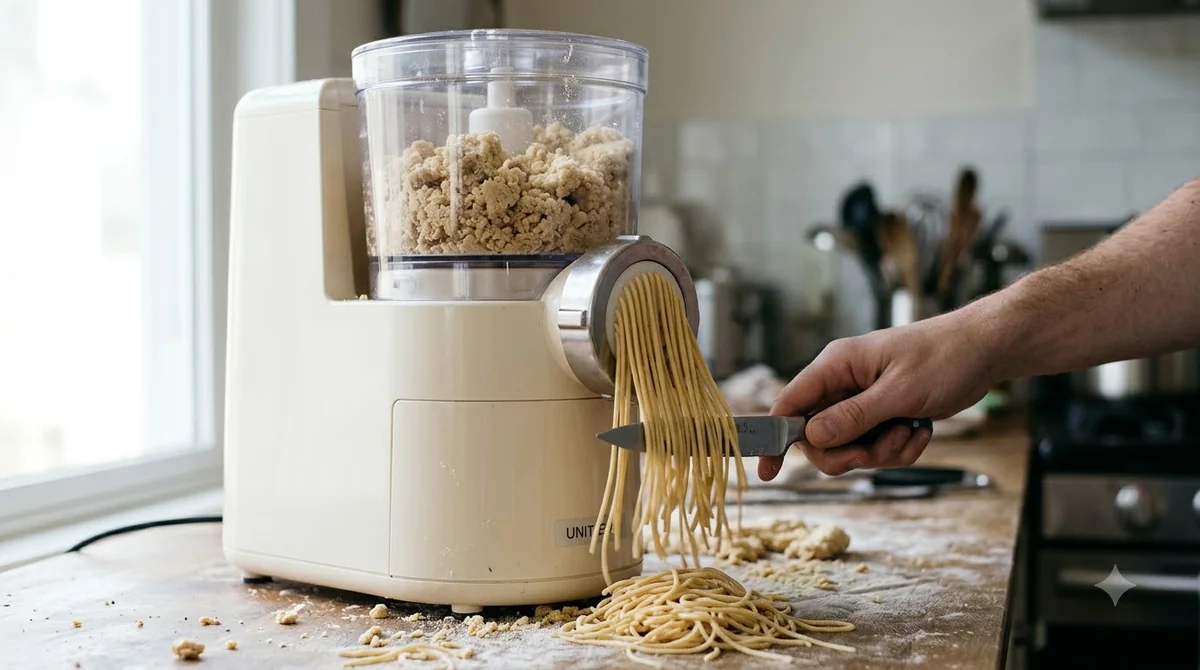

Homemade spaghetti is made from flour and eggs, kneaded into a smooth dough, rested, rolled thin and cut into strands. Most guides use roughly one egg for every 100 grams of flour, though the exact count varies by recipe. Fresh spaghetti cooks in a few minutes, so the process is mostly about the dough and the cutting. This guide covers the ratio, the rest and the cook time from the recipes we read.
Choosing the Flour and Egg Ratio
The ratio is the foundation. The Matbakh recipe uses “one whole egg to 100 grams of flour,” with 4 eggs and about 3 1/4 cups of 00 flour. Bread or all-purpose flour also works, though the texture will be a little chewier.
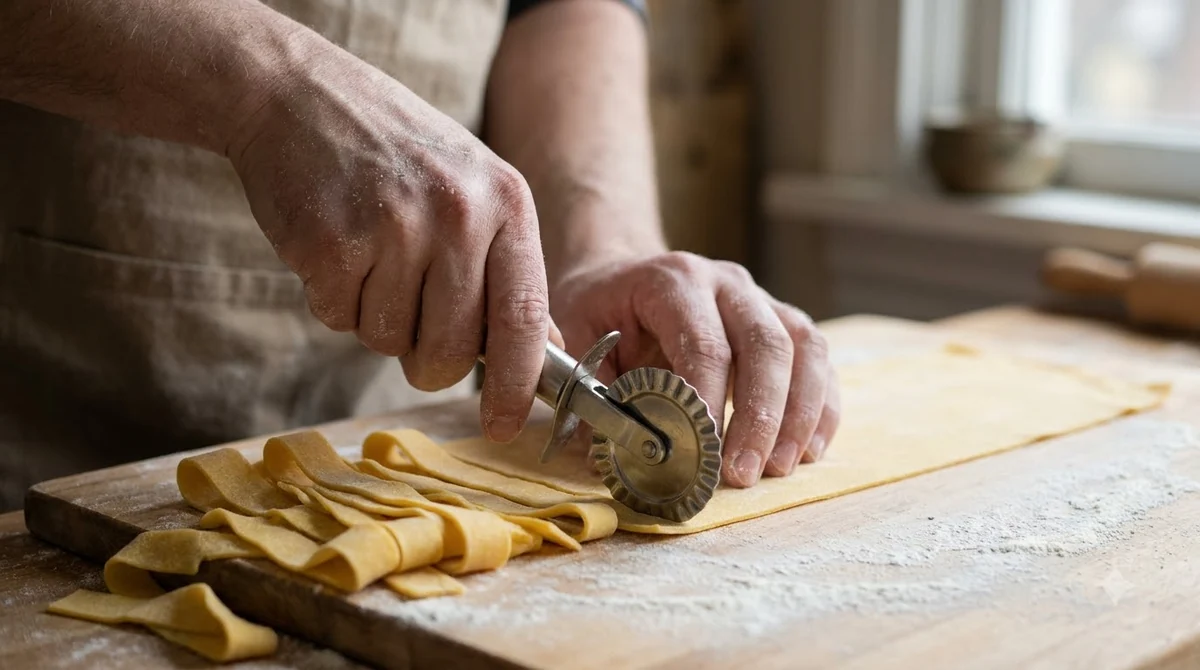
A second recipe from Pastagrammar’s fresh egg pasta guide uses “3 1/3 cup (400 grams) all-purpose flour, plus extra for dusting” with “5 large eggs.” That is a richer dough, so it is firmer to knead and produces a more tender noodle. Weigh your flour when you can, because cup measures vary.
If the dough feels dry and crumbly, add a teaspoon of water at a time. If it is sticky, dust with flour. The dough should feel smooth and elastic, not tacky.
Kneading and Resting the Dough
Kneading builds the structure that lets the dough stretch without tearing. Work it until it is smooth, then let it rest so it relaxes and rolls out more easily.
The Matbakh recipe says to “knead for 10 minutes, using a dough hook on a stand mixer or your hands,” then cover the dough with plastic wrap and let it rest for 30 minutes. Pastagrammar also rests the dough at room temperature for “at least 30 minutes,” and notes that it can rest overnight for later use. Its kneading instruction is simply to knead until the dough is “smooth and even,” without a set time.
- Mix the flour and eggs until a shaggy dough forms.
- Knead for about 10 minutes until smooth and elastic.
- Wrap the dough and rest it for at least 30 minutes.
- Divide the dough into pieces and roll each one through a pasta machine or with a rolling pin.
Rolling and Cutting the Strands
Roll the dough to a sheet thin enough to see the work surface through in places, then cut it into long strands. Dust the strands lightly with flour as you go so they do not stick together.
Keep the sheet covered with a towel while you cut, since fresh dough dries out quickly. Hang the strands or spread them on a floured tray until you cook them.
Cooking Fresh Spaghetti
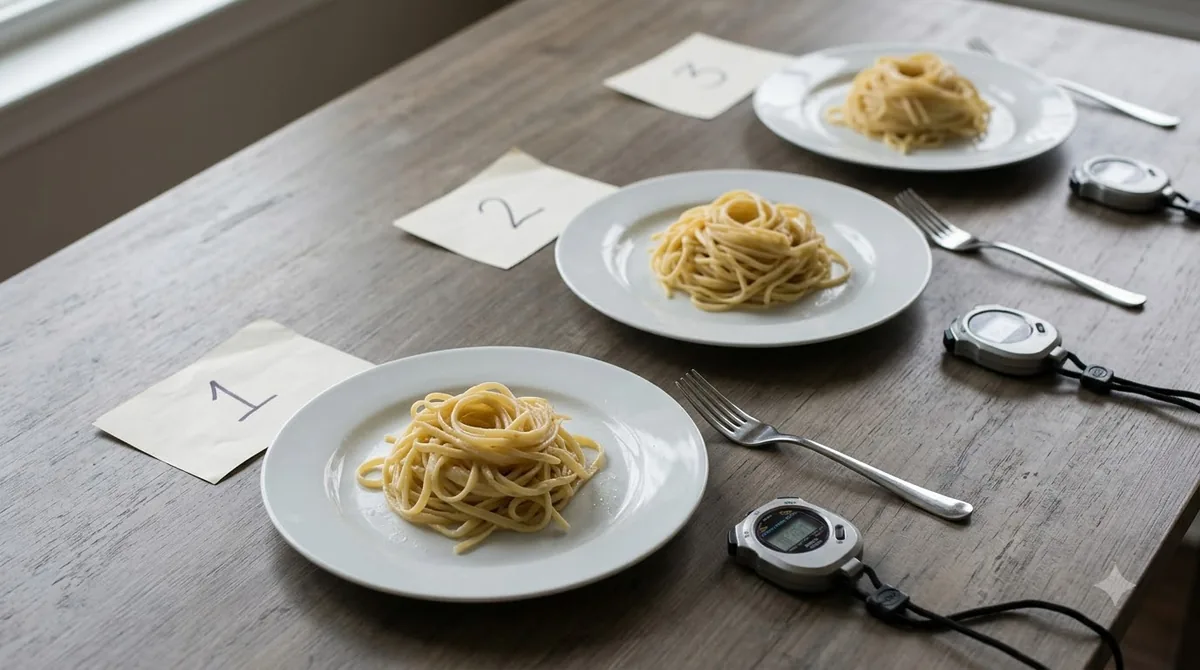
Fresh spaghetti cooks much faster than dried. The Matbakh recipe boils the noodles “in a large pot of generously salted water for 3 to 5 minutes, or until they float to the top.” Pastagrammar gives “2 to 3 minutes” for fresh pasta and notes that very thin pasta can take as little as 30 seconds.
Start tasting at 2 minutes. A fresh strand should be tender but still have a slight bite. Drain it and toss it straight into the sauce so the strands do not clump.
Common Problems and Fixes
| Problem | Likely cause | Fix |
|---|---|---|
| Dough cracks when rolled | Too dry or not rested | Add water a teaspoon at a time and rest longer |
| Strands stick together | Not enough flour on the cut strands | Dust right after cutting and separate the nests |
| Mushy noodles | Overcooked | Taste early and drain as soon as they are tender |
Tips for Making Homemade Spaghetti Consistently
Consistency is what turns a first attempt at homemade spaghetti into a dinner you repeat. Weigh the flour and eggs when you can, because a cup of flour varies with how it was scooped. Keep notes on how the dough felt so the next batch of homemade spaghetti comes out the same.
Use a sharp knife or a pasta cutter for the strands. Dragging a dull blade through the sheet pinches the edges, and that makes homemade spaghetti stick together in the pot. A smooth, even cut keeps the strands separate and helps them cook at the same pace.
Dry the strands briefly if you are not cooking them right away. A short rest on a floured tray is enough to stop the nests from clumping. If you plan to cook later, cover the homemade spaghetti loosely and keep it away from heat.
Season the cooking water well. It should taste lightly salty, which flavors the strands as they cook. Save a cup of the starchy water from the pot, and use it to loosen the sauce so the finished homemade spaghetti gets a glossy coat.
Frequently Asked Questions
How many eggs do I need for homemade spaghetti?
The common guideline is about one egg per 100 grams of flour. The two recipes here use 4 eggs with about 3 1/4 cups of flour, and 5 large eggs with 400 grams of flour.
How long should I knead the dough?
The Matbakh recipe says about 10 minutes. Pastagrammar says to knead until smooth and even, without a set time.
Do I have to rest the dough?
Yes, at least 30 minutes is the time both recipes give. Resting makes the dough easier to roll and reduces shrinkage.
How long does fresh spaghetti take to cook?
Expect about 2 to 5 minutes, depending on how thin you rolled the dough. Taste early and trust the texture.
Can I make homemade spaghetti without a pasta machine?
Yes. A rolling pin and a sharp knife are enough for thin sheets and even strands. Work in small pieces of dough so the sheet stays manageable while you roll it out.
Homemade spaghetti rewards a little patience. Get the ratio right, give the dough its rest, and cook the strands briefly in well-salted water. Once you have made one batch, you will know how the dough should feel and can adjust the next one by eye.
 9 min readLearnNew York Style Pizza Recipe: Dough Ratios, Rise Times and Oven SettingsUpdated Nov 10, 2026
 8 min readLearnPizza Pockets Recipe: Homemade Dough, Filling and Baking TimesUpdated Nov 11, 2026
 5 min readLearnOrzo Substitute: Best Swaps by Ratio and Cook TimeUpdated Nov 13, 2026
 8 min readLearnSpaghetti alla Chitarra: Shape, Sauces and Cooking Time ExplainedUpdated Nov 10, 2026
 5 min readLearnHow Long to Rest Pasta Dough Before RollingUpdated Nov 13, 2026
 6 min readLearnFix Sticky Pasta Dough: Flour, Rest and RollUpdated Nov 13, 2026