

Spaghetti alla chitarra is an Abruzzo egg pasta cut into square strands by pressing dough over a frame of parallel wires. The square shape gives the pasta a rough surface and enough body to hold meat and tomato sauces. The name comes from the frame, whose wires look like guitar strings.
Cooking time depends on whether the pasta is dried or fresh, so check which one you have before you put the water on.
What Gives Spaghetti Alla Chitarra Its Shape
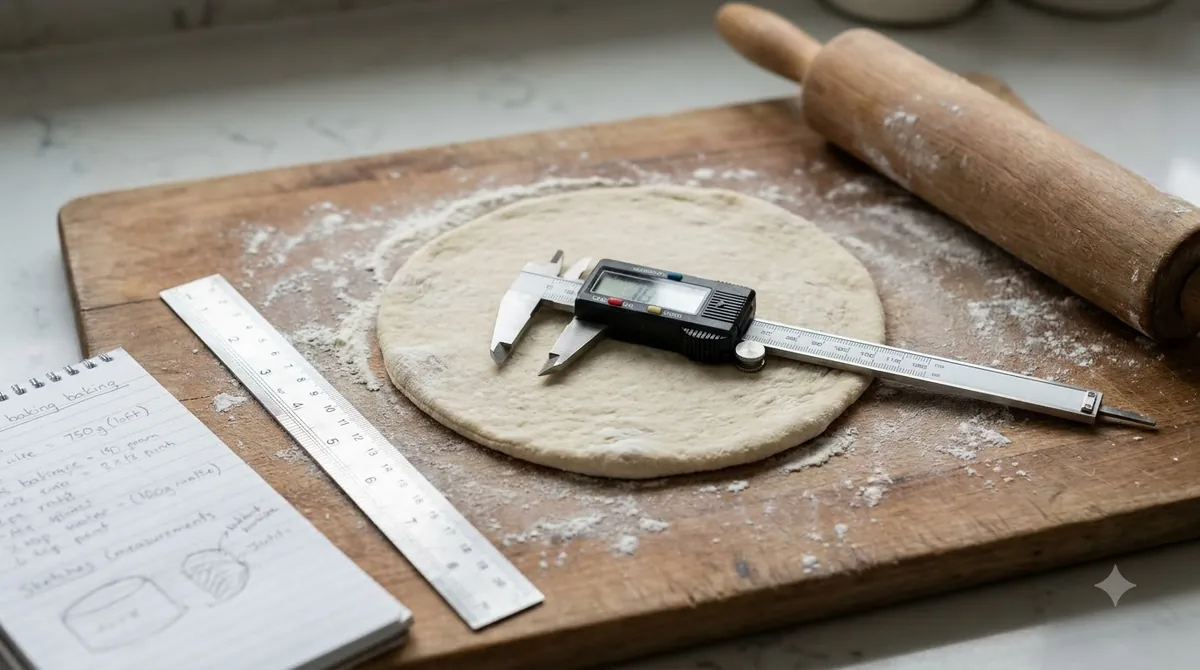
Spaghetti alla chitarra has a square cross-section, about 2 to 3 mm thick, because its strands are cut from a sheet of dough rather than pushed through a die.
The pasta comes from Abruzzo, a region in central Italy, and it is also called maccheroni alla chitarra. The Wikipedia entry on the pasta notes that the Italian Ministry of Agriculture lists it as a prodotto agroalimentare tradizionale, or PAT, a traditional food product recognized at national level.
The exact origin is unclear. A traditional recipe from the Teramo area dates to the early 1800s or earlier, and another claim places its roots in the province of Chieti. Before the frame came into use, cooks cut pasta with a notched rolling pin, a tool that the Wikipedia article links to the earlier history of the shape.
Dried versions are common too. According to the Garofalo product page, its dried spaghetti alla chitarra is made from durum wheat semolina only, and the Wikipedia entry notes that a dried version without egg is often sold as spaghetti or maccheroni alla chitarra in Italy and abroad. If you are weighing the two doughs, semolina pasta vs egg pasta compares them.
The name means guitar. The wires stretched across the frame resemble guitar strings, and that is the usual explanation for the name. According to Gambero Rosso International, the tool gives the pasta its name, its shape and a porous texture that helps sauce cling. For a shorter explainer, see what spaghetti alla chitarra is.
How the Chitarra Frame Cuts the Pasta
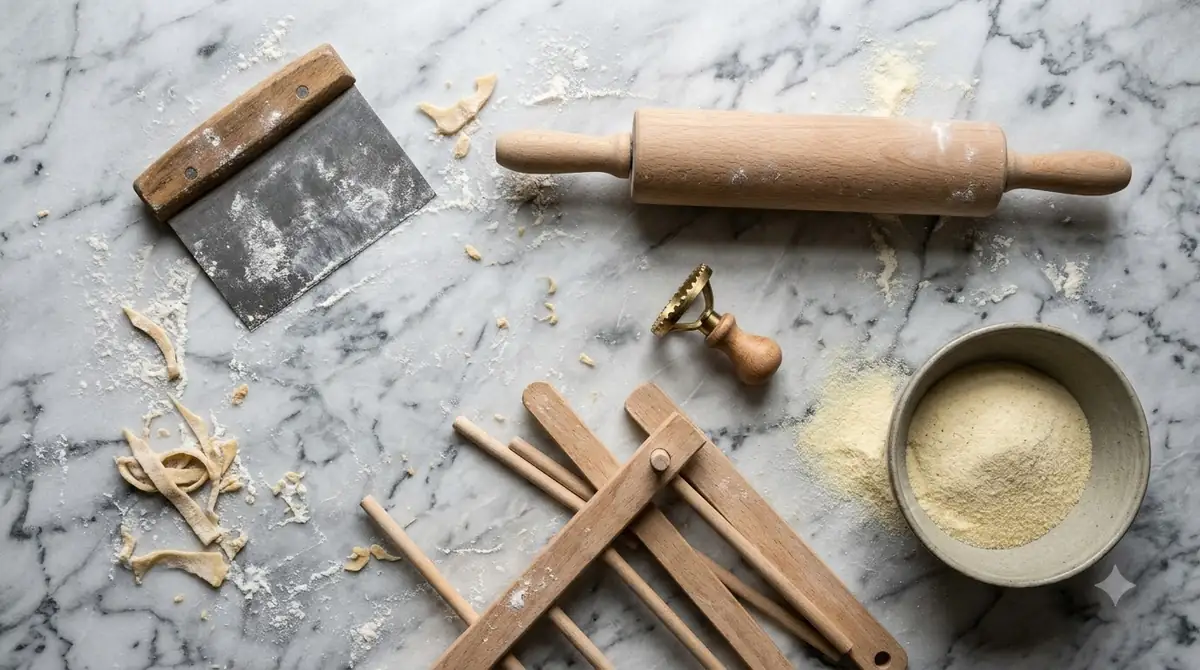
A chitarra is a wooden frame with parallel steel wires, and a rolling pin pressed over a dough sheet forces the dough down through the wires.
The frame is usually made of beech or another neutral wood, with steel wires stretched along its long side. According to Gambero Rosso International’s history of the dish, the distance between the wires determines the shape of the strands, so the frame matters as much as the dough.
The cutting itself follows a short sequence, and it takes practice to press the pin evenly across the whole length of the sheet.
- Dust the rolled sheet with plenty of semolina so it does not stick to the wires or the pin.
- Lay the sheet over the wires. If it is too long, fold the ends over, or trim it to leave a gap.
- Roll the pin from top to bottom with even pressure, and repeat until the strands fall through the wires.
- Turn the frame, catch the pasta from the open side, and dust it again with semolina before you set it aside.
Gambero Rosso International describes the finished strands as square-section spaghetti about 30 centimeters long. Cut the strands to the length of the pot if you need shorter pieces for a small pan.
Dough for Spaghetti Alla Chitarra
One widely used home dough combines 200 g of Italian 00 soft wheat flour, 100 g of durum semolina and 3 large eggs, kneaded by hand for 5 to 10 minutes until soft and elastic.
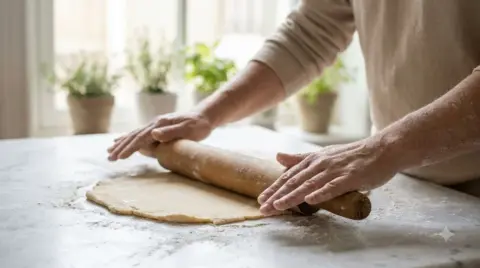
After kneading, the dough should rest about 30 minutes, wrapped and covered, before you roll it. The Wikipedia entry gives the same resting time for the dough, so the step is consistent across sources.
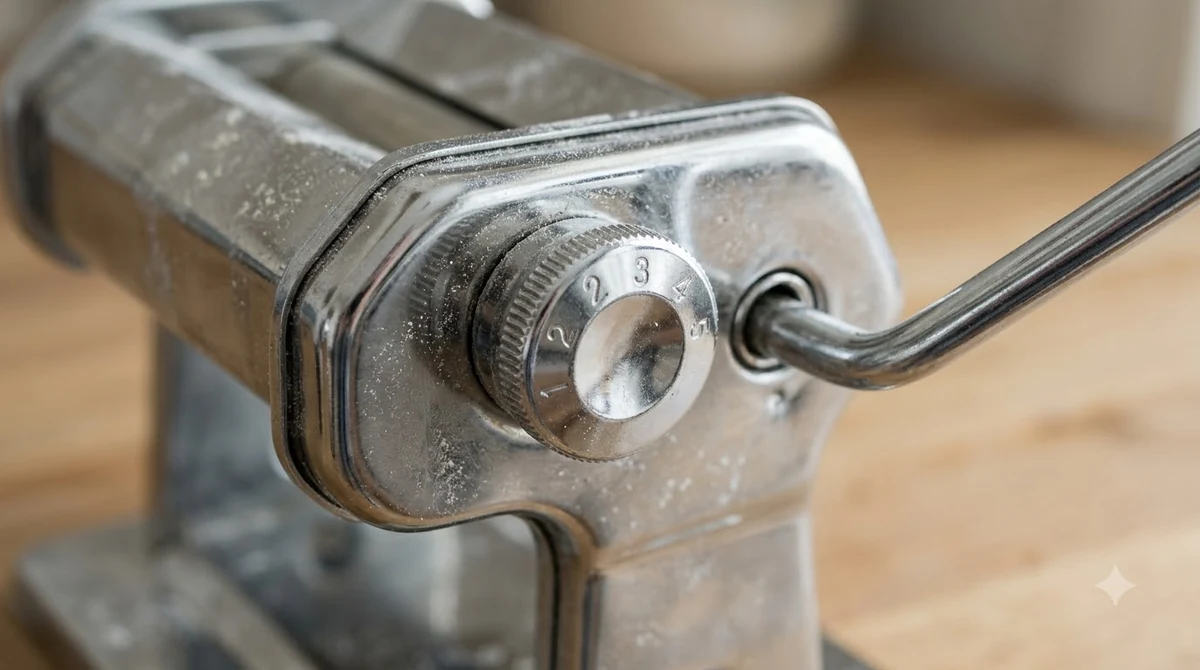
- Roll the sheet to about 3 mm, which is usually the third or fourth setting on a pasta machine; how thin to roll pasta varies with the shape.
- Work with one quarter of the dough at a time, so the rest stays wrapped and does not dry out.
- Use semolina for dusting while you shape the pasta, as the recipe directs.
This is one example recipe, not the only one. The Wikipedia entry describes the dough simply as durum semolina and eggs without giving proportions, so the exact ratio varies by cook and by region. Choose the version that matches the flour you can buy, and compare it with other recipes, such as this fresh pasta dough recipe, before you start.
How Long to Cook Spaghetti Alla Chitarra
Dried spaghetti alla chitarra cooks in about 13 minutes, according to the Garofalo product page for its dried version, while fresh sheets are cooked until al dente.
| Form | Cooking time | Notes |
|---|---|---|
| Dried, Garofalo N° 40-3 | 13 minutes | 2 mm thick, 260 mm long, 500 g pack |
| Fresh, homemade | Until al dente | No fixed minute count in the sources read, so taste to check |
Salt the water once it boils, then return it to a boil before you add the pasta. Taste a strand before you drain the pot, and stop when it is tender with a slight bite, as described in how to cook pasta al dente.
Uncooked fresh pasta can be frozen and cooked without thawing, according to The Pasta Project recipe, so you can shape a batch ahead of time.
Dried packs vary by brand, so check the time on your own package first. The Garofalo figure applies to that product only, and a different dried brand may need more or less time.
Classic Sauces for Spaghetti Alla Chitarra
The traditional pairing is a meat sauce, either an Abruzzo ragù of pork, beef and lamb or a tomato sauce with small meatballs called pallottine.
- Abruzzo ragù: a slow meat sauce that combines pork, beef and lamb, the most typical version in the region.
- Teramo style: a tomato sauce served with pallottine, the small meatballs that are the most classic partner.
- Other versions: some recipes use lamb chops, pork ribs, or beef and veal in the sauce.
A basic pallottine recipe uses 1 lb of finely ground beef or veal, 1 egg and 1.5 oz of grated cheese. The mixture is shaped into balls of 1.5 to 2 cm and fried before they go into the tomato sauce.
The Garofalo page says the rough surface and thickness of the dried pasta suit sauces well. A sauce with enough body will cling to the square strands instead of pooling at the bottom of the bowl.

How It Compares to Tonnarelli and Ciriole
Tonnarelli from Lazio share the square cross-section of spaghetti alla chitarra, while ciriole from Molise are about twice as thick as spaghetti.
| Pasta | Region | Key difference |
|---|---|---|
| Spaghetti alla chitarra | Abruzzo | Square, about 2 to 3 mm thick, cut over a wire frame |
| Tonnarelli | Lazio | Square cross-section, the pasta used in Roman cacio e pepe |
| Ciriole | Molise | Thicker, about twice the thickness of spaghetti |
The square cut is the main link between spaghetti alla chitarra and tonnarelli, but the two names belong to different regions and different traditions. If you cook one and then the other, expect a similar cut and a different sauce culture.
Caring for a Chitarra Frame
A chitarra with stainless steel strings is the safer choice, because copper or brass wires can rust, according to the author of one recipe.
- Stainless steel strings resist rust better than copper or brass.
- Cheap plastic strings work poorly, so avoid them when you buy.
- If pasta sticks to the wires, strum the strings gently to release it.
Because the wires set the strand shape, keep them taut and clean so the strands stay even.
Frequently Asked Questions
Is spaghetti alla chitarra the same as regular spaghetti?
No. Spaghetti alla chitarra has a square cross-section and is cut over a wire frame, while regular spaghetti is round. The Garofalo product page describes its dried version as similar to spaghetti but with a square cross-section.
Do I need a frame to make it?
The square cut comes from the frame, so a chitarra is the traditional tool for the shape. The sources read for this guide describe no other traditional method for this cut.
How long does dried spaghetti alla chitarra take to cook?
One brand, Garofalo, lists 13 minutes for its dried version. Always check the time on your own package, since cooking times differ between brands.
Why is it called alla chitarra?
Chitarra means guitar. The name refers to the frame, whose parallel wires look like guitar strings.
What are pallottine?
Pallottine are small meatballs made with ground meat and cheese, fried, and then cooked in tomato sauce. They are the classic partner for this pasta in the Teramo area of Abruzzo.
For a quick weeknight dinner, dried spaghetti alla chitarra is the simpler choice. If you own a frame and have the time, making fresh sheets follows the traditional method, so start with the dough and cook until al dente.
 8 min readLearnWhat Is Spaghetti alla Chitarra? The Square Egg Pasta of AbruzzoUpdated Nov 6, 2026
 8 min readLearnManicotti Pasta: Shape, Size, Cooking Times and SubstitutesUpdated Nov 10, 2026
 6 min readLearnTrofie vs Fusilli: Shape, Sauce and Cooking DifferencesUpdated Nov 13, 2026
 8 min readLearnCasarecce Pasta: Simple Guide to Shape, Sauce and CookingUpdated Nov 10, 2026
 5 min readLearnHomemade Spaghetti: Dough Ratio, Rest and Cook TimeUpdated Nov 13, 2026
 8 min readLearnChifferi Pasta: Shape, Cooking and 1 Simple RecipeUpdated Nov 10, 2026