
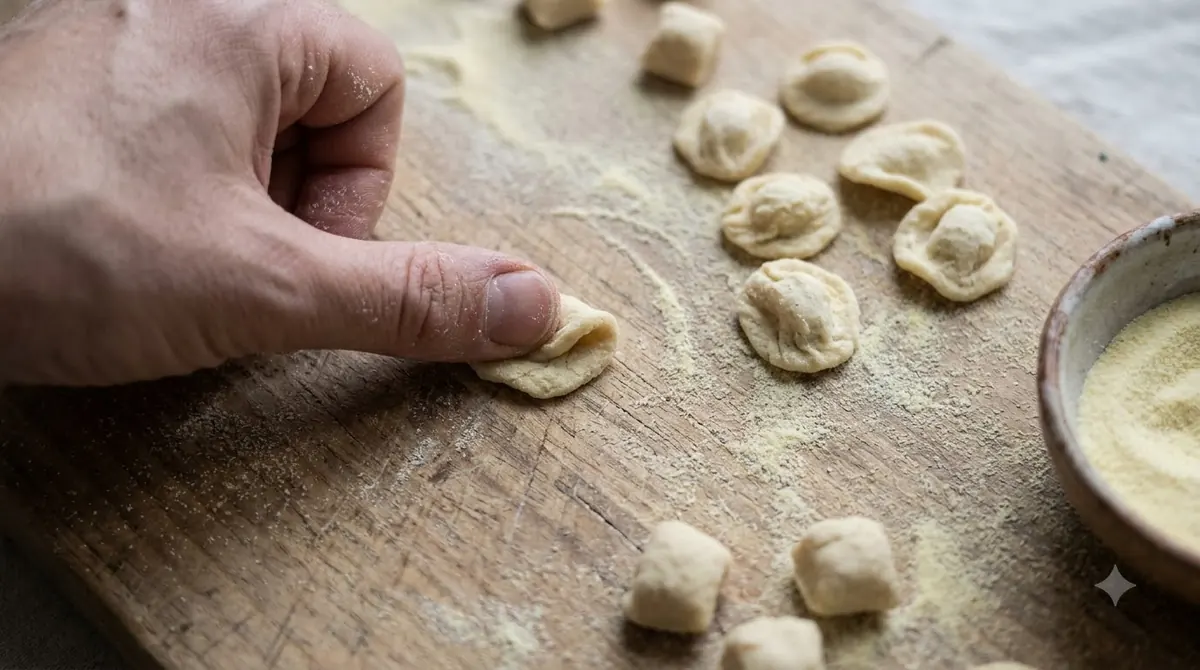

Here is how to make strozzapreti: mix flour with water, knead, rest the dough for about 30 minutes, roll it to about 1.5 mm, cut strips and twist each piece between your palms. The result is a short, hand-twisted pasta with an irregular shape, most closely tied to Romagna. Recipes differ on flour and eggs, so the method below follows the steps the sources describe rather than one fixed ratio.
What Are Strozzapreti?
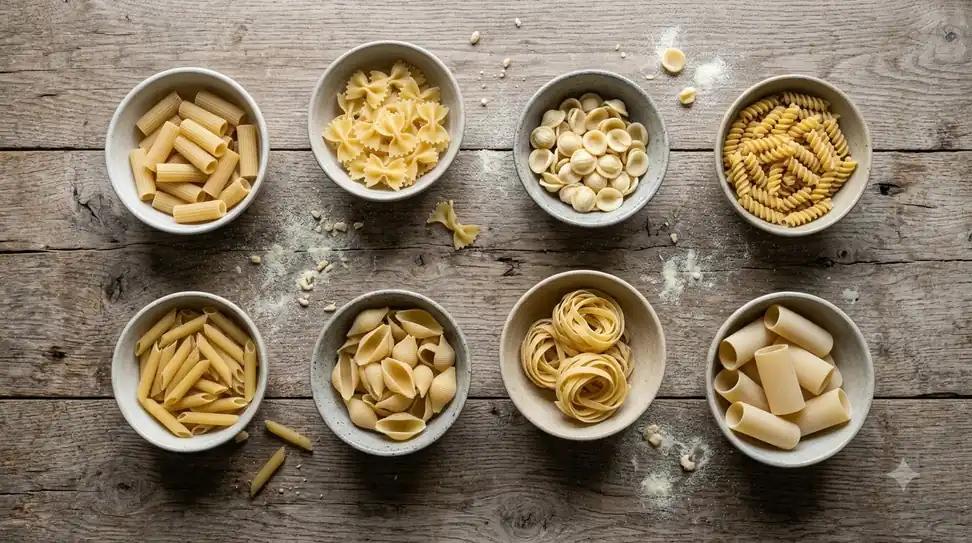
Strozzapreti is a hand-made pasta that is short and twisted, similar to cavatelli but longer. Wikipedia describes the main home of the pasta as Romagna, especially the countryside between Faenza and Lugo.
The name translates roughly to “priest choker” or “priest strangler”. The Wikipedia article on strozzapreti gives several legends behind the name, all tied to anticlerical sentiment in Romagna and Tuscany.
The shape is never perfectly uniform, and The Pasta Project considers that irregularity part of the appeal of homemade strozzapreti.
Dough and Ingredients for Strozzapreti
The basic dough is flour and water, though the sources do not agree on the flour or the egg. The story behind the name is in our strozzapreti pasta guide.
The Pasta Project guide to strozzapreti notes that some makers use soft wheat flour and others durum, and that eggs are not always used in Emilia-Romagna, while other regions may include a little egg. Wikipedia lists the Emilia version with Parmesan and egg whites, so check the recipe you follow.
Knead the dough, cover it, and rest it for “30 minutes or so” before rolling. The Pasta Project gives no flour-to-water ratio, so add the water gradually and stop when the dough holds together and feels smooth.
How to Make Strozzapreti by Hand
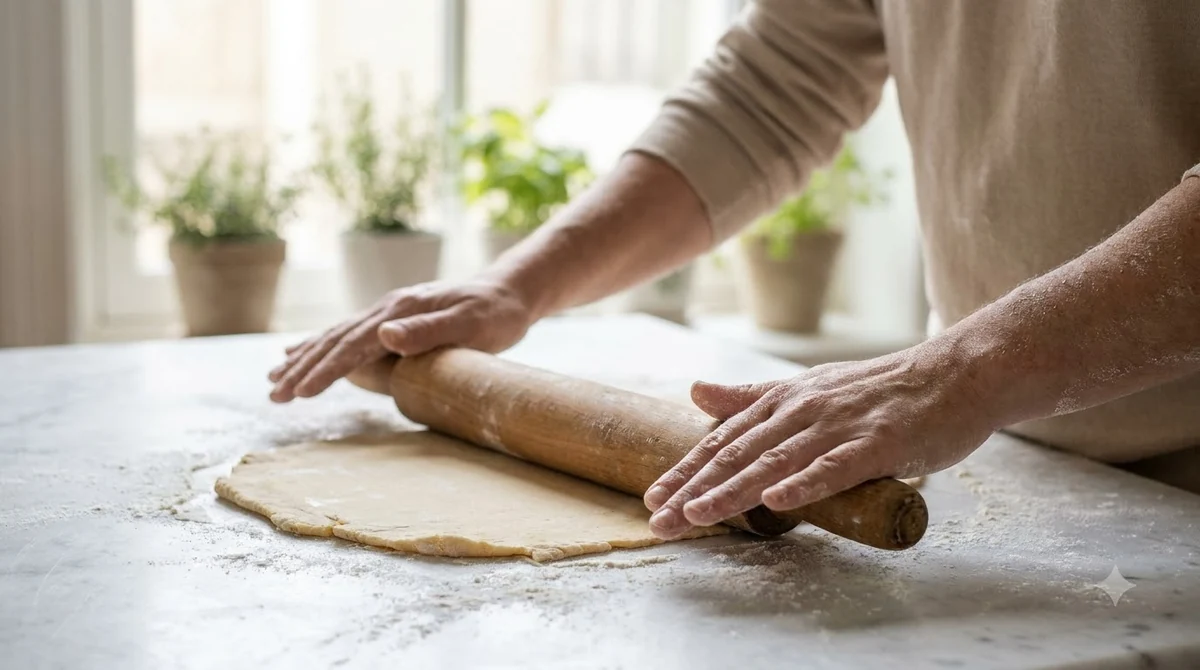
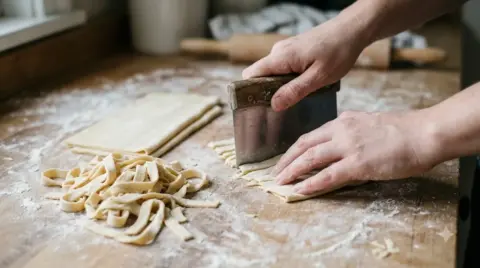
Roll the dough to about 1.5 mm, cut it into strips about 1.25 cm wide, then roll or twist each piece between your palms into the shape. Another dough without eggs is described in flour-only lagane dough.
The Pasta Project describes rolling each strip between the palms or around a stick. Wikipedia describes twisting the pieces and pinching them to about 10 cm, while The Pasta Project aims for pieces about 5 to 6 cm long or a bit longer. The length therefore depends on the recipe you follow.
- Roll the rested dough out to about 1.5 mm thick.
- Cut the sheet into strips about 1.25 cm wide.
- Take one strip, lay it across your palms, and roll or twist it into a short, irregular piece.
- Separate the finished pieces so they do not stick together while they wait to cook.
Wikipedia notes that in some areas each piece is knotted after twisting, which is called strozzapreti col nodo. You can follow that finish if you want a more textured shape.
Cooking and Serving Strozzapreti
Cook the pieces in boiling water until they are tender, and taste one to check before you drain them. Neither source gives a cooking time, so the test is the bite, not the clock. A related hand-rolled shape appears in rolling pici by hand.
Because each piece is a different size and thickness, cook them together but expect some to finish before others. Pull a test piece from the pot to check the centre of a thicker one before you drain the whole batch.
Wikipedia also lists gnocchi versions that share the name in Trentino, Milan, Naples, Salento, Calabria and Corsica. Those are different dishes, so do not use a gnocchi recipe to judge the pasta cooking time.
Common Mistakes When Making Strozzapreti
Most problems come from rolling too thick, skipping the rest, or trying to make the pieces too uniform.
The recipe sets a target of about 1.5 mm. A sheet much thicker than that gives a heavier piece that is harder to twist, so roll to the target and check the sheet as you go.
Trying for perfect uniformity works against the shape. Because the pieces are meant to be irregular, focus on an even thickness and a steady width rather than identical lengths.
Why the Twisted Shape Matters for Sauce
The irregular twist gives the sauce more surface to cling to. Neither source compares sauces directly, so treat this as a cooking choice rather than a tested rule.
Short, twisted shapes suit a chunky ragù or a simple tomato sauce with small pieces of vegetable, because the pieces trap the sauce in their folds. A thin, runny sauce slides off a smooth surface, so keep the sauce thick enough to coat the pasta.
Toss the cooked pieces in the pan with a splash of the cooking water so the sauce coats each twist evenly, rather than pooling at the bottom of the bowl.
Dough Rest and Batch Size
The Pasta Project asks for a covered rest of about 30 minutes. That lets the gluten relax, so the sheet rolls out without snapping back. Wrap the dough so the surface does not dry out while it waits.
Work in batches. Roll only as much dough as you can cut and shape in one session, because strips left to sit on the counter can dry at the edges and crack when you twist them.
Keep the shaped pieces separated on a lightly floured board or tray until you cook them, which matches the separation step in the method.
Frequently Asked Questions
What does strozzapreti mean?
The name translates roughly to “priest choker” or “priest strangler”. Wikipedia gives several legends behind it, all tied to anticlerical sentiment.
Is strozzapreti made with egg?
Not always. The Pasta Project says eggs are not always used in Emilia-Romagna and that other regions may include a little egg, while Wikipedia lists an egg version from Emilia. Check the recipe you follow.
Do you need a pasta machine for strozzapreti?
No. Both sources describe rolling the dough and shaping each piece by hand, and neither says a machine is needed.
How long should strozzapreti dough rest?
About 30 minutes, covered, at room temperature, according to The Pasta Project. Rest it before rolling so the sheet stays easier to control.
Strozzapreti rewards a light hand. Rest the dough, keep the sheet near 1.5 mm, and let the twist be a little uneven, since that is what makes the shape look homemade.
 5 min readLearnHomemade Strozzapreti: 3 Easy Steps and SaucesUpdated Nov 13, 2026
 6 min readLearnHow to Make Trofie: Hand-Rolled Dough and Shaping StepsUpdated Nov 13, 2026
 6 min readLearnHomemade Pici: Hand-Rolled Tuscan Strands and Dough StepsUpdated Nov 13, 2026
 8 min readLearnHow to Stretch Pizza Dough by Hand: Step-by-Step GuideUpdated Nov 10, 2026
 6 min readLearnBest Sauce for Strozzapreti: Meat Ragù, Tomato and PestoUpdated Nov 13, 2026
 8 min readLearnStrozzapreti Pasta: What It Is, How to Shape It and What to Serve With ItUpdated Nov 10, 2026