
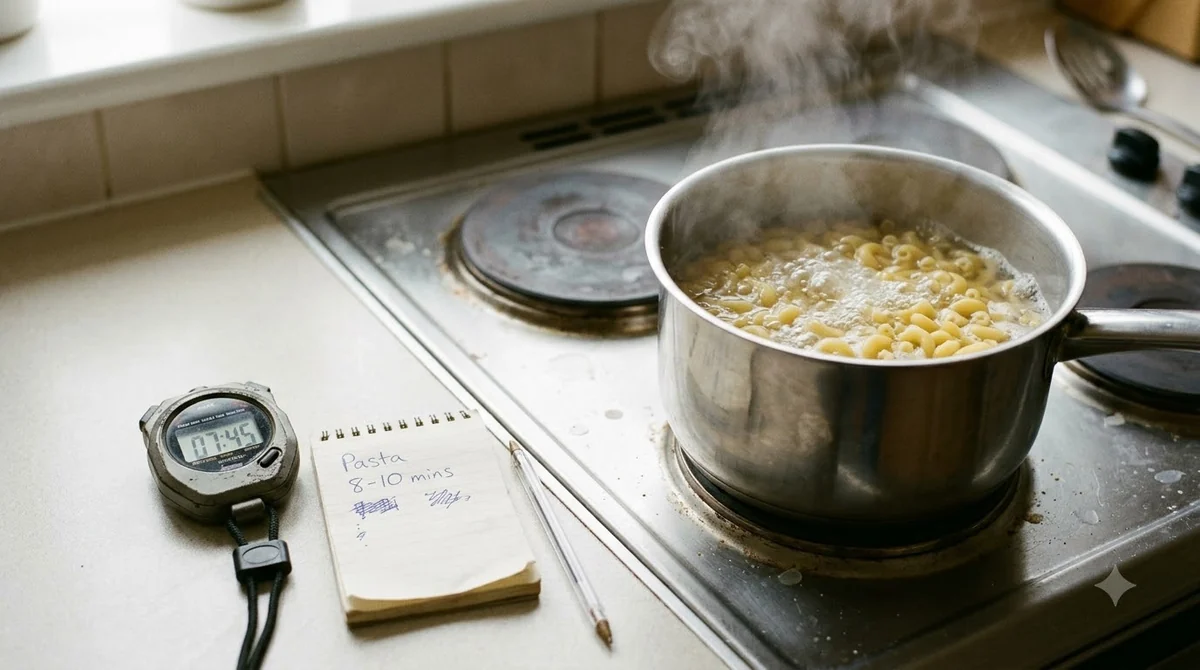

To boil spaghetti, cook it in a large pot of salted boiling water for the time printed on the package, then start testing a strand a minute or two before that time. Dried spaghetti is usually cooked to al dente, which means firm to the bite. The exact minutes depend on the brand and the thickness of the strands, so the package is the best starting point for how long to boil spaghetti.
Timing: how long to boil spaghetti
The short answer is to follow the cooking time on the box and check early. Some brands print a range, and the lower end is the safer place to start when you are learning how long to boil spaghetti in your own pot.
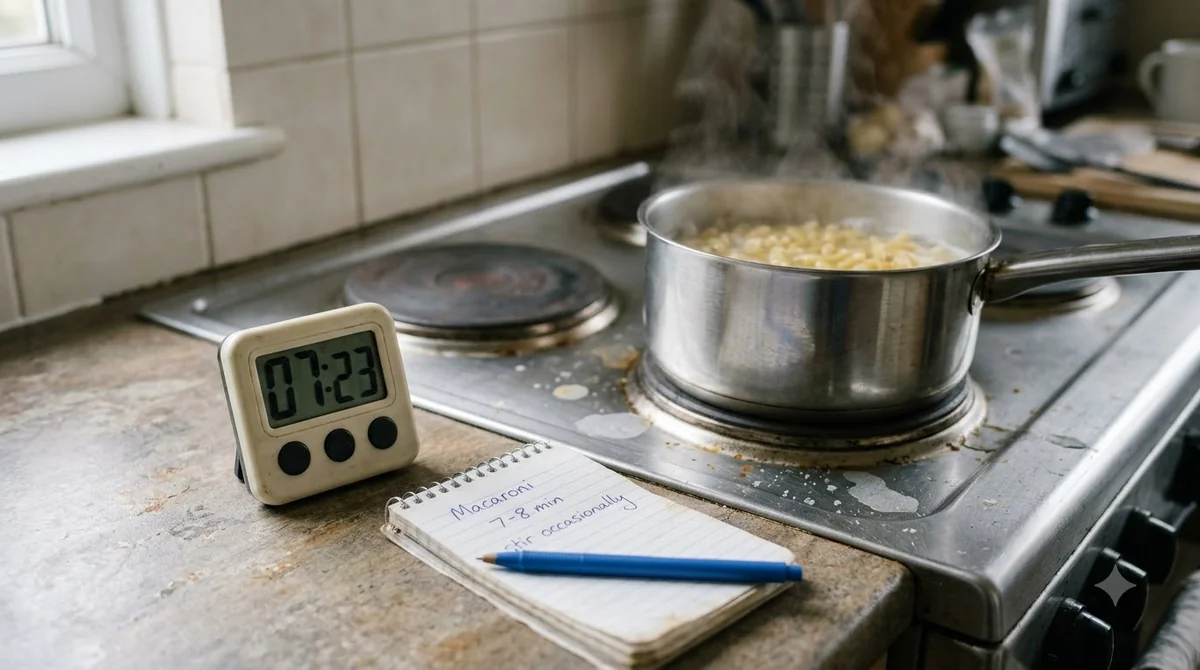
Package times are written for pasta cooked in plenty of boiling water. If you lower the heat to a gentle boil, or add a large batch of cold pasta, the water temperature drops and the cooking time gets longer. Keep the water at a rolling boil after the spaghetti goes in, and start your timer when the water returns to a boil.
Spaghetti is usually sold in lengths of about 25 to 30 cm, or 10 to 12 inches, and that length is the same across most brands. Length does not change cooking time much. The thickness of the strands matters more.
- Read the cooking time on the package and set a timer for the low end of the range.
- Lift one strand out with tongs about a minute before the timer ends.
- Taste it. If it is firm in the center and tender at the edge, it is ready.
- If it still tastes chalky in the center, cook it for another 30 to 60 seconds and test again.
How thickness changes the time
Not all long pasta is the same. Spaghettoni is thicker and takes longer to cook than regular spaghetti, while spaghettini is thinner and needs less time. Capellini is very thin and can overcook in a minute or two if you are not watching the pot. When you switch to a different thickness, treat the package time as a new starting point and test early. Short tubes run on a different clock, so see how long to boil penne if you are cooking tubes instead.

Water and salt when you boil spaghetti
Use a large pot with enough water for the spaghetti to move freely, and salt the water before the pasta goes in, because knowing how long to boil spaghetti only helps if the water is ready. Most dried Italian pasta is made without salt, so the cooking water is where the seasoning comes from.
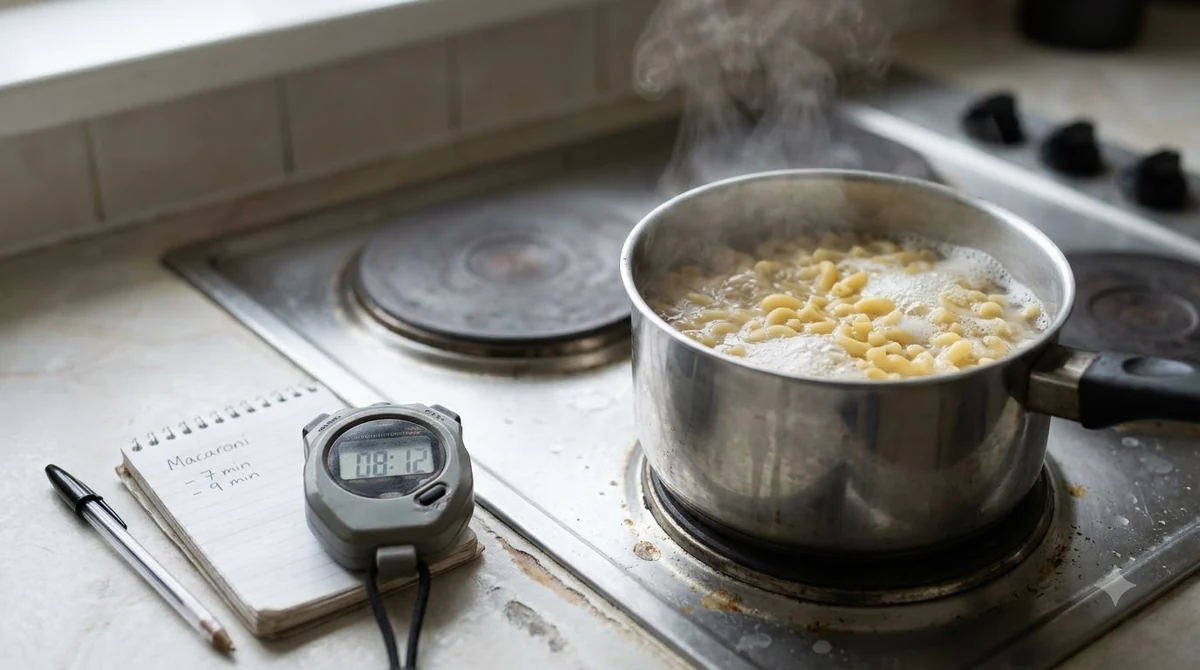
A common rule of thumb is about 0.5 kg, or 1 lb, of dried pasta for up to four servings, according to the general pasta reference on Wikipedia. Adding salt to the water is standard practice, and the amount of salt does not change how fast the pasta cooks. Salt the water for flavor, not for speed.
Our guide on whether to salt pasta water goes deeper. For amounts, Taste of Home’s pasta guide recommends 1 gallon of water and 1½ tablespoons of kosher salt per pound of dried pasta, and notes that some Italian chefs suggest 2 to 3 tablespoons in a large pot. It also suggests checking the noodles 1 to 2 minutes before the recommended time is up.
- Bring a large pot of water to a rolling boil.
- Add salt to the water and stir until it dissolves.
- Add the spaghetti all at once and stir in the first minute so the strands do not stick together.
- Keep the water at a boil and stir occasionally until the pasta is done.
What spaghetti is and how it is made
Spaghetti is a long, thin pasta made from durum-wheat semolina and water. The standard Italian version uses semolina, and it is usually white because refined flour is used, although whole wheat versions also exist. For a broader guide to the shape, see spaghetti pasta.
Spaghetti has a long history and spread through Sicily and southern Italy over several centuries. The modern shape of the strand, about 25 to 30 cm long, became common in the second half of the twentieth century, according to the Wikipedia entry on spaghetti. Knowing the ingredients helps explain why dried spaghetti is fairly stable in the pot: it is a firm dough that needs time to hydrate and soften through the center.
The main ingredient is durum wheat semolina. According to the Wikipedia entry on semolina, semolina is a coarse flour traditionally made from durum wheat, and its high protein and gluten content make it especially suitable for pasta. That structure is why spaghetti holds its shape in boiling water, but it also means the center stays firmer longer than a soft egg noodle, so the taste test matters before you drain the pot.
Test for doneness when you boil spaghetti
Al dente means cooked through but still firm when you bite it. The term comes from Italian and describes the ideal texture for most pasta dishes, according to the Wikipedia entry on al dente.
When you decide how long to boil spaghetti, the best test is a taste, not a timer. Pull out a strand, let it cool for a second, and bite it. Look for a thin, even color all the way through. A white core means it needs a little more time, while a soft, uniform texture means it is already past al dente. For the same test on other shapes, see how to cook pasta al dente.
- Bite a strand near the end of the package time.
- If it is chalky in the center, cook for another 30 to 60 seconds.
- Drain once the strand is firm but cooked through, and save a cup of the cooking water if you plan to finish the pasta in sauce.
Fresh vs dried spaghetti
How long to boil spaghetti depends partly on whether it is fresh, because fresh spaghetti needs much less time than dried. According to the Wikipedia pasta article, fresh pasta takes about half the time that dried pasta does. Start checking fresh spaghetti well before you would check dried.
| Type | How to time it | Notes |
|---|---|---|
| Dried spaghetti | Package time, test early | Varies by brand and thickness |
| Fresh spaghetti | About half the dried time | Soft, tender texture when done |
| Spaghettini | Less than regular spaghetti | Thinner strands cook faster |
| Spaghettoni | More than regular spaghetti | Thicker strands need more time |
When you work out how long to boil spaghetti of a different type, use the table as a guide, but let your own taste test make the final call. A pot with a lot of pasta, or a pot that drops to a simmer, will change the timing enough to matter.
Common mistakes when boiling spaghetti
Most problems with boiled spaghetti come from timing and water, not from the pasta itself. The most common mistake is to skip the taste test and rely on the box alone, which is how many pots end up soft or chalky in the center.
- Using too little water, which lets the temperature drop and stretches how long to boil spaghetti.
- Adding the pasta before the water is at a full boil.
- Leaving the spaghetti unstirred for the first minute, so the strands stick together.
- Waiting until the package time ends before tasting, when the pasta may already be past al dente.
Keep these in mind next time you work out how long to boil spaghetti. A large pot, a steady boil, and one early taste will do more for your results than any fixed minute count.
Frequently Asked Questions
Should I rinse spaghetti after boiling?
For most sauces, no. Rinsing washes off the surface starch that helps sauce cling to the strands. Rinse only if you are making a cold pasta salad and want to stop the cooking. More detail is in do you rinse pasta after cooking.
Does salt change how long to boil spaghetti?
No. Salt is added for flavor, and the amount of salt does not change cooking speed, so it does not shorten how long to boil spaghetti, according to the Wikipedia pasta article.
How much spaghetti should I cook per person?
About 0.5 kg, or 1 lb, of dried pasta serves up to four people as a main dish, according to the same reference. Adjust for larger appetites or for a side dish, and see how much pasta per person for more on portions.
Can I boil spaghetti ahead of time?
It is best to cook spaghetti close to serving time. If you must wait, drain it, toss it with a little oil, and reheat it briefly in hot sauce or water.
Why is my spaghetti sticking together?
Spaghetti sticks most often when the pot is too small or when the strands are not stirred in the first minute. Use a large pot, add the pasta all at once, and stir early.
Knowing how long to boil spaghetti comes down to three steps: follow the package time, start testing early, and bite a strand before you drain. Keep the water at a boil, salt it generously, and remember that thinner or fresh pasta will be ready sooner.
 7 min readLearnHow Long to Boil Penne: Package Timing, Water and DonenessUpdated Nov 10, 2026
 8 min readLearnHow to Dry Fresh Pasta at Home: Timing, Storage and TipsUpdated Nov 10, 2026
 8 min readLearnPizza Dough with 00 Flour: Recipe, Timing and TipsUpdated Nov 11, 2026
 9 min readLearnHow to Cook Orzo: Simple Boil and Skillet MethodsUpdated Nov 10, 2026
 5 min readLearnPizza Oven Chicken Wings: Temperature, Time and DonenessUpdated Nov 13, 2026
 9 min readLearnShould You Salt Pasta Water? Yes, Here Is How MuchUpdated Nov 10, 2026