
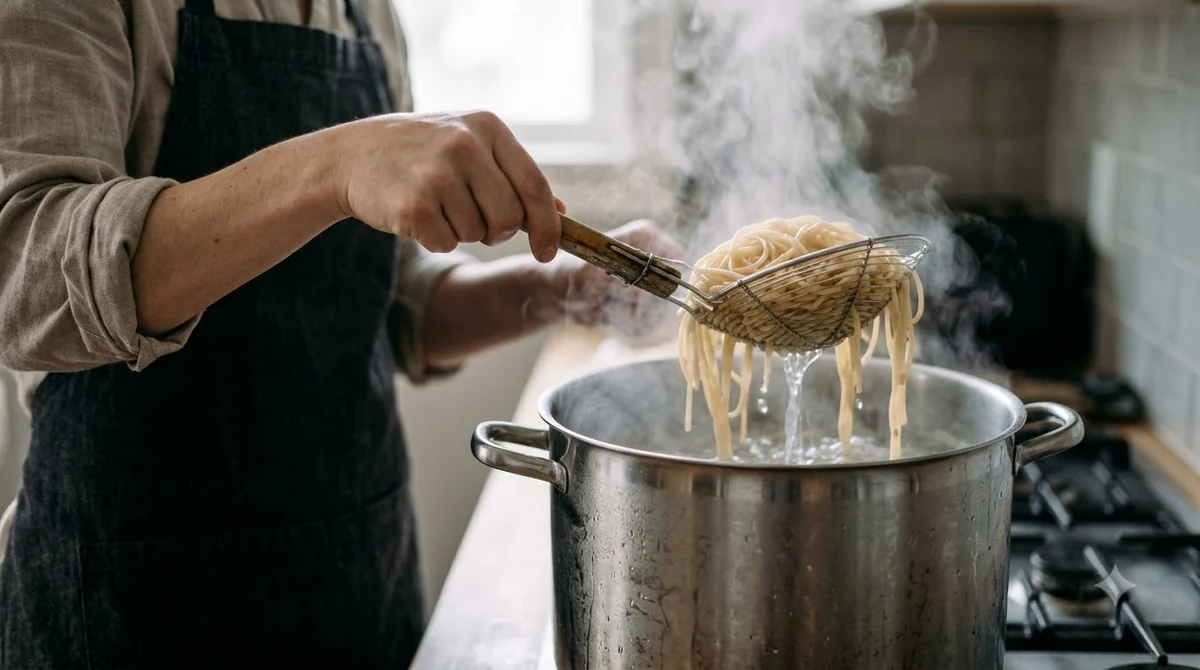

For most home cooks, the answer to should you salt pasta water is yes, since the noodles absorb some of that salt as they cook. America’s Test Kitchen recommends about 1 tablespoon of table salt for every gallon of water.
Salting the water seasons the pasta itself, not the sauce, so it matters most for plain noodles. Should you salt pasta water when the sauce is already salty, such as one with cured meat or aged cheese? Often not, and you can reasonably skip it.
Sodium needs vary from person to person, so if you manage blood pressure, follow your doctor’s guidance on salt intake.
Should You Salt Pasta Water? Why Most Cooks Do
Salting the water seasons the noodle, because pasta absorbs about one-quarter teaspoon of sodium per pound while it cooks.
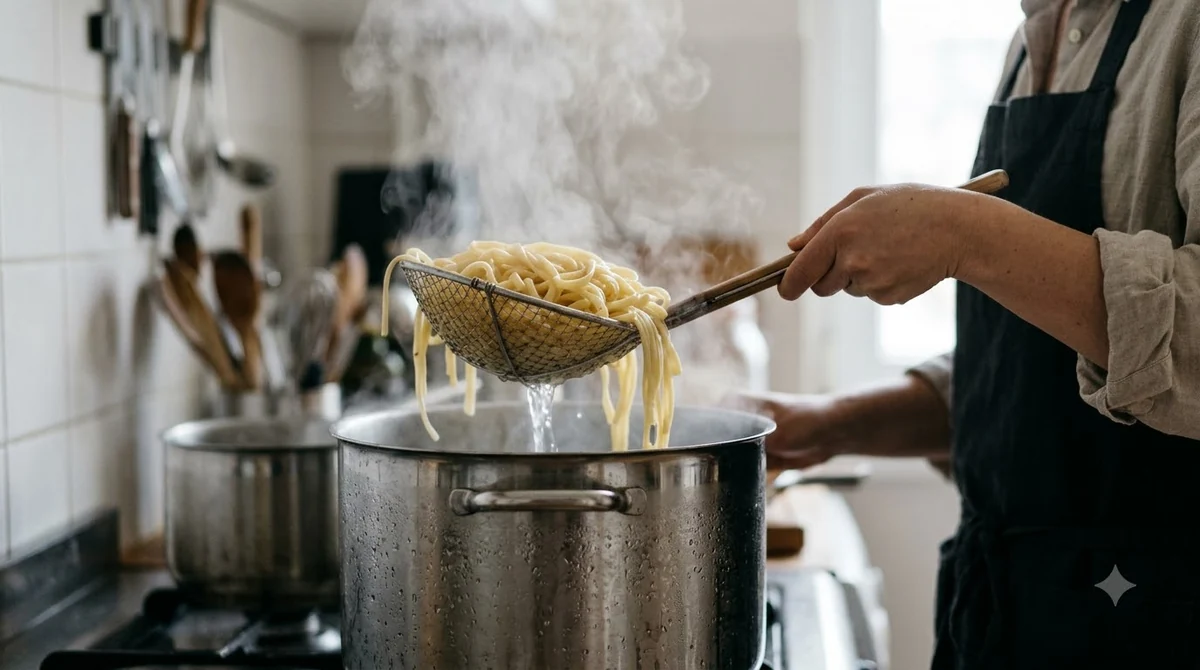
Plain noodles tossed with only butter or oil have nothing else to carry the seasoning, so the water does most of the work. Should you salt pasta water for those dishes? Yes, because the noodles are the only element that can carry seasoning. Dishes with a strong sauce need less help from the pot.
According to America’s Test Kitchen, the same ratio applies “no matter what size or shape the pasta is,” so long penne and thin spaghetti get the same amount of salt per pound. The noodle takes in only a small share of the sodium dissolved in the water, which is why the water has to taste properly salted before the pasta goes in.
The University of Illinois Extension describes salt as a flavor enhancer that makes pasta taste better for many people. So when you ask should you salt pasta water, the real question is whether the noodles need seasoning on their own.
How Much Salt to Add per Pot of Pasta Water
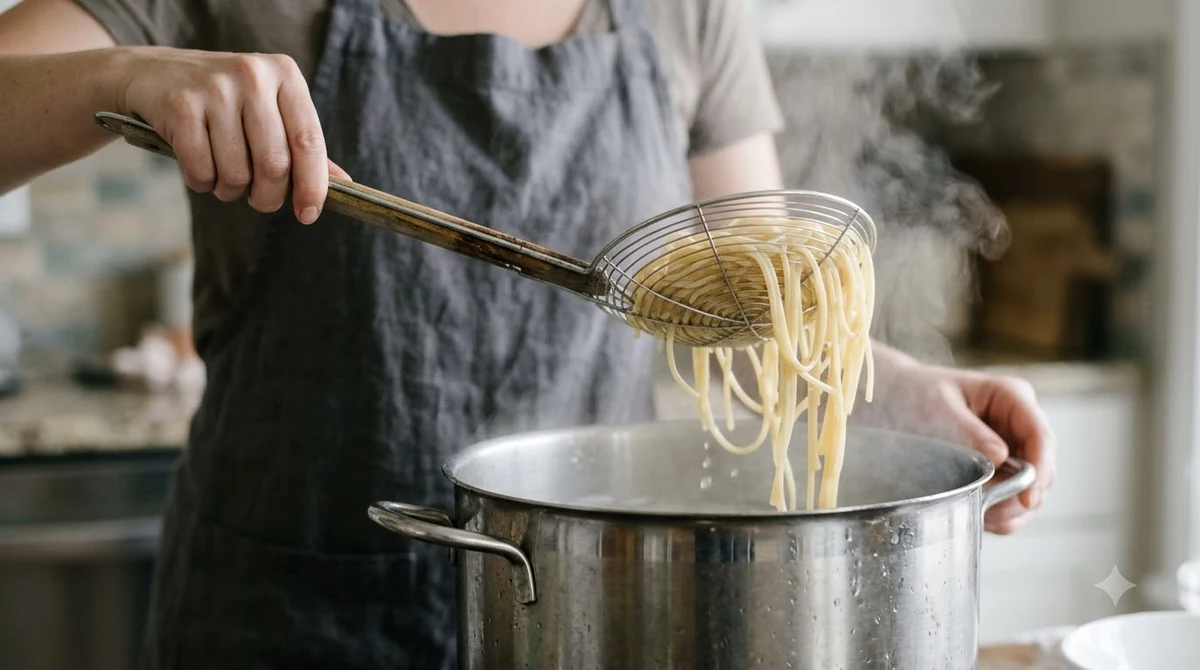
For 4 quarts (1 gallon) of water and about 1 pound of pasta, use 1 tablespoon of table salt. The exact amount is the part people most often get wrong when they ask should you salt pasta water. Pasta cooked in a larger pasta pot needs a proportional amount, so scale the salt with the water.
| Water | Pasta | Table salt | Source |
|---|---|---|---|
| 4 quarts (1 gallon) | About 1 pound | 1 tablespoon | America’s Test Kitchen recommendation |
| 6 quarts | 1 pound spaghetti | 2 tablespoons | American College of Culinary Medicine test (reference method) |
Sea salt, coarse salt, and table salt all work, according to America’s Test Kitchen. If you use kosher salt, add a little more than the recipe calls for, because kosher salt has larger granules than table salt. Measuring by volume is less exact, so taste the water before adding the pasta. Knowing the right ratio is only half of deciding should you salt pasta water; the other half is measuring it consistently.
America’s Test Kitchen quotes Cook’s Illustrated Senior Editor Steve Dunn, who warns that going above 1 tablespoon can make the pasta taste salty. Stay near that amount and adjust the sauce rather than the pot.

When Should You Salt Pasta Water? After It Boils
Add the salt after the water reaches a full boil and before the pasta goes in. The timing matters for how quickly the salt disperses through the water. Oil is a separate question, answered in do you put oil in pasta water.
- Bring the water to a full, rolling boil in a large pot.
- Stir in the measured salt until it dissolves.
- Add the pasta only after the salt is fully dissolved.
America’s Test Kitchen says adding salt after the boil helps it dissolve faster and protects the pot. The same article does not claim that salt speeds up boiling, which is the next question readers ask. Cooking time depends more on the shape than on salt, so keep a timer running, and see how long to boil spaghetti for a common example.
Does Salt Speed Up Boiling or Stop Boiling Over?
Should you salt pasta water to speed up boiling? No, it does not. Salt does not speed up boiling. It raises the boiling point slightly, about one degree, which means the water takes a bit longer to boil, according to the University of Illinois Extension blog.
Dissolved salt lowers the vapor pressure of water, so the solution has to be heated higher before it boils, as Wikipedia explains for any non-volatile solute. The American College of Culinary Medicine calls the change “not enough to make an appreciable difference” in a normal pot.
If you cook for a crowd and use a very large pot, remember the principle stays the same: you are adding a small, predictable amount of salt to a large volume of water, not changing how the water boils.
Should you salt pasta water to stop boiling over? The idea is also a myth. The same source calls that claim “not chemically possible,” so use a larger pot or lower the heat if the water foams up. Keep a cup of the water aside before draining, because starchy pasta water for sauce carries some of that salt into the dish.
How Much Sodium Ends Up in Your Pasta
For anyone wondering whether should you salt pasta water affects sodium intake, one test by the American College of Culinary Medicine gives a clear answer. In that test, a 140 gram serving cooked with 2 tablespoons of table salt in 6 quarts held about 247 milligrams of sodium. The amount you add to the water changes that number directly.
| Salt used in the pot | Sodium per 140 g serving |
|---|---|
| No salt | Under 5 mg |
| 1 tablespoon (half the reference amount) | About 128 mg |
| 2 tablespoons (reference amount) | About 247 mg |
| 4 tablespoons (double the reference amount) | About 490 mg |
Rinsing the cooked pasta cut its sodium by about 34% in the same test. If you are asking should you salt pasta water because you watch sodium, rinsing is one lever, and a smaller pot salt is another. Rinsing also removes surface starch, which can make a sauce slide off the noodles, so rinse only when the pasta will be eaten plain or in a cold dish. Our guide on whether you rinse pasta after cooking explains when that makes sense.
The Illinois Extension notes that the general guideline is less than 1,500 milligrams of sodium per day for more than half the population, while the average American eats about 3,400 milligrams. Pasta is one source among many, so your full day of meals matters more than any single pot. Anyone deciding should you salt pasta water with sodium limits in mind can cut the pot salt and rely on the sauce.
When You Can Skip Salting the Water
Skipping it makes sense when the sauce is already salty, because the American College of Culinary Medicine advises salting the sauce, not the pasta. Common situations where skipping makes sense include:
- Your sauce includes salty ingredients such as cured meat, anchovies, or aged cheese.
- You are cooking for someone who has been asked to limit sodium.
- You are boiling dried pasta and serving it with a finished, well-seasoned sauce.
The college’s statement is direct: “it’s not necessary to add salt to the water in which you cook your pasta.” Illinois Extension agrees that salt is unnecessary for boiling dried pasta, though many people prefer the flavor it adds. Plain noodles tossed only with butter or oil are the case where salted water does the most work.
Common Mistakes When Salting Pasta Water
Most problems with should you salt pasta water come from a few predictable errors. Each one is easy to avoid once you know the numbers from the sections above.
- Salting too little, so plain noodles taste flat.
- Using more than 1 tablespoon for every 4 quarts, which America’s Test Kitchen says can make pasta taste salty.
- Measuring kosher salt the same way as table salt, even though its granules are larger.
- Adding salt before the water boils, when America’s Test Kitchen says adding it after the boil dissolves it faster.
- Assuming salt will make the water boil faster, which it does not.
Frequently Asked Questions
Can kosher salt replace table salt in pasta water?
Yes, but add a little more than the recipe calls for, because kosher salt has larger granules than table salt, according to America’s Test Kitchen. Taste the water before adding the pasta so you can adjust. The same rule answers should you salt pasta water with kosher salt in any pot.
Will salted pasta water make the pasta taste salty?
It can, which is why the amount matters more than the decision itself. America’s Test Kitchen warns that more than 1 tablespoon of table salt for 4 quarts of water can make pasta taste salty. Start with the recommended amount, then season the sauce separately so you control the final taste.
Does rinsing pasta remove the sodium?
Rinsing cooked pasta cut its sodium by about 34% in one American College of Culinary Medicine test. Rinsing also removes surface starch that helps sauces cling, so skip it when you plan to serve the pasta with sauce.
How much sodium per day is recommended?
The Illinois Extension cites less than 1,500 milligrams per day for more than half of the population, while the average American consumes about 3,400 milligrams. Ask your doctor for a daily target that fits your health needs.
Should you salt pasta water if the sauce is already salty?
No. The American College of Culinary Medicine says the salt belongs in the sauce when the sauce is already seasoned. Taste the sauce first, then decide whether the water needs any salt at all.
Should you salt pasta water? Yes when plain noodles need seasoning, use about 1 tablespoon per gallon, and taste the sauce before adding more. If your sauce is already salty or you are watching sodium, skip the pot salt and keep the seasoning in the sauce instead.
 8 min readLearnCan You Freeze Pizza Dough? Yes, Here Is How to Do It RightUpdated Nov 6, 2026
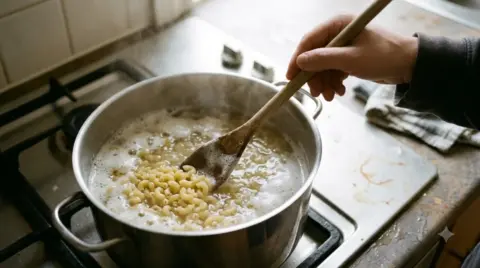 9 min readLearnDo You Put Oil in Pasta Water? No, and Here Is WhyUpdated Nov 10, 2026
 8 min readLearnHow Much Salt in Pizza Dough? A Simple GuideUpdated Nov 10, 2026
 8 min readLearnBiga vs Poolish: Which Pizza Pre-Ferment Should You Use?Updated Nov 11, 2026
 9 min readLearnStarchy Pasta Water for Sauce: What It Does and How to Use ItUpdated Nov 10, 2026
 6 min readLearnEggless Pasta Dough: Semolina, Water and Resting TimeUpdated Nov 13, 2026