
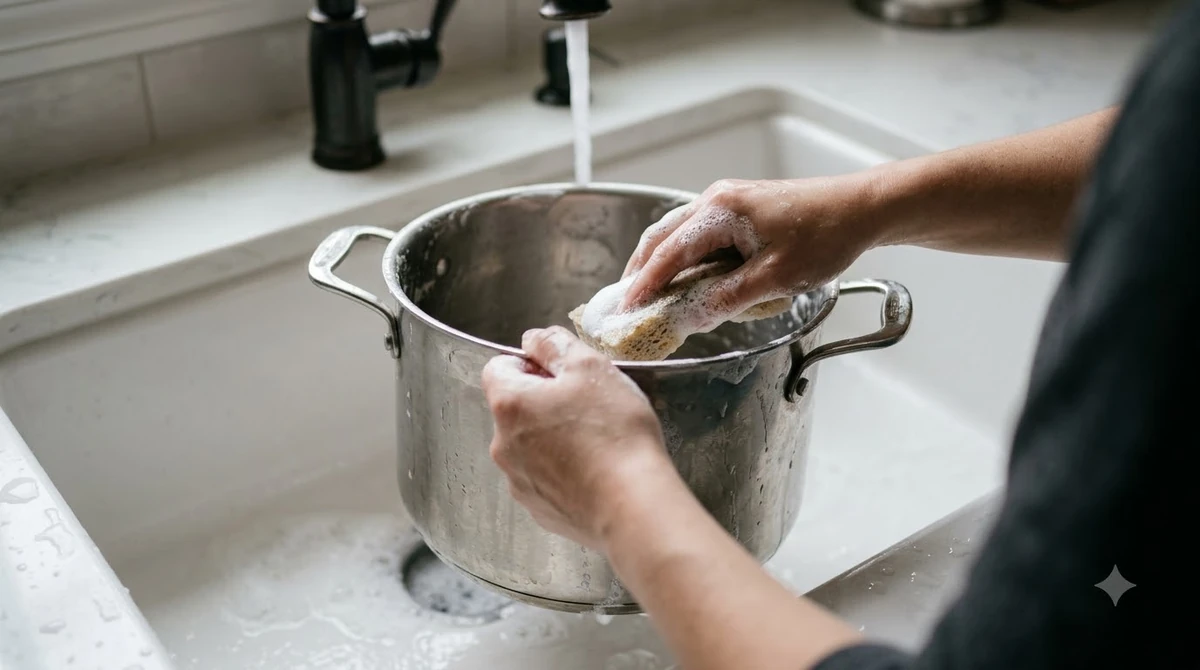

How to clean a pasta pot starts with letting it cool, then washing it with warm soapy water and a sponge. Stuck-on starch usually needs a baking soda paste or a nonabrasive cleanser, not steel wool. Most pots need only the first step.
This page explains how to clean a pasta pot with general steps that work on most cooking pots. Stainless steel, nonstick and enamel finishes need slightly different care, so check the maker’s guide if your pot has a special coating. If you are shopping for a new one, see our pasta pot buying guide and how to choose a pasta pot size.
How to Clean a Pasta Pot in Five Steps
Knowing how to clean a pasta pot takes five steps: let it cool, wash it with warm soapy water, then deal with stuck spots before drying. Cooling comes first because cold water on a hot pan can warp or crack the metal.
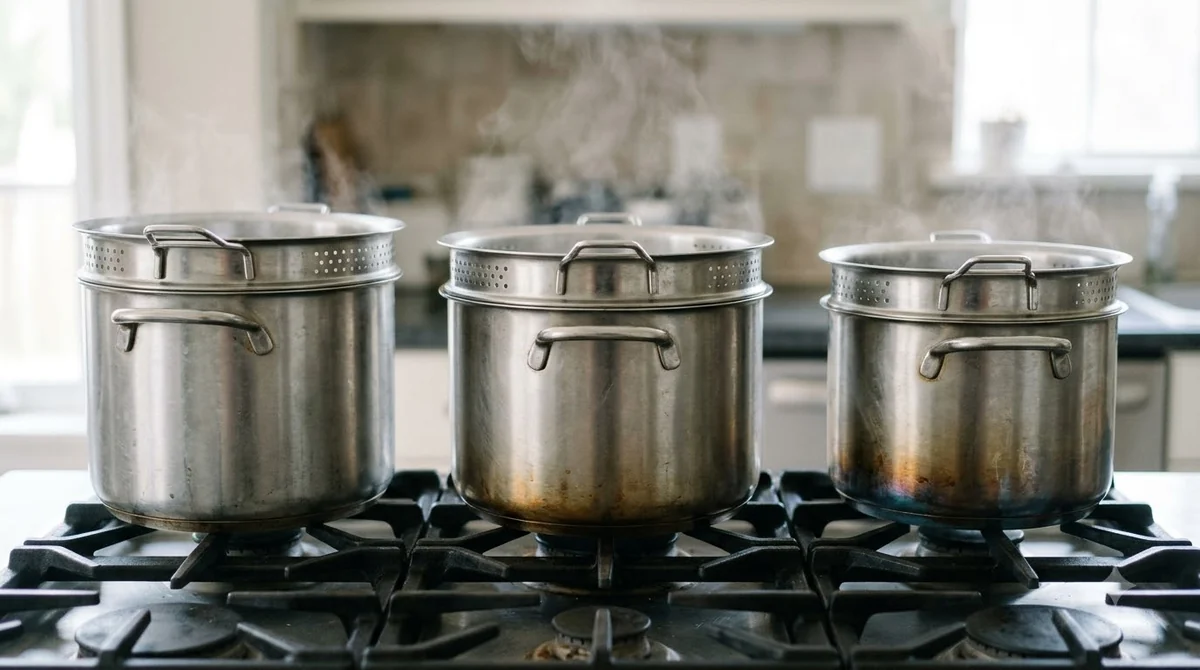
- Let the pot cool completely before you add any water.
- Pour off the cooking water and scrape out loose pasta with a wooden spoon or silicone spatula.
- Wash the inside and outside with warm water, dish soap and a soft sponge. This handles most daily cleaning.
- For stuck-on bits, use a nonabrasive, non-chlorine cleanser or the baking soda method described below.
- Rinse, dry the pot fully and check the lid and handles for grease.
The steps above show how to clean a pasta pot without damaging the finish. The lid and handles need the same attention, because grease collects in handle joints and around rivets. A quick wipe with soapy water usually removes it.
Rinse the pot soon after you drain it. Starch that dries on the inside is harder to lift, so a warm rinse right after cooking can save a lot of scrubbing later.
Timing matters most when you learn how to clean a pasta pot quickly. Fill the pot with warm water while it is still warm, and let it sit for a few minutes before you scrub. The soak loosens starch before it hardens, so you use less force and avoid scratches.
Why Pasta Residue Sticks to the Pot
Pasta releases starch into the cooking water, and that starch clings to the metal once the water boils away or the pot sits. Cleaning a pasta pot is mostly about starch, not the oil and grease you find in a skillet.
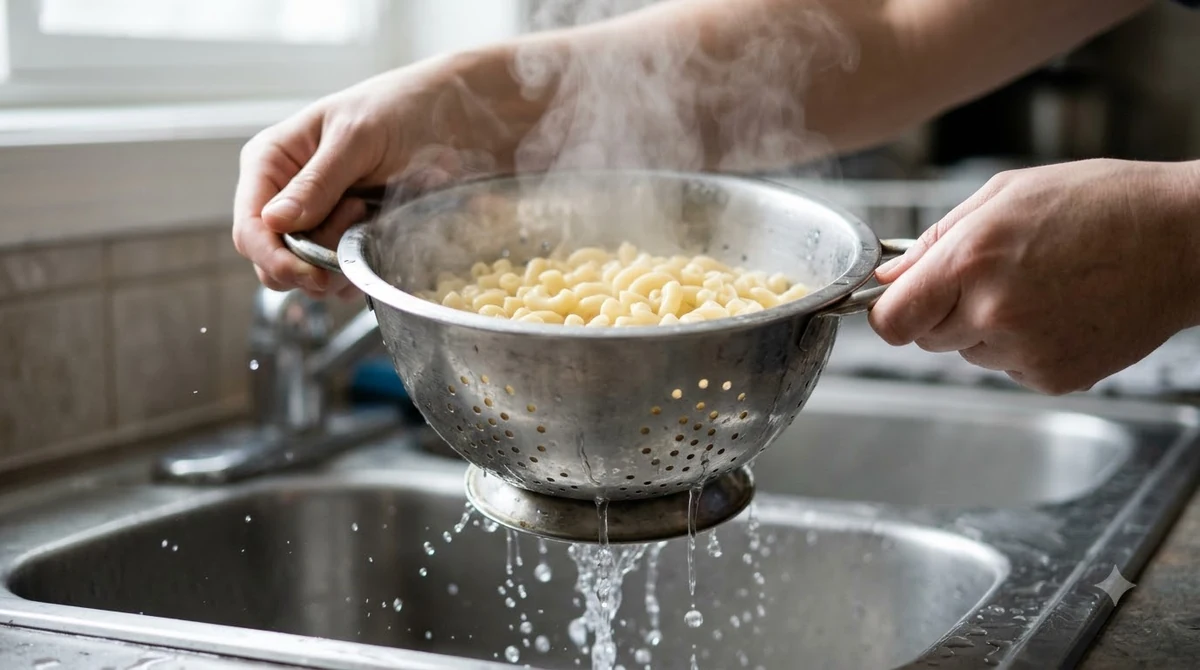
Watch the cooking water as it cools. If it looks cloudy, that cloudiness is starch, and it will leave a film if the pot sits with water in it. Removing the film before it dries makes the next wash much easier.
This article covers how to clean a pasta pot only, not other kitchen tools. Pasta machines have rollers and cutters and need their own steps, such as how to clean an Imperia pasta machine, so do not use the pot routine on them.
Safe Cleaners and Scrubbers
For stainless steel, warm soapy water is enough for daily cleaning, and a nonabrasive, non-chlorine cleanser is the recommended choice for stubborn marks. Steel wool and bleach are the options to skip. Most of the advice on how to clean a pasta pot also applies to other stainless cookware, although the maker’s guide always comes first.
According to All-Clad’s care and use guide, stubborn burnt spots need a nonabrasive, non-chlorine cleanser, and the company advises against steel wool, steel scouring pads and chlorine. The table below sorts common options by what they do well and where they go wrong.
| Cleaner or scrubber | Good for | Avoid when |
|---|---|---|
| Warm soapy water and a sponge | Daily cleaning and light residue | Almost never a problem |
| Soft sponge or nylon scrubber | Gentle scrubbing of cooked-on starch | Heavy scrubbing that needs more force |
| Nonabrasive, non-chlorine cleanser | Stubborn marks and burnt spots on stainless steel | The label lists chlorine |
| Baking soda paste | Stuck-on pasta and light burns | Daily cleaning, where soap is enough |
| Steel wool or steel scouring pads | Nothing on a pasta pot | Always, because they scratch the surface |
| Chlorine bleach or oven cleaner | Nothing on a pasta pot | Always, because they can wear the coating and cause pitting |
Read the label before you buy any cleaner, and treat the maker’s care page as the final word for your pot. A pot that is only lightly soiled rarely needs anything beyond soap and a sponge.
Cleaning Burnt-On Pasta Residue
Mix three parts baking soda with one part water, spread the paste over the burnt spot, and let it sit a few minutes for light marks or a few hours for heavy char. This ratio comes from the Food Republic guide to burnt pans.
- Let the pot cool before you add anything to it.
- Spread the paste thickly over the burnt area and wait. Small stains need a few minutes, and heavy char may need a few hours.
- Or fill the pot with water, bring it to a boil and simmer for a few minutes. The guide gives no exact simmer time, so check the residue as you go.
- Scrub with a sponge or scrape gently with a wooden spatula, then rinse. Repeat if residue remains.
Burnt pasta is the hardest part of how to clean a pasta pot, and patience does more than force. Apply the paste only to the burnt area, not the whole pot, so the rest of the surface keeps its finish. The Food Republic burnt-pan guide also warns against steel wool, which can scratch the surface and lead to rust. Skip the scouring if soaking has not loosened the residue yet.
Cleaning Nonstick and Coated Pots
For nonstick-coated stainless steel, All-Clad says the pot is dishwasher-safe but hand washing keeps the finish looking new, so soap, water and a soft sponge are the safest routine. Check the care guide for enamel or other coatings.
- Hand wash with warm water, dish soap and a soft sponge.
- Skip steel scouring pads and harsh detergents, which All-Clad advises against.
- Dry the pot before you store it so the surface stays bright.
- For enamel or other coatings, the instructions that came with the pot are the best guide, because the specific rules vary by maker.
Coated pots are the easiest to damage with the wrong tools, so the gentlest method is also the right one. Every step of how to clean a pasta pot with a nonstick coating should be gentle, from the sponge to the drying cloth. If your pot came with cleaning instructions, follow those before any method in this guide.

Mistakes That Damage a Pasta Pot
Steel wool, chlorine bleach, oven cleaner and cold water on a hot pan are the habits most likely to scratch, discolor or warp a pot. Each one is easy to avoid once you know it.
- Steel wool or steel scouring pads scratch the surface, and the scratches can later rust.
- Chlorine bleach and oven cleaner can wear the coating and cause pitting.
- Cold water on a hot pan can cause thermal shock, which leads to warping or cracking.
- Leaving cooked pasta to dry in the pot makes the film harder to remove.
Mistakes are the fastest way to ruin a good pot, so avoid them even when you are in a hurry. Knowing what not to use is part of knowing how to clean a pasta pot well. A quick rinse after each use prevents most of these problems. If you learn one habit from this guide, make it rinsing the pot while it is still warm. To use the pot well once it is clean, see how to use a pasta pot with strainer.
Frequently Asked Questions
Can you put a pasta pot in the dishwasher?
All-Clad says its nonstick-coated stainless pots are dishwasher-safe, but it recommends hand washing to keep the finish looking new. For other pots, check the maker’s care guide before using a dishwasher, since the rules vary by finish.
Is vinegar safe to use in a pasta pot?
Vinegar appears often in home-cleaning advice, but the All-Clad care guide used for this article does not list it. If your pot’s guide does not mention vinegar, use warm soapy water or a nonabrasive, non-chlorine cleanser instead. That choice keeps how to clean a pasta pot simple and safe.
Can you use steel wool on a pasta pot?
No. Steel wool is the wrong tool when you are learning how to clean a pasta pot. All-Clad advises against steel wool and steel scouring pads on its stainless cookware, because they can scratch the surface. A soft sponge is the safer choice for stuck-on pasta.
Why should a pasta pot cool before you wash it?
Cold water on a very hot pan can cause thermal shock, which can warp or crack it. All-Clad tells owners to let stainless cookware cool completely before washing, so give the pot time to cool first. It is the simplest rule in how to clean a pasta pot safely.
How do you clean the lid and handles?
When you learn how to clean a pasta pot, wash the lid and handles with the same warm soapy water and sponge you use on the pot body. Grease collects around handle joints, so check those spots and dry the pot fully afterward.
What should you use on pasta that is stuck to the pot?
Start with warm soapy water and a sponge, and let the pot soak if the food is stuck. This is the first thing to try when learning how to clean a pasta pot with stuck food. For stubborn pieces, use the baking soda paste or a nonabrasive, non-chlorine cleanser, as described in the burnt-residue section above.
Learning how to clean a pasta pot takes only a few minutes when you do it soon after draining. Pasta machines need their own routine, so keep this method for the cooking pot. If stains remain after a baking soda soak, check the maker’s care page before you try anything stronger.
 9 min readGear & PantryHow to Use a Pasta Pot with Strainer, Step by StepUpdated Nov 11, 2026
 9 min readGear & PantryHow to Choose a Pasta Pot Size That Fits Your CookingUpdated Nov 11, 2026
 9 min readGear & PantryPasta Pot Buying Guide: How to Choose the Right Size and InsertUpdated Nov 16, 2026
 9 min readGear & PantryHow to Clean Pasta Machine Without Damaging ItUpdated Nov 5, 2026
 8 min readGear & PantryHow to Use a Pizza Oven Brush the Right WayUpdated Nov 11, 2026
 8 min readGear & PantryBest Garlic Press for Even Mincing and Easy CleanupUpdated Nov 12, 2026