
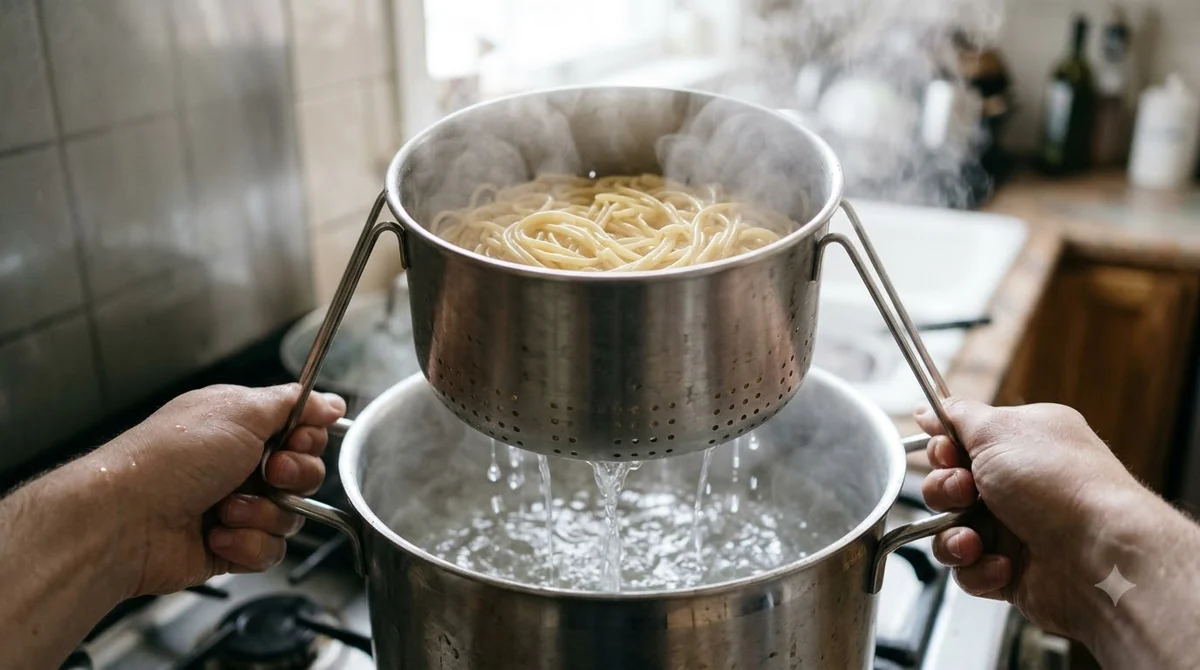

To use a pasta pot with strainer, fill the pot with salted water, bring it to a rolling boil, add the pasta, then lift the insert out to drain. The steps are simple, but the water amount and the insert fit decide how well it works. This guide covers both, with figures from the sources linked below.
Follow the steps in order, then check the insert against your pot before your first meal. A pasta pot with strainer saves a second pot, but only when the insert and the pot sizes match.
What Is a Pasta Pot with Strainer?
A pasta pot with strainer is a tall stockpot with a perforated insert that lifts cooked pasta out of the boiling water.
A stockpot is a large, often deep pot, and it is labeled by volume or diameter rather than by a fixed standard size. The insert is a basket that sits inside the pot, with holes that let water drain away while the pasta stays in the basket.
A colander is a perforated utensil used to strain foods such as pasta. Wikipedia’s colander entry notes that colanders are traditionally made from light metal or thin stainless steel, and that plastic, silicone, ceramic and enamelware are also used. The insert works the same way, but it stays inside the pot so you do not need a second bowl or sink.
A pasta pot with strainer suits both long pasta such as spaghetti and short shapes such as penne, because the basket holds the whole batch in one lift. Cooking a full pound at once is where the basket saves the most effort, since all the pasta comes out together.
How Much Water and Salt Does a Pasta Pot with Strainer Need?
Plan on about 4 to 6 quarts of water per pound of pasta, plus 1 tablespoon of table salt for every 4 quarts, which is the ratio America’s Test Kitchen gives.
| Guideline | Amount | Source |
|---|---|---|
| Water per pound of pasta, Eataly | 4 quarts of boiling water | Tasting Table |
| Water per pound of pasta, Lidia Bastianich | 6 quarts | Tasting Table, citing The New York Times |
| Salt in the water | 1 tablespoon table salt per 4 quarts, for roughly 1 pound | America’s Test Kitchen |
| Pot size for 1 pound of pasta | 6 to 8 quarts, about three-quarters full | Smithsonian Magazine, quoted by Tasting Table |
The sources give different amounts, so treat the table as a range rather than one rule. For a pasta pot with strainer, a 6 to 8 quart pot fits about one pound of pasta with room for the water to move.
Because the water amount depends on the pot as well as the pasta, check that your pot holds the full volume with the insert in place before you start. Measure the water in a jug first, so you know how much your pot holds before the pasta goes in.
Add the salt after the water boils and before the pasta goes in. Salt added to cold water can sink and scratch the pot. Kosher salt has larger granules, so use a bit more than a recipe that calls for table salt.
Step by Step: Cooking Pasta in the Insert
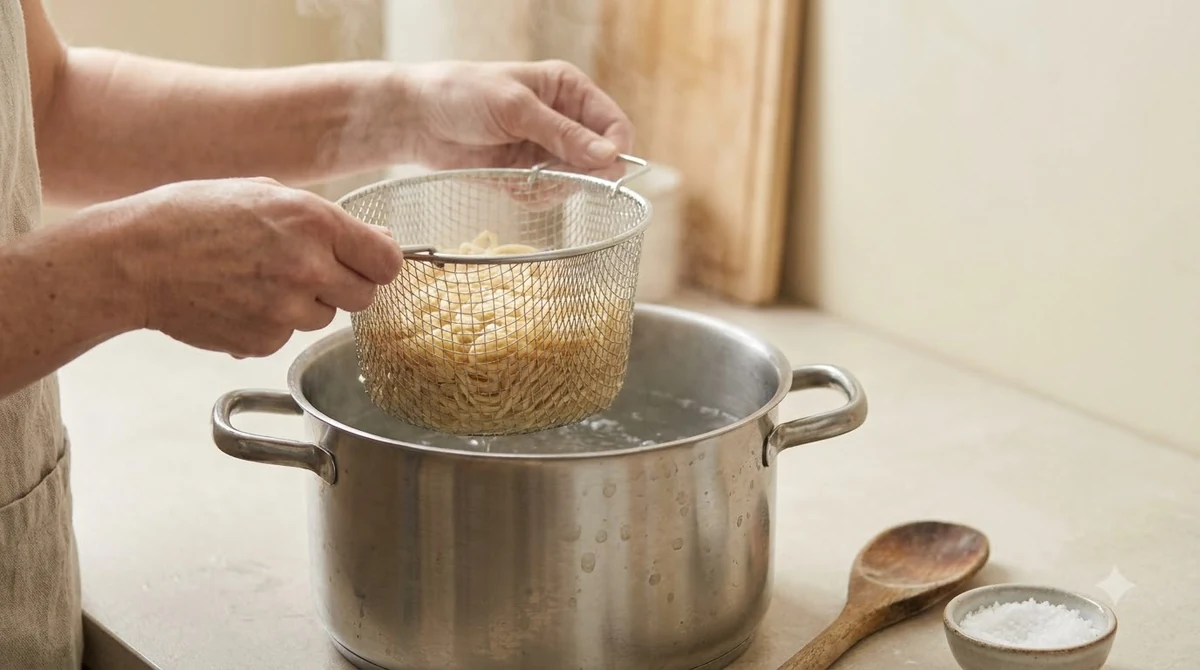
Using a pasta pot with strainer starts with filling the pot and bringing it to a boil, then you salt the water, lower the pasta in the insert and cook it for the time on the package.
- Take the insert out and fill the pot with water, using the amounts in the table above.
- Set the pot on the burner over high heat and wait until the water reaches a rolling boil.
- Add the salt once the water boils, and stir until it dissolves.
- Load the dry pasta into the insert and lower it into the boiling water so the pasta is fully covered.
- Stir once or twice in the first minute so the strands or shapes do not stick together.
- Cook for the time printed on the package, then taste a piece about a minute before that time.
Once the pasta reaches the texture you want, move on to draining. Keep the insert over the pot while you work, so the pasta does not sit on the counter. A pasta pot with strainer keeps the timing simple, because the basket is already in the water and you only need to lift it once.
How to Drain Without Losing the Pasta Water
Lift the insert of your pasta pot with strainer straight up so the pasta water stays in the pot, then let the basket drain over the pot for a few seconds.
Drain over the pot rather than the sink, so the cooking water stays in the pot. Keeping the water in the pot also makes it easy to ladle some into your sauce later, which is a separate topic from draining. Once the basket has stopped dripping, set it on a plate or a heatproof surface, then move the pasta to your serving dish.
Tilting the whole pot to pour off the water is the wrong method for this design, because the insert is built to be lifted out, not poured through.
Steam rises quickly when you lift the insert, so follow these safety points:
- Use both handles and lift straight up, not at an angle.
- Keep your face and hands back from the steam while the basket drains.
- Rest the insert on a heatproof surface or in the sink, not on the counter edge.
Does the Insert Fit Your Pot?
An insert should be narrower and shorter than the pot, and the Made In pasta insert is listed for 6 and 8 quart stock pots with a 10.75 inch total diameter.
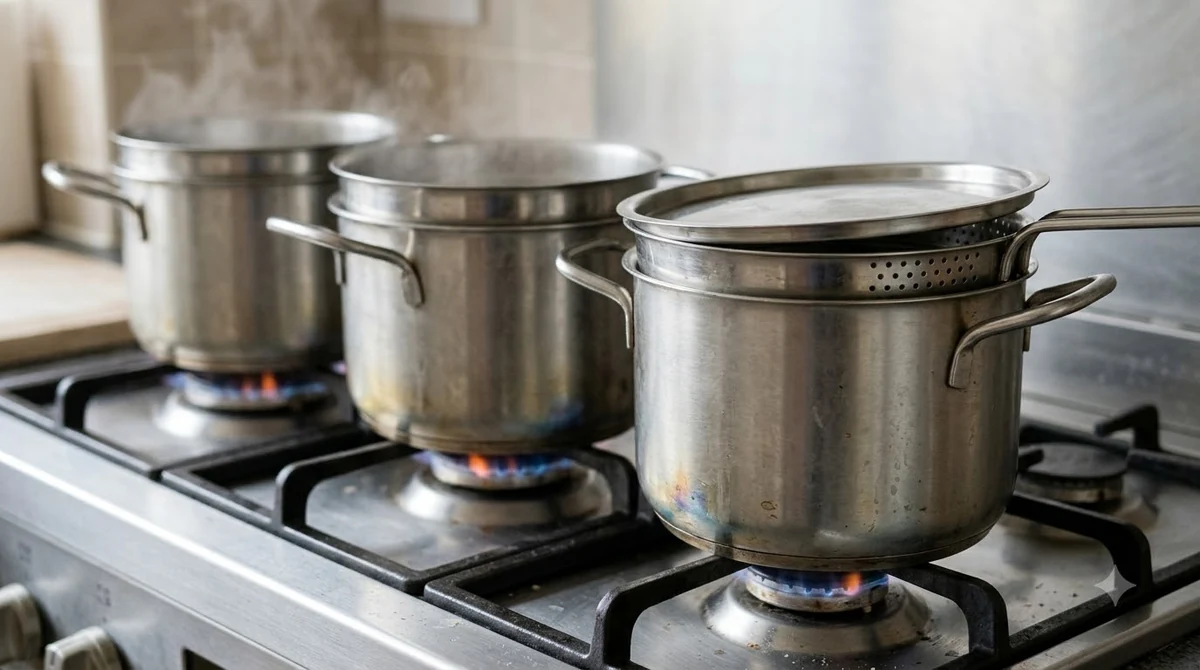
Measure the inside width and depth of your pot before you buy, because a pasta pot with strainer only works well when the insert sits steady inside it. If the basket is loose or sits unevenly, it can tip when you lift it, so test the fit with the empty insert before you fill the pot.
The insert of a pasta pot with strainer also needs room to hang without touching the bottom of the pot.
Here are the numbers to compare. The Made In pasta insert listing gives a total diameter of 10.75 inches, a cooking surface of 7.75 inches and a height of 6.75 inches with handles, at a weight of 1.7 pounds. The listing also gives a length of 14.75 inches with handles, and some owners of older 8 quart pots say the insert is too large for their pot, so a tape measure is worth the minute.
Use this checklist before you buy a pasta pot with strainer:
- Confirm the pot’s capacity matches a size the insert lists, such as 6 or 8 quarts.
- Compare the insert’s total diameter with the pot’s inside width.
- Check that the insert’s height with handles suits the pot’s depth.
Mistakes to Avoid and How to Care for the Insert
The most common mistakes are buying an insert that does not match the pot and assuming it is dishwasher safe without checking the care instructions.
Rinse the insert soon after each use, so cooked starch does not dry on the holes, and keep the pot clean around the basket. Care for a pasta pot with strainer is mostly about the insert, because its holes are where food gets stuck.
The Made In listing describes its premium stainless steel insert as hand wash care, and it does not mention dishwasher safety. Dishwasher safety is not confirmed in the sources used for this guide, so check the manufacturer’s care instructions before you put any insert in the dishwasher.
- Buying an insert without checking the pot’s dimensions first.
- Lifting the basket with one hand, which makes it harder to keep the pasta level.
- Assuming the pot and insert are dishwasher safe without reading the listing.
Frequently Asked Questions
Do all pasta pots come with a strainer insert?
No. Many pots sold as stockpots have no basket, so check the product listing for an insert before you buy. A pasta pot with strainer only works as described when the insert is included or sold to fit your pot.
Can I cook pasta without an insert?
Yes. Cook the pasta in a stockpot, then drain it in a colander set in the sink. A colander is a perforated utensil that strains foods such as pasta, so it does the same job as the insert in a separate piece of equipment (a spaghetti spoon is another way to lift and drain long pasta), while a pasta pot with strainer keeps both in one pot.
How long should I cook pasta in the insert?
Follow the cooking time printed on the package, then taste a piece about a minute before that time. Cooking times differ by shape and brand, so the package time is the best starting point for any pasta pot with strainer.
Should I rinse pasta after draining it?
That depends on the recipe you are following. Many hot pasta recipes tell you to drain and toss the pasta right away, so check the recipe before you rinse. This guide does not give a rinsing rule from a source, so follow your recipe.
Can I use a pasta insert in any stockpot?
Only if it fits. Compare the insert’s listed pot sizes and diameter with your pot. The Made In insert is listed for 6 and 8 quart stock pots, so a pot outside those sizes may not suit it.
Before you buy a pasta pot with strainer, measure your pot and confirm the insert lists your pot size. Once it fits, the steps above cover the whole cook: water, salt, pasta, lift and drain. Keep your hands clear of the steam, and hand wash a premium stainless insert unless the maker says otherwise.
 9 min readGear & PantryHow to Use a Pasta Rolling Pin, Step by StepUpdated Nov 11, 2026
 9 min readGear & PantryHow to Use a Pasta Extruder: Step-by-Step GuideUpdated Nov 11, 2026
 9 min readGear & PantryHow to Choose a Pasta Pot Size That Fits Your CookingUpdated Nov 11, 2026
 9 min readGear & PantryHow to Clean a Pasta Pot the Easy WayUpdated Nov 11, 2026
 9 min readGear & PantryPasta Pot Buying Guide: How to Choose the Right Size and InsertUpdated Nov 16, 2026
 9 min readGear & PantryBest Spider Strainers: Top Picks and How to ChooseUpdated Nov 12, 2026