
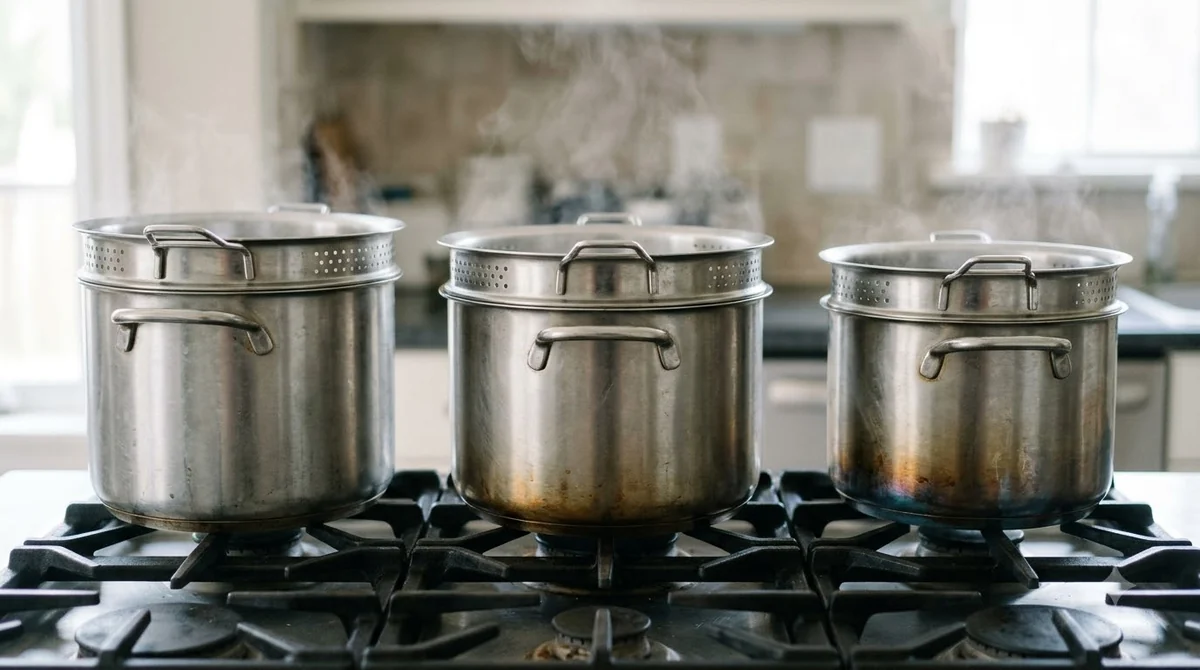

Knowing how to choose a pasta pot size starts with water volume: plan on at least 5 to 6 quarts for every pound of dried pasta. A pot that small leaves little room for the noodles to move, and the cooking water gets crowded with starch. Choose the larger end of the range if you cook for a crowd or long noodles.
What pot size do you need for one pound of pasta?
For one standard 1 lb box of dried pasta, Tasting Table’s guide to pot size advises at least a six-quart pot.
Tasting Table calls not using a big enough pot one of the biggest mistakes people make with pasta, which is why how to choose a pasta pot size is worth getting right. Its guidance is specific: a standard box needs at least six quarts of water. That amount gives the noodles room to spread out as they go into the pot.
In how to choose a pasta pot size, use the box as your starting point, not the amount on your plate. A pot that handles one box is enough for a weeknight dinner for two, and our roundup of the best pasta pots lists options by capacity. If you add a second box or cook for a group, the same pot becomes crowded fast, so move up a size before you start.
How to choose a pasta pot size by quarts per pound
Food Network sets the minimum at 5 quarts for one pound of dried pasta, one quart less than the six-quart figure from Tasting Table. Both numbers work as a floor, so the table below shows how the guidance compares.
| Source | Water for 1 lb dried pasta | What it means |
|---|---|---|
| Tasting Table | At least 6 quarts | Pot size for a standard box |
| Food Network | At least 5 quarts | Minimum for a pot in its review |
| Food Network testing | 4 quarts for most pots, 8 quarts for larger pots | Water used when cooking its test loads |
Food Network tested each pot with one pound of dried pasta and eight ounces of fresh pasta. It used 4 quarts of water for most pots and 8 quarts for the larger ones, especially those with a colander insert. For how to choose a pasta pot size, the gap between 5 and 6 quarts is small, so when sources disagree, the larger pot is the safer choice.
When you plan how to choose a pasta pot size for big batches, scaling the 5-quart floor to two pounds gives 10 quarts, which is more than the 8-quart pots in that review. For a two-pound batch, either choose a bigger pot or cook the pasta in two batches with fresh water each time. Check the package for cooking time, since the pot size does not change how long the pasta needs.
Food Network also suggests two teaspoons of salt for every quart of water. In a 6-quart pot, that comes to about 4 tablespoons, a useful number to know before you measure the salt. Our guide on whether you should salt pasta water adds context.
Why a small pot makes pasta stick
A small pot holds too little water for the starch the pasta releases, so the noodles begin to clump and stick together, a problem we cover in how to keep pasta from sticking. Tasting Table explains that starch concentration becomes too high in a small pot, which is the main reason to size up when you decide how to choose a pasta pot size.
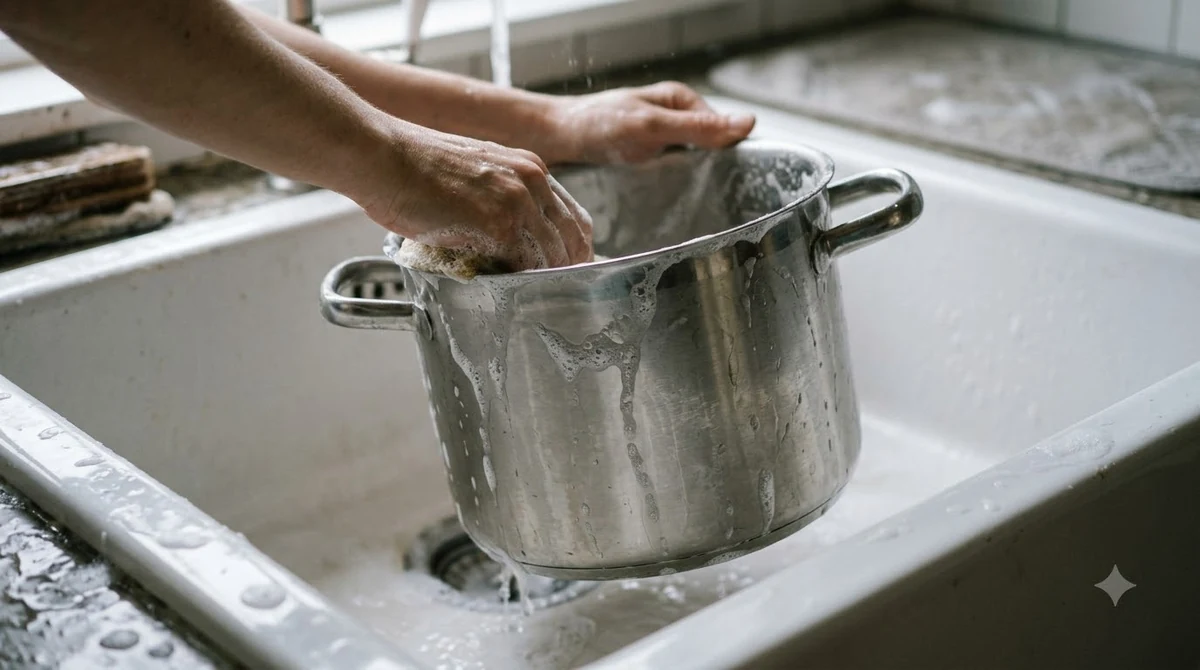
Starch leaves the surface of the noodles as they cook. With less water to spread into, that starch sits on the strands and binds them together. A larger volume of water dilutes it, so each strand stays separate for longer.
Stirring helps too, but it comes second to how to choose a pasta pot size in the first place. Tasting Table recommends continuously stirring the pot as the pasta cooks to prevent clumping. Stirring does not replace the right pot, though, so start with the volume and then stir during the first minutes in the water.
Fill the pot with enough water before you turn on the burner, a habit that goes with how to choose a pasta pot size. Measuring the water first also tells you whether the pot will hold the pasta you plan to cook without spilling when the noodles go in.
Do you need a colander insert or strainer?
A colander insert saves a step at the sink, but it changes how to choose a pasta pot size, because Food Network’s tests used 8 quarts of water for larger pots, especially those with an insert. Plan for the extra volume if you want the insert, or choose a separate strainer and keep the pot smaller. See the best colander for pasta if you go that route.
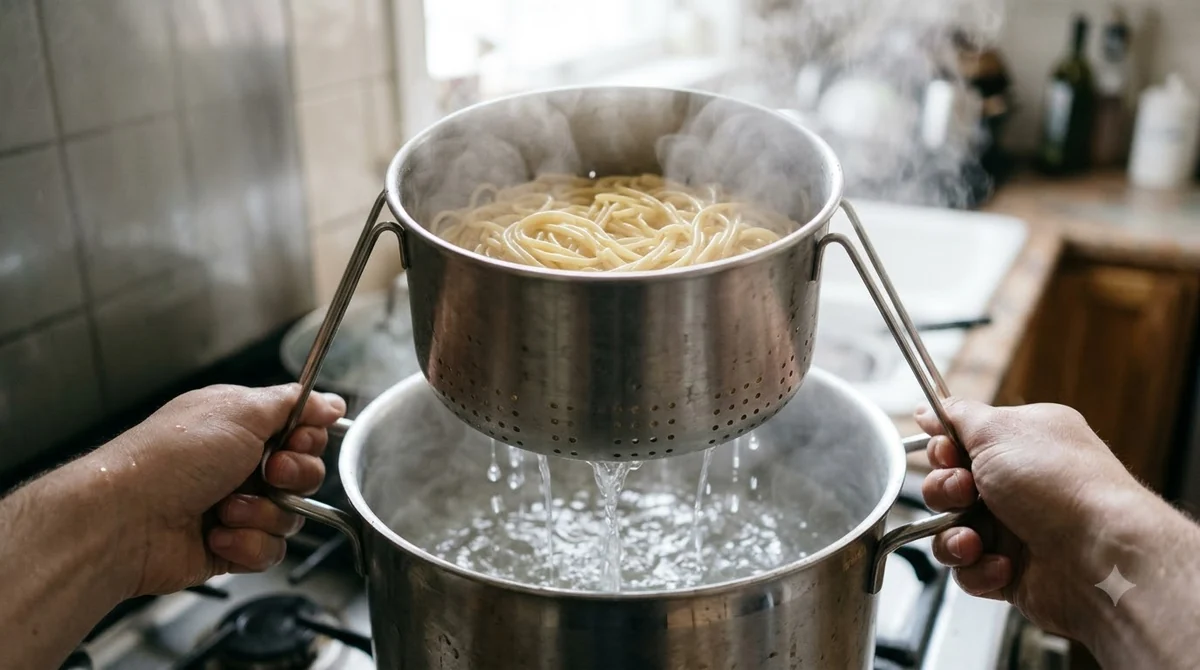
Strainers come in two main styles, and the style affects how to choose a pasta pot size. Some detach from the pot and are lifted out with the pasta. Others are built into the pot or the lid. Food Network notes that built-in strainers need enough arm strength to tilt a full pot without it slipping into the sink, so the weight of a full pot is part of the choice.
| Pot in the review | Listed capacity | Draining feature |
|---|---|---|
| Cuisinart Chef’s Classic | 12 quarts | Pasta insert with a tapered rim for drip-free pouring |
| All-Clad 6-Qt | 6 quarts | Built-in colander, with some spillage when draining |
| Bialetti Oval | 5.5 quarts | Strainer with a locking lid |
| Rachael Ray Oval | 8 quarts | Pouring lip and nonstick interior |
| Gotham Steel | 5 quarts | Lid with two drain holes, so no separate strainer is needed |
The capacities above, a useful reference for how to choose a pasta pot size, come from the spec sheets listed in the Food Network review. Check the current listing before you buy, because sizes and features can change between versions.
Shape matters for long pasta
Oval and tall pots cook long pasta such as spaghetti or lasagna noodles more evenly, according to Food Network. In how to choose a pasta pot size, shape can matter as much as capacity once the noodles are longer than the pot is wide.
- Oval pots: a Food Network reviewer found the shape made it easy to put a full pound of spaghetti in quickly.
- Tall pots: suit long noodles that would otherwise need to be broken to fit.
- Wide, round pots: work well for short shapes, but long noodles can bend and leave parts above the water.
Tasting Table notes that, in theory, pasta cooks as long as it is covered with boiling water. Use that as your test for how to choose a pasta pot size: if the noodles stick out above the surface, the pot is too narrow or too short for that shape, even if the capacity is large enough.
Weight, storage and cooktop fit
Bigger pots get much heavier once they are full, and many pasta pots do not work on induction cooktops. Check both before you buy, because the largest pot is only useful if you can lift it and it fits your burner.
- Weight: a large pot full of boiling water is heavy, so think about how you will lift and drain it.
- Storage: confirm the pot fits your cabinet, since larger sizes take more shelf space.
- Cooktop: many pasta pots are not induction-compatible, so check the label before you buy.
Food Network suggests an 8- or 12-quart pot if you live with many pasta lovers. If you cook for one or two people most nights, a 5- or 6-quart pot covers most boxes of dried pasta. Match the pot to how often you cook pasta, not to a single big dinner, when you decide how to choose a pasta pot size.
Frequently Asked Questions
How do I choose a pasta pot size for one pound?
Food Network sets the minimum at 5 quarts, while Tasting Table advises at least 6 quarts for a standard box. If you can, choose the 6-quart pot, since it gives the noodles more room and more water to stay separate.
Can I cook pasta in a small pot?
You can, but a small pot concentrates the starch released by the noodles, and Tasting Table says the pasta then starts to stick together. Use a bigger pot, or cook in smaller batches with enough water for each one.
Do I need a colander insert for pasta?
No. In how to choose a pasta pot size, the insert is optional, and a separate colander or a pot with a built-in strainer works just as well. An insert saves a step, but Food Network’s tests used 8 quarts of water for larger pots, especially those with inserts, so plan for the extra volume.
How much salt should I add to pasta water?
Food Network suggests two teaspoons of salt for every quart of water. In a 6-quart pot, that is about 4 tablespoons. Taste the water before adding pasta, and adjust if your recipe calls for a different amount.
Does pot material matter for pasta?
The sources used here focus on capacity, shape and strainers, and do not give guidance on material. When you decide how to choose a pasta pot size, choose based on size, weight and whether the pot works on your cooktop, and follow the manufacturer’s care instructions for the material you pick.
A simple rule for how to choose a pasta pot size is to start with the number of pounds you cook most often, then add a quart or two of headroom. That keeps the water volume high, helps the pasta stay separate, and leaves a pot you can still lift when it is full. For feeding a crowd, read how to cook pasta for a crowd, and browse more tips in the Gear & Pantry guides.
 9 min readGear & PantryPasta Pot Buying Guide: How to Choose the Right Size and InsertUpdated Nov 16, 2026
 9 min readGear & PantryHow to Choose a Pizza Stone Size That Fits Your OvenUpdated Nov 11, 2026
 9 min readGear & PantryBest Truffle Oil: How to Choose a Bottle That Matches Your CookingUpdated Nov 16, 2026
 8 min readGear & PantryBest Pesto: How to Choose a Jar That Fits Your PastaUpdated Nov 16, 2026
 9 min readGear & PantryHow to Use a Pasta Pot with Strainer, Step by StepUpdated Nov 11, 2026
 9 min readGear & PantryHow to Clean a Pasta Pot the Easy WayUpdated Nov 11, 2026