
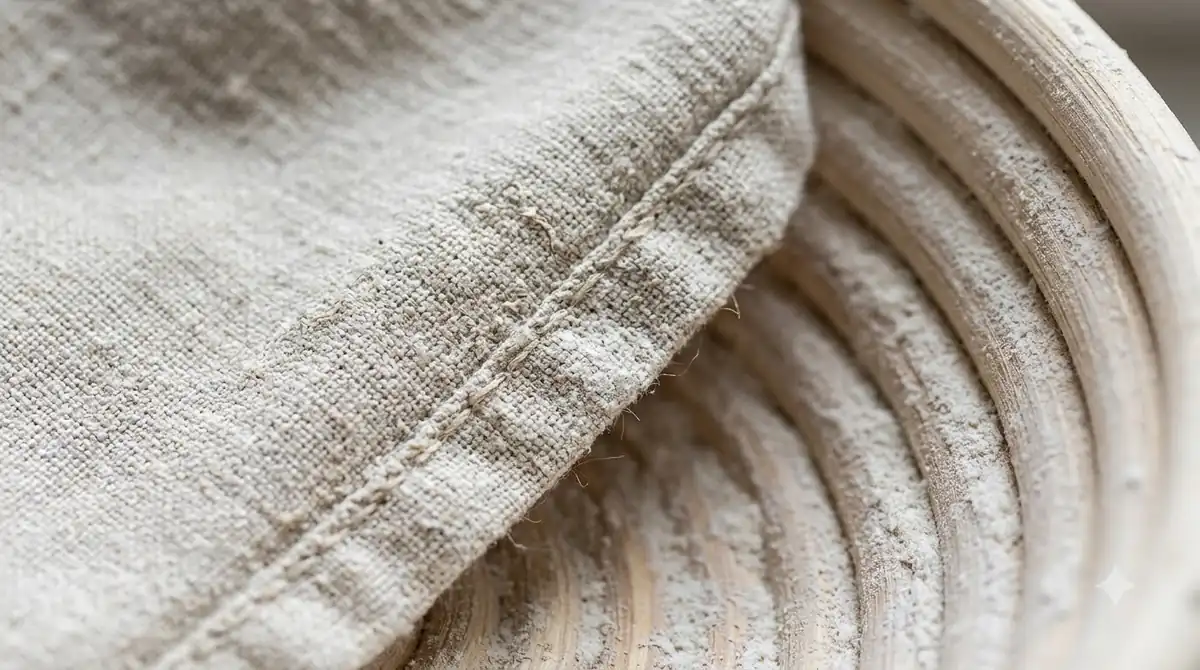

Underproofed pizza dough is dough that has not risen long enough, so it feels tight and springs back fast when you poke it. Baked in that state, it turns out dense and chewy instead of light and airy.
Extra time at a steady warm temperature usually fixes it. Cold dough can mislead the test, so check it again before you shape and bake.
What Underproofed Pizza Dough Looks and Feels Like
Underproofed pizza dough feels tight and elastic, shows little rise, and bakes into a dense crumb.
Freshly kneaded dough is tight and elastic, and proofing lets it stretch without tearing. Proofing gives the yeast time to build gas and gives the gluten time to relax. In underproofed pizza dough, the gluten stays tight, so the dough resists stretching and snaps back toward its original shape.
Four signs usually show up together. Bread bakers describe a related pattern, with weak oven spring and loaves that blow out at the score. Bread is not pizza, but the warning signs are worth knowing.
- The dough feels firm and springy, and it fights back when you try to stretch it.
- It has grown only a little. Most doughs roughly double in volume when they are fully proofed.
- A poked dent springs back right away instead of settling.
- The baked crust is tight and chewy, with a dense crumb instead of open bubbles, see the causes of a hard pizza crust.
How to Do the Poke Test
The poke test tells you whether underproofed pizza dough needs more time, based on how fast a finger dent springs back.
Press the dough and watch the dent. Tasting Table’s guide to ready pizza dough describes three outcomes, and the test is the clearest sign you have before shaping.

Practical Sourdough, a bread site, describes a proofed dent that springs back about halfway within 5 to 10 seconds. Use that as a rough clock, not a rule, because dough made with a different flour or in a cooler room will behave differently.
- Flour your fingertip lightly and press gently into the center of the dough.
- If the dent springs back right away, the dough is underproofed and needs more time.
- If the dent springs back slowly, about halfway, the dough is ready to stretch.
- If the dent stays and the dough does not rise back, it is likely overproofed.
Gozney Academy’s proofing guide gives the same reading: a dough that springs back right away needs more proofing.
Press with a light hand, as forum users advise. The test can mislead with cold dough, which can look like underproofed pizza dough when it is not. Some forum users report that dough straight from the fridge springs back fast even when it is properly proofed. Press lightly near the base of the dough, and let it warm before you decide.
Why Pizza Dough Ends Up Underproofed
Underproofed pizza dough usually results from too little time or too little warmth, and cold dough straight from the fridge is a common trigger.
Yeast works faster when the dough is warm, so time and temperature go together. The ranges below come from Gozney Academy’s proofing guide. For the numbers on water, dough and room warmth, see the pizza dough temperature chart.
- Room-temperature proofing ranges from 1 to 24 hours, so the time you choose matters.
- Cold proofing in the fridge takes 24 to 72 hours, and the cold slows fermentation, so a chilled dough can look ready too early. See cold ferment pizza dough for how long cold rests run.
- The quick-proof range is 20 C to 38 C, which is 68 F to 100 F. Below that range, expect a slower rise.
- Recipe times assume a certain room temperature. Practical Sourdough assumes a kitchen at 68 to 72 F, so a cooler room needs more time.
- Bread bakers also blame a sluggish starter for a slow rise, though that applies to sourdough rather than yeast from a packet.
How to Fix Underproofed Dough
Give underproofed pizza dough another 30 to 60 minutes in a warm spot, then poke it again before you shape it. If the dough barely rose at all, see pizza dough not rising.
Tasting Table notes that a quick proof in a warm spot takes a few hours. Practical Sourdough recommends the same extra window for bread dough. It is a reasonable starting point for underproofed pizza dough, though a bread guide is not a pizza guide, so keep testing as you go.
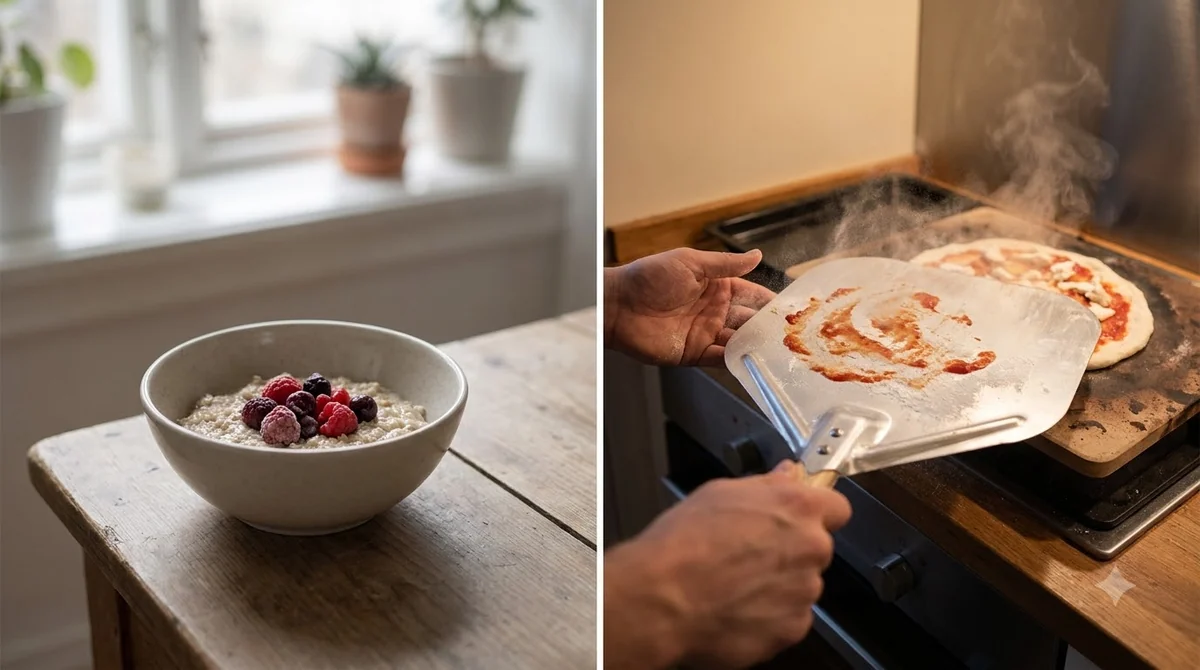
- Cover the dough with a lid or a damp cloth so the surface does not dry out.
- Move it to a spot in the 20 C to 38 C range, where the yeast can work steadily.
- Wait 30 to 60 minutes, then poke the dough again.
- If the dough came out of the fridge, let it come to room temperature first.
- If the dough turns resistant while you stretch it, cover it and rest it for 10 to 15 minutes, then continue.
Underproofed, Ready or Overproofed: How to Tell Them Apart
Ready pizza dough springs back slowly to about halfway, while underproofed pizza dough springs back fast and overproofed dough leaves a dent that stays.
| Poke result | State | What to do |
|---|---|---|
| Springs back right away | Underproofed | Keep proofing, then test again |
| Springs back slowly, about halfway | Ready | Shape and bake |
| Dent stays and the dough does not rise back | Likely overproofed | Stop proofing and check the dough |
Tasting Table describes the same test from the other side. A dent that stays points to overproofing, not underproofing.
Andrea Congiusta, executive chef at Pasta Beach, quoted in Tasting Table, puts the ready state simply: when the rested ball is soft and has no resistance at the center, it is time to bake or stretch.
How to Avoid Underproofing Next Time
To avoid underproofed pizza dough, judge it by the poke test and its size, not only by the clock, since temperature changes the timing.
Size is the second check. Most doughs roughly double in volume when they are fully proofed, so a dough that has barely grown needs more time.
Practical Sourdough suggests a proofing box or a warm spot for steady temperature, and planning the bake around the dough rather than the other way around.
- Keep the dough in the 20 C to 38 C range for quick proofs.
- Plan cold proofs for 24 to 48 hours. Gozney Academy says that window is better than the full 72 hours.
- Let refrigerated dough warm up before you run the poke test.
- Test again after each extra rise, since one check is not always enough.
Frequently Asked Questions
How long should pizza dough proof?
Room-temperature proofing takes anywhere from 1 to 24 hours, and cold proofing in the fridge takes 24 to 72 hours. Gozney Academy says 24 to 48 hours is better for cold proofs. Use the poke test, not the clock alone, to decide when the dough is ready.
Can you bake underproofed pizza dough?
You can bake underproofed pizza dough, but the crust will usually bake dense and tight. If you have time, give the dough another 30 to 60 minutes, then test it again before you shape it.
Why does my dough spring back fast after it doubled?
Cold dough can spring back quickly even when it is properly proofed, according to some forum users. Let the dough warm to room temperature, press lightly near the base, and test again before deciding it needs more time.
Should I add more yeast to underproofed dough?
None of the sources behind this guide recommend adding yeast to underproofed dough. Extra time in a steady warm spot is the step to try first, and it does not change the recipe. If the dough is wet rather than tight, read about pizza dough that is too sticky.
What does ready pizza dough feel like?
Ready dough is soft, relaxed and has little resistance at the center when you press it. It should spring back slowly, about halfway, rather than snap back fast. Chef Andrea Congiusta, quoted by Tasting Table, uses that softness as the signal to go.
Is the poke test reliable?
It is a useful guide, not a rule. Read it together with the size of the dough, the room temperature and how the dough feels in your hands. Cold dough can give misleading results, so repeat the test after a short warm rest.
Make the poke test a routine step before every shaping, not only when a bake with underproofed pizza dough goes wrong.
If you suspect underproofed pizza dough, because it is tight and springs back fast, leave it alone a while longer rather than baking it early. A quick poke test before you shape will save you from a dense crust.
 8 min readLearnHow to Fix Soggy Pizza: Causes, Heat and Simple FixesUpdated Nov 10, 2026
 8 min readLearnPizza Dough Fermentation: Stages, Timing and Signs It Is ReadyUpdated Nov 11, 2026
 7 min readLearnPizza Dough Shrinking Back? Why It Happens and How to Fix ItUpdated Nov 10, 2026
 9 min readLearnPizza Dough Too Dry? How to Fix It and Prevent ItUpdated Nov 11, 2026
 7 min readLearnPizza Dough Tearing: Causes and Simple FixesUpdated Nov 10, 2026
 9 min readLearnPizza Dough Not Rising? Causes and Fixes That WorkUpdated Nov 10, 2026