
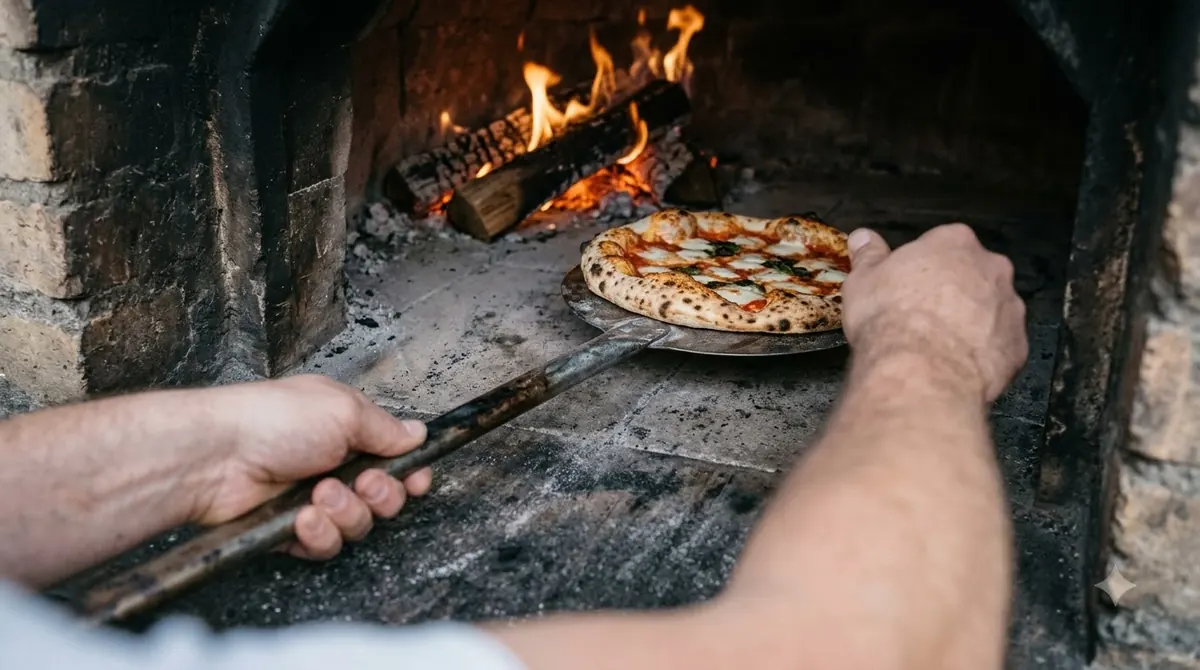

To learn how to launch a pizza, slide it off a floured peel onto a hot stone in one controlled motion. The stone should be between 370 and 430 °C (698 to 806 °F) before you start, and the dough should move freely on the peel.
Most failed attempts at how to launch a pizza trace back to dough that is too cold or too warm, or to toppings added before a shake test. Fix those steps first and the slide is usually clean.
What You Need Before You Launch
Learning how to launch a pizza starts with three things: a peel, a fully heated stone, and an infrared thermometer to confirm the stone is at 370 to 430 °C before you launch.
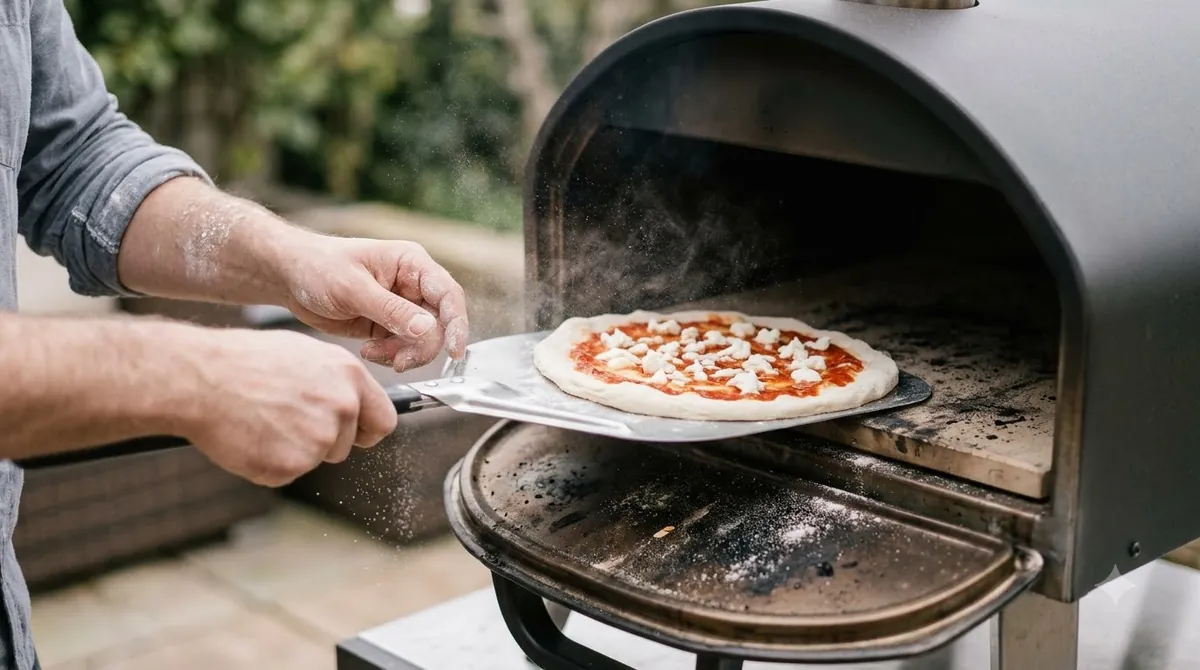
- A wooden or composite peel for raw dough. Alfa Forni recommends this material for transferring raw pizza because dough sticks less to it.
- A second peel for the cooked pizza. Ooni suggests keeping one peel for building and launching and another for turning and retrieving.
- Tipo 0 flour or semolina. Alfa Forni uses these for dusting the peel before launch.
- An infrared thermometer. It checks the stone surface temperature before you build.
For how to launch a pizza well, Alfa Forni gives a target of 370 to 430 °C (698 to 806 °F) for the refractory stone, checked with an infrared thermometer. Start heating the oven as soon as the dough has risen, so the pizza goes onto a hot stone; how to get a pizza oven hotter covers ways to raise the heat.
Prepare the Dough and the Peel
Let cold-proofed dough (see cold ferment pizza dough) sit at room temperature for at least 4 hours before you stretch it, and dust the peel with Tipo 0 flour or semolina.
Ooni advises at least 4 hours out of the fridge for cold-proofed dough. Ooni’s launch tips explain why the timing matters: cold dough resists stretching, while dough that is too warm sweats and sticks to the peel.
Flour the peel, but not excessively. Alfa Forni warns that excess flour burns on the stone and tastes bitter, so the dusting belongs on the peel, not spread across the hot surface. Keep the prep peel at room temperature so the dough does not soften against it while you top the pizza. Good preparation is the first part of how to launch a pizza well. Wooden peels also need gentle cleaning afterward, which our guide to cleaning a wooden peel explains.
Ooni gives proofing times for its own recipes: about three to four hours for its classic pizza dough and about one hour for its quick version. Dough that has not rested enough is harder to stretch, so check the feel before you move to the peel. If the dough is sticky and slack, see pizza dough that is too sticky.
| Dusting option | What it does on the peel and stone |
|---|---|
| Tipo 0 flour | Alfa Forni recommends a light dusting. Excess flour can burn on the stone and taste bitter. |
| Semolina | Alfa Forni lists it alongside Tipo 0 flour for dusting the peel. |
| Cornmeal | Fontana Forni notes that some people use cornmeal instead of flour. |
| Flour and semolina mix | Fontana Forni lists this mix as an option, alongside plain flour and cornmeal. |
Check That the Pizza Slides
Before any toppings go on, shake the peel to confirm the pizza moves freely, and if it sticks, lift one edge and add flour underneath.
- Check for holes. Pinch any small holes closed. Ooni notes that moisture trapped between the peel and the dough causes sticking. Larger holes can be turned into a calzone instead of a round pizza, Ooni says.
- Shake the peel gently. If the dough slides, you can keep going. If it does not, move to the next step.
- Lift one edge and add flour underneath. Ooni recommends doing this before the sauce and toppings go on.
- Try the air method. Lift one edge and gently blow air underneath. The air creates pockets and spreads flour to any sticky spots.
- Shake again while you top. Fontana Forni suggests shaking the peel during topping, and adding more flour under any edge that starts to stick.
Testing the slide is where how to launch a pizza becomes a repeatable skill. Keep the toppings light. Fontana Forni says “less is more,” because heavy pizzas are harder to slide. Be careful when spreading sauce so none drips onto the peel.
How to Launch a Pizza in One Motion
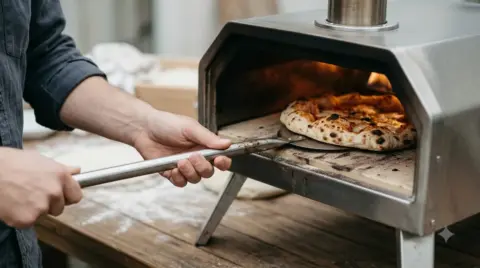
To launch, tilt the peel slightly over the stone, slide the pizza forward with controlled movements, and pull the peel back in one motion. If you are new to the tool, start with our guide on how to use a pizza peel step by step.
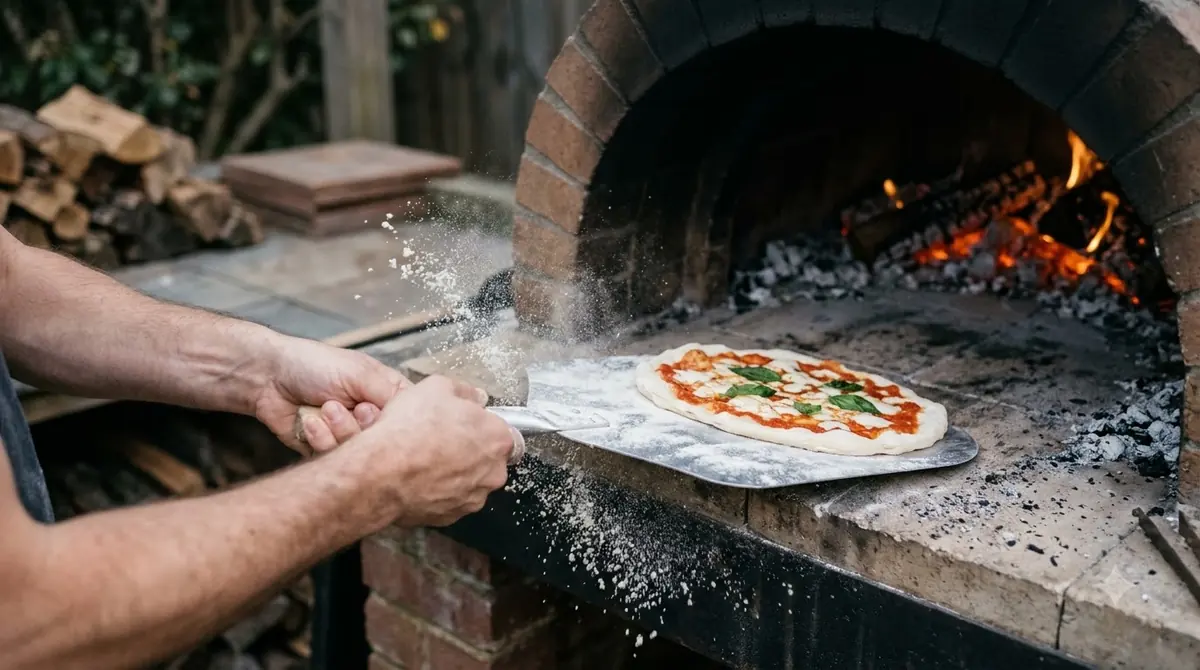
- Hold the peel at a slight angle. Tilt it so the leading edge sits just above the stone.
- Slide the pizza forward. Use controlled movements rather than a fast push.
- Pull the peel back in one motion. Alfa Forni says this leaves the pizza in place “without distorting its shape.”
Fontana Forni describes the same step in how to launch a pizza as one quick shake that slides the pizza onto the stone. If the pizza lands off-center, leave it for a moment, because Fontana Forni advises letting it cook a bit before you move it.
Practice before you launch a real pizza. Fontana Forni suggests a folded kitchen towel on the peel at oven height, or a dry run in a cold oven, so the motion feels familiar before the stone is hot.
Place and Turn the Pizza
When you learn how to launch a pizza, place it in the hottest part of the stone, usually the center, then start turning after 20 to 30 seconds and repeat at the same interval.
Alfa Forni recommends the center of the stone, or a spot slightly away from the flame in a wood-fired oven. Avoid placing the pizza too close to the flame, because one side may burn too quickly.
Placement and turning finish the job, so they belong in your plan for how to launch a pizza from start to finish. For turning, Alfa Forni gives the same window for the first turn and for each turn after it: 20 to 30 seconds. Use your warm peel to rotate the pizza so the prep peel stays cool and ready for the next launch. Our guide to how to turn a pizza in a pizza oven goes deeper on turning.
Common Mistakes When Launching
Most problems with how to launch a pizza come from a short list of mistakes. The most common are overloading the pizza, letting sauce drip onto the peel, leaving the pizza too long on the peel, and dusting a hot stone with flour.
- Too many toppings. Ooni says fewer toppings make the pizza easier to slide off the peel.
- Sauce on the peel. Sauce that drips onto the peel adds moisture between the dough and the peel, which makes sticking more likely.
- Waiting too long. Ooni warns that sauce soaks into the dough if the pizza sits too long, making it gluey and more likely to stick. Build only when you and the oven are ready.
- Launching too close to the flame. Alfa Forni warns that one side may burn too quickly if the pizza sits near the flame.
- Flour on the stone. Fontana Forni notes that flour on a hot stone burns and smolders, adding an off flavor.
Frequently Asked Questions
Should I use parchment paper to launch a pizza?
Parchment is a common alternative when you practice how to launch a pizza: build the pizza on paper, slide the paper and pizza onto the stone, then remove the paper once the crust firms. Some home bakers on forums report that parchment can interfere with the bottom crust, so test it before you rely on it.
How hot should the stone be before I launch?
For how to launch a pizza on time, Alfa Forni recommends 370 to 430 °C (698 to 806 °F), checked with an infrared thermometer. Heat the stone fully before you build the pizza, so it is ready when the peel reaches the surface.
What if my pizza lands off-center?
Leave it for a moment. Fontana Forni advises letting it cook a bit before you move it. Avoid sliding it around on the stone while the base is still setting.
How long should dough rest before launching?
For how to launch a pizza from dough that is ready, Ooni recommends at least 4 hours at room temperature for cold-proofed dough before you stretch it. Dough that is too cold resists stretching, and dough that is too warm can sweat and stick to the peel.
Should I practice launching before using real dough?
Yes. Learning how to launch a pizza is easier with a dry run. Fontana Forni suggests practicing with a folded kitchen towel on the peel at oven height, or in a cold oven. The practice helps you feel the single, smooth motion before the stone is at full heat.
Mastering how to launch a pizza comes down to three checks each time: a stone at 370 to 430 °C, dough that has rested at room temperature, and a shake test before the toppings go on. Keep the flour on the peel and off the hot stone, and your launches will get cleaner with practice.
 8 min readLearnPizza Sticking to Peel: Causes and FixesUpdated Nov 10, 2026
 7 min readLearnHow to Clean Wooden Pizza Peel Without Warping ItUpdated Nov 10, 2026
 8 min readLearnHow to Make Pizza Without a Peel: Parchment and Sheet Pan MethodsUpdated Nov 11, 2026
 8 min readLearnSemolina vs Cornmeal for Pizza Peel: Which Works BetterUpdated Nov 10, 2026
 8 min readLearnHow to Keep Pasta from Sticking TogetherUpdated Nov 10, 2026
 6 min readLearnHow to Turn Pizza in Pizza Oven Without Tearing the CrustUpdated Nov 10, 2026