
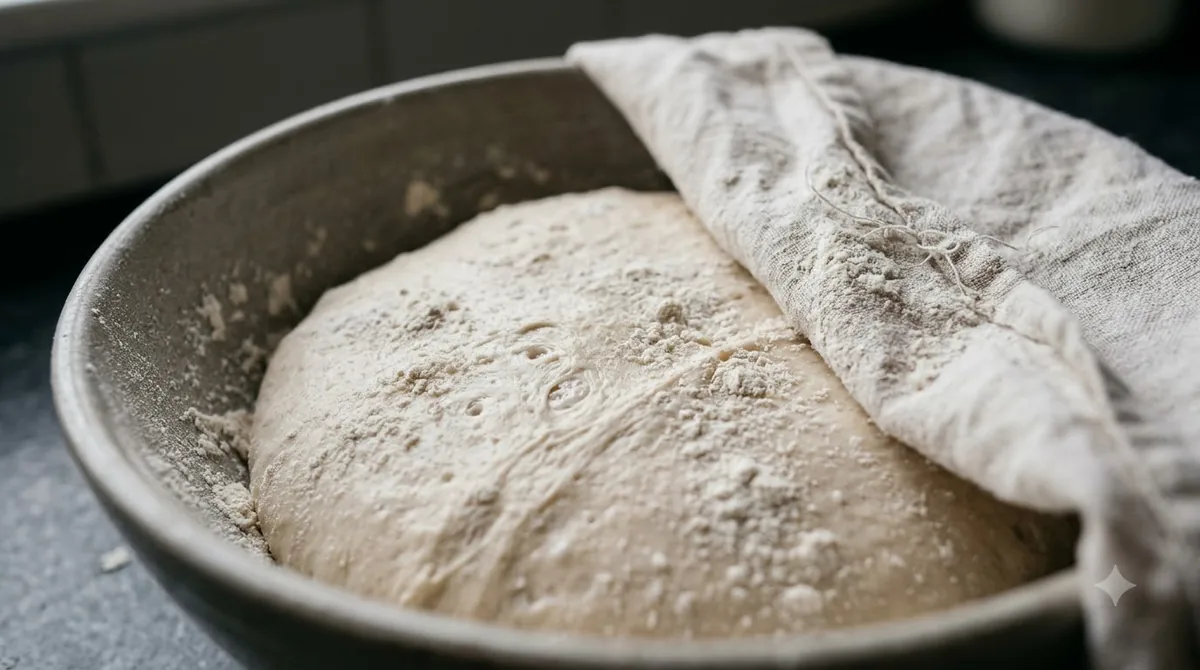

Learn how to make a pizza dough starter by mixing equal weights of flour and water, then feeding it on a set schedule until it doubles reliably. The process usually takes five to seven days. Ooni advises starting it three to four days before you plan to bake, so the levain is ready when the dough is.
A starter replaces commercial yeast, so your dough timing changes too. Plan on about a week before your first bake, and keep the jar in a warm spot while it builds.
What a pizza dough starter does
A pizza dough starter is a flour and water mix that hosts wild yeast and bacteria, and it leavens dough in place of commercial yeast. Once it is mature, you measure a portion of it into each new dough, which keeps the process going without buying packets of yeast.
The starter also shapes the flavor of the crust, which is why sourdough pizza differs from a quick yeast dough. If you want a faster pre-ferment instead, compare poolish pizza dough and biga pizza dough. Because the culture needs time to grow, you need to know how to make a pizza dough starter well before baking day.
What you need before you start
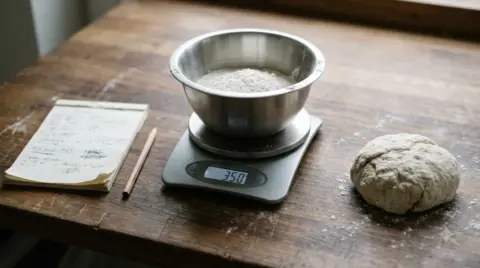
You need flour, water, a kitchen scale and a clean container. When you learn how to make a pizza dough starter, King Arthur Baking builds it with 50 g of flour and 50 g of water, so a scale makes the feeds repeatable from day to day.
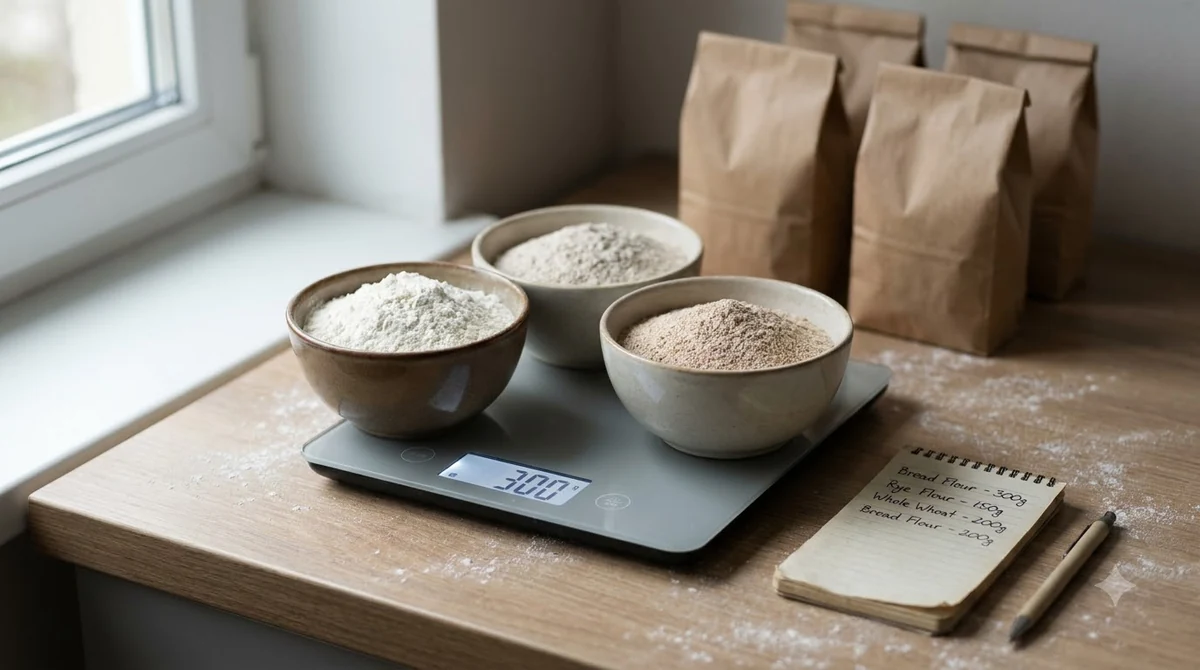
- Flour: whole wheat or pumpernickel for the first day, then unbleached all-purpose flour for each feed.
- Water: cool water. Tap water is fine unless it smells strongly of chemicals.
- Container: a non-reactive jar of about one half to one quart, such as glass, crockery, stainless steel or food-grade plastic.
- Scale: weighing in grams keeps the 1:1:1 feeding ratio exact.
How to make a pizza dough starter, day by day
Build the starter over five to seven days by mixing equal weights of flour and water, discarding most of the mix, and feeding on a fixed routine. King Arthur’s schedule starts with a 24-hour rest on day one and moves to feeds about 12 hours apart from day three.
| Day | What to do | Timing |
|---|---|---|
| Day 1 | Mix 50 g whole wheat or pumpernickel flour with 50 g cool water in the jar. | Rest 24 hours at about 70°F |
| Day 2 | Discard all but 50 g, then add 50 g water and 50 g all-purpose flour. | Rest 24 hours |
| Day 3 | Start twice-daily feeds: keep 50 g, discard the rest, add 50 g water and 50 g flour. | About 12 hours between feeds |
| Day 4 | Repeat the same discard and feed twice, about 12 hours apart. | About 12 hours between feeds |
| Day 5 | Keep the same routine and check the signs of readiness. | About 12 hours between feeds |
| Days 6 to 7 | If the starter has not risen much, keep feeding every 12 hours until it is vigorous. | Only if needed |
On day one, King Arthur says to combine the flour and water in a container of one half to one quart, stir thoroughly and cover loosely. On day two, some activity is normal, but none is also acceptable at this stage. Each feed follows the same 1:1:1 ratio by weight: 50 g of starter, 50 g of water and 50 g of flour. The discard is the step people skip most often, yet it keeps the volume manageable and gives the remaining culture more food for the next feed.
- Pour off everything except 50 g of the mix.
- Add 50 g water and 50 g flour, then stir until no dry flour remains.
- Cover loosely and leave the jar in its warm spot until the next feed.
How to tell the starter is ready
A ready starter at least doubles in volume within 6 to 8 hours of a feeding, shows many bubbles on the surface and smells pleasantly tangy. Ready means it rises reliably after each feed, not that it rose once.
- It at least doubles in about 6 to 8 hours after a feed.
- The surface shows plenty of bubbles and small rivulets.
- The smell is fresh and tangy, not sharp or like nail polish remover.
If the starter has not doubled by day six or seven, keep feeding every 12 hours. Patience is more useful here than a different flour, because the culture needs repeated feeds to grow stronger.
Keeping the starter warm and active
Keep the starter between 70°F and 78°F, because King Arthur Baking says growth slows below 68°F. A cool kitchen is the most common reason a starter seems stuck.
If your kitchen runs cool, move the jar to a warmer spot. King Arthur suggests the top of a water heater or refrigerator, or an oven with only the light on. Check the temperature first, because the oven must not get too hot for the culture.
Using the starter in pizza dough
Ooni’s sourdough dough uses 200 g of a 250 g levain, 10 g of salt, a three-hour bulk ferment and an overnight cold proof. The levain itself is built from 50 g of mature starter, 50 g of 00 or bread flour, 50 g of whole-grain flour and 100 g of warm water.
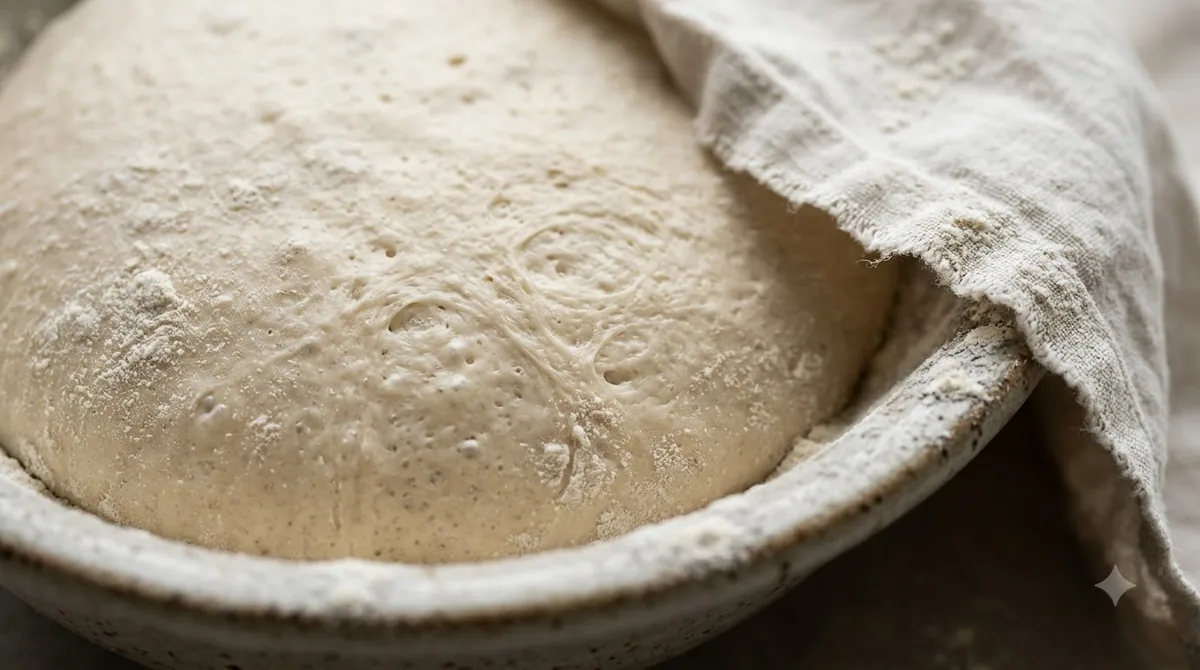
Ooni recommends making the starter three to four days before you cook, so it is mature when you need the levain. The full sourdough method is in Ooni’s sourdough pizza dough, which also lists the salt and timing in detail. Once your starter is active, our sourdough pizza dough recipe walks through the full dough and bake.
After the bulk ferment, the dough cold proves in the fridge for about 24 hours (our cold ferment pizza dough guide explains why that helps). Ooni says to let the dough balls return to room temperature for around two hours before you stretch them.
Common mistakes and how to avoid them
Most failed starters are too cold, skip the discard or get fed too late. Each problem slows the build, so check them in that order before you change the flour. If the dough itself fails after the starter is ready, see why pizza dough is not rising.
- Keeping it cold. Below 68°F, growth slows, so move the jar somewhere warmer.
- Skipping the discard. Without it the mix grows too heavy to feed well.
- Feeding late. Long gaps between feeds leave the culture hungry and slow.
Keeping the starter after it is ready
Feed a mature starter every one to two days at room temperature, or refrigerate it for up to two weeks without feeding. Ooni gives both intervals, so you can choose between regular feeding and a longer pause. Knowing how to make a pizza dough starter is only half the job, because keeping it alive between bakes is the other half.
King Arthur notes that discarded starter can go into other recipes, so you do not have to throw it away. Keep a note of the last feed in the fridge so you know when the starter needs its first refresh before baking.
Frequently Asked Questions
How long does it take to make a pizza dough starter?
Expect about five to seven days. King Arthur’s schedule reaches readiness around day five and allows days six and seven if the starter has not risen. Ooni advises making it three to four days before you cook.
What flour is best for a pizza dough starter?
King Arthur starts with whole wheat or pumpernickel and feeds with unbleached all-purpose flour. Ooni’s levain uses 00 or bread flour together with whole-grain flour. Either approach follows the same 1:1:1 weight ratio.
How do I know the starter is ready?
A ready starter at least doubles in volume within 6 to 8 hours of a feeding. It should also show many bubbles and smell pleasantly tangy. Consistent rises after each feed matter more than a single rise.
Can I keep the starter in the fridge?
Yes. Ooni says a refrigerated starter can keep for up to two weeks without feeding. Ooni’s guide does not give a warm-up step for a refrigerated starter, so check that it rises after a feed before you mix the dough.
Why is my starter not rising?
The most likely cause is a cool kitchen. King Arthur says growth slows below 68°F and recommends 70°F to 78°F. Keep feeding on the 12-hour routine and move the jar to a warmer spot.
How much starter goes into the dough?
Ooni’s recipe builds a 250 g levain and uses 200 g of it in the final dough. Measure the levain by weight rather than by eye so the dough hydration stays consistent from batch to batch.
Learning how to make a pizza dough starter takes about a week, so start at least that early before you plan to bake, and treat the schedule as a guide rather than a rule. Watch the rise and the smell more than the calendar. A slow starter in a cool kitchen usually needs more time and a warmer spot before you bake with it.
 7 min readLearnHow to Make Pizza Dough in a Stand MixerUpdated Nov 10, 2026
 9 min readLearnGarlic Knots from Pizza Dough: How to Make Them at HomeUpdated Nov 10, 2026
 8 min readLearnPoolish Pizza Dough: How to Make It for Better FlavorUpdated Nov 10, 2026
 8 min readLearnSame Day Pizza Dough: How to Make It Start to FinishUpdated Nov 10, 2026
 8 min readLearnSemolina Pizza Dough: What It Is and How to Make ItUpdated Nov 10, 2026
 8 min readLearnPizza Dough With Bread Flour: How to Make a Chewy Crust at HomeUpdated Nov 6, 2026