
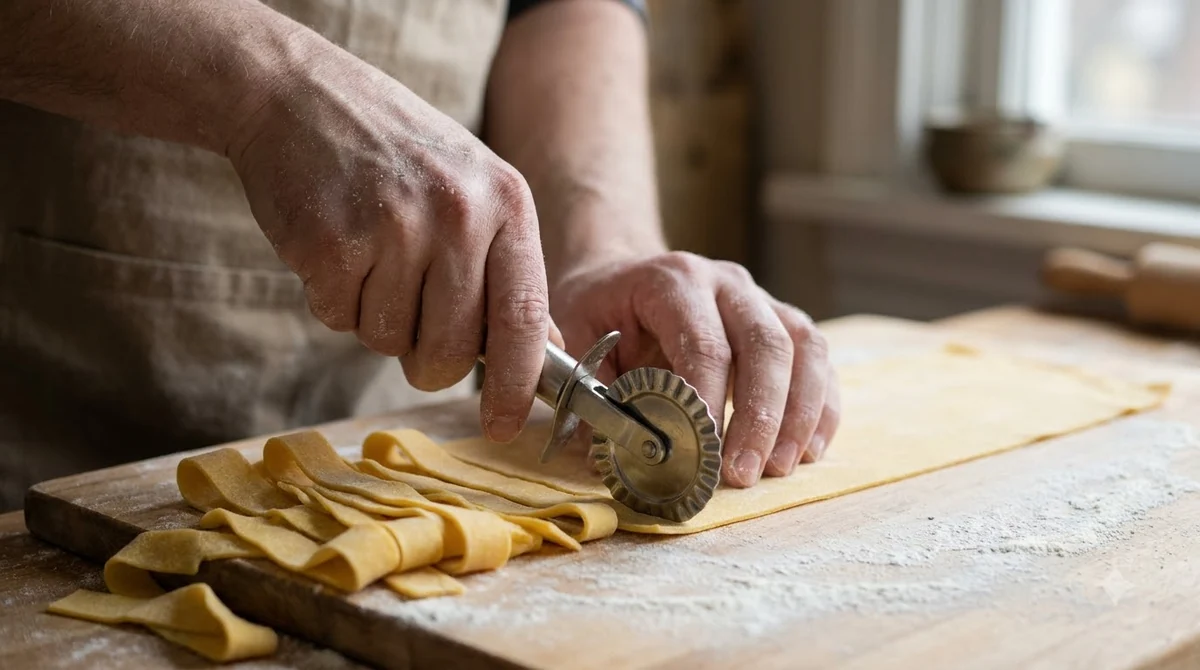

How to make busiate at home starts with durum semolina mixed with warm water and a pinch of salt, rest the dough, then coil small ropes around a thin rod. The result is a tight, twisted spiral that holds olive oil, pesto and chunky sauces in its grooves. The method needs no eggs and only a few tools, so it suits a first attempt at hand-shaped pasta.
What Makes Busiate Different
Busiate is a Sicilian spiral pasta that comes from Trapani, where it is traditionally made by hand. Each piece is a short rope wound around a thin rod, which leaves a corkscrew shape with a slightly hollow center.
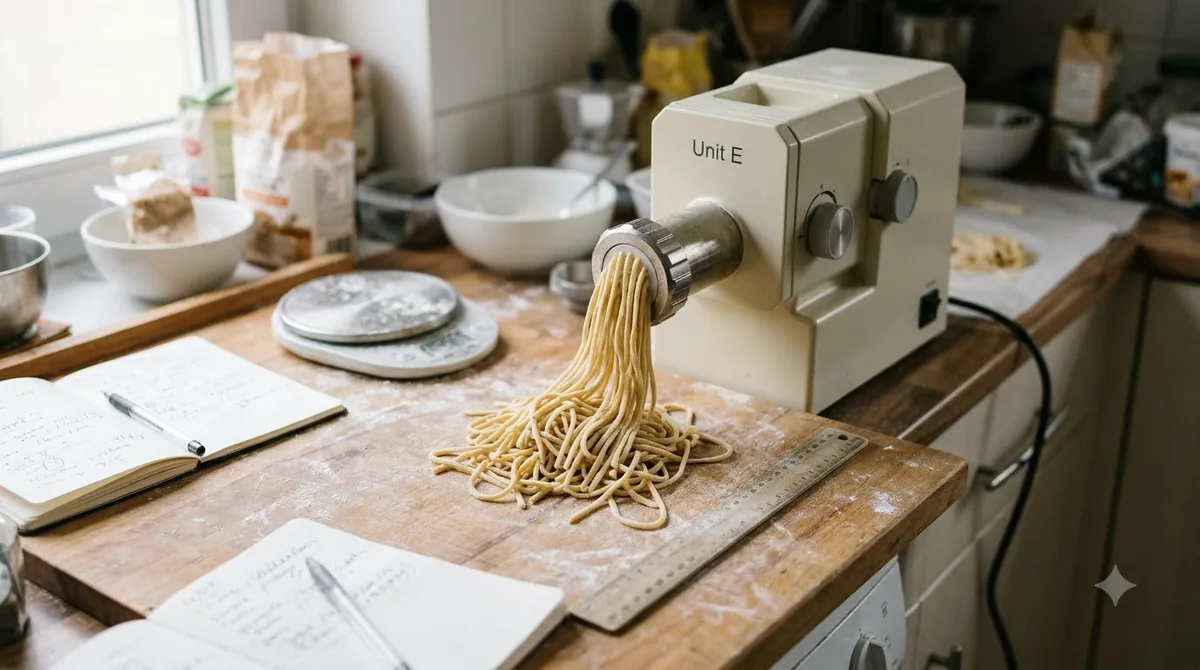
The name has two explanations. One links it to the busa, a thin stem of a wild Mediterranean grass that was used as the first shaping rod. The other links it to buso, a thin iron knitting needle used in Trapani. Both point to a simple tool, not a machine, and that is why busiate is still a practical pasta to make at home.
The Pasta Evangelists guide to busiate describes the same spiral method, and the shape is simple enough to learn in one session.
Homemade Busiate Dough
Busiate dough is a plain durum semolina dough with no egg. A common home version uses 200 g of fine semolina or durum flour, about 100 ml of warm water and a pinch of salt.
- Put the flour on a clean board or in a bowl and make a well in the center.
- Add the salt to the warm water, then pour it into the well a little at a time.
- Work the dough until it is smooth and firm. If it feels dry, add up to one tablespoon more water at a time.
- Shape it into a ball, cover it with a cloth or plastic wrap and rest it for 15 to 20 minutes at room temperature.
Resting is what makes the dough easy to roll, and keeping unused pieces covered stops them from drying out while you work.
How to Make Busiate Step by Step
Shaping takes a little practice, but each spiral goes quickly once the motion feels natural. A thin bamboo skewer, a knitting needle or a ferretto rod all work.
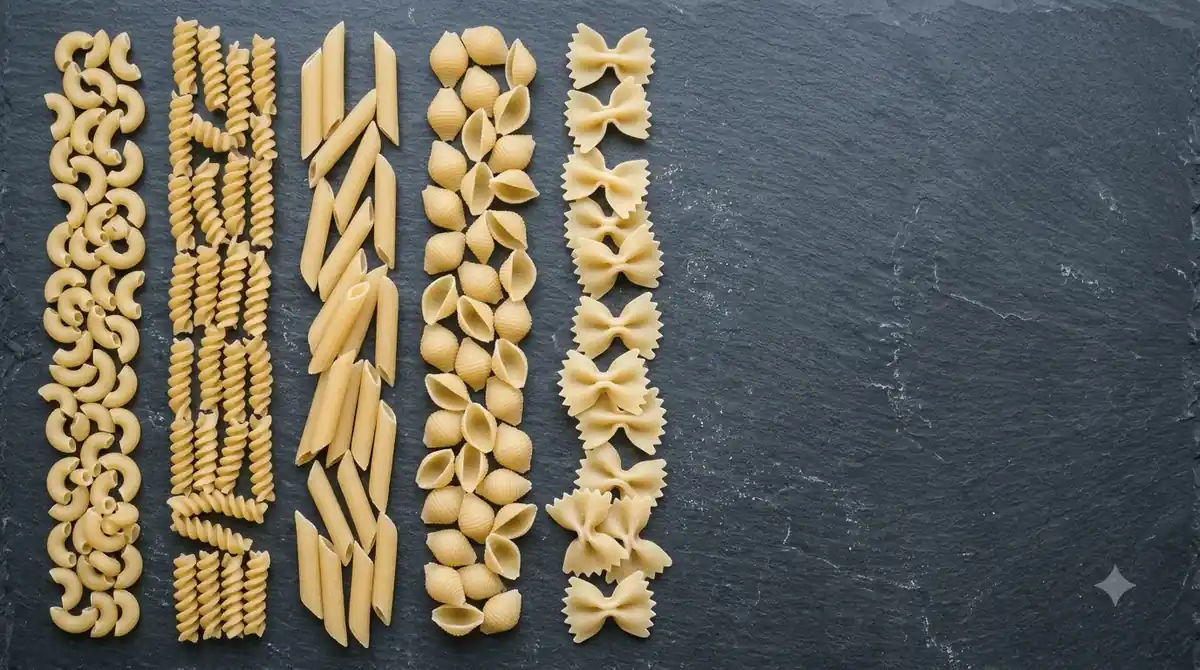
- Divide the dough into eight pieces and keep the rest covered while you work.
- Roll one piece into a flat, even sheet, then cut it into thin strips.
- Roll each strip into a narrow rope and cut the rope into short lengths.
- Lay a piece across the work surface, hold the rod at a slight angle and wrap the dough tip around it.
- Coil the dough down the rod as you roll the rod toward you, until the spiral is complete.
- Slide the busiate off the rod onto a floured tray. If it sticks, turn the rod in the opposite direction to loosen it.
Dust the tray and the rod lightly with flour. Spread the finished pieces so they do not touch, and let them dry for a short time before cooking if you have the time.
Cooking and Serving Busiate
Busiate cooks in well-salted boiling water. Fresh pieces need about 4 to 6 minutes, and dried pieces need about 9 to 11 minutes, so start testing early and check every 30 seconds.
| Style | Cooking time | Good with |
|---|---|---|
| Fresh, hand-shaped | 4 to 6 minutes | Light sauces, olive oil and herbs |
| Dried, store-bought | 9 to 11 minutes | Heavier ragù and meat sauces |
Traditional Trapani serving pairs busiate with pesto, which clings well to the grooves. The Pasta Project’s busiate notes describe the same shaping and cooking steps used here.
Common Mistakes When Shaping Busiate
Most problems with busiate come from dough that is too dry, too wet or left out too long. Each one shows up in the spiral, so the fix is usually in the dough before you touch the rod.
A dough that cracks as you roll it needs a little more water, added one tablespoon at a time. A dough that sticks to your hands and the board needs a light dusting of semolina or flour, not a large amount, because extra flour dries the surface and the rope will not hold its twist.
If the spiral unwinds when you slide it off the rod, the rope was probably too thick or the rod was not held at a steady angle. Make the ropes narrower and keep the coil tight as you roll. If the pieces stick to the rod, turn it back the way it came, then gently forward again.
Frequently Asked Questions
Is busiate the same as fusilli?
No. Both are spirals, but busiate is a short hand-rolled rope with a looser, more open twist, while fusilli is usually a machine-made dried shape with tighter ridges.
Do I need eggs in busiate dough?
Traditional busiate uses only durum semolina, warm water and salt. Eggs are not part of the classic recipe.
What if I do not have a rod?
A thin bamboo skewer or a knitting needle of similar thickness works well. Use one that is clean, dry and straight, and dust it with flour so the dough does not stick.
How long does homemade busiate keep?
Can I make busiate ahead for a dinner party?
You can shape the pieces earlier in the day and keep them dusted and spread on a tray, covered. Cook them just before serving, since fresh busiate needs only a few minutes in boiling water and loses its texture if it sits too long.
Fresh busiate is best cooked the same day. If you dry it fully, store it in an airtight container and check the storage guidance on the package or from the manufacturer before using it later.
Busiate rewards patience more than skill. Rest the dough, keep the pieces covered and roll one spiral at a time. Once the motion feels natural, the shape goes quickly, and a simple olive oil or pesto sauce will show off the twist better than a heavy topping.
 8 min readLearnBusiate Pasta: The Sicilian Spiral ExplainedUpdated Nov 6, 2026
 5 min readLearnHow to Make Semolina Pasta Dough: Simple StepsUpdated Nov 13, 2026
 6 min readLearnHow to Make Osso Buco: Braised Veal Shanks Step by StepUpdated Nov 13, 2026
 6 min readLearnHow to Make Risotto alla Milanese: Saffron Rice Step by StepUpdated Nov 13, 2026
 6 min readLearnHow to Make Bucatini All’Amatriciana: Step-by-Step Roman RecipeUpdated Nov 13, 2026
 5 min readLearnHow to Make Fresh Mozzarella at Home: Step-by-Step MethodUpdated Nov 13, 2026