
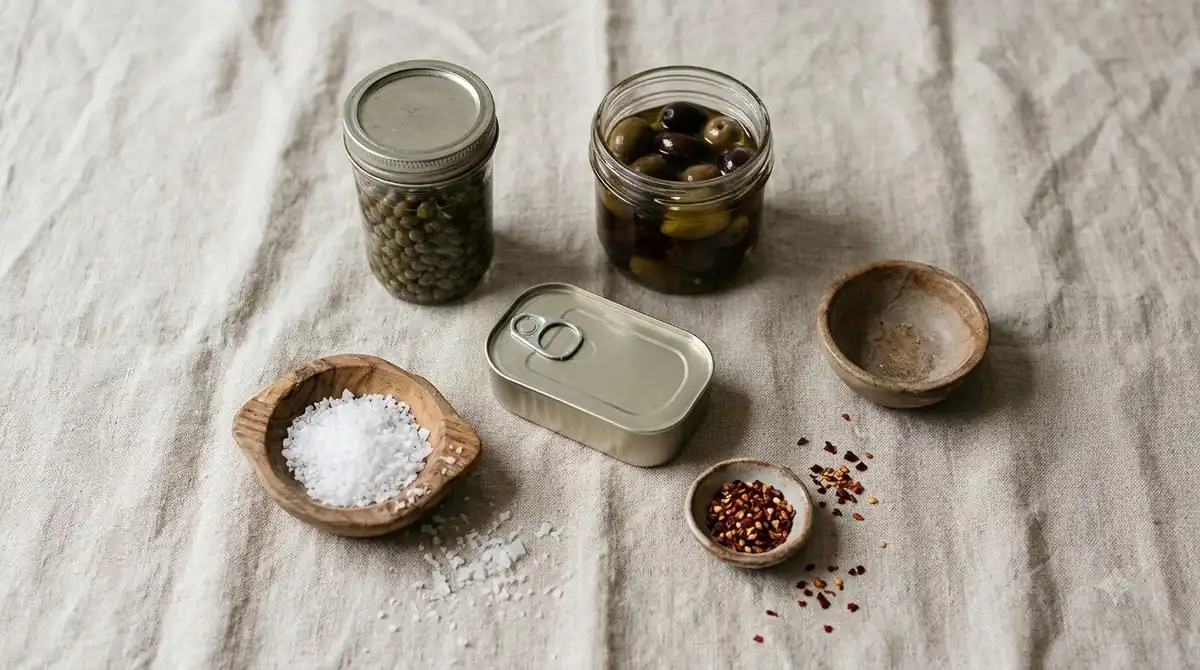

If you want to know how to make risotto alla milanese, toast Arborio or Carnaroli rice, add hot broth a ladle at a time, and stir in a saffron infusion for a golden, creamy rice. The rice should be loose and still have a firm bite when it is ready. The dish comes from Milan, Italy, and is traditionally served alongside osso buco.
The technique matters more than the list of ingredients. Heat the broth before you start, add it in small rounds, and stop adding liquid once the rice is tender but not mushy. The finish, when butter and Parmesan are beaten in off the heat, gives the risotto its silky texture. The steps below combine two published recipes, from DeLallo and Lidia’s Italy.
What Ingredients Does Risotto Alla Milanese Need?
The base is short-grain rice, saffron, warm broth, dry white wine, butter and Parmesan, with an optional bit of beef marrow for extra richness.
Arborio is the easiest rice to find, and Carnaroli holds its shape well if you prefer a firmer result. The DeLallo method uses one cup of Arborio, while Lidia’s Italy uses two cups for a larger pan. Saffron gives the dish its color and aroma, and the threads should be steeped in a little hot broth before they go into the pot. DeLallo uses one pinch, about 12 to 15 threads, steeped in a quarter cup of broth. Lidia’s Italy uses half a teaspoon of threads in half a cup of hot stock.

The broth is the other key choice. DeLallo calls for five cups of chicken broth, while Lidia’s Italy uses eight cups of homemade or low-sodium beef stock. Chicken gives a lighter flavor and beef gives a deeper one, so pick whichever suits the meal. Keep the broth warm in a separate pan at all times, since cold liquid stops the rice from releasing its starch.
How to Make Risotto Alla Milanese Step by Step
Toast the rice in fat first, then add wine, and then add broth gradually while stirring, until the grains are creamy and just tender.
Start by warming the broth in a saucepan over low heat. In a wide, heavy pan, cook a little olive oil or butter with finely chopped onion until soft, then add the rice and stir for about two minutes, until the edges turn translucent. Lidia’s Italy describes this toasting step as the point where the grains start to take on flavor and seal in some starch. Pour in the wine and stir until it is absorbed. DeLallo uses three quarters of a cup of dry white wine and cooks it for two to three minutes until nearly gone.
- Steep the saffron in a few spoonfuls of hot broth for about 10 minutes, so the color and flavor release.
- Add enough broth to just cover the rice, about one to one and a half cups for DeLallo’s batch, and stir.
- Keep adding broth in small rounds, stirring every few minutes, and wait for each addition to absorb before the next.
- Pour in the saffron broth about halfway through the cooking, once the rice has started to swell.
- Test a grain after about 18 minutes of simmering. It should be creamy outside with a slight firmness in the center.
Add more hot broth, a quarter cup at a time, if the rice still tastes raw in the middle or looks dry. Stop adding liquid once the rice is tender, because overcooked risotto turns gluey.
How Do You Finish Risotto Alla Milanese?
Take the pan off the heat, then beat in cold butter and grated cheese until the rice turns glossy and loose.
This final step, called mantecatura in Italian, is what makes risotto creamy. DeLallo’s method adds one cup of loosely packed Parmigiano Reggiano at the end, and uses three tablespoons of butter unless beef marrow is part of the recipe. Lidia’s Italy beats in two tablespoons of cubed butter a few pieces at a time, then stirs in half a cup of grated Grana Padano until smooth. If you add marrow, stir in about two ounces cut into small pieces before the butter.
Serve it right away. Risotto keeps thickening as it sits, so the loose texture disappears within a few minutes. Spoon it into shallow bowls, since the wide surface helps the rice hold its shape on the plate.
| Element | DeLallo version | Lidia’s Italy version |
|---|---|---|
| Rice | 1 cup Arborio | 2 cups Arborio or Carnaroli |
| Saffron | 1 pinch (12 to 15 threads) | 1/2 teaspoon threads |
| Broth | 5 cups chicken broth | 8 cups beef stock |
| Cooking time | 18 to 20 minutes after all broth is added | About 18 minutes total |
| Finish | 1 cup Parmigiano Reggiano, 3 tablespoons butter | 2 tablespoons butter, 1/2 cup Grana Padano |
Frequently Asked Questions
Which rice is best for risotto alla milanese?
Arborio is the most common choice and works well for most cooks. Carnaroli is often preferred for a firmer, more separate grain. Avoid long-grain rice, because it does not release enough starch to make a creamy texture.
Can I make risotto alla milanese without bone marrow?
Yes. Both recipes used here work without marrow, and the butter and Parmesan finish provides most of the richness. Marrow adds a deeper flavor, so it is optional rather than required.
Why is my risotto gluey?
Gluey risotto usually means the rice has been overcooked or stirred too hard. Stir gently, stop adding broth once the grains are tender, and serve right away so the texture does not set.
Can I make risotto alla milanese ahead of time?
Risotto is best freshly made because it thickens as it cools. If you need to prepare it early, cook it until just short of done, spread it on a tray to cool, and finish with hot broth and the butter and cheese just before serving. Check the package and your reheating method for food safety timing.
Risotto alla milanese rewards attention more than skill. Keep the broth hot, add it a little at a time, and finish with butter and cheese off the heat. Serve it right away with osso buco or a simple green salad, and the golden rice will taste as good as it looks.
 6 min readLearnHow to Make Arancini: Crispy Fried Risotto Rice BallsUpdated Nov 13, 2026
 6 min readLearnHow to Make Risotto: Arborio Rice, Warm Stock and Stirring TipsUpdated Nov 13, 2026
 5 min readLearnHow to Make Semolina Pasta Dough: Simple StepsUpdated Nov 13, 2026
 6 min readLearnHow to Make Bucatini All’Amatriciana: Step-by-Step Roman RecipeUpdated Nov 13, 2026
 6 min readLearnHow to Make Osso Buco: Braised Veal Shanks Step by StepUpdated Nov 13, 2026
 5 min readLearnHow to Make Busiate Pasta at Home, Step by StepUpdated Nov 13, 2026