
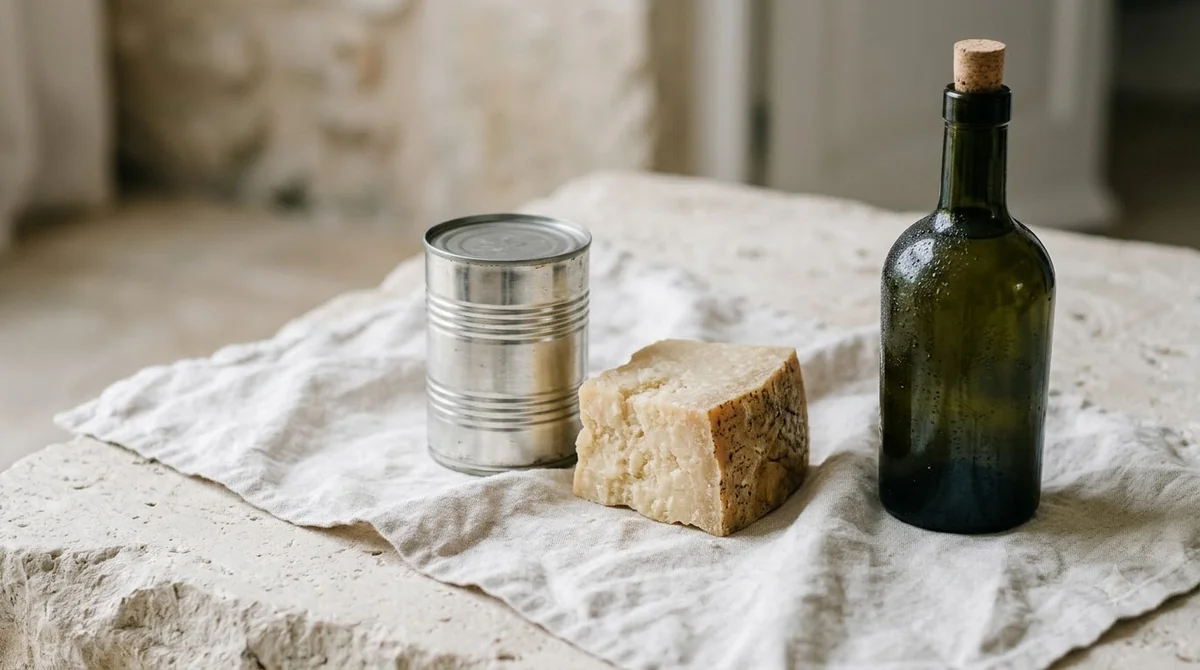

To learn how to make pasta puttanesca, simmer crushed tomatoes with garlic, anchovies, olives, capers and a little chili, then toss the sauce with spaghetti. The whole dish takes about 30 minutes, including the pasta. It relies on salty pantry ingredients instead of meat or cheese, so the flavor comes from the brine of the olives and capers. The method below follows a classic version with anchovies, and it also explains how to adapt the sauce if you skip the fish.
What Makes Pasta Puttanesca Taste the Way It Does
The sauce is built on four salty, sharp ingredients: anchovies, olives, capers and chili. Tomatoes provide the body and sweetness that balance them.
Anchovies melt into the hot oil and add depth rather than a strong fishy taste. Olives and capers are added to the pan for a short time so they keep some bite. Chili adds gentle heat, and parsley is stirred in at the end for freshness. Cheese is not traditionally served with this dish, which is why most classic recipes leave it off the table.
One recipe from Recipes from Italy uses Gaeta olives, San Marzano canned tomatoes and salted capers, and it advises tasting the sauce before adding any salt because the other ingredients are already salty.
Ingredients for Pasta Puttanesca
The amounts below serve four people and come from the Recipes from Italy version of how to make pasta puttanesca. Use the table as a shopping list before you start cooking.
| Ingredient | Amount |
|---|---|
| Spaghetti or linguine | 350 g (12 oz) |
| Canned whole peeled tomatoes, preferably San Marzano | 400 g (14 oz) |
| Extra virgin olive oil | 4 tablespoons |
| Garlic | 1 clove |
| Oil-packed anchovy fillets, drained | 5 fillets |
| Gaeta black olives, pitted or whole | 150 g (5 oz) |
| Salted capers | 3 tablespoons |
| Small red chili, fresh or dried | 1 |
| Fresh parsley | 1 sprig |
If you cannot find Gaeta olives, use good-quality Mediterranean black olives. Mild canned olives make the sauce taste flat. Salted capers should be rinsed under cold water and drained well before they go in the pan.
How to Make Pasta Puttanesca Step by Step
Start with the sauce while the pasta water heats up. The sauce comes together in about 10 minutes of active cooking once the tomatoes go in.
- Crush the canned tomatoes by hand or with a fork, and keep their juices. Pit and roughly chop the olives, and set aside a few whole ones for serving. Finely chop the garlic and parsley.
- Heat the olive oil in a large skillet over medium heat. Add the capers, garlic, olives, anchovies and chili.
- Cook for about 1 minute, stirring constantly, until the anchovies dissolve into the oil. Keep the garlic gentle so it does not brown and turn bitter.
- Add the crushed tomatoes with their juices. Simmer gently for 8 to 10 minutes, stirring now and then, and stir in the parsley near the end.
- Taste the sauce before adding any salt. The anchovies, capers and olives already carry a lot of salt.
The simmer time is the step that matters most. A short simmer leaves the tomatoes sharp, while a longer one softens the sauce and lets the briny flavors blend. Recipes from Love and Lemons also use an 8 to 10 minute simmer after the tomatoes go in, which matches the timing above.
How Long to Cook the Pasta and How to Combine It
Cook the pasta in plenty of salted water, and pull it out a little before it is fully tender, because it will finish in the sauce.
Bring a large pot of salted water to a boil and cook the spaghetti until it is 2 to 3 minutes short of al dente. Check the package time as a starting point, and taste a strand before you drain it. Before draining, reserve about half a cup of the cooking water. Some recipes ask for a full cup, so save a little extra in case the sauce needs loosening.
- Drain the pasta and transfer it straight into the skillet with the sauce.
- Toss over medium heat for 2 to 3 minutes so the pasta absorbs the sauce.
- Add a small splash of the reserved water only if the sauce looks thick or dry. Starchy water helps the sauce cling to the strands without making it watery.
- Serve immediately with more parsley and a few whole olives on top.
Pasta that sits in the sauce for too long will drink up the liquid and turn stodgy, so plate it as soon as it is tossed.
A Vegetarian Version Without Anchovies
You can make a good sauce without anchovies, but it will taste a little less savory, so add the other salty ingredients with care.
The Love and Lemons version of pasta puttanesca is vegetarian and leaves out the anchovies entirely. It starts with a chopped shallot cooked in olive oil for 4 to 5 minutes, then adds garlic, red pepper flakes, 2 tablespoons of capers and about half a cup of roughly chopped kalamata olives. The sauce then simmers for 8 to 10 minutes after the crushed tomatoes go in. The author notes that anchovies are traditional, and readers who want the savory note have added anchovy paste or a small amount of other fish.
Use the same timing as the anchovy version. A shallot gives the base a little sweetness, which fills the gap that the fish would leave behind.
Serving and Storing Pasta Puttanesca
Serve the pasta hot, straight from the skillet, with a simple side that can soak up the sauce.
A green salad, sautéed broccolini or crusty bread all work well. Love and Lemons notes that leftovers keep in an airtight container in the refrigerator for up to 3 days. Reheat them in the microwave or in a skillet with a splash of water, and stir until the pasta is hot all the way through.
Frequently Asked Questions
Is pasta puttanesca supposed to have cheese?
Classic recipes usually leave cheese out. The sauce is already salty and sharp, so grated cheese can mask the flavor of the olives and capers. If you want cheese, a light sprinkle of hard grating cheese is a common personal choice, but it is not part of the traditional method.
Can I use spaghetti or another pasta shape?
Spaghetti and linguine are the usual choices because the thin strands carry the chunky sauce well. Bucatini also works and holds up to the olives and capers. Short shapes such as penne can be used, but they need a little more sauce to coat every piece.
Why does my sauce taste too salty?
Anchovies, capers and olives all contribute salt, so the sauce can become too salty quickly. Taste it before you add any salt, and rinse salted capers under cold water. If the sauce is already salty, add a spoonful of the reserved pasta water or a little extra crushed tomato to dilute it.
How far ahead can I make the sauce?
Leftover sauce can be stored in an airtight container in the refrigerator. Cook the pasta fresh and toss it with the reheated sauce, adding a little of the reserved pasta water if needed. The Love and Lemons guidance on leftovers gives a storage limit of up to 3 days for the finished dish.
Knowing how to make pasta puttanesca is useful because it is one of the fastest sauces to put together once you have the pantry staples on hand. Buy good olives, rinse the capers, and taste before you salt. With a short simmer and a splash of starchy pasta water, you get a bold, balanced dinner in about half an hour.
 8 min readLearnPuttanesca Sauce Recipe: A Classic Italian MethodUpdated Nov 10, 2026
 6 min readLearnHow to Make Lemon Ricotta Pasta: Creamy, Bright and QuickUpdated Nov 13, 2026
 8 min readLearnBruschetta Recipe: How to Make Classic Tomato Bruschetta at HomeUpdated Nov 12, 2026
 8 min readLearnBolognese Sauce Recipe: How to Make a Classic Ragu at HomeUpdated Nov 10, 2026
 8 min readLearnClam Pizza Recipe: A Classic White Clam Pie You Can Make at HomeUpdated Nov 6, 2026
 6 min readLearnHow to Make Tortellini with Brown Butter and Sage: Rich and QuickUpdated Nov 13, 2026